1. ArchDaily
  2. deck

deck: The Latest Architecture and News

The Illusion of Level: Detailing for Water in “Flat” Architecture

Subscriber Access | 

We walk on "flat" ground every day and rarely think twice—but how flat is it, really? In the city, curbs are chamfered, sidewalks pitch toward grates, and roadways are crowned to shed water into shallow gutters. In suburbs and on unpaved paths, irregular terrain is the norm. Inside buildings, by contrast, we pursue near-perfect horizontality—structural frames, slabs, and finishes are all disciplined to create level walking surfaces in the name of safety and accessibility. Yet flatness is inherently at odds with water. A closer look reveals a quiet repertoire of accommodations: slight falls at entries, thresholds raised a few millimeters, wet areas with barely perceptible pitches. The floor is read as flat, but it is in fact carefully tuned—micro-topographies masquerading as plane—to manage water without calling attention to themselves.

What are the common ways architects "keep things flat" while actually managing water—the perennial enemy of buildings? A useful way to look at it is by zooming into three recurring conditions: exterior or roof decking, bathrooms and other wet rooms, and exterior ground planes. Each relies on a slightly different toolkit—pedestal systems over sloped waterproofing, micro-gradients to floor traps, hidden perimeter drains, split slopes—to maintain the illusion of a seamless, level surface. Studying these situations side by side reveals just how much design effort goes into reconciling perceptual flatness with the messy reality.
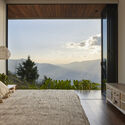
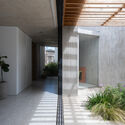
The Illusion of Level: Detailing for Water in “Flat” Architecture - Image 1 of 4The Illusion of Level: Detailing for Water in “Flat” Architecture - Image 2 of 4The Illusion of Level: Detailing for Water in “Flat” Architecture - Image 3 of 4The Illusion of Level: Detailing for Water in “Flat” Architecture - Image 4 of 4The Illusion of Level: Detailing for Water in “Flat” Architecture - More Images+ 15

15 Brazilian Residences With Wooden Decks

Subscriber Access | 

Living in a tropical country means cherishing outdoor experiences, whether feeling the gentle breeze, connecting with nature, or basking in the sunlight. We have grown up with a cultural tradition of playing in our yards, gathering with family and friends on balconies, enjoying barbecues, or simply admiring the beautiful landscape. Numerous Brazilian residences integrate wooden decks for these purposes. They are versatile spaces that fulfill various functions.

15 Brazilian Residences With Wooden Decks - Image 1 of 415 Brazilian Residences With Wooden Decks - Image 2 of 415 Brazilian Residences With Wooden Decks - Image 3 of 415 Brazilian Residences With Wooden Decks - Image 4 of 415 Brazilian Residences With Wooden Decks - More Images+ 11

How to Build a Backyard Pool? Types and Features

Subscriber Access | 

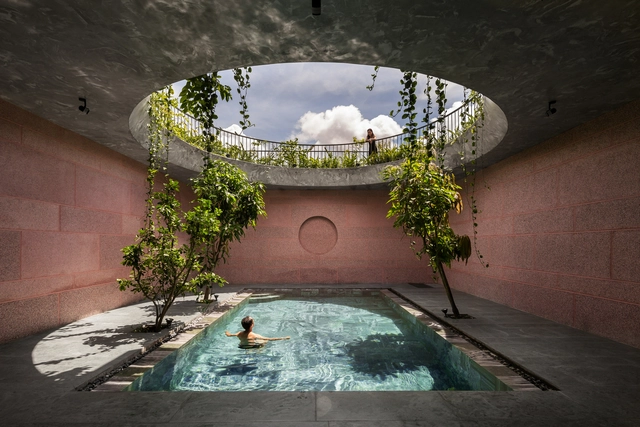
Designer pools bring status to luxury homes and five-star hospitality spaces. But adding the cooling, calming, energizing, and environmental benefits of a hyper-local water body to a residence can far outweigh the cost of installation. With a range of long- and short-term landscaping options possible, meanwhile, luxury is available, whatever the budget.

Most pools are built below ground to retain unobstructed visuals above. While all in-ground pools start off the same way – with excavation, then connecting the plumbing and filtration systems – the main difference is in the construction of the pool’s basin. The simplest and quickest method is to lower a pre-fabricated reinforced plastic pool or pre-cast concrete basin into the cavity, before connecting the pipework and backfilling the recess with sand. But this is only suitable for off-the-shelf pools with simple geometries. In order to make the most efficient use of all available space, bespoke pool shapes and sizes are best achieved by pouring or spraying concrete into a rebar or timber frame.

How to Build a Backyard Pool? Types and Features - Image 1 of 4How to Build a Backyard Pool? Types and Features - Image 2 of 4How to Build a Backyard Pool? Types and Features - Image 3 of 4How to Build a Backyard Pool? Types and Features - Image 4 of 4How to Build a Backyard Pool? Types and Features - More Images+ 19

Wooden Decks in Public Spaces: Welcoming Floors for Collective Meeting

Subscriber Access | 

Wooden Decks in Public Spaces: Welcoming Floors for Collective Meeting - Image 1 of 4Wooden Decks in Public Spaces: Welcoming Floors for Collective Meeting - Image 2 of 4Wooden Decks in Public Spaces: Welcoming Floors for Collective Meeting - Image 3 of 4Wooden Decks in Public Spaces: Welcoming Floors for Collective Meeting - Image 4 of 4Wooden Decks in Public Spaces: Welcoming Floors for Collective Meeting - More Images+ 18

Wooden floors are know for their warm appearance, rich texture, and natural tones that vary according to the origin of the planks, changing with the weather and the passage of time. Outdoors, wooden surfaces are widely used for terraces and living areas, taking advantage of these inviting qualities to bring people together on warm and welcoming floors. Built with modular pieces, wooden decks can easily form artificial topographies, shaping creative and effective public spaces for rest, sports, games, and collective gathering.

Wooden Living-Roof Built With Japanese Joinery Techniques Uses Zero Screws

Subscriber Access | 

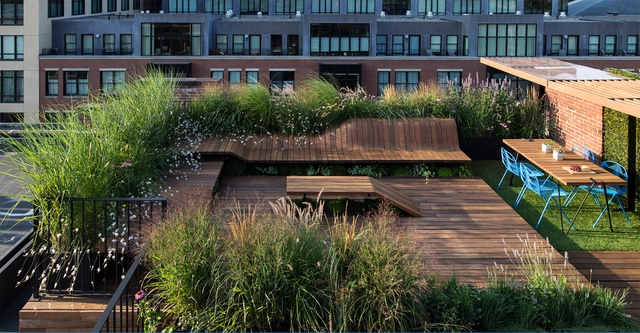
A multidisciplinary design study by J.Roc Design, based in Boston, has developed a proposal using wood to restore value to an underused rooftop at the southern end of the city.

In order to accommodate a series of different activities, which required a wide variety of furniture, and therefore a considerable reduction of space, a subtle treatment was made to the flat surface of the roof creating distinct spaces that could be used for sitting, resting and entertaining. 

Wooden Living-Roof Built With Japanese Joinery Techniques Uses Zero Screws - Image 1 of 4Wooden Living-Roof Built With Japanese Joinery Techniques Uses Zero Screws - Image 2 of 4Wooden Living-Roof Built With Japanese Joinery Techniques Uses Zero Screws - Image 3 of 4Wooden Living-Roof Built With Japanese Joinery Techniques Uses Zero Screws - Image 4 of 4Wooden Living-Roof Built With Japanese Joinery Techniques Uses Zero Screws - More Images+ 15