1. ArchDaily
  2. Decolonial

Decolonial: The Latest Architecture and News

Ecologies of Repair: Reconciling Our Relationship with Water

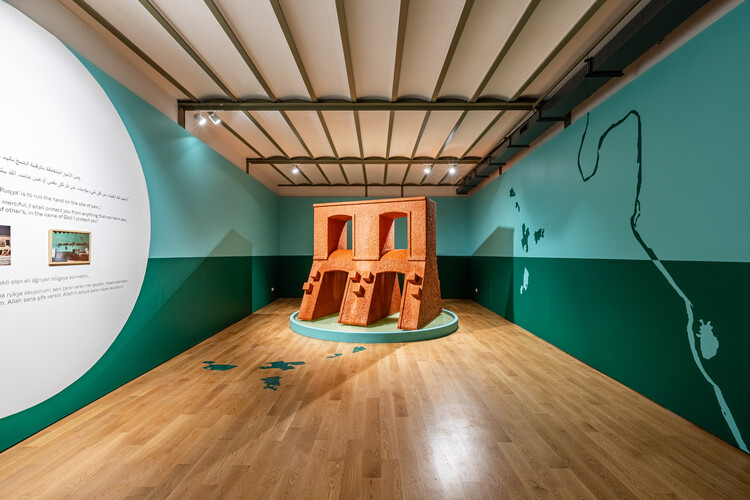
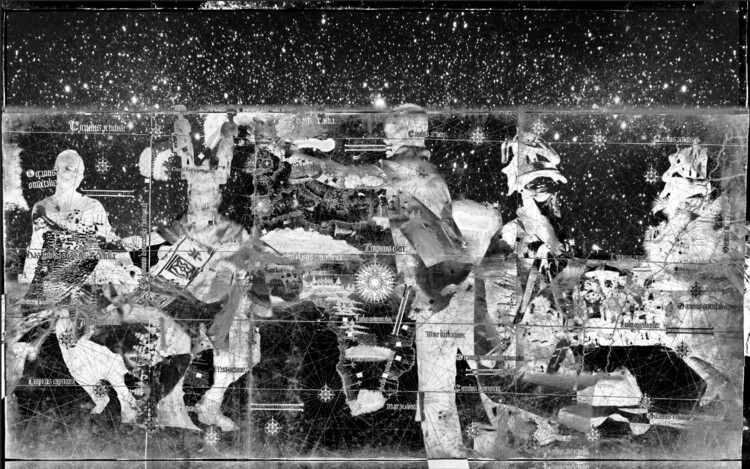
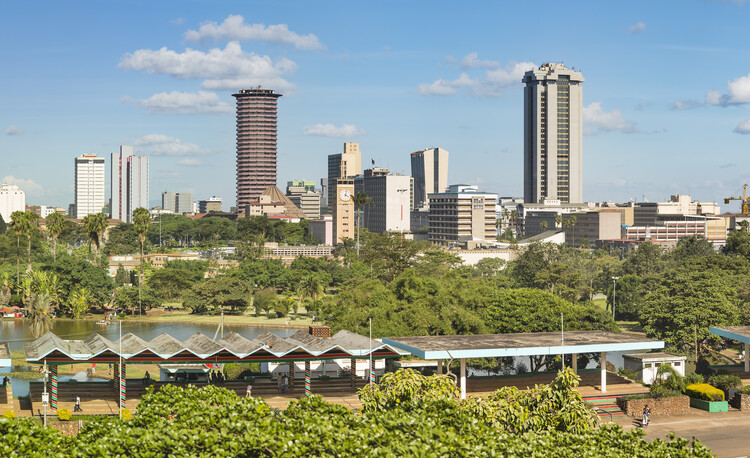
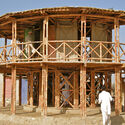
Ola Hassanain is a Sudanese architect and artist operating in the Netherlands, and will be exhibiting at the Pan-African Architecture Biennale in Nairobi, Kenya, later in 2026. All three locations tell stories of the built environment's relationship with water. These illustrate the continuous battles between the amorphous forces of nature that are the rivers and seas, and human attempts to shape and control them. In most cases, they are attempts at extraction. Catastrophes happen as a result of the overreach of these attempts or of their mismanagement, or both.

Ecologies of Repair: Reconciling Our Relationship with Water - Image 1 of 4Ecologies of Repair: Reconciling Our Relationship with Water - Image 2 of 4Ecologies of Repair: Reconciling Our Relationship with Water - Image 3 of 4Ecologies of Repair: Reconciling Our Relationship with Water - Image 4 of 4Ecologies of Repair: Reconciling Our Relationship with Water - More Images+ 10

Choreographing Lagos: Dele Adeyemo on Dance, Cosmology, and Spatial Practices

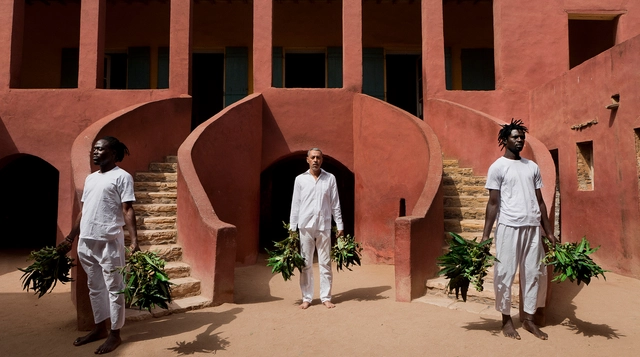
Having thrown a stone today, Eshu kills a bird of yesterday. The Yoruba proverb tells both a story of reparation and of ancestrality by joyfully bending spacetime conventions and accessing subjects from the past with present actions. The saying offers a poetic entry point to broader West African traditions and to the practice of Scottish-Nigerian artist and architect Dele Adeyemo. Named one of the winners of the ArchDaily 2025 Next Practices Awards, Adeyemo's work brings together ecology, spirituality, dance, and territory, examining how embodied cultural practices can generate alternative spatial possibilities within and against the architecture of racial capitalism.

Born in Nigeria and raised in the United Kingdom, Adeyemo has been visiting Lagos for many years. Through this engagement, he has developed an extensive body of research on collective movement practices that predate capitalism and offer distinct, often imaginative spatial intelligences operating alongside dominant systems. ArchDaily spoke with Dele about his artistic and pedagogical practices, and how he identifies design sophistication where architects often perceive deficiency.

Choreographing Lagos: Dele Adeyemo on Dance, Cosmology, and Spatial Practices - Image 1 of 4Choreographing Lagos: Dele Adeyemo on Dance, Cosmology, and Spatial Practices - Image 2 of 4Choreographing Lagos: Dele Adeyemo on Dance, Cosmology, and Spatial Practices - Image 3 of 4Choreographing Lagos: Dele Adeyemo on Dance, Cosmology, and Spatial Practices - Image 4 of 4Choreographing Lagos: Dele Adeyemo on Dance, Cosmology, and Spatial Practices - More Images+ 20

Reclaiming the Narrative: A New Generation of Museums in West Africa

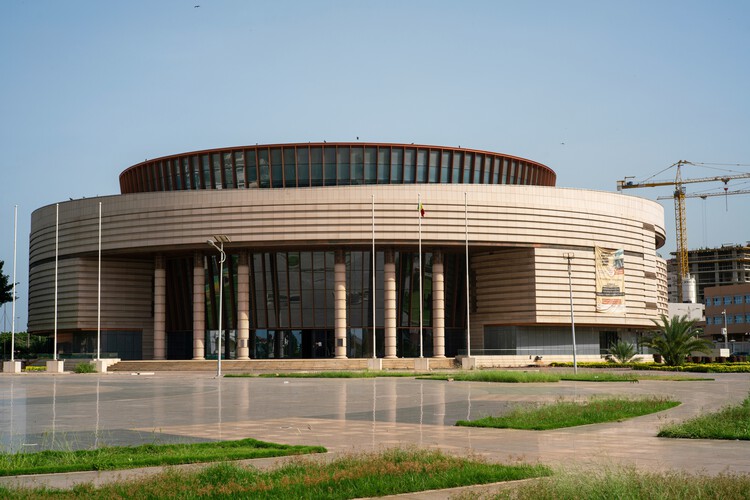
As countries in Africa emerged from colonialism in the mid-twentieth century, many expressed their independent identities through architecture. This process continues several decades later, exemplified by several new museums in West Africa, recently completed or in planning. Although varying in purpose and form, they have some common goals: addressing the need for restitution of many artifacts taken during colonialism and mostly kept in European museums; and defining a museum with local identity as opposed to a non-contextual import.

Reclaiming the Narrative: A New Generation of Museums in West Africa - Image 1 of 4Reclaiming the Narrative: A New Generation of Museums in West Africa - Image 2 of 4Reclaiming the Narrative: A New Generation of Museums in West Africa - Image 3 of 4Reclaiming the Narrative: A New Generation of Museums in West Africa - Image 4 of 4Reclaiming the Narrative: A New Generation of Museums in West Africa - More Images+ 12

Sumayya Vally Renovates Heritage Building in Central London as New Arts and Cultural Center

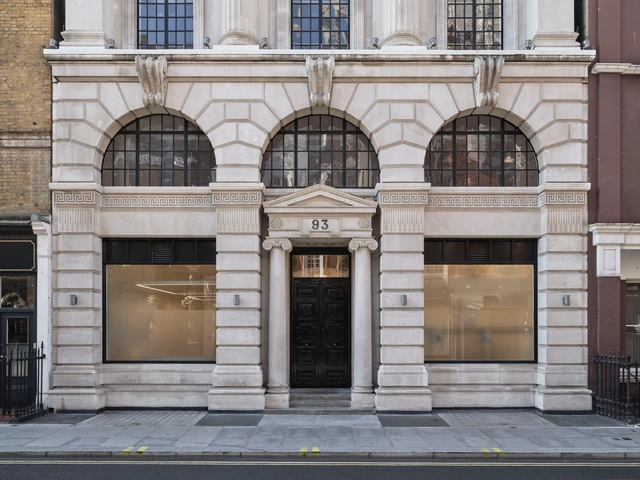
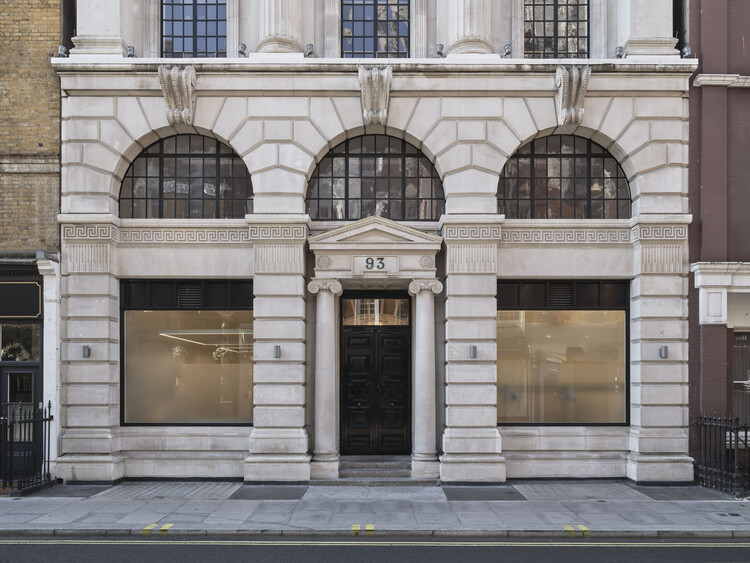
October will see the opening of Ibraaz, a new cultural space reimagined by Architect-in-Residence Sumayya Vally in central London. The initiative is led by the Kamel Lazaar Foundation and aims to highlight art, culture, and ideas from the Global Majority: communities of African, Asian, Indigenous, and Latin American heritage that together represent most of the world's population. The project seeks to bridge local and global conversations by creating a "world of many worlds" within a single venue: a six-floor, 10,000-square-foot building that has undergone multiple transformations, from synagogue to residence, club, and now cultural center.

Sumayya Vally Renovates Heritage Building in Central London as New Arts and Cultural Center - Image 1 of 4Sumayya Vally Renovates Heritage Building in Central London as New Arts and Cultural Center - Image 2 of 4Sumayya Vally Renovates Heritage Building in Central London as New Arts and Cultural Center - Image 3 of 4Sumayya Vally Renovates Heritage Building in Central London as New Arts and Cultural Center - Image 4 of 4Sumayya Vally Renovates Heritage Building in Central London as New Arts and Cultural Center - More Images

The Transposed Monument: Murray House and the Paradox of Preservation

Subscriber Access | 

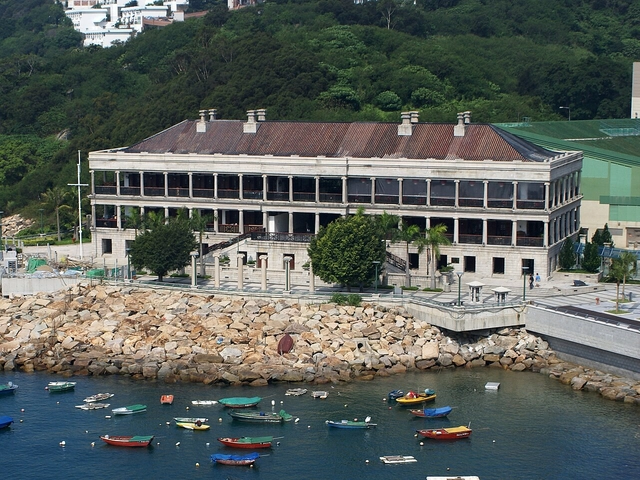
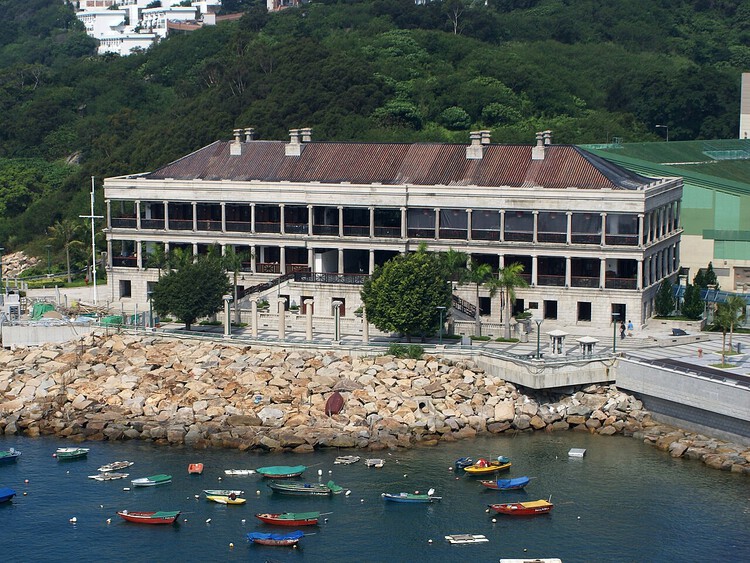
In preserving architecture, there are many possible approaches—ranging from treating a building as a static monument, meticulously restoring it in situ to the point of limiting public access, to more adaptive strategies that reprogram and modify interior spaces while retaining key architectural elements such as materiality and structural form. Yet one method stands apart, both in ambition and in controversy: to deliberately dismantle a building—brick by brick—meticulously label and document each part, and store it until a new site, purpose, or narrative emerges. Then, to reassemble it anew, possibly for an entirely different use. Though the original context is lost, this strategy aims to preserve cultural significance through transformation rather than stasis. This is the story of Murray House in Stanley, Hong Kong.

Originally constructed in 1846 as officers' quarters for the British military in Central, Murray House was one of the earliest examples of neoclassical architecture in Hong Kong—a unique and enduring trace of the city's colonial past. Its robust granite colonnades and symmetrical façade stood as a symbol of classical permanence. During the Japanese occupation of Hong Kong in 1941, the building's function was repurposed as the command center for the Japanese military police. It survived the war and continued to house various government departments throughout the postwar decades.

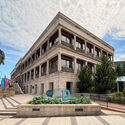
The Transposed Monument: Murray House and the Paradox of Preservation - Image 1 of 4The Transposed Monument: Murray House and the Paradox of Preservation - Image 2 of 4The Transposed Monument: Murray House and the Paradox of Preservation - Image 3 of 4The Transposed Monument: Murray House and the Paradox of Preservation - Image 4 of 4The Transposed Monument: Murray House and the Paradox of Preservation - More Images+ 13

From Fragility to Resilience: Curating the Inaugural Pan-African Architecture Biennale

Subscriber Access | 

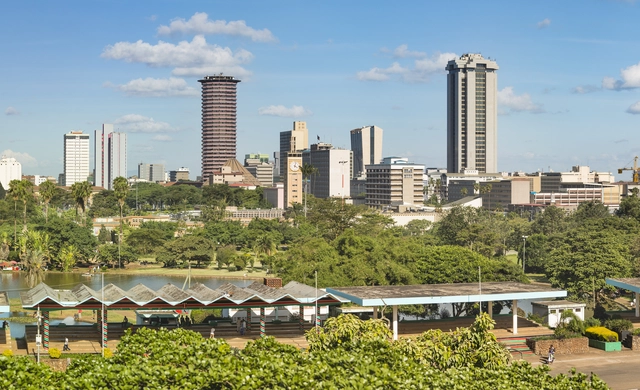
A Pan-African Biennale of Architecture is planned for 2026 in Nairobi, Kenya. According to the curator, it "represents an unprecedented opportunity to reclaim Africa's architectural narrative, reasserting the continent's role as a global leader in urban resilience, sustainability, and cultural expression."

Omar Degan, the curator in partnership with the Architectural Association of Kenya, is a practicing architect, professor, and teacher. He leads an architecture office known as DO Architecture Group, which was established between Italy and Somalia—two places deeply connected to his identity. His work focuses on what he describes as "fragile contexts" around the world, including areas affected by natural disasters, refugee camps, slum upgrades, and underserved neighborhoods.

From Fragility to Resilience: Curating the Inaugural Pan-African Architecture Biennale - Image 1 of 4From Fragility to Resilience: Curating the Inaugural Pan-African Architecture Biennale - Image 2 of 4From Fragility to Resilience: Curating the Inaugural Pan-African Architecture Biennale - Image 3 of 4From Fragility to Resilience: Curating the Inaugural Pan-African Architecture Biennale - Image 4 of 4From Fragility to Resilience: Curating the Inaugural Pan-African Architecture Biennale - More Images+ 5

Architecture and Coloniality: Brazilian Modernism in Critical Perspective

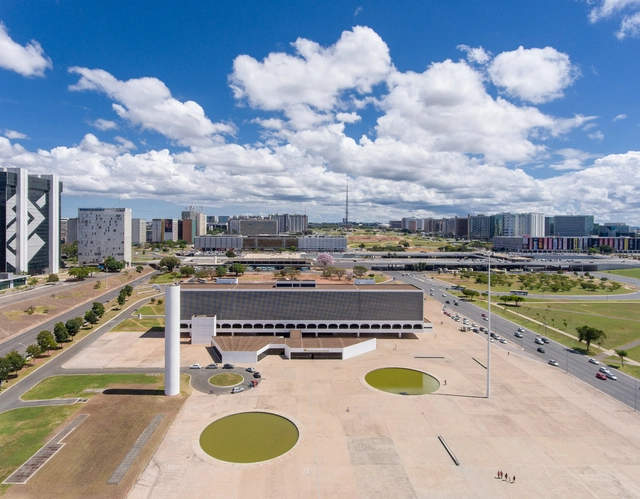
Brazilian modern architecture is often celebrated as a landmark of innovation and national identity, projecting the country onto the international stage with iconic works and a distinctive aesthetic. However, recent research and publications have highlighted its deep entanglement with colonial narratives, both in its influences and its social impact. Although modernism emerged as an attempt to break away from European academic traditions, it remained dependent on foreign references and incorporated strategies of domination that echoed colonial logic.

Architecture and Coloniality: Brazilian Modernism in Critical Perspective  - Image 1 of 4Architecture and Coloniality: Brazilian Modernism in Critical Perspective  - Image 2 of 4Architecture and Coloniality: Brazilian Modernism in Critical Perspective  - Image 3 of 4Architecture and Coloniality: Brazilian Modernism in Critical Perspective  - Image 4 of 4Architecture and Coloniality: Brazilian Modernism in Critical Perspective  - More Images+ 7

The Decolonization of Architecture Is a Necessary Step in Its Decarbonization

Subscriber Access | 

Imagination and policy development go hand in hand. Before we can create policies that bring about a desirable future, we must first envision what that future looks like, which is particularly significant in Architecture because we see the future as an integral part of the design process. This familiarity with envisioning the future carries a responsibility for us to create guidelines and regulations that can either support or obstruct the direction our planet takes.

In this moment of climate change, resulting from centuries of irresponsible practices, the idea of the future has been invaded by fear, an alert that would determine the survival of our existence. Architecture, along with other disciplines, has begun to channel efforts toward reexamining, reconceptualizing, and reformulating its practices toward the future we need to achieve. Beyond statistics and projections, the approach of architecture in relation to climate action brings to light numerous concepts, among them, the need for a historical review for the creation of this future.

The Decolonization of Architecture Is a Necessary Step in Its Decarbonization - Image 1 of 4The Decolonization of Architecture Is a Necessary Step in Its Decarbonization - Image 2 of 4The Decolonization of Architecture Is a Necessary Step in Its Decarbonization - Image 3 of 4The Decolonization of Architecture Is a Necessary Step in Its Decarbonization - Image 4 of 4The Decolonization of Architecture Is a Necessary Step in Its Decarbonization - More Images+ 3

“Earth as Ancestral and Future Technology”: An Interview With Gabriela de Matos and Paulo Tavares, Curators of the Brazil Pavilion and Winners of the Golden Lion at the 2023 Venice Biennale

Subscriber Access | 

Questioning the canonical history of architecture and shedding light on long-invisible spatial practices, Gabriela de Matos and Paulo Tavares propose the exhibition “Terra” [Earth], at the Brazilian pavilion at the Venice Architecture Biennale 2023. "It's our way of shaking things up," say the curators, who turn their attention to ancestral ways of dealing with the land, aiming for more fair and complete possibilities for the present and future.

Addressing "earth" in all its meanings, the curators overlay issues related to soil and territory with the planetary problems. They propose an approach to reparations and decoloniality - emerging in Brazil - with broad topics such as decarbonization and the environment, decisive in the contemporary global debate. The Brazilian Pavilion titled Terra [Earth], won the Golden Lion for Best National Participation at the 2023 Venice Architecture Biennale, on Saturday 20th of May, selected by a jury comprising Italian architect and curator Ippolito Pestellini Laparelli as president, Nora Akawi, Thelma Golden, Tau Tavengwa, and Izabela Wieczorek.

Brazil Pavilion at the 2023 Venice Biennale Reveals Details About the Exhibition “Terra”

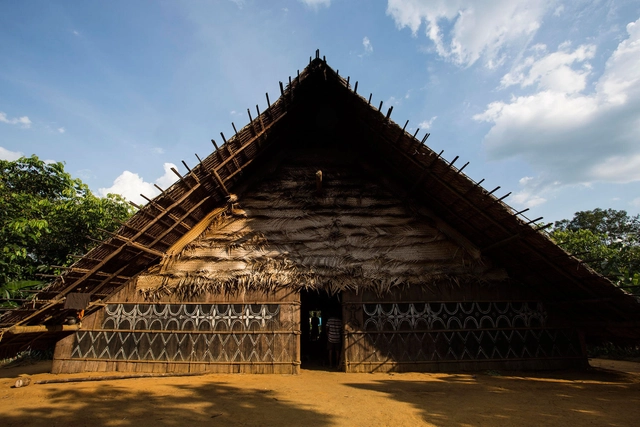
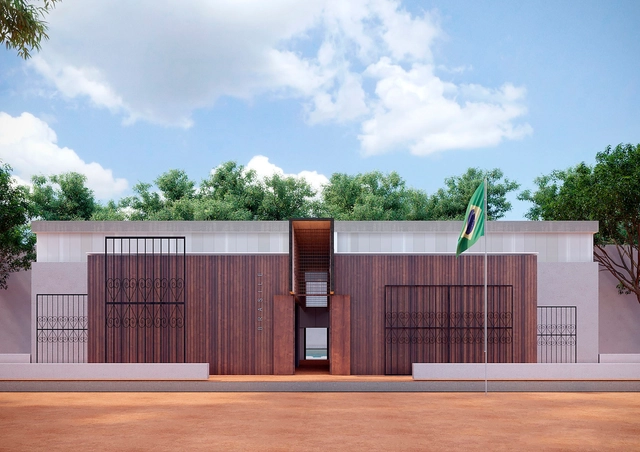
The São Paulo Biennial Foundation has just announced details of the Terra project that will occupy the Brazil Pavilion at the 18th International Architecture Exhibition, La Biennale di Venezia. With a curatorial effort by Gabriela de Matos and Paulo Tavares, the Brazilian exhibition will feature a diverse group of collaborators, comprising Mbya-Guarani indigenous peoples, Tukano, Arawak and Maku indigenous peoples, weavers from Alaká (Ilê Axé Opô Afonjá), Iyá Nassô Oká (Casa Branca do Engenho Velho), Ana Flávia Magalhães Pinto, Ayrson Heráclito, Day Rodrigues with collaboration from Vilma Patrícia Santana Silva (Etnicidades Group FAU-UFBA), Fissura Collective, Juliana Vicente, Thierry Oussou, and Vídeo nas Aldeias.

Brazil Pavilion at the 2023 Venice Biennale Reveals Details About the Exhibition “Terra” - Image 1 of 4Brazil Pavilion at the 2023 Venice Biennale Reveals Details About the Exhibition “Terra” - Image 2 of 4Brazil Pavilion at the 2023 Venice Biennale Reveals Details About the Exhibition “Terra” - Image 3 of 4Brazil Pavilion at the 2023 Venice Biennale Reveals Details About the Exhibition “Terra” - Image 4 of 4Brazil Pavilion at the 2023 Venice Biennale Reveals Details About the Exhibition “Terra” - More Images+ 4

Status, Statues, and Statutes: The Issue With Monuments to Flawed Men

This article was originally published on Common Edge.

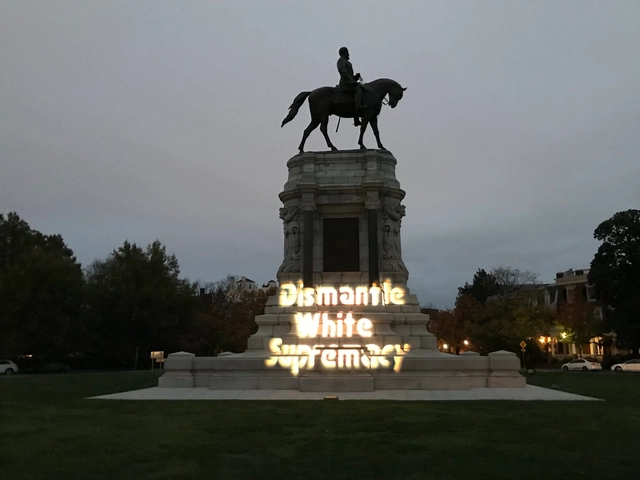
Monuments, as Alois Riegl pointed out a century ago, are aids to memory. “In memoriam,” the carvings cry out. Though they are almost always tainted with political ideologies and social values, they can stand on their own as works of art, absorbing meanings over millennia. Many that we continue to treasure were once associated with events and practices antithetical to modern mores and taboos: Greek temples were founded on the altars of animal—and, earlier, human—sacrifice; the pyramids were made by slaves; market crosses may have served as flogging posts. There really are no innocent human artifacts dedicated to remembering human acts, as fact or fiction.