1. ArchDaily
  2. Educational Architecture

Educational Architecture: The Latest Architecture and News

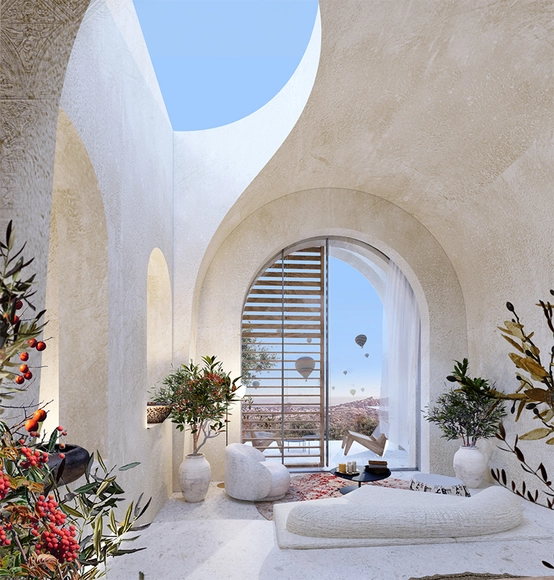
A Portuguese Botanical Space and a 19th Century Rehabilitated Water Reservoir: 8 Unbuilt Hospitality Facilities Submitted to ArchDaily

Subscriber Access | 

Offering short-term accommodation to travelers, hotels represent one of the main elements supporting the hospitality sector. They often aim to create a serene environment, isolated from the bustle of city life, yet representative of the local identity. Boutique hotels represent a rising sub-sector of hospitality design. These are small hotels typically between 10 and 100 rooms with carefully chosen interior design, providing a memorable experience to their guests. From historic renovations to contemporary ground-up hotels, hotel projects represent a great opportunity for architects to create unique environments centered around leisure and relaxation.

This week’s curated selection of Best Unbuilt Architecture highlights projects submitted by the ArchDaily community. Located in the forests of Portugal, on the shore of the Greek island of Crete, or in the deserts of Egypt, this round-up of unbuilt projects showcases how architects respond to local conditions in order to create designs that cater to the needs of tourists and travelers.

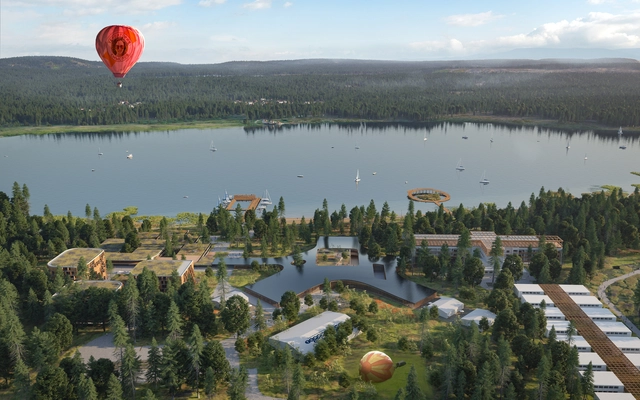
A Portuguese Botanical Space and a 19th Century Rehabilitated Water Reservoir: 8 Unbuilt Hospitality Facilities Submitted to ArchDaily - Image 4 of 4A Portuguese Botanical Space and a 19th Century Rehabilitated Water Reservoir: 8 Unbuilt Hospitality Facilities Submitted to ArchDaily - Image 34 of 4A Portuguese Botanical Space and a 19th Century Rehabilitated Water Reservoir: 8 Unbuilt Hospitality Facilities Submitted to ArchDaily - Image 44 of 4A Portuguese Botanical Space and a 19th Century Rehabilitated Water Reservoir: 8 Unbuilt Hospitality Facilities Submitted to ArchDaily - Image 48 of 4A Portuguese Botanical Space and a 19th Century Rehabilitated Water Reservoir: 8 Unbuilt Hospitality Facilities Submitted to ArchDaily - More Images+ 56

A Monolithic Museum in Portugal and a Digital Heritage Centre in South Korea: 10 Unbuilt Cultural Projects Submitted to ArchDaily

Subscriber Access | 
A Monolithic Museum in Portugal and a Digital Heritage Centre in South Korea: 10 Unbuilt Cultural Projects Submitted to ArchDaily - Featured Image
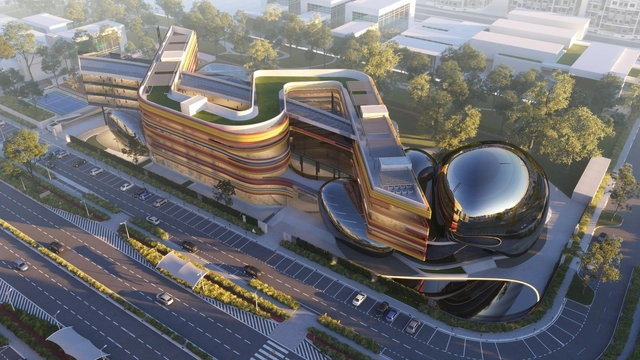
The Library of SONGDO International City BY DROO Da Costa Mahindroo Architect. Image © Visual Depiction

This week’s curated selection of Best Unbuilt Architecture highlights educational and cultural projects submitted by the ArchDaily community. Through examples from all around the world, the article explores how these spaces of knowledge and discovery are designed to inspire and inform.

Featuring a monolithic museum in Portugal, a digital heritage centre with a media facade in Korea and a mobility research centre in Turkey, the round-up spans various kinds of educational and cultural spaces, as well as different attitudes towards the built or natural environment. The following projects reveal the ideas that shape spaces of knowledge in different contexts, illustrating diverse approaches toward what constitutes an institution of culture.

A Monolithic Museum in Portugal and a Digital Heritage Centre in South Korea: 10 Unbuilt Cultural Projects Submitted to ArchDaily - Image 1 of 4A Monolithic Museum in Portugal and a Digital Heritage Centre in South Korea: 10 Unbuilt Cultural Projects Submitted to ArchDaily - Image 2 of 4A Monolithic Museum in Portugal and a Digital Heritage Centre in South Korea: 10 Unbuilt Cultural Projects Submitted to ArchDaily - Image 3 of 4A Monolithic Museum in Portugal and a Digital Heritage Centre in South Korea: 10 Unbuilt Cultural Projects Submitted to ArchDaily - Image 4 of 4A Monolithic Museum in Portugal and a Digital Heritage Centre in South Korea: 10 Unbuilt Cultural Projects Submitted to ArchDaily - More Images+ 52

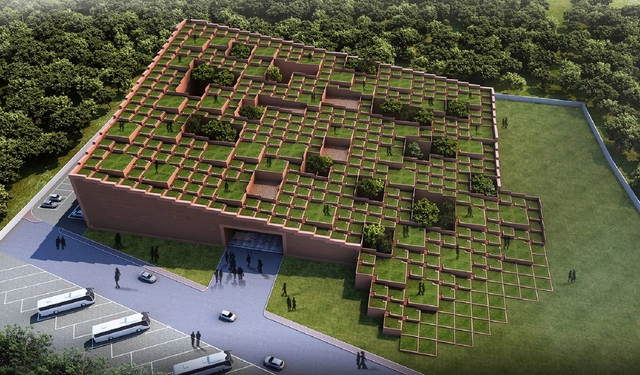
Sanjay Puri Architects Designs Stepped Volume with Green Terraces for Prestige University Building in India

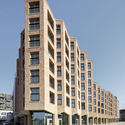
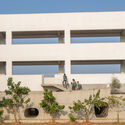
Sanjay Puri Architects has designed a new building for the Prestige University in Indore, a stepped massing with green terraces that blends with the landscape. Currently under construction within the 32-acre university campus, the project echoes traditional Indian architecture through its use of red brick and contextual adaptation to the local climate. The morphology creates an outdoor amphitheatre for students and faculty, while the interweaving of indoor and outdoor spaces is meant to foster engagement and social interaction.

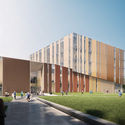
Sanjay Puri Architects Designs Stepped Volume with Green Terraces for Prestige University Building in India - Image 1 of 4Sanjay Puri Architects Designs Stepped Volume with Green Terraces for Prestige University Building in India - Image 2 of 4Sanjay Puri Architects Designs Stepped Volume with Green Terraces for Prestige University Building in India - Image 3 of 4Sanjay Puri Architects Designs Stepped Volume with Green Terraces for Prestige University Building in India - Image 4 of 4Sanjay Puri Architects Designs Stepped Volume with Green Terraces for Prestige University Building in India - More Images+ 7

HENN Wins Competitions to Design the Brainergy Hub and the Language Forum in Germany

HENN has won two major architecture competitions in Germany to design the Brainergy Hub in Jülich and the German Language Forum in Mannheim. The office's Brainergy Hub proposal features a circular design dedicated to renewable energy research, whereas the Language Forum proposal stands as an inviting open space that promotes communication and interaction through unique learning experiences.

HENN Wins Competitions to Design the Brainergy Hub and the Language Forum in Germany - Image 1 of 4HENN Wins Competitions to Design the Brainergy Hub and the Language Forum in Germany - Image 2 of 4HENN Wins Competitions to Design the Brainergy Hub and the Language Forum in Germany - Image 3 of 4HENN Wins Competitions to Design the Brainergy Hub and the Language Forum in Germany - Image 4 of 4HENN Wins Competitions to Design the Brainergy Hub and the Language Forum in Germany - More Images+ 1

The 2022 Edition of the EU Mies van der Rohe Award Reveals Final List of Works Competing

The European Commission and the Fundació Mies van der Rohe have announced the second list of 85 works competing for the 2022 European Union Prize for Contemporary Architecture – Mies van der Rohe Award. Joining the batch of first nominations announced in February 2021, the full list comprises now of 532 competing works for the EU Mies Award 2022. The shortlist of 40 will be announced in January 2022, the winners in April 2022, and the Award ceremony will take place in May 2022.

The 2022 Edition of the EU Mies van der Rohe Award Reveals Final List of Works Competing - Image 1 of 4The 2022 Edition of the EU Mies van der Rohe Award Reveals Final List of Works Competing - Image 2 of 4The 2022 Edition of the EU Mies van der Rohe Award Reveals Final List of Works Competing - Image 3 of 4The 2022 Edition of the EU Mies van der Rohe Award Reveals Final List of Works Competing - Image 4 of 4The 2022 Edition of the EU Mies van der Rohe Award Reveals Final List of Works Competing - More Images+ 5

A Three-Dimensional 'Learning Landscape' and a Soviet-Inspired Architecture School: 10 Unbuilt Educational Facilities Submitted to ArchDaily

Subscriber Access | 

This week’s curated selection of Best Unbuilt Architecture highlights educational architecture submitted by the ArchDaily community. From preschools to higher education institutes, this article explores how architects shifted towards fostering individual creativity, critical thinking, and exploration, and presents projects submitted to us from all over the world.

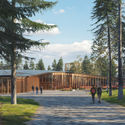
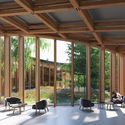
Featuring a secluded kindergarten in the Icelandic mountains, a vibrantly-colored playschool in the industrial city of Shenzhen, and a Florentine high school with a flow of natural sunlight, this round-up explores how architects prioritize student well being and comfort in spaces that promote productivity, learning, and creativity. The selection also includes preschools, high schools, and academies in France, United States, Egypt, Kazakhstan, and Israel.

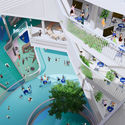
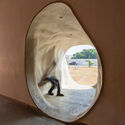
A Three-Dimensional 'Learning Landscape' and a Soviet-Inspired Architecture School: 10 Unbuilt Educational Facilities Submitted to ArchDaily  - Image 38 of 4A Three-Dimensional 'Learning Landscape' and a Soviet-Inspired Architecture School: 10 Unbuilt Educational Facilities Submitted to ArchDaily  - Image 46 of 4A Three-Dimensional 'Learning Landscape' and a Soviet-Inspired Architecture School: 10 Unbuilt Educational Facilities Submitted to ArchDaily  - Image 61 of 4A Three-Dimensional 'Learning Landscape' and a Soviet-Inspired Architecture School: 10 Unbuilt Educational Facilities Submitted to ArchDaily  - Image 67 of 4A Three-Dimensional 'Learning Landscape' and a Soviet-Inspired Architecture School: 10 Unbuilt Educational Facilities Submitted to ArchDaily  - More Images+ 119

Akshar Arbol International School / KSM Architecture

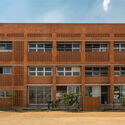
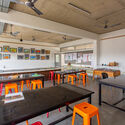
Akshar Arbol International School / KSM Architecture - Exterior Photography, Schools , Door, FacadeAkshar Arbol International School / KSM Architecture - Interior Photography, Schools , Table, ChairAkshar Arbol International School / KSM Architecture - Interior Photography, Schools , DoorAkshar Arbol International School / KSM Architecture - Exterior Photography, Schools , FacadeAkshar Arbol International School / KSM Architecture - More Images+ 36

"Blurring Out Boundaries Between Domestic and Institution": In Conversation with Korean Pavilion Curator Hae-Won Shin at the 2021 Venice Architecture Biennale

Subscriber Access | 

The 17th Venice Architecture Biennale is currently unfolding, and its 60 national pavilions reveal a wide range of answers to the question "How will we live together". This year's edition restates the Biennale's role as a platform for inquiry, prompting a collective re-evaluation of pressing issues such as migration, inequality, climate change or the role of technology. While in Venice, Archdaily met virtually within the Korean pavilion with curator Hae-Won Shin, as the pandemic prevented the exhibition's creators to be present at the Biennale. The conversation explored the thinking behind "Future School" and how it creates a framework for collective learning and exploration.

Henning Larsen Breaks Ground on Denmark's First Ecolabel School

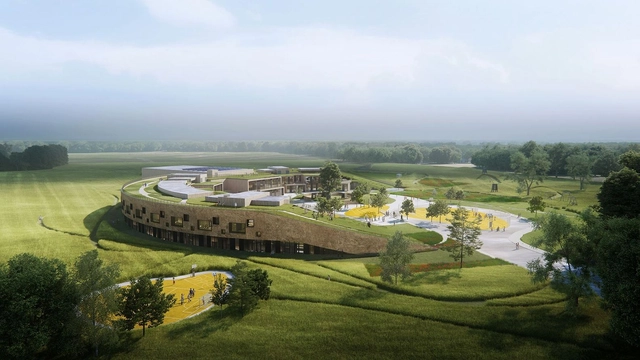
Located in Denmark’s Lolland-Falster region, Henning Larsen's New School in Sundby marked the commencement of a historic project for the country's sustainable educational-facility architecture. The primary school is set to be the largest construction project in Guldborgsund Municipality that ensures high sustainability parameters and community engagement. The school is expected to open its doors at the end of summer 2022, welcoming over 580 students in a nature-oriented premises.

Henning Larsen Breaks Ground on Denmark's First Ecolabel School - Image 1 of 4Henning Larsen Breaks Ground on Denmark's First Ecolabel School - Image 2 of 4Henning Larsen Breaks Ground on Denmark's First Ecolabel School - Image 3 of 4Henning Larsen Breaks Ground on Denmark's First Ecolabel School - Image 4 of 4Henning Larsen Breaks Ground on Denmark's First Ecolabel School - More Images+ 1

Korean Pavilion at the 2021 Venice Biennale Reimagines Traditional Schools

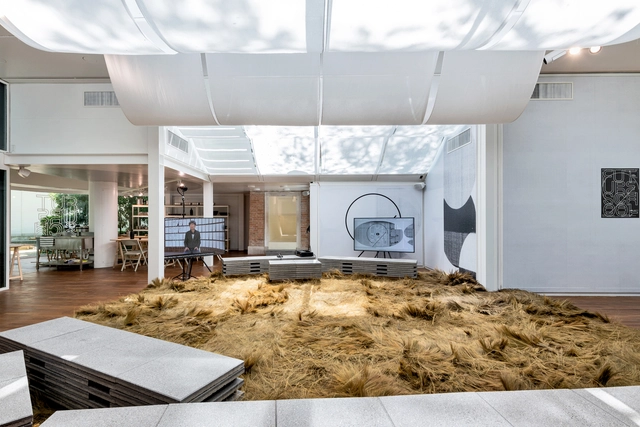
Titled "Future School", the Korean Pavilion at the 17th International Architecture Exhibition - La Biennale Di Venezia, transforms the structure into an explorative academic facility. Curated by Hae-Won Shin, the pavilion will be on display at the Giardini from May 22nd until November 21st, 2021.

Korean Pavilion at the 2021 Venice Biennale Reimagines Traditional Schools  - Image 1 of 4Korean Pavilion at the 2021 Venice Biennale Reimagines Traditional Schools  - Image 2 of 4Korean Pavilion at the 2021 Venice Biennale Reimagines Traditional Schools  - Image 3 of 4Korean Pavilion at the 2021 Venice Biennale Reimagines Traditional Schools  - Image 4 of 4Korean Pavilion at the 2021 Venice Biennale Reimagines Traditional Schools  - More Images+ 5

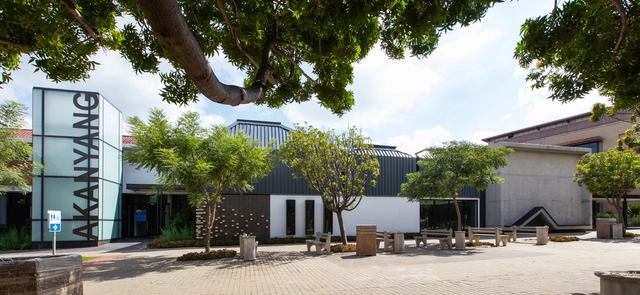
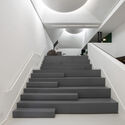
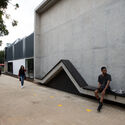
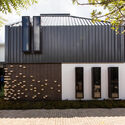
University of Pretoria - Akanyang / Two Five Five Architects

University of Pretoria - Akanyang / Two Five Five Architects - Interior Photography, University, Stairs, HandrailUniversity of Pretoria - Akanyang / Two Five Five Architects - Exterior Photography, UniversityUniversity of Pretoria - Akanyang / Two Five Five Architects - Interior Photography, University, ChairUniversity of Pretoria - Akanyang / Two Five Five Architects - Exterior Photography, University, FacadeUniversity of Pretoria - Akanyang / Two Five Five Architects - More Images+ 41

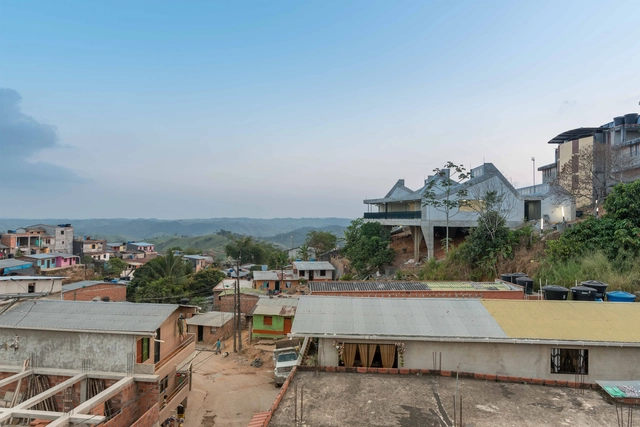
Antioquia's Educational Parks: 13 Examples of Learning-Centered Infrastructure in Colombia

Subscriber Access | 

Educational architecture is crucial for creating spaces that, not only nurture and mold the minds of the future generations, but also provide spaces for the wider public to come and share knowledge and ideas. 

Izuminomori Kindergarten / Hiroto Suzuki architects and associates

Izuminomori Kindergarten / Hiroto Suzuki architects and associates - Interior Photography, KindergartenIzuminomori Kindergarten / Hiroto Suzuki architects and associates - Interior Photography, Kindergarten, Stairs, Door, HandrailIzuminomori Kindergarten / Hiroto Suzuki architects and associates - Interior Photography, KindergartenIzuminomori Kindergarten / Hiroto Suzuki architects and associates - Exterior Photography, KindergartenIzuminomori Kindergarten / Hiroto Suzuki architects and associates - More Images+ 31

The Same People who Designed Prisons Also Designed Schools

According to architect and academic Frank Locker, in architectural education, we keep repeating the same formula from the 20th-century: teachers transmitting a rigid and basic knowledge that gives students, no matter their motivation, interests, or abilities, little to no direction. In this way, says Locker, we are replicating, literally, prisons, with no room for an integral, flexible, and versatile education.

"What do you think of when you're in a space with closed doors and a hallway where you can't enter without permission or a bell that tells you when you can enter and leave?" asks Locker.

The Same People who Designed Prisons Also Designed Schools - Image 1 of 4The Same People who Designed Prisons Also Designed Schools - Image 2 of 4The Same People who Designed Prisons Also Designed Schools - Image 3 of 4The Same People who Designed Prisons Also Designed Schools - Image 4 of 4The Same People who Designed Prisons Also Designed Schools - More Images+ 4

Mecanoo Wins International Competition to Design the Senezh Management LAB Campus in Russia

Mecanoo was selected as the winner of the international architectural competition for the development of the Senezh Management LAB. The master plan highlights an architecture that responds to its surroundings and generates a rich environment with a diverse variety of functions and spaces.

Mecanoo Wins International Competition to Design the Senezh Management LAB Campus in Russia - Image 1 of 4Mecanoo Wins International Competition to Design the Senezh Management LAB Campus in Russia - Image 2 of 4Mecanoo Wins International Competition to Design the Senezh Management LAB Campus in Russia - Image 3 of 4Mecanoo Wins International Competition to Design the Senezh Management LAB Campus in Russia - Image 4 of 4Mecanoo Wins International Competition to Design the Senezh Management LAB Campus in Russia - More Images+ 4

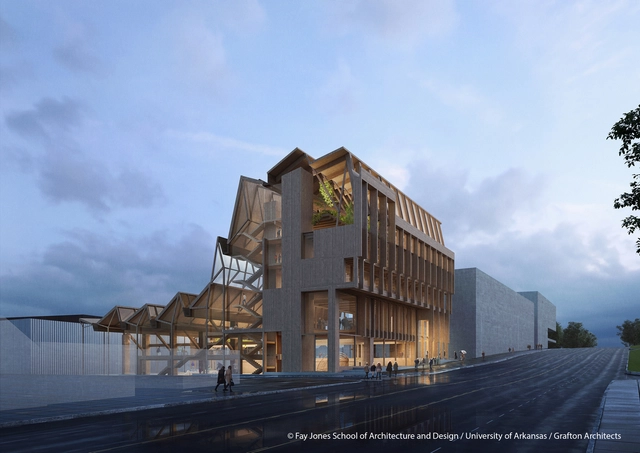
Grafton Architects Wins Competition to Design the Anthony Timberlands Center at the University of Arkansas

Grafton Architects was selected as the winning firm to design the Anthony Timberlands Center for Design and Materials Innovation at the University of Arkansas. In collaboration with Modus Studio for the planned campus design research center, the design on the project is scheduled to begin this summer.

Coldefy with RDAI | HHCP Selected to Design the National Pulse Memorial & Museum

OnePULSE Foundation has selected Coldefy & Associés with RDAI, Orlando-based HHCP Architects, Xavier Veilhan, dUCKS scéno, Agence TER, and Prof. Laila Farah, to design the National Pulse Memorial & Museum.

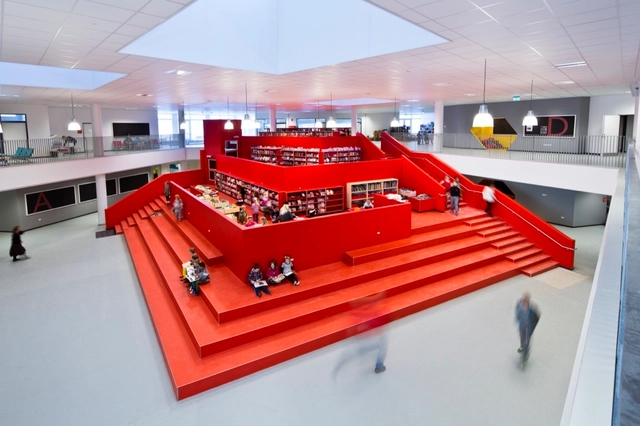
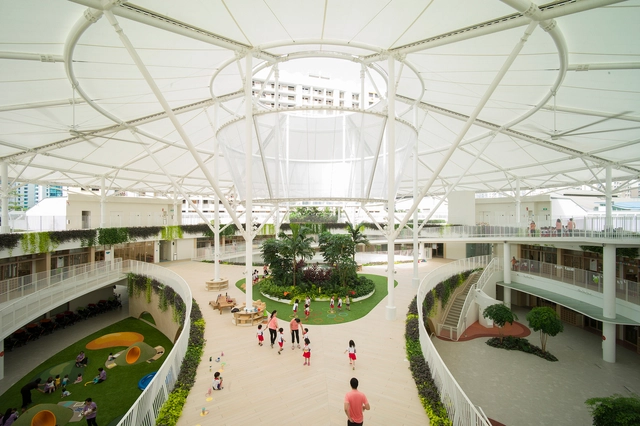
Designing School Playgrounds: Architecture for Learning Outside the Classroom

The most important part of children's education happens in the playground, instead of in the classroom. Despite this, many times we find huge empty school playgrounds.

Due to its importance and meaning, many schools and educational institutions have broken traditional paradigms and have opted to explore new possibilities. We have selected innovative examples, in which, through the use of specially designed equipment, strident colors and a variety of textures, they allow recreation areas to promote exchange, learning, and discovery.


Designing School Playgrounds: Architecture for Learning Outside the Classroom - Image 1 of 4Designing School Playgrounds: Architecture for Learning Outside the Classroom - Image 2 of 4Designing School Playgrounds: Architecture for Learning Outside the Classroom - Image 3 of 4Designing School Playgrounds: Architecture for Learning Outside the Classroom - Image 4 of 4Designing School Playgrounds: Architecture for Learning Outside the Classroom - More Images+ 14