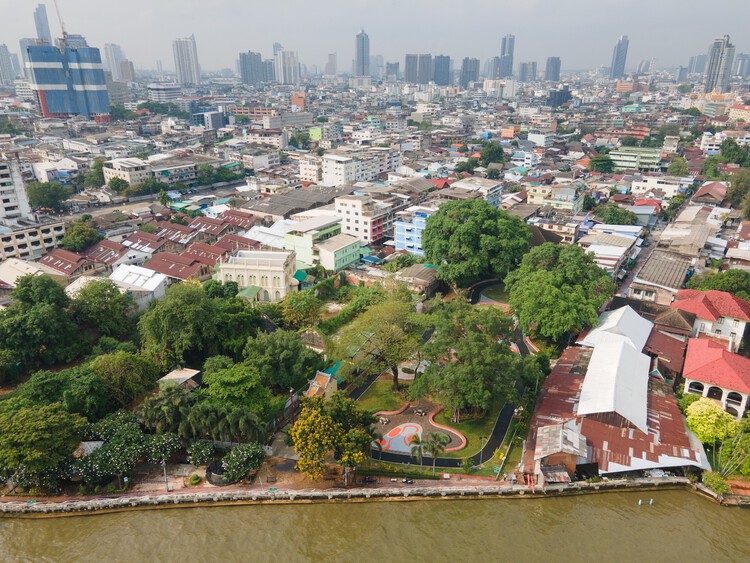
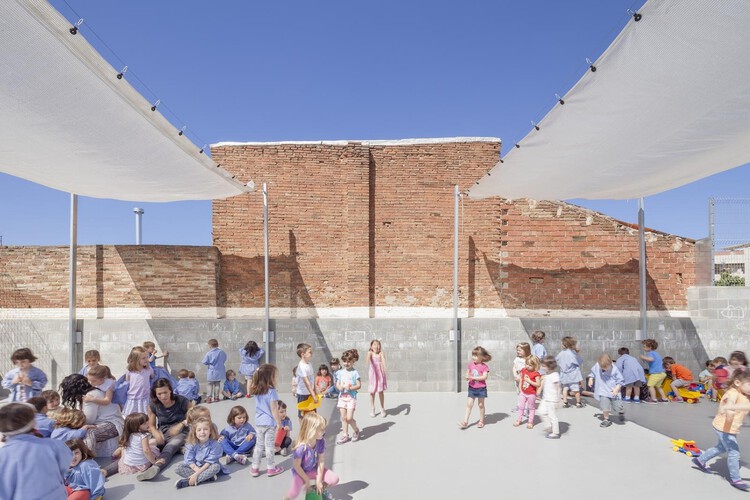
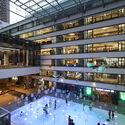
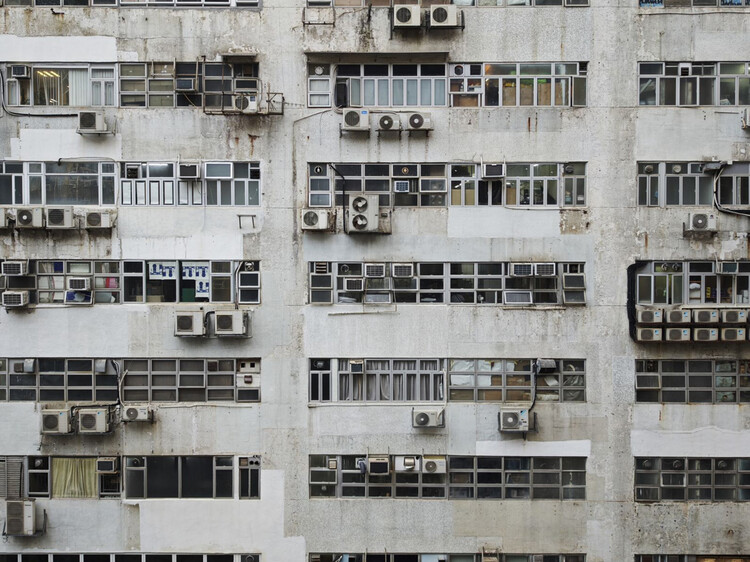
"By 2050, almost every child in the world — nearly 2.2 billion children — will be exposed to frequent heat waves." UNICEF's warning is often read as a public health forecast, but it is also a challenge to architecture and the way cities are built. As extreme heat intensifies across Asia, Europe, and beyond, thermal comfort should not be reduced to merely an indoor service delivered by machines. Air-conditioning has become a life-support system for many cities, especially in dense, humid, and rapidly urbanizing regions. Yet to rely on it as the default answer is to treat heat as something that can simply be moved elsewhere (and in the process generating extra heat) — expelled from interiors into streets, service alleys, energy grids, and the atmosphere. Its expansion increases energy demand, produces waste heat, and reinforces unequal access to comfort.
Heat, however, does not stop at the human body. It reorganizes the wider urban ecosystem: trees struggle with compacted soil and radiant paving; birds and insects lose habitat when planting is reduced to decorative greenery; aquatic systems warm, microbial life shifts, and materials absorb and release heat long after the sun has set. Heat is not simply a climatic problem to be escaped indoors. It is an urban actor that reshapes public space, labor, mobility, planting, material choices, and the fragile relationships between human and nonhuman life.
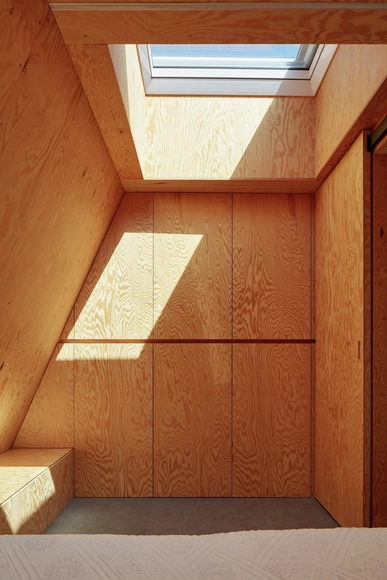
Sunlight House / HEIN-TROY Architects. Image Courtesy of VELUX
Can architecture shape comfort before mechanical systems enter the equation? As buildings account for nearly 40% of global energy consumption and people spend close to 90% of their time indoors, thermal performance has become one of architecture's most urgent concerns. Yet despite often being associated with insulation values, energy ratings, or mechanical systems, thermal performance begins with spatial decisions made long before technical equipment is introduced. Orientation, airflow, daylight, and the placement of openings all influence how a building absorbs, retains, and releases heat throughout the day.
Thermal performance is not only about reducing energy demand but also about maintaining comfortable indoor conditions in response to climate. Closely tied to thermal comfort—the way occupants experience temperature, airflow, humidity, and radiant heat—it influences health, well-being, and productivity as much as it does operational efficiency. Research suggests that healthy indoor environments can improve learning ability and productivity by up to 15%, reinforcing the growing relationship among environmental performance, resilience, and space quality.
Barcelona House - Strom Architects - Sliding - Helena Lee Photography
Throughout much of history, weight has been closely associated with the very idea of architecture. Vitruvius, whose notion of firmitas linked construction to stability and permanence, understood solidity as one of its fundamental qualities, and building largely meant resisting the effects of time, gravity, and natural forces. In Greek and Roman architecture, monumentality depended on the available construction systems and materials, such as stone and solid masonry, whose expression was defined by mass, thickness, and structural repetition. Columns, walls, and podiums, beyond supporting buildings, asserted their presence in the territory, communicating order, durability, and power. Architecture met the ground with weight.
Offsite construction dramatically reduces construction waste and ensures precision assembly, but long-term sustainability relies on the durability of the factory-applied building envelope.. Image Courtesy of Terraco
The global offsite construction market—encompassing modular, precast concrete, and hybrid prefabricated systems—was valued at USD 172 billion in 2024 and is projected to reach USD 225.7 billion by 2030 (CAGR 4.9–8%). In the UAE, government targets call for 25–30% offsite content in public projects by 2030; the UK currently leads globally, with 15–20% of housing using offsite solutions. Offsite manufacturing is increasingly promoted as the sustainable future of construction, with benefits including reduced waste, accelerated delivery, and improved quality control. Sustainability is not defined by how quickly a building is assembled. It is defined by how long it performs.
Establishing thermal comfort once demanded a far more deliberate and calibrated architectural intelligence—an interplay of orientation, massing, material behavior, ventilation potential, shading, and the ways daylight and surfaces absorb and release heat. This was not simply a matter of taste, but of necessity. When many of Hong Kong's post-war modernist buildings were constructed in the late 1960s and 1970s, forming a substantial portion of the city's public housing and broader residential stock, air-conditioning was not yet a ubiquitous, default service. Cooling, where present at all, was limited and unevenly distributed; comfort had to be negotiated through passive means, through section, façade depth, operable openings, and climatic detailing. It was only later, particularly through the 1970s and 1980s, as air-conditioning became increasingly standardized across the region, that mechanical cooling began to displace this earlier matrix of architectural decision-making.
Did air conditioning negatively affect architectural space, particularly in Hong Kong and the nearby region? The more precise claim is that widespread reliance on AC has profoundly rearranged the incentive structure of building design.
Beyond being a source of life, the power of the sun in architecture has long been tied to humanity's need to harness and control it as a vital resource. Since ancient times, solar energy has been used to measure time, support planting and harvesting, and provide protection from heat and cold. Today, solar radiation plays a significant role in global energy consumption. Architectural solutions based on materials, technologies, and environmental analysis are developed with an understanding of solar energy's capacity to transform the interior environment of buildings. But how can buildings be transformed into sources of clean energy?
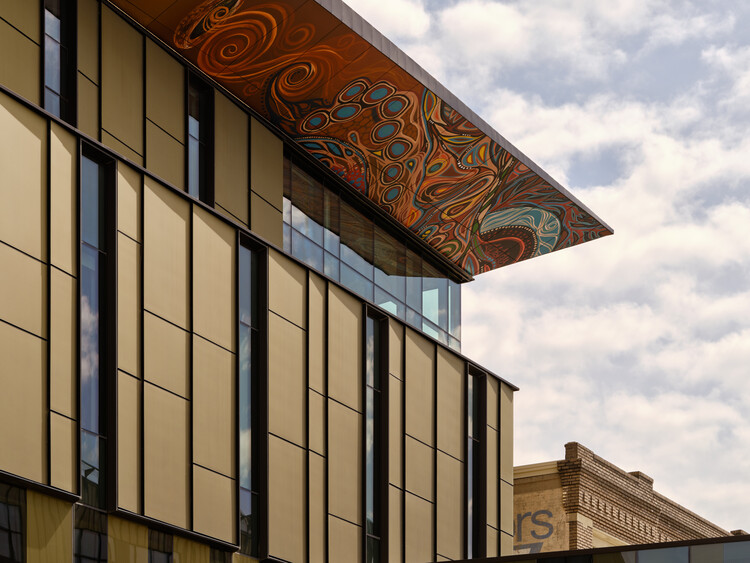
Courtesy of SolarLab, Photo by doublespacephoto.com. Image RRC Polytech Manitou a bi Bii daziigae / Diamond Schmitt Architects & Number TEN Architectural Group
As environmental accountability becomes embedded in design culture, the building envelope is being reconsidered not just as a protective skin, but as an active energy-producing surface. Treating solar technology as a material rather than an attachment reshapes how architecture is conceived and detailed. Color, texture, rhythm, and assembly become inseparable from performance. Building-Integrated Photovoltaics (BIPV) operate within this expanded definition of materiality. By integrating solar technology into façades and rainscreens from the earliest project stages, architects can reduce redundancy, align energy goals with design intent, and rethink how envelopes are composed. Yet translating this ambition into buildable systems requires technical precision and construction intelligence.
Modern residential construction in the UAE demonstrates the need for advanced thermal envelope solutions in hot, arid climates where cooling can account for up to 70% of peak electricity consumption. Image Courtesy of Terraco
Terraco, a global leader in Exterior Insulation Finishing Systems, has demonstrated through independent studies that when planning building renovations, it is essential to adopt a deep retrofit strategy that includes energy-efficient measures, such as thermal insulation of external walls and roofs.
The studies show that cooling energy use in buildings can be reduced by up to 47% annually in Middle Eastern and South Asian climates, directly as a result of installing the combined Terraco EIFS and Roof Insulation Finishing Systems, compared to leaving external walls and roofs uninsulated.
Cities bring together the best and worst of the human condition. They concentrate opportunities for work, social networks, and cultural production, but they also expose deep social inequalities. Among the many forms of urban exclusion are limited access to transportation, housing, leisure, or safety issues. One form that is rarely discussed is thermal inequality. In lower-income neighborhoods, where there are fewer trees, parks, and permeable surfaces, heat accumulates and thermal discomfort dominates, resulting in higher energy consumption and health risks. As concern about the climate crisis grows, this discussion becomes more urgent: extreme heat is no longer just a climatic phenomenon but also a spatial expression of inequality.
It's no exaggeration to say that Renzo Piano is one of the most unanimously respected architects in the world of architecture. With an oeuvre that blends respect for context, lightness and technology to create environmentally conscious and aesthetically pleasing structures, his approach combines advanced materials with traditional techniques. In projects of various scales, the Genoese architect maintains an essential thread: the implementation of passive architectural strategies, highlighting the importance of these methods for sustainability and energy efficiency. This is often made explicit in his sketches, as an initial concern, and clearly comes through in the finished works. Here are some examples of iconic projects developed by his office in recent decades.
Architecture goes beyond its fundamental function of defining spaces and providing protection; it shapes the user experience, influencing sensations of comfort, spaciousness, and well-being. Among the many elements that make up a building, openings play a crucial role in connecting the interior and exterior, balancing privacy with transparency, and allowing the entry of natural light and ventilation. In particular, natural light transforms environments, defines atmospheres, and enhances architectural details, making spaces more dynamic and inviting.
Series 8670 Casement Window. Image Courtesy of Western Window Systems
Windows have long held an ambivalent role in architecture, as they both define and enclose interiors while simultaneously creating a link to the outdoors. This dual function goes beyond simply meeting construction needs or providing daylight, directly influencing how occupants experience and engage with the views. The 20th century saw the introduction of materials such as steel, aluminum, and glass, which enabled different types of windows with thinner frames and expansive panes, enhancing transparency and reinforcing the visual connection with the surrounding setting.
American architects such as Frank Lloyd Wright and Philip Johnson explored these possibilities to harmonize architecture with landscape. In Fallingwater House, windows and terraces seamlessly connect the house to the waterfall and surrounding forest, whereas the Glass House's minimal framing nearly dissolves the boundary between interior and exterior, bringing the natural environment to life inside the house. Through its evolution, windows have become an element that unites space, materials, and perception, opening new pathways for exploring the relationship between architecture and its environment.
https://www.archdaily.com/1034016/framing-interiors-and-landscapes-in-aluminum-and-glass-to-master-the-viewEnrique Tovar
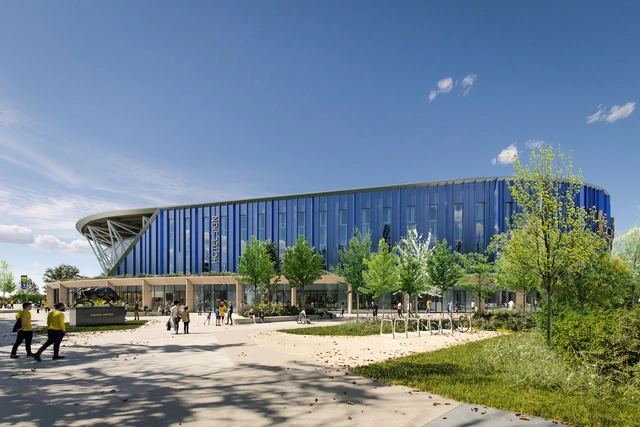
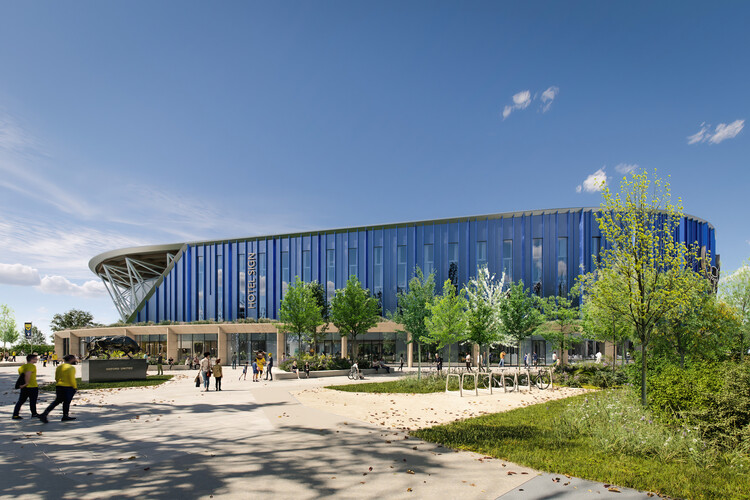
Oxford United Football Club's planning application for a new all-electric football stadium has been approved by Cherwell District Council. The scheme was developed by a team that includes AFL Architects, Mott Macdonald engineering services, Fabrik landscape design, and Ridge and Partners built environment consultants. Designed for a capacity of 16,000 spectators, the master plan also proposes a 1,000-person events space, a 180-bed hotel, a restaurant, a health and wellbeing centre, and a new public plaza with gardens.
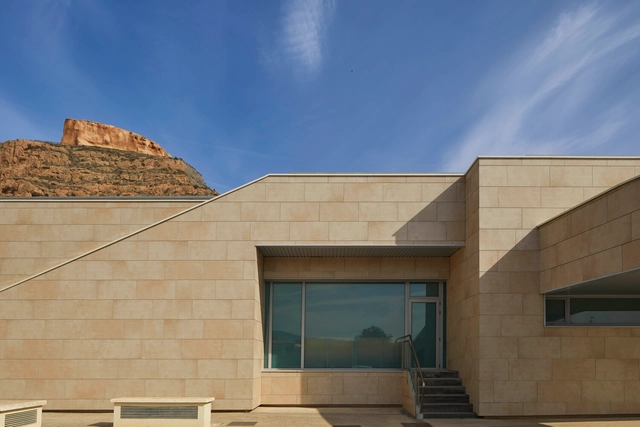
Renovation Project of Puerta de Arnedo Health Center (La Rioja). Photos: María Natali.
In modern architecture, materials must meet a range of functional, aesthetic, technical, and environmental demands. Gres Aragón offers ceramic tile solutions that respond to all aspects of a project—from façades and interiors to exteriors, pools, staircases, and industrial spaces—while maintaining a consistent design language.
With more than 80 years of experience and deep expertise in the extruded tile manufacturing process, Gres Aragón has established itself as a trusted partner for architects and interior designers. Its product offerings are based on four core principles: visual continuity, extreme durability, high-tech performance, and a strong commitment to sustainability.
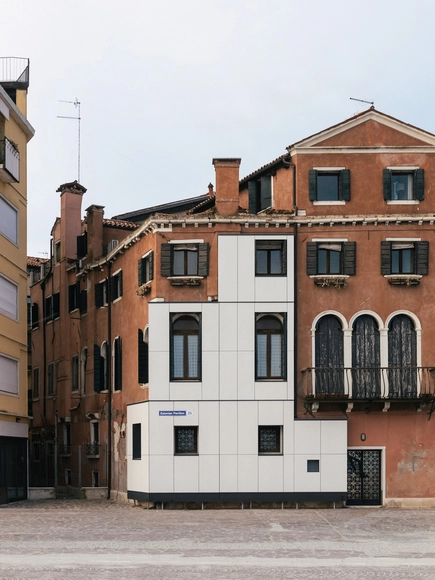
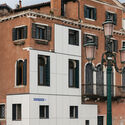
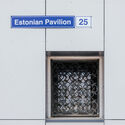
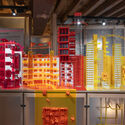
The installation and exhibition representing Estonia at the 19th International Architecture Exhibition of La Biennale di Venezia is curated by architects Keiti Lige, Elina Liiva, and Helena Männa. Titled Let Me Warm You, the national exhibition explores different dimensions of sustainability by questioning whether insulation-driven renovations in Estonia are simply compliance measures to meet European energy targets or whether they can also serve as opportunities to enhance the spatial and social quality of mass housing districts. To make this point, the Estonian installation covers the façade of a Venetian building with insulation panels, replicating how they are commonly installed in Estonia for mass housing renovations.
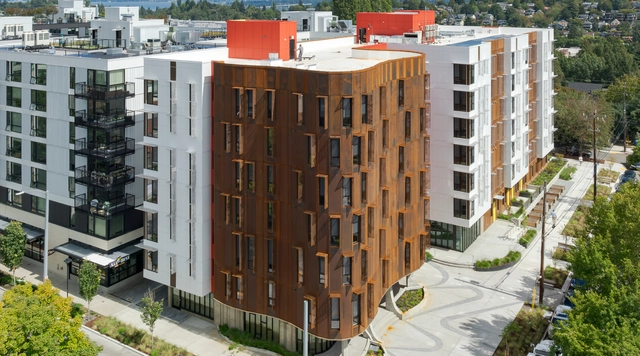
As urban neighborhoods continue to evolve, design plays a key role in shaping how buildings respond to urbanization, functional demands, and the character of their surroundings. Intertwined, these elements guide the transformation of urban life and influence how new developments engage with their context—a dynamic clearly visible in Seattle's Central District. Long considered a historic hub for the city's African American community, the Africatown Plaza project proposes a comprehensive approach that integrates architectural performance with community resonance, using the building envelope as a primary medium.
https://www.archdaily.com/1030331/metal-facade-systems-with-community-resonance-the-case-of-africatown-plazaEnrique Tovar