1. ArchDaily
  2. Facade Elements

Facade Elements: The Latest Architecture and News

Designing for Coexistence: The Invisible City of Bees

Subscriber Access | 

In the first days after birth, the bee remains inside the nest, cleaning cells and being fed by other workers. Over time, it begins organizing pollen stores, regulating the hive's temperature, and guarding the entrance. Only in the final weeks of its life does it leave the shelter to fly. It is in the moment of flight that its trajectory begins to intersect with architecture and the city. In search of nectar, it moves across a territory shaped not only by its spatial memory and the availability of flowers, but by the way we construct the built environment. Each movement becomes a negotiation with urban space: impermeable surfaces that disrupt natural cycles, air currents intensified between buildings, vegetation-free voids, scattered green fragments between lots, and technical rooftops.
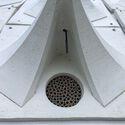
Designing for Coexistence: The Invisible City of Bees - Image 1 of 4Designing for Coexistence: The Invisible City of Bees - Image 2 of 4Designing for Coexistence: The Invisible City of Bees - Image 3 of 4Designing for Coexistence: The Invisible City of Bees - Image 4 of 4Designing for Coexistence: The Invisible City of Bees - More Images+ 11

Line Up for Concrete Curves: Curvilinear Facades Doing the Trick

 | Sponsored Content

Contemporary architecture evolves in tandem with the materials and construction techniques available in each region. In addition to the architectural trends of the moment or historical ideas that may inspire creativity, understanding how materials are used, cared for, and maintained, as well as their technical and aesthetic properties, is crucial to the concepts envisioned by many architects. Each material carries its own inherent logic. In fact, architect Louis Kahn suggested that the way materials interact can lead to unavoidable combinations of structure, walls, and assembly in buildings. Rieder products exemplify this by offering modular, flexible solutions that help buildings seamlessly adapt to urban environments, enhancing both interior and exterior spaces while maintaining cost-effectiveness.

Prefabrication and Formal Boldness in Belgian Modernism: The Story of the CBR and LH 187 Buildings in Brussels

Subscriber Access | 

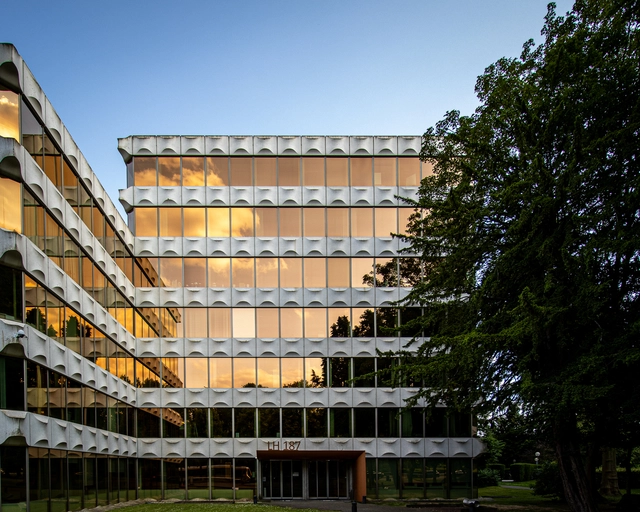
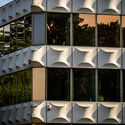
Between 1960 and 1976, Belgium's capital became a center for architectural experimentation, blending modernist ideals with prefabrication. This period led to the creation of two iconic buildings: the CBR Office Building (1967-1970) and LH 187 (1976), designed by Constantin Brodzki and Marcel Lambrichs. Located side by side, these buildings share a striking architectural style. Both feature facades made from large prefabricated concrete modules, showcasing the brutalist aesthetic and a dedication to using industrial materials and innovative construction techniques for their time.

Prefabrication and Formal Boldness in Belgian Modernism: The Story of the CBR and LH 187 Buildings in Brussels - Image 1 of 4Prefabrication and Formal Boldness in Belgian Modernism: The Story of the CBR and LH 187 Buildings in Brussels - Image 2 of 4Prefabrication and Formal Boldness in Belgian Modernism: The Story of the CBR and LH 187 Buildings in Brussels - Image 3 of 4Prefabrication and Formal Boldness in Belgian Modernism: The Story of the CBR and LH 187 Buildings in Brussels - Image 4 of 4Prefabrication and Formal Boldness in Belgian Modernism: The Story of the CBR and LH 187 Buildings in Brussels - More Images+ 20

Balancing Function and Aesthetics: Incorporating Natural Light and Ventilation in Facades

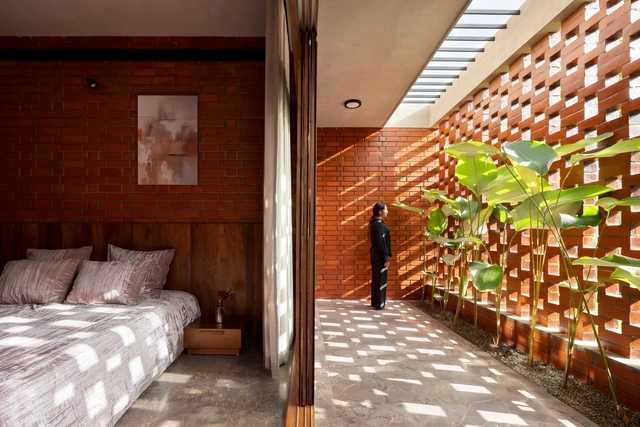
Environmental comfort is one of the aspects that contribute to the good performance of architecture. In project descriptions, the incidence of natural lighting and ventilation is often highlighted as advantageous characteristics that add to the aesthetics and functioning of the program. In a way, environmental comfort is part of the building's function, not necessarily linked to the activities that take place inside the construction but plays a role in its development.

Balancing Function and Aesthetics: Incorporating Natural Light and Ventilation in Facades - Image 1 of 4Balancing Function and Aesthetics: Incorporating Natural Light and Ventilation in Facades - Image 2 of 4Balancing Function and Aesthetics: Incorporating Natural Light and Ventilation in Facades - Image 3 of 4Balancing Function and Aesthetics: Incorporating Natural Light and Ventilation in Facades - Image 4 of 4Balancing Function and Aesthetics: Incorporating Natural Light and Ventilation in Facades - More Images+ 10