1. ArchDaily
  2. Farm

Farm: The Latest Architecture and News

Designing for Horses: 8 Projects Shaping Space for Equine Life

Subscriber Access | 

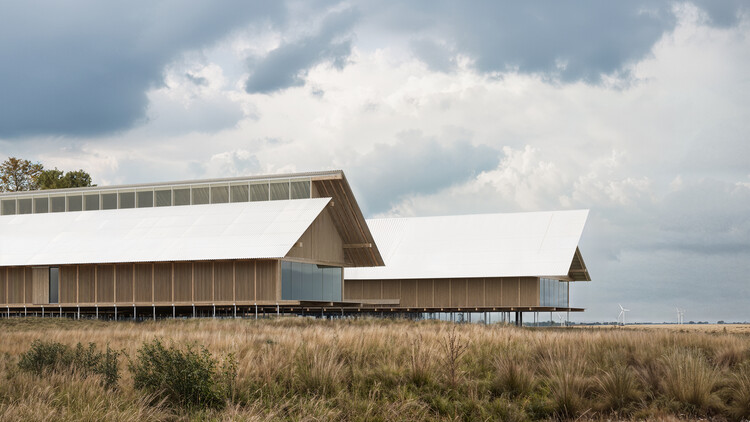
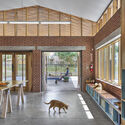
Few commissions allow architects to focus on non-human users, and fewer still involve horses. While domestic pets like cats and dogs are common muses, the particular needs of horses present a unique challenge when designing stables. Since the horses, who are the stable's primary inhabitants, cannot articulate their needs, design relies on the rigorous requirements dictated by human caretakers, requiring a balance between streamlined human operations and maximized horse comfort and safety. Architects often seem to address this through three core principles: Equine Comfort & Well-being, Contextual Materiality, and Operational Efficiency. Thus, the resulting layouts are characterized by rigorous zoning that clearly separates the programs into residential (stalls), service (tack, storage, wash, feed), and training spaces (arenas, walkers). The designs also address visual well-being: Horses are social animals, so they strategically position stables to promote sightlines between animals and to the exterior, often employing louvered or open-frame systems. Furthermore, lighting is kept diffuse using materials such as translucent panels to prevent sharp, stress-inducing shadows in arenas. Similarly, circulation paths are designed for the safe, efficient movement of both people and animals.

Designing for Horses: 8 Projects Shaping Space for Equine Life - Image 1 of 4Designing for Horses: 8 Projects Shaping Space for Equine Life - Image 2 of 4Designing for Horses: 8 Projects Shaping Space for Equine Life - Image 3 of 4Designing for Horses: 8 Projects Shaping Space for Equine Life - Image 4 of 4Designing for Horses: 8 Projects Shaping Space for Equine Life - More Images+ 4

From Coast to Countryside: 15 Rural Hotels in Portugal

Subscriber Access | 

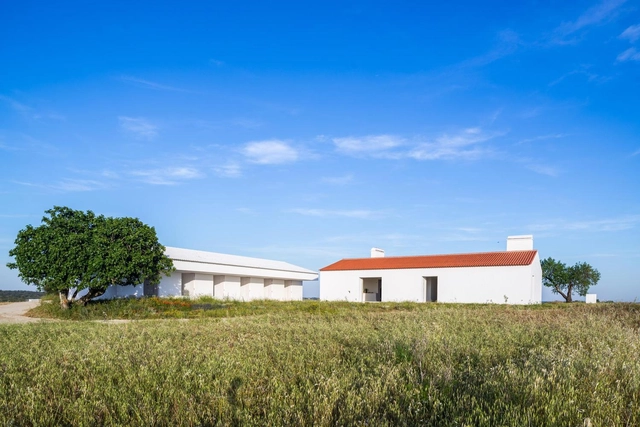
Tourism in Portugal began to develop in the late 1950s, initially centered on key destinations such as the Algarve coast, Lisbon, and the religious hub of Fátima. This focus made tourism largely a coastal activity. However, rapid growth and overburdened infrastructure in these areas led to saturation and a crisis in the sector. To address this, efforts were made to promote alternative destinations, appealing to a new wave of tourists looking for more sustainable, authentic, and locally immersive experiences.

From Coast to Countryside: 15 Rural Hotels in Portugal - Image 1 of 4From Coast to Countryside: 15 Rural Hotels in Portugal - Image 2 of 4From Coast to Countryside: 15 Rural Hotels in Portugal - Image 3 of 4From Coast to Countryside: 15 Rural Hotels in Portugal - Image 4 of 4From Coast to Countryside: 15 Rural Hotels in Portugal - More Images+ 20

Cobe Unveils Design for Museum Wegner in Tønder, Denmark

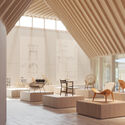
Cobe has revealed the design for Museum Wegner in Tønder, Denmark, a new cultural institution dedicated to the life and work of renowned Danish designer Hans J. Wegner. The museum will be located at Hestholm, a historic farm dating back to 1445, and will combine the adaptive reuse of existing structures with a contemporary extension. Selected as the project architect in February 2024 following a competitive interview process, Cobe is now moving the design toward realization with strong local and national support.

Cobe Unveils Design for Museum Wegner in Tønder, Denmark - Image 1 of 4Cobe Unveils Design for Museum Wegner in Tønder, Denmark - Image 2 of 4Cobe Unveils Design for Museum Wegner in Tønder, Denmark - Image 3 of 4Cobe Unveils Design for Museum Wegner in Tønder, Denmark - Image 4 of 4Cobe Unveils Design for Museum Wegner in Tønder, Denmark - More Images+ 2

The Continuous Project: A Case of Iterative Placemaking in Long You, China

The architect's role has traditionally been relatively well-defined: design a building, direct the project, coordinate logistics, and guide construction through to completion. As specialised fields have proliferated, together with a rapidly changing social economy, the practice of architecture has diversified, opening multiple paths for how architects can contribute to society.

Since the 1980s, one of the most consistent shifts may have been the separation between the "design architect" and the "architect of record." Where a single office once carried a project from concept to completion, internationalisation—alongside cross-border work, licensure regimes, procurement models, and liability structures—has encouraged a split. Design teams increasingly set the conceptual and schematic direction, then hand over the design development to local record architects for technical detailing, approvals, and site execution. The model has clear advantages—sharper expertise, efficiency, and often profitability (or services offered at reduced fees)—but it also segments the profession and can distance authorship from delivery.

What, then, might the next shift be, and what new synergies could redefine the architect's role? How should architects adapt to the changing professional climate? One promising trajectory is a turn from singular, permanent objects toward ongoing placemaking—iterative, context-specific programmes that prototype, test, and refine spatial ideas in public. Rather than producing one large, iconic work that fixes a site for decades, this model privileges cycles of making, use, evaluation, and adjustment at the community scale.

The Continuous Project: A Case of Iterative Placemaking in Long You, China - Image 1 of 4The Continuous Project: A Case of Iterative Placemaking in Long You, China - Image 2 of 4The Continuous Project: A Case of Iterative Placemaking in Long You, China - Image 3 of 4The Continuous Project: A Case of Iterative Placemaking in Long You, China - Image 4 of 4The Continuous Project: A Case of Iterative Placemaking in Long You, China - More Images+ 24

Cultivating Spaces: Where Architecture Meets the Farm-to-Table Movement

Subscriber Access | 

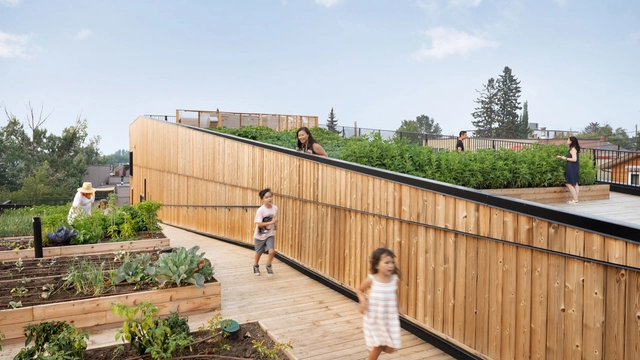
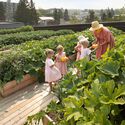
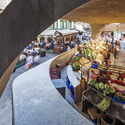
The farm-to-table movement represents a profound shift in how food is grown, distributed, and consumed. Rooted in sustainability and the support of local economies, it prioritizes fresh, locally sourced ingredients and fosters direct relationships between producers and consumers. While the concept focuses on food, the spaces where these connections occur are equally important in shaping the experience, highlighting the critical role of architecture.

Cultivating Spaces: Where Architecture Meets the Farm-to-Table Movement - Image 1 of 4Cultivating Spaces: Where Architecture Meets the Farm-to-Table Movement - Image 5 of 4Cultivating Spaces: Where Architecture Meets the Farm-to-Table Movement - Image 2 of 4Cultivating Spaces: Where Architecture Meets the Farm-to-Table Movement - Image 3 of 4Cultivating Spaces: Where Architecture Meets the Farm-to-Table Movement - More Images+ 60

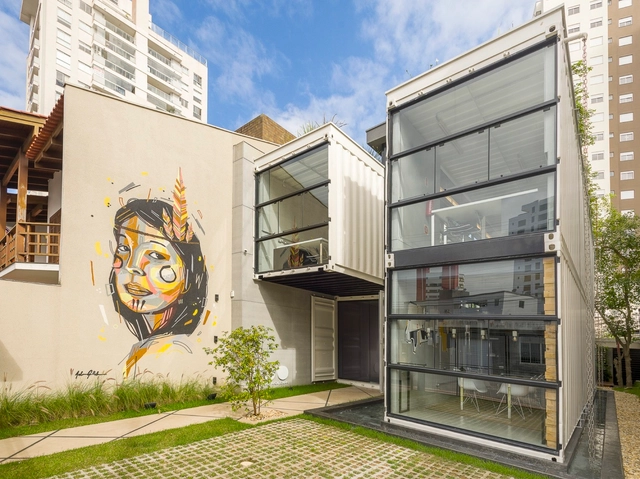
Container / Rodrigo Kirck Arquitetura

Container / Rodrigo Kirck Arquitetura - Office BuildingsContainer / Rodrigo Kirck Arquitetura - Office BuildingsContainer / Rodrigo Kirck Arquitetura - Office BuildingsContainer / Rodrigo Kirck Arquitetura - Office BuildingsContainer / Rodrigo Kirck Arquitetura - More Images+ 17

  • Area Area of this architecture project Area:  135
  • Year Completion year of this architecture project Year:  2016
  • Manufacturers Brands with products used in this architecture project
    Manufacturers:  Hunter Douglas, Mosarte, Portobello, Todeschini, Tramontina