1. ArchDaily
  2. Fish Farm

Fish Farm: The Latest Architecture and News

From Cloud to Coast: The Physical Cost of AI in Hong Kong’s Borderlands

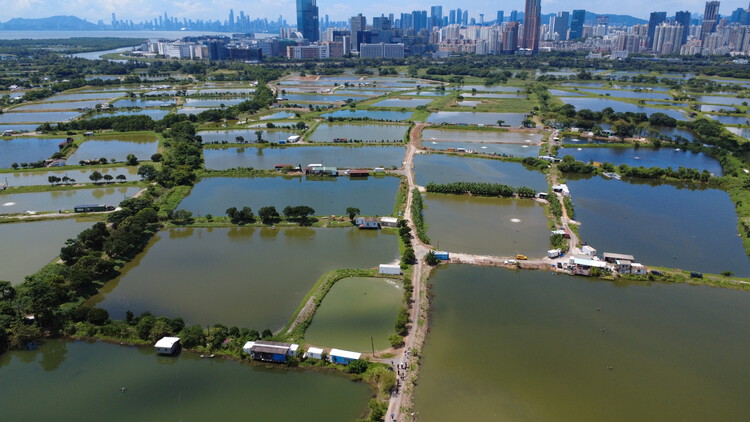
Amid the rapid build-out of data centres and AI economies across the Greater Bay Area—and alongside the celebration of AI as a tool and "author," as featured in 2025 Hong Kong–Shenzhen Bi-City Biennale of Urbanism\Architecture (Hong Kong)—a parallel question becomes unavoidable: how do the planning and construction of AI infrastructure actually begin to shape everyday life? Many of the facilities already built remain intentionally distant from daily experience. The "cloud" may be marketed as immaterial, but its architecture is profoundly physical: high-power, high-heat, service-heavy environments that are often sited in remote or low-density areas to take advantage of lower land costs and to minimize friction with nearby communities. Security and risk management further reinforce this logic. Data centres hold sensitive, privileged information—corporate assets, legal records, government and institutional data—and remoteness becomes part of their operating model, keeping the infrastructures of AI both spatially and socially out of sight.
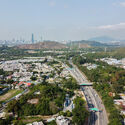
From Cloud to Coast: The Physical Cost of AI in Hong Kong’s Borderlands - Image 2 of 4From Cloud to Coast: The Physical Cost of AI in Hong Kong’s Borderlands - Image 6 of 4From Cloud to Coast: The Physical Cost of AI in Hong Kong’s Borderlands - Image 3 of 4From Cloud to Coast: The Physical Cost of AI in Hong Kong’s Borderlands - Image 4 of 4From Cloud to Coast: The Physical Cost of AI in Hong Kong’s Borderlands - More Images+ 7

These Floating Farms Could Be Key to Feeding Future Populations

Subscriber Access | 

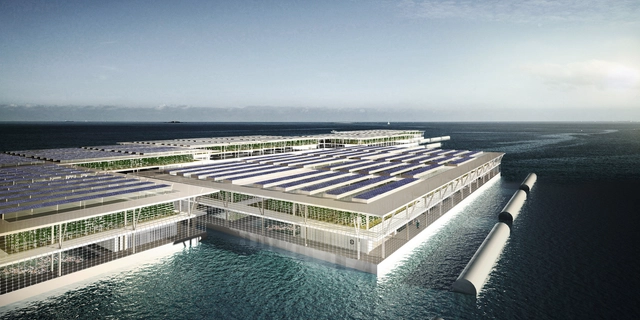
Tap a button on your phone and hop into the shower; walk downstairs 15 minutes later, and you have a fresh pot of coffee waiting for you. That’s a ritual that is no longer just a fantasy for many people. The rise of the internet of things has allowed us to control remote appliances with just a tap of the touchscreen. Until now, the scale of these processes has largely been limited to personal devices: anything from brewing a pot of coffee to warming up your car on a frosty morning. But what if we could grow food for thousands of people, with that same tap of a button? That is the goal of Forward Thinking Architecture’s “Smart Floating Farms” project.

These Floating Farms Could Be Key to Feeding Future Populations - Image 1 of 4These Floating Farms Could Be Key to Feeding Future Populations - Image 2 of 4These Floating Farms Could Be Key to Feeding Future Populations - Image 3 of 4These Floating Farms Could Be Key to Feeding Future Populations - Image 4 of 4These Floating Farms Could Be Key to Feeding Future Populations - More Images+ 2