1. ArchDaily
  2. Foundation Le Corbusier

Foundation Le Corbusier: The Latest Architecture and News

Preserving a Legacy: The Role of Foundations and Architectural Archives Today

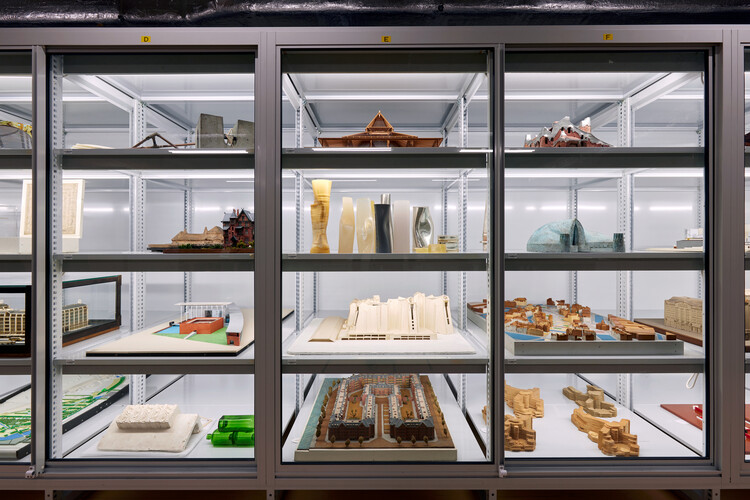
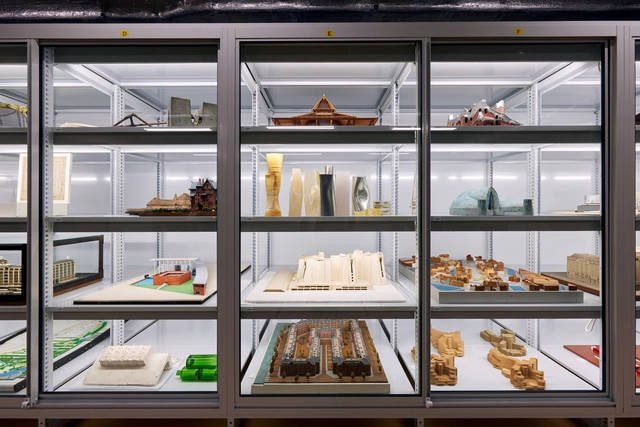
From projects, ideas, drawings, and sketches to photographs, models, material samples, and other documentation, these records embody years and memories of professional work responding to different needs, contexts, and purposes. Understanding that the architectural archive can serve as an effective method to inform and expand our understanding of collective intelligence, several foundations and architectural archives today take on multiple functions, extending their boundaries toward new horizons. Beyond preserving legacies and presenting them, they demonstrate the importance of promoting forward-looking cultural, social, and educational programs that engage younger generations in contemporary issues.

Preserving a Legacy: The Role of Foundations and Architectural Archives Today - Image 1 of 4Preserving a Legacy: The Role of Foundations and Architectural Archives Today - Image 2 of 4Preserving a Legacy: The Role of Foundations and Architectural Archives Today - Image 3 of 4Preserving a Legacy: The Role of Foundations and Architectural Archives Today - Image 4 of 4Preserving a Legacy: The Role of Foundations and Architectural Archives Today - More Images+ 5

Le Corbusier and Brazilian Modernism: ABERTO4 Exhibition Opens at Maison La Roche in Paris

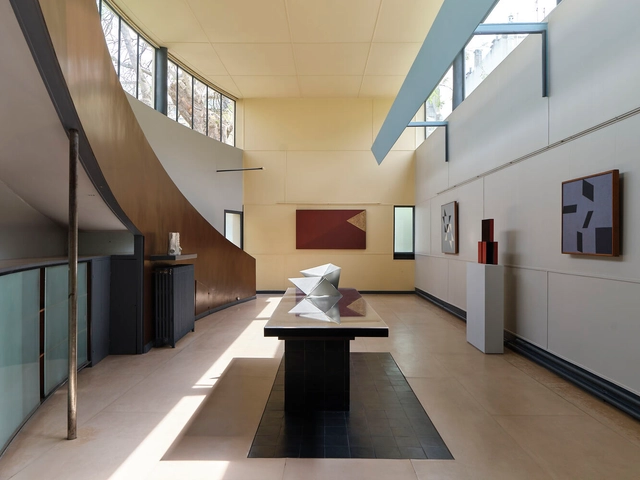
Founded in 2022 by art advisor Filipe Assis, ABERTO is an exhibition platform celebrating the convergence of art, design, and architecture in Brazil and beyond. Staging exhibitions in private and public modernist spaces, its past editions have highlighted the global connections forged by Brazilians from the 20th century onwards. Following three exhibitions in São Paulo, "ABERTO 4 – Brazil After Le Corbusier" marks its first international edition, taking place at Le Corbusier's Maison La Roche in Paris, from 14 May to 8 June 2025. The exhibition presents around 35 design and art pieces by Brazilian artists, spotlighting Le Corbusier's seminal connection to Brazilian modernist architecture and exploring his influence on contemporary Brazilian creatives. Previous editions of ABERTO have featured over 100 artists from Brazil and abroad in houses designed by Oscar Niemeyer (2022), Vilanova Artigas (2023), and Ruy Ohtake and Chu Ming Silveira (2024).

Le Corbusier and Brazilian Modernism: ABERTO4 Exhibition Opens at Maison La Roche in Paris - Image 1 of 4Le Corbusier and Brazilian Modernism: ABERTO4 Exhibition Opens at Maison La Roche in Paris - Image 2 of 4Le Corbusier and Brazilian Modernism: ABERTO4 Exhibition Opens at Maison La Roche in Paris - Image 3 of 4Le Corbusier and Brazilian Modernism: ABERTO4 Exhibition Opens at Maison La Roche in Paris - Image 4 of 4Le Corbusier and Brazilian Modernism: ABERTO4 Exhibition Opens at Maison La Roche in Paris - More Images+ 44

Maison Guiette: Le Corbusier’s Modernist Outpost in Antwerp, Belgium

Subscriber Access | 

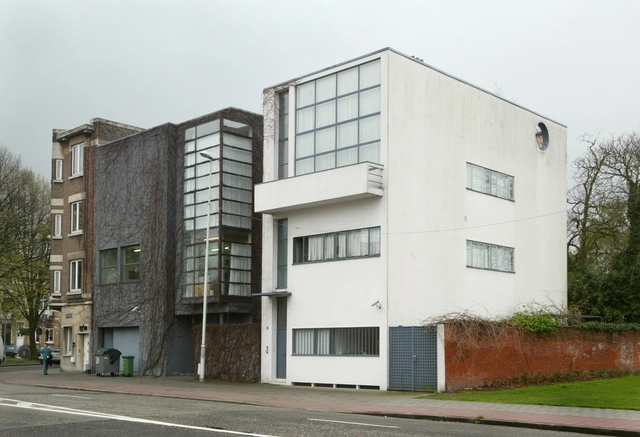
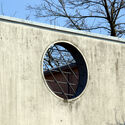
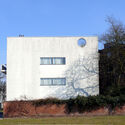
Amidst the traditional streets of Antwerp, where centuries-old townhouses stand as remnants of a historic European city, a stark white volume quietly asserts its presence. Maison Guiette, designed by Le Corbusier in 1926, is an anomaly in its surroundings — a bold statement of modernity in a context that had not yet embraced it.

While today it is overshadowed by the architect's more famous works, this house holds a unique place in history: it was Le Corbusier's first built project outside France, a precursor to his later architectural experiments, and a manifestation of his emerging Modernist principles. Despite its modest scale, it was a manifesto in built form — a house that encapsulated the essence of an architectural revolution.

Maison Guiette: Le Corbusier’s Modernist Outpost in Antwerp, Belgium - Image 1 of 4Maison Guiette: Le Corbusier’s Modernist Outpost in Antwerp, Belgium - Image 2 of 4Maison Guiette: Le Corbusier’s Modernist Outpost in Antwerp, Belgium - Image 6 of 4Maison Guiette: Le Corbusier’s Modernist Outpost in Antwerp, Belgium - Image 7 of 4Maison Guiette: Le Corbusier’s Modernist Outpost in Antwerp, Belgium - More Images+ 7

Paris 20th-Century Architecture City Guide: From Le Corbusier’s Modern Villas to Brutalist Estates

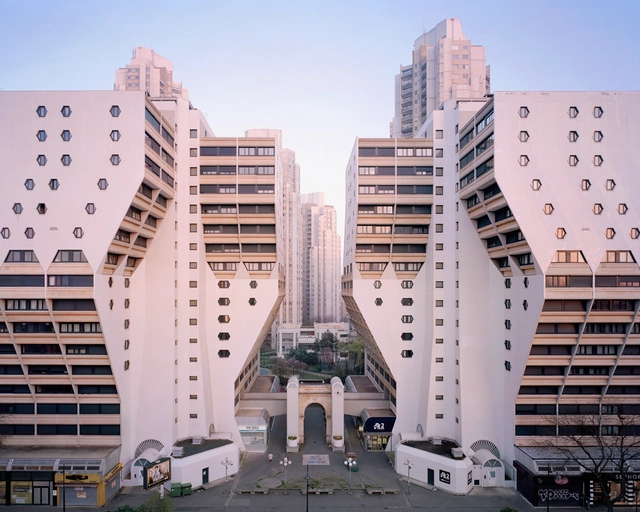
The 20th century saw a period of experimentation and innovation at an unprecedented pace, a direction that also marked the architectural expressions of the time. Paris, as one of Europe’s leading centers for artistic and cultural expression, was also the epicenter for the formation of new architectural styles, from Le Corbusier’s modern architecture revolution to expressions of the High-Tech style as seen in the design of Renzo Piano and Richard Rogers’ Centre Pompidou. The social transformation found its expression through Brutalist public institutions or residential ensembles, like the ones designed by Renée Gailhoustet and Jean Renaudie at Irvy-Sur-Seine, while political movements attracted architects from across the ocean, including Oscar Niemeyer, who created his first European building in the French capital.

Paris 20th-Century Architecture City Guide: From Le Corbusier’s Modern Villas to Brutalist Estates - Image 1 of 4Paris 20th-Century Architecture City Guide: From Le Corbusier’s Modern Villas to Brutalist Estates - Image 2 of 4Paris 20th-Century Architecture City Guide: From Le Corbusier’s Modern Villas to Brutalist Estates - Image 3 of 4Paris 20th-Century Architecture City Guide: From Le Corbusier’s Modern Villas to Brutalist Estates - Image 5 of 4Paris 20th-Century Architecture City Guide: From Le Corbusier’s Modern Villas to Brutalist Estates - More Images+ 19

The Almine Rech Gallery In New York Presents An Exhibition Of Tapestries Made By Le Corbusier

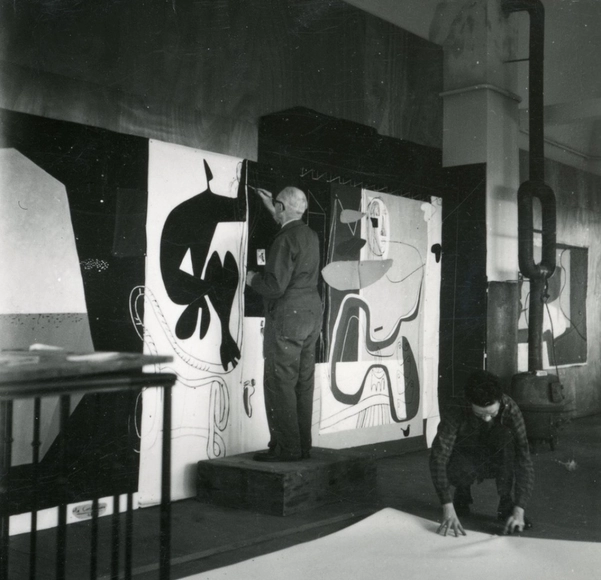
For sixty years, Le Corbusier used a wide variety of media to explore the themes and forms of his art, ranging from drawing to urbanism and including painting, architecture, and sculpture. He first discovered tapestry in 1936, in response to a request from Marie Cuttoli, who was then commissioning artworks woven in a factory in Aubusson from modern painters. However, it was twelve years later that he expressed his interest in producing woven artworks based on his drawings and found his way to this city in central France, where a true renaissance of tapestry had begun, at the initiative of Jean Lurçat and Jean Picart Le Doux.

Le Corbusier’s Restored Parisian Apartment Opened to the Public

The Fondation Le Corbusier has celebrated its 50th anniversary with the unveiling of a restored apartment originally designed by the famous architect. The studio apartment on Nungesser-et-Coli in Paris was designed by Le Corbusier in 1931 for his own habitation and was completed in 1934.

The apartment underwent two years of restoration following its listing as a classified world heritage site in 2016 and is now open to the public.

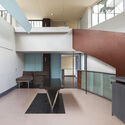
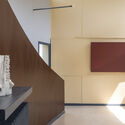
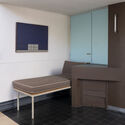
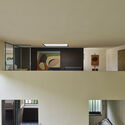
Le Corbusier’s Restored Parisian Apartment Opened to the Public - Image 1 of 4Le Corbusier’s Restored Parisian Apartment Opened to the Public - Image 2 of 4Le Corbusier’s Restored Parisian Apartment Opened to the Public - Image 3 of 4Le Corbusier’s Restored Parisian Apartment Opened to the Public - Image 4 of 4Le Corbusier’s Restored Parisian Apartment Opened to the Public - More Images

Apartment in Le Corbusier's Unité d'Habitation Renovated to Original Design by Philipp Mohr

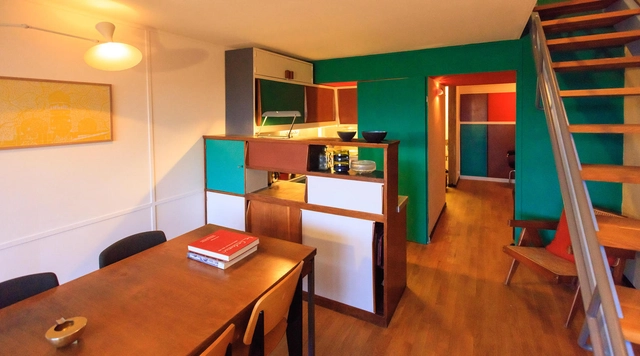
Architect Philipp Mohr has led the renovation of an apartment at Le Corbusier’s iconic Unite d’Habitation in Berlin, carried out to the architect’s original design. Over the course of two years, Mohr’s team engaged with archival research, antique shopping, and the surveying of the Unite d’Habitation Marseille in France.

Mohr purchased the apartment in 2016 and embarked on a journey of demolition, measurement, and extensive renovation including lowering ceilings and moving walls in order to recreate the interior likely envisioned by Le Corbusier.

Apartment in Le Corbusier's Unité d'Habitation Renovated to Original Design by Philipp Mohr - Image 1 of 4Apartment in Le Corbusier's Unité d'Habitation Renovated to Original Design by Philipp Mohr - Image 2 of 4Apartment in Le Corbusier's Unité d'Habitation Renovated to Original Design by Philipp Mohr - Image 3 of 4Apartment in Le Corbusier's Unité d'Habitation Renovated to Original Design by Philipp Mohr - Image 4 of 4Apartment in Le Corbusier's Unité d'Habitation Renovated to Original Design by Philipp Mohr - More Images+ 18

Getty Assembles Experts for Conservation of Le Corbusier's Only Three Museums

The Getty Conservation Institute has announced a workshop to address the care and conservation of three museums designed by Le Corbusier. The three museums are the only museums designed by the prolific architect. The workshop will be held in India, where two of the three museums are, with municipal corporations from Ahmedabad and Chandigarh serving as hosts for the event. The Foundation Le Corbusier, located in Paris, will also be assisting with the workshop.

Le Corbusier's Pavillon de l'Esprit Nouveau Named One of "20 Designs That Defined the Modern World"

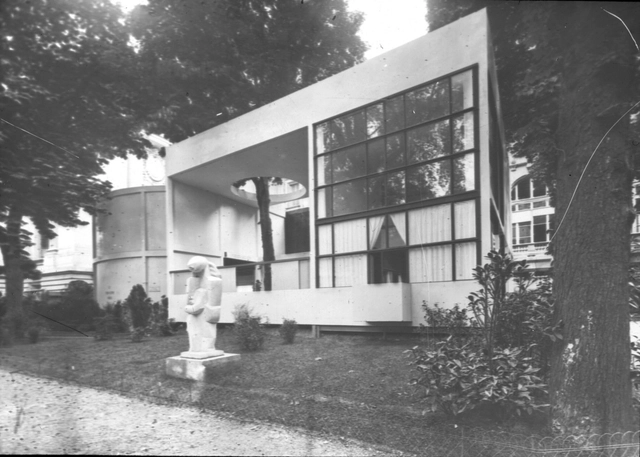
Creator of London’s Design Museum and columnist for CNN, Stephen Bayley named Le Corbusier’s Pavillon de l’Esprit Nouveau as one of, “20 designs that defined the modern world.” Before Bayley lays out the list, he gives a brief history and several definitions of design; culminating to his conclusion that design gives life meaning. Bayley writes, “Le Corbusier declared that design is ‘intelligence made visible’. That’s certainly true, but intelligence can take many forms…” [1]

Le Corbusier's Cité Radieuse Rooftop to Host Contemporary Art Center

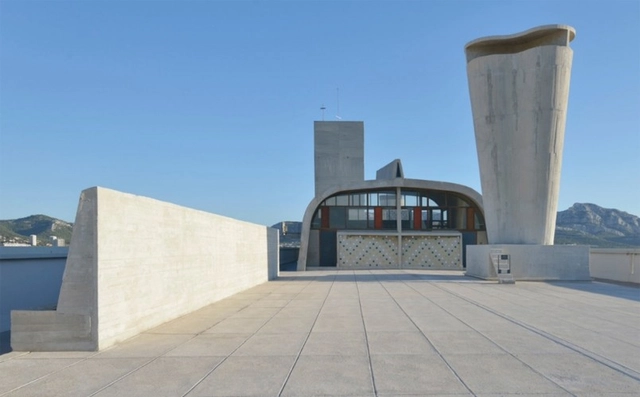
When the gym and solarium on the 20-century’s most famous rooftop terrace - elevated 18-stories above Le Corbusier’s Cité Radieuse - went up for sale in 2010, French designer Ito Morabito of Ora-ïto immediately jumped on the opportunity and purchased the space. With the support of the Foundation Le Corbusier, Ora-ïto initiated a campaign to restore the 1950‘s structure to its original state, by removing an addition that blocked the spaces 360-degree views of the city, and transform it into a contemporary art center, named the MAMO for “Marseille Modulor” - as a nod to New York’s MOMA.