The Architecture Film Festival London, in its 2021 edition, addresses a variety of topics related to contemporary architecture. In particular, the role of housing—from the history of housing estates to the current global housing crisis—is a prominent theme.
The Architecture Film Festival London, in its 2021 edition, addresses a variety of topics related to contemporary architecture. In particular, the role of housing—from the history of housing estates to the current global housing crisis. Thus, this critical topic will provide the basis for the festival’s opening film, PUSH (2019), directed by Fredrik Gertten.
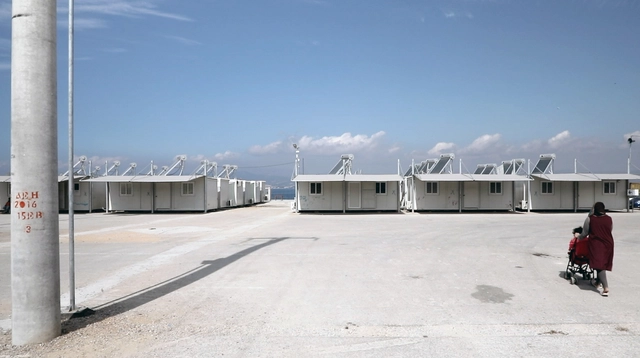
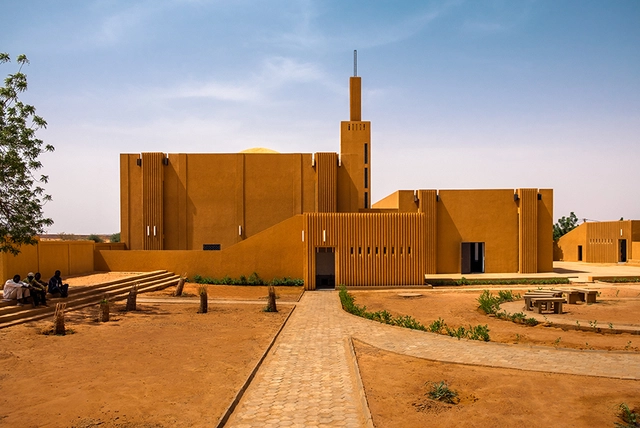
Though born in Tehran and remaining deeply inspired by her native Iran, architect Yasaman Esmaili has worked on projects all around the world. These primarily include humanitarian and crisis intervention works that deeply engage the local communities in which they are situated. A recent article by Metropolis Magazine discusses these projects in depth, as well as Esmaili’s story and inspirations.
https://www.archdaily.com/921281/yasaman-esmailis-architectural-work-engages-with-communities-around-the-worldLilly Cao
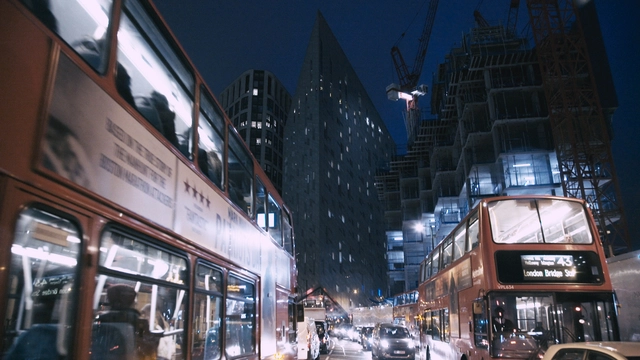
1. Abstract: Food is one of the most fundamental elements of human existence. Looking back, the way we produce, store and consume food has evolved greatly. Humans have thrived because our ancestors learnt how to gather, produce and consume food, all with their bare hands. And mankind has sustained due to these crucial elements of knowledge passed through generations. With industrialization came mass production, and with mass production came an influx of consumers - who started paying instead. Skills and crafts related to agriculture and food production are now mostly obsolete in the urbane environment. Mass consumerism through supermarkets and even online mediums is slowly changing how we perceive, acquire and consume food. This has raised issues like overconsumption, poor quality, high wastage and an over-dependence on manufacturing agencies. In the long run our perception of fresh foods/fruits will be completely eroded by advertisements and fancy packaging, which can have irreversible impacts on health, and hence, the human evolution cycle. The time to intervene is now. As a designer how can you bring farming to the cities where people can see, participate or celebrate cultivation - and understand what they eat, much better? Where not only awareness related to food is available, but as a community we become more responsible for our actions. How can you change the image of cities as the ones that only consume, to ones that contribute too? Or make farming so easy for people using technologies of today that makes it easy for people to grow it in their homes? Urban meal mine1(n), is a place where people can generate/learn/contribute to grow food for their city. This is usually located in the heart of the city where skilled labour + abundant transport + short distance logistics + faster production technologies can break even revenue over the high cost land it occupies. Learn more on http://unfuse.uni.xyz 2. Site: The site for this intervention is the New Covent Market located in the Nine Elms District, London opposite to historic Battersea power station. The site is close to the river Thames and is a part of Nine Elms regeneration plan. It consists of a 4 decade old market structure which houses a wide variety of wholeseller’s of foods, fruits, vegetables and flowers. The site is surrounded by residential and commercial developments of various scales, and is expected to invite people from around the city. It also has two brand new tube stations proposed in attempt to rejuvenate transport links to the Nine Elms district. 3. Eligibility The competition is open to all students and professionals (Worldwide). Minimum eligible age for participation is 18 years. This competition is open for both students and professionals. Team size is maximum of 4 members per team. All disciplines are eligible. Team: Teams with all student participants (with valid id’s required) will be categorized under student teams. Teams with even one professional participant will be categorized under professional team. 4. Submission A maximum 6 – A3 sheets in digital format (JPEG) (120ppi). Minimum requisites in the sheets (For a complete submission): Site plan (Compulsory), Key conceptual sections x 2 (Minimum), 3D views x 3 (Minimum / Should include 1 aerial view), Elevation x 1 Cover image of size 1500 x 600 px or larger in aspect ratio 1 : 2.5. Floor plans, images, sketches (if any) can be added to support the entry in the form of additional images. 5. Prizes A total of 4000$ worth rewards to be won. Winner: 1500$ in cash + Trophy + Certificate + Publication Runner up: 550$ in cash + Trophy + Certificate + Publication People's Choice (Students): 500$ - Trophy + Certificate + Publication People's Choice (Professionals): 500$ - Trophy + Certificate + Publication Honorable Mention (Students x 4): Medal + E - certificate + Bi-Annual Digest of Unfuse + Publication Online presentation: 30 Shortlisted Entries - E- certificate - Entries promoted through partner websites.
Since its foundation in 1919 in Weimar, “Bauhaus” is not just the name of Walter Gropius' legendary school of building – it also stands for unprecedented ideas as well as for having the courage to create the future while considering present global and social issues. The initial purpose was to create a school of building which would achieve a total work of art through its interdisciplinary ways.
Together with the Bases Conversion and Development Authority (BCDA), the Philippine Senate aims to develop its permanent home in an 18,320 square meter lot situated in the heart of the Philippines’ premier business and residential districts.
Call for Entries: DSGN Innovation Hub Scheme in Bali, Indonesia - International Competition 2018
DSGN (Design Student Global Network) officially launches its first international design competition! The winning proposal - an Innovation Hub development scheme for a rural community site in Bali, Indonesia - is to be built as part of the first series of international design workshops, beginning in early 2019. The center will then be used by the local community-based Five Pillar Foundation to collaborate and disseminate their skills classes for community development and social entrepreneurship.
Individuals or multidisciplinary teams of students, graduates and professionals can participate in this international design competition.
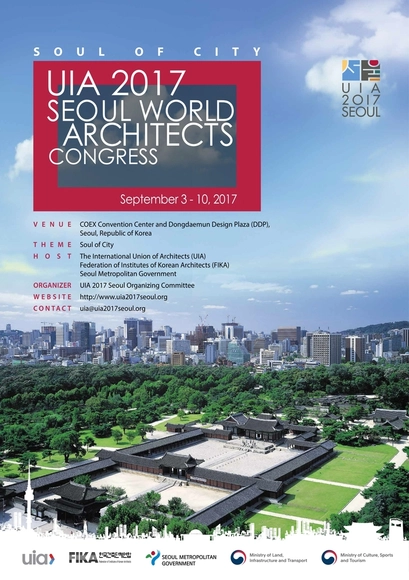
The UIA (International Union of Architects) world congresses are a premier forum for professionals and future leaders in the field of architecture to exchange the best and latest practices, visions and first-hand experience. The UIA 2017 Seoul, in particular, will promote various innovative architectural techniques and technologies among member sections and global citizens. In doing so, academic programs, exhibitions, competitions, student activities, and public outreach programs will simultaneously take place.
World-renowned architect and 2015 AIA Gold Medal–winner Moshe Safdie FAIA’s masterful use of light and geometry is explored in Global Citizen. This international exhibition is a retrospective that spans decades, from Safdie’s formative period in the 1960s and early 1970s to his recent projects around the world. Featuring more than 100 objects, including drawings, sketches, videos, photographs, and scale models, Safdie’s architecture is portrayed not only as visual art but also as a medium for advancing social, political, and cultural goals.
UPDATE: The submission deadline has been changed to February 7th, 2016.
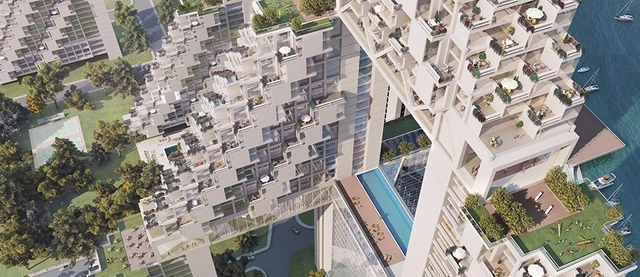
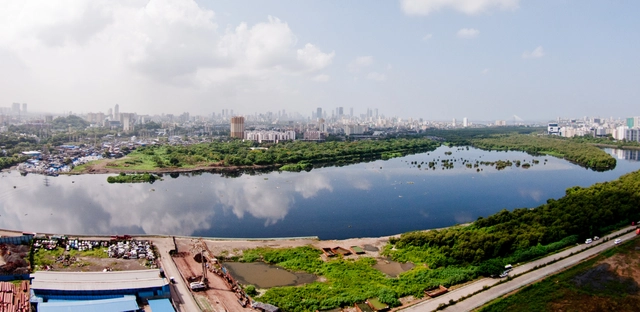
The Mumbai Metropolitan Region Development Authority (MMRDA) is looking for multi-disciplinary design teams that are capable of designing and delivering a technically demanding and environmentally sensitive makeover in the heart of India’s Financial Capital, Mumbai. There are no competition fees to be paid and all submissions will be exclusively done through the competition portal. Five shortlisted entries from the first stage will each receive Rs. 5,00,000 and the eventual winner will receive Rs. 50,00,000 as part of a contract.
Millennium Park. Image Courtesy of Urban Land Institute
The Urban Land Institute (ULI) has selected six finalists for the 2015 Urban Open Space Award competition, which recognizes public spaces that benefit and revitalize their surrounding communities. This was the first year that ULI expanded the program to include global submissions.
“The submissions from this year are representative of how quality urban open space has become more than just an amenity for cities,” said jury chair Michael Covarrubias. “The international diversity of the projects is reflective of how developers continually work to meet global demand by the public for the inclusion of healthy places in cities.” See all of the finalists after the break.





.jpg?1433459246&format=webp&width=640&height=580)