1. ArchDaily
  2. Igreja

Igreja: The Latest Architecture and News

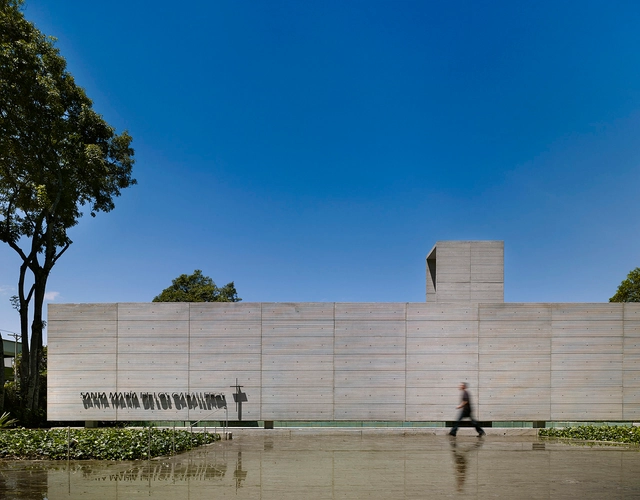
Architecture and Spirituality: 12 Churches and Chapels in Latin America

Subscriber Access | 

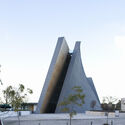
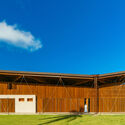
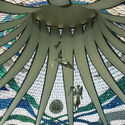
Latin America is home to the largest Catholic population in the world—more than 25% of all Catholics globally live on this continent. Here, faith has shaped not only spiritual life but also cities' cultural, social, and urban fabric. Since the first temples, built during European colonization, the architecture of Catholic churches in the region has undergone profound transformations. The once-imposing features of colonial Baroque and richly ornamented façades have gradually given way to bolder, more contemporary expressions that reflect local realities, a search for identity, and a spirit of architectural experimentation.
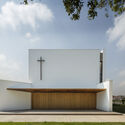
Architecture and Spirituality: 12 Churches and Chapels in Latin America - Image 1 of 4Architecture and Spirituality: 12 Churches and Chapels in Latin America - Image 2 of 4Architecture and Spirituality: 12 Churches and Chapels in Latin America - Image 3 of 4Architecture and Spirituality: 12 Churches and Chapels in Latin America - Image 4 of 4Architecture and Spirituality: 12 Churches and Chapels in Latin America - More Images+ 11

Between the Sacred and the Profane: The Story Behind the Church of the Sacred Heart of Jesus in Lisbon

Subscriber Access | 

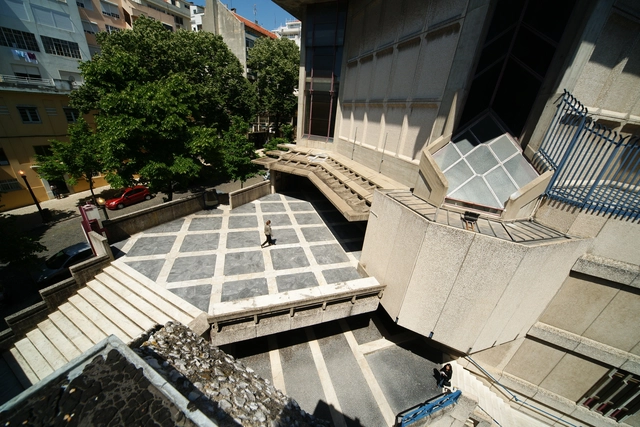
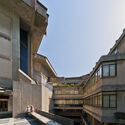
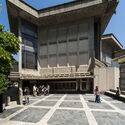
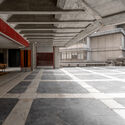
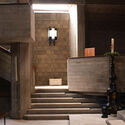
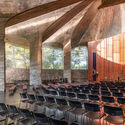
As a landmark of contemporary religious architecture in Portugal, the Church of the Sacred Heart of Jesus stands in contrast to traditional models, representing a work free from historicist stigmas. Resulting from a design competition organized in 1960, the church is notable for its civic dimension, urban role, and its anti-monumental and social significance. Integrated into the regular grid of the Avenidas Novas neighborhood, this example of the Movement for the Renewal of Sacred Art is part of a larger parish complex that often goes unnoticed by passersby. Its external street creates an unexpected public space, inviting people to enter and engage in a courtyard where architecture and the city merge. Finely crafted in terms of spatiality, detail, and light, the church holds many surprises for those who venture inside.

Between the Sacred and the Profane: The Story Behind the Church of the Sacred Heart of Jesus in Lisbon - Image 1 of 4Between the Sacred and the Profane: The Story Behind the Church of the Sacred Heart of Jesus in Lisbon - Image 2 of 4Between the Sacred and the Profane: The Story Behind the Church of the Sacred Heart of Jesus in Lisbon - Image 3 of 4Between the Sacred and the Profane: The Story Behind the Church of the Sacred Heart of Jesus in Lisbon - Image 4 of 4Between the Sacred and the Profane: The Story Behind the Church of the Sacred Heart of Jesus in Lisbon - More Images+ 12

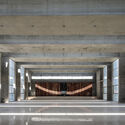
The Use of Light as a Divine Element in 5 Modern Churches

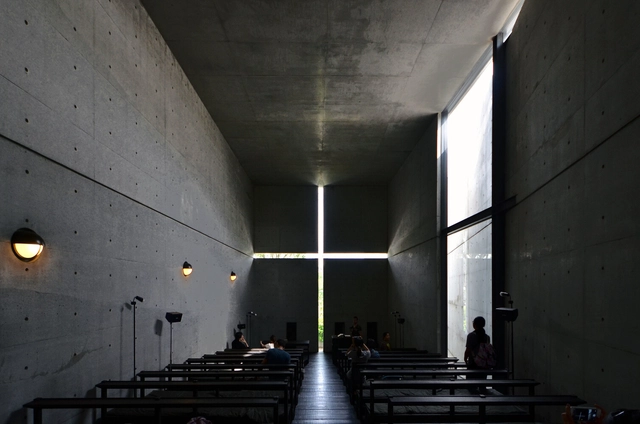
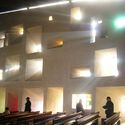
The use of light in religious constructions as an element of association with the divine has been present throughout the history of humanity. Historically, a series of temples from various religions have used this technique as an attempt to visually and perceptibly approach humans to a sacred and intangible dimension. Light is often given a spiritual connotation and significant symbolic force, capable of modifying people's relationships, perceptions, and experiences with their surroundings. Thus, it is an element that has been, and still is, used by architecture to create scenarios and effects in many religious spaces, especially churches.

The Use of Light as a Divine Element in 5 Modern Churches - Image 13 of 4The Use of Light as a Divine Element in 5 Modern Churches - Image 3 of 4The Use of Light as a Divine Element in 5 Modern Churches - Image 6 of 4The Use of Light as a Divine Element in 5 Modern Churches - Image 8 of 4The Use of Light as a Divine Element in 5 Modern Churches - More Images+ 10