1. ArchDaily
  2. Inflatable Architecture

Inflatable Architecture: The Latest Architecture and News

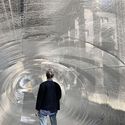
Transparent Lightness: When Pneumatic Architecture Connects with the Environment

In Six Memos for the Next Millennium, Italo Calvino explores lightness from a literary perspective and argues, "Opposed to lightness is weight. Removing weight produces lightness; it is a value, not a defect." Drawing on Greek mythology, he reflects on one of Perseus's feats after severing the head of the terrible Gorgon Medusa without being turned to stone. Assisted by the gods Hades, Hermes, and Athena, Perseus flies with his winged sandals and uses a bronze shield as a mirror to reflect her image. Relying, like many architects, on what is lightest—the wind and the clouds—he also fixes his gaze on what is revealed through indirect vision: an image reflected in a mirror.

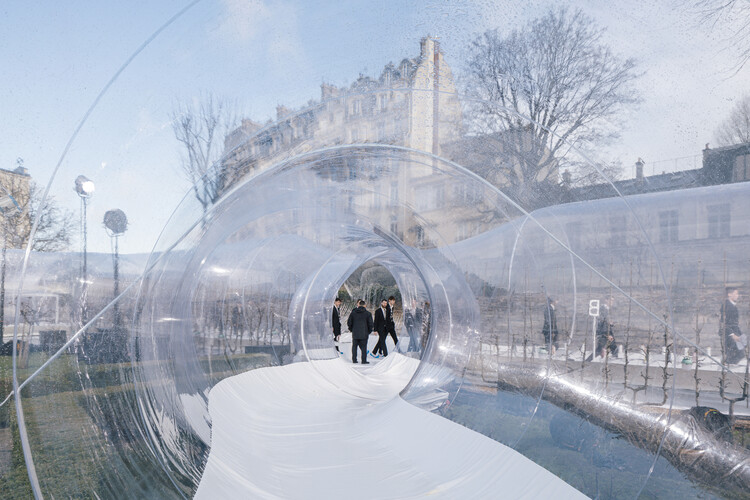
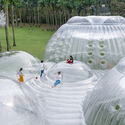
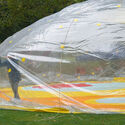
Historically, transparency has been naturalized as an inherent condition of modern architecture. With the shift from the heavy load-bearing wall to the lightweight glass envelope, glass was introduced into the discipline, blurring the boundaries between interior and exterior spaces. In connection with inflatable architecture, transparency is linked to lightness and impermanence, leaving temporary traces on the landscapes it inhabits. By using textiles or plastics as main materials and air as a structural system, the search for lightness in the built environment now recognizes more than a single atmosphere of application.
Transparent Lightness: When Pneumatic Architecture Connects with the Environment - Image 1 of 4Transparent Lightness: When Pneumatic Architecture Connects with the Environment - Image 2 of 4Transparent Lightness: When Pneumatic Architecture Connects with the Environment - Image 3 of 4Transparent Lightness: When Pneumatic Architecture Connects with the Environment - Image 4 of 4Transparent Lightness: When Pneumatic Architecture Connects with the Environment - More Images+ 15

Inflatable Architectures in Public Spaces: Exploring the Works of Conjuntos Empáticos in Spain

Subscriber Access | 

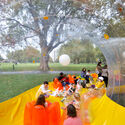
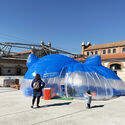
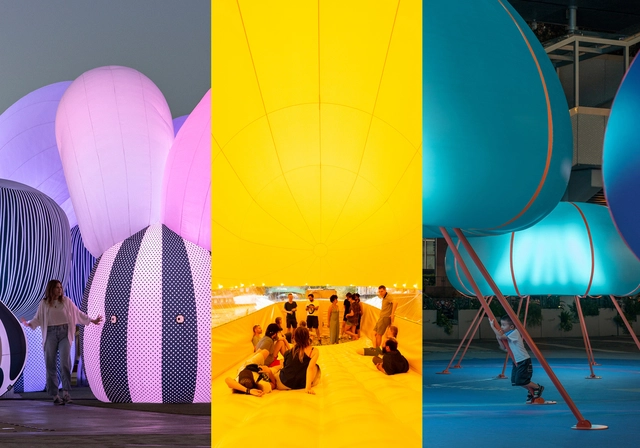
How do inflatable structures behave in public spaces? What relationships or connections can they establish among people? From the perspective of Conjuntos Empáticos, inflatable structures act as organisms that engage passersby through their lightness, materiality, and element of surprise, ensuring sensory experiences in various environments and public spaces. These structures can accommodate everything from collective interventions to moments of leisure, encouraging social interaction and creating atmospheres that dissociate the scale of the city from the domestic space.

Inflatable Architectures in Public Spaces: Exploring the Works of Conjuntos Empáticos in Spain - Image 1 of 4Inflatable Architectures in Public Spaces: Exploring the Works of Conjuntos Empáticos in Spain - Image 2 of 4Inflatable Architectures in Public Spaces: Exploring the Works of Conjuntos Empáticos in Spain - Image 3 of 4Inflatable Architectures in Public Spaces: Exploring the Works of Conjuntos Empáticos in Spain - Image 4 of 4Inflatable Architectures in Public Spaces: Exploring the Works of Conjuntos Empáticos in Spain - More Images+ 4

BIG Designs Immersive Set Design for the World Tour of WhoMadeWho

Architecture group BIG has unveiled the new stage design for the world tour of the Danish band WhoMadeWho. With visuals developed in collaboration with flora&faunavisions, EyeMix Studio, and Christopher Mulligan, the design features an inflatable sphere created to become a canvas for the three-dimensional video projections that contribute to the concert experience. The tour kicked off on November 2023 and will reach several cities around the world, including Paris, Madrid, Berlin, Istanbul, New York City, Los Angeles, Santiago de Chile, London as well as the band’s hometown, Copenhagen.

BIG Designs Immersive Set Design for the World Tour of WhoMadeWho - Image 1 of 4BIG Designs Immersive Set Design for the World Tour of WhoMadeWho - Image 2 of 4BIG Designs Immersive Set Design for the World Tour of WhoMadeWho - Image 5 of 4BIG Designs Immersive Set Design for the World Tour of WhoMadeWho - Image 3 of 4BIG Designs Immersive Set Design for the World Tour of WhoMadeWho - More Images+ 10

Inflatable Architecture: Pneumatic Structures Transforming Built Environments

Subscriber Access | 

As society, technology, and architecture have evolved, designers and architects have embraced novel construction systems and innovative approaches to reshape the built environment. This advancement has stretched the boundaries of traditional construction techniques and ignited fresh ideas in building design.

In the past, some architects and artists aimed to question an architectural paradigm deeply entrenched in anthropocentrism. Historically, architecture has been linked to the notion that buildings, being conceived by human beings, must be extremely durable, even imperishable. Considering the principle that the best intervention is the least intrusive, inflatable architecture, in contrast to these human-centric viewpoints —but aligned to our ephemeral nature—, can propose structures that may exist one day and vanish the next, leaving a temporal imprint on the landscape. This architectural approach uses textiles as the primary material and air as the structural system, potentially challenging the traditional Vitruvian ideals of Venustas, Firmitas, and Utilitas.

From NASA to Bouncy Houses: The Evolution of Inflatables

Subscriber Access | 

Inflatable Architecture has enabled the imaginations of environmental dreamers of all types. From figures like Buckminster Fuller to Ant Farm, inflatables promise to liberate people from the harsh conditions of nature or the tyranny of architecture. Originally developed by the US Military for radar enclosures on the arctic, inflatables were picked up by NASA before their secrets were bestowed upon the public who deployed them to solve all sorts of problems, from enclosing pools to stadiums.

Smiljan Radic Designs Transparent Dome for Alexander McQueen Show in London

Chilean architect Smiljan Radic has designed and installed a perfectly transparent dome for Alexander McQueen's Spring / Summer 2022 fashion show earlier this week in London.