1. ArchDaily
  2. islamic art

islamic art: The Latest Architecture and News

Sumayya Vally on the First Islamic Arts Biennale: "Claim, Reclaim, Configure, and Reconfigure"

Subscriber Access | 

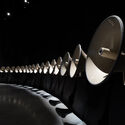
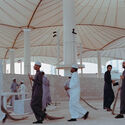
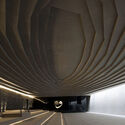
The First Islamic Arts Biennale, artistically directed by Sumayya Vally, opened on January 2023 and is still ongoing until May 23, 2023, in Jeddah, Saudi Arabia. The inaugural event was commissioned and produced by the Diriyah Biennale Foundation and was curated by Vally alongside Dr. Julian Raby, Dr. Omniya Abdel Barr, and Dr. Saad Al-Rashid. The biennale re-imagines the Western Hajj Terminal at King Abdulaziz Airport, designed by Skidmore, Owings & Merrill and winner of the 1983 Aga Khan Award, as a cultural space to redefine Islamic Arts from "within, in a way, that connects some of these art forms and forms of artistic expression to the experience and rituals" of those that live it.

Sumayya Vally is a South African architect, founder, and director of the Johannesburg-based collaborative architectural studio Counterspace. Designer of the Serpentine Pavilion in 2020/2021, she was the youngest architect to get this commission. Part of Time’s 100 emerging leaders who are shaping the future, in 2021, the only architect to make the list at that time, Sumayya started her career as a curator and teacher, and recently she was appointed as artistic director of the first Islamic Arts Biennale in Jeddah. ArchDaily had the chance to talk with Vally about her contribution to this biennale, her vision of the exhibition, the venue, the scenography, and the participating architects. Sumayya also shared some exclusive info about her entry for the 2023 Venice Architecture Biennale, starting on May 20th, in Venice, Italy.
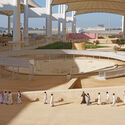
Sumayya Vally on the First Islamic Arts Biennale: "Claim, Reclaim, Configure, and Reconfigure" - Image 1 of 4Sumayya Vally on the First Islamic Arts Biennale: "Claim, Reclaim, Configure, and Reconfigure" - Image 2 of 4Sumayya Vally on the First Islamic Arts Biennale: "Claim, Reclaim, Configure, and Reconfigure" - Image 3 of 4Sumayya Vally on the First Islamic Arts Biennale: "Claim, Reclaim, Configure, and Reconfigure" - Image 4 of 4Sumayya Vally on the First Islamic Arts Biennale: Claim, Reclaim, Configure, and Reconfigure - More Images+ 41

The Mosque Between the Past, Present, and its Function Beyond a Religious Space

Subscriber Access | 

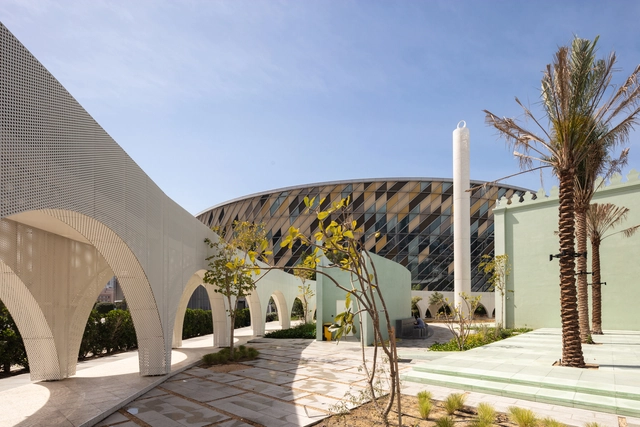
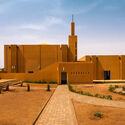
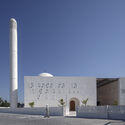
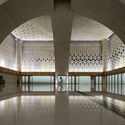
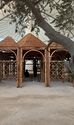
The mosque; the Islamic holy place of prayer, carries a distinct structural characteristic and identity. It is a serene and spiritual architecture that brings individuals closer to their faith and divine entity. Prophet Muhammad's original house in Medina (in present-day Saudi Arabia) is believed to be the first place of prayer, and served as a model for early mosque architecture; a mud-brick structure with living quarters on one side of an enclosed rectangular courtyard. Soon after, the allocation of open spaces in the center of towns where Muslims could gather and pray became more frequent, resulting in several spaces of worship with a universal spatial characteristic: their orientation towards Mecca.

The design process of the mosque started with a single enclosed geometric form, reinforcing the idea of spirituality and seclusion. Soon after, this simple spatial prototype evolved into the first formal hypostyle mosque, known for its vast prayer hall and series or arcades. Variations of this model saw the first mosque in Medina, known as the Quba Mosque (622 CE), the Kairouan Mosque in Tunis (670 CE), and the Umayyad mosque in Damascus (715 CE), some of which incorporated column details from ancient Greek and Roman architecture. However, the role of mosques evolved throughout the years from just a place of worship to an architecture that helps in re-establishing the values of Islam and offers contributions to society, including educational, civic, and ceremonial. 

The Mosque Between the Past, Present, and its Function Beyond a Religious Space - Image 1 of 4The Mosque Between the Past, Present, and its Function Beyond a Religious Space - Image 2 of 4The Mosque Between the Past, Present, and its Function Beyond a Religious Space - Image 3 of 4The Mosque Between the Past, Present, and its Function Beyond a Religious Space - Image 4 of 4The Mosque Between the Past, Present, and its Function Beyond a Religious Space - More Images+ 19