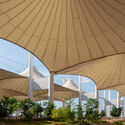
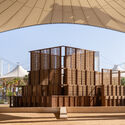
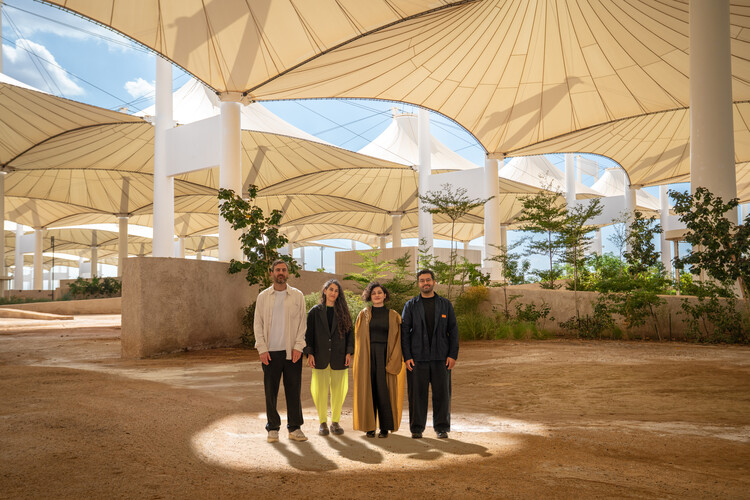
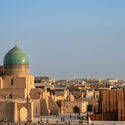
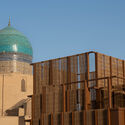
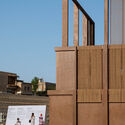
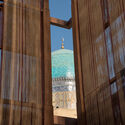
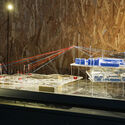
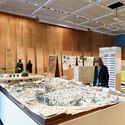
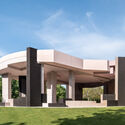
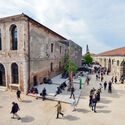
AlMusalla Prize 2027 - Group portrait, from left to right_ Jessam Al-Jawad (Al-Jawad Pike), Zeina Koreitem (MILLIØNS), Meriem Chabani (New South), Ali Ismail Karimi (Civil Architecture). Image Courtesy of Diriyah Biennale Foundation
In a global landscape marked by accelerated change, 2025 emerged as a decisive year for architecture—not only because of the major events that animated the international circuit, but above all because of the voices that stood out within them. From the Venice Architecture Biennale to Expo Osaka, pavilions and installations from the Global South ceased to function as mere exhibition gestures and instead asserted themselves as territories of memory, resistance, and imagination, articulating narratives that expand the horizons of contemporary architectural debate.
Across these works, tradition and future move side by side: ancestral materials reappear in reimagined forms, historical wounds are given sensitive expression, and social urgency is translated into proposals that challenge established ways of building and inhabiting the world.
This past year marked a period of introspection for architecture. As 2025 unfolded, the discipline, confronted with evolving environmental and social realities, entered a broader turning point in how it understands its role and how users engage with it. Throughout the year, exhibitions shifted focus away from buildings as isolated objects toward a broader understanding of relationships between ecology, equity, everyday life, and collective imaginaries. Across institutions and cities, they operated less as showcases and more as discursive platforms: places where architecture was not only presented, but also imagined, questioned, and collectively redefined.
While exhibitions have long functioned as sites of discourse, politics, and community, this role became more explicit in 2025. As Carlo Ratti noted in an ArchDaily interview during the pre-opening of the Venice Architecture Biennale 2025, exhibitions today can "hybridize the way that people come together," an ambition that echoed across cities and institutions as exhibitions evolved into spaces for debate, experimentation, and collective reflection. Exhibitions are places where architects and designers meet, where conversations unfold openly with the public, and where ideas emerge through spontaneous exchanges among passersby. Exhibitions became spaces where architectural discourse extended beyond professional circles, opening conversations to broader publics through everyday encounters, shared experiences, and informal exchanges.
As one of the most important and visited contemporary architecture exhibitions worldwide, the Venice Architecture Biennale extends beyond the grounds of the Giardini and the Arsenale, aiming to engage the entire city in discussions on relevant issues, challenges, and opportunities within the architectural profession. This year's Biennale, curated by Carlo Ratti, explores the theme "Intelligens. Natural. Artificial. Collective," inviting visitors to consider how architecture, technology, and nature intersect to shape the future.
As part of this year's event, 11 collateral exhibitions organized by various national and international institutions offer a range of perspectives on topics such as sustainability, cultural landscapes, and adaptive architecture. These exhibitions, spread throughout Venice, contribute to the broader conversation on the evolving role of architecture in addressing global challenges and promoting a more sustainable and interconnected future.
2025 promises to be a landmark in architecture, heralding a vibrant renaissance of creativity and exploration. As societies confront challenges such as climate change, rapid urbanization, and technological evolution, architecture is both a mirror to these dynamics and a compass pointing toward a sustainable and inclusive future. This year's architectural calendar offers abundant opportunities to celebrate the discipline's transformative power — from boundary-pushing festivals to thought-provoking exhibitions that explore pressing cultural and environmental narratives.
From well-established biennials to inaugural gatherings, including the World Architecture Festival 2025, Desert X Al Ula, and the COP Climate Conference, the 2025 calendar highlights themes such as sustainability, heritage, and community. These events underscore architecture's unique ability to shape a better future, addressing global challenges while honoring cultural diversity and design ingenuity.
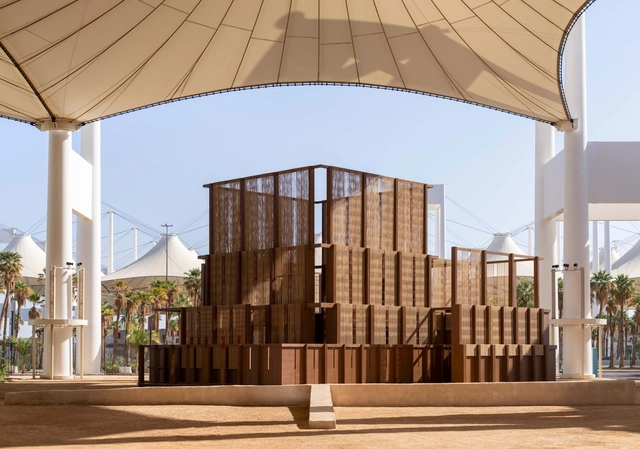
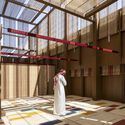
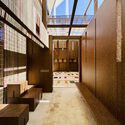
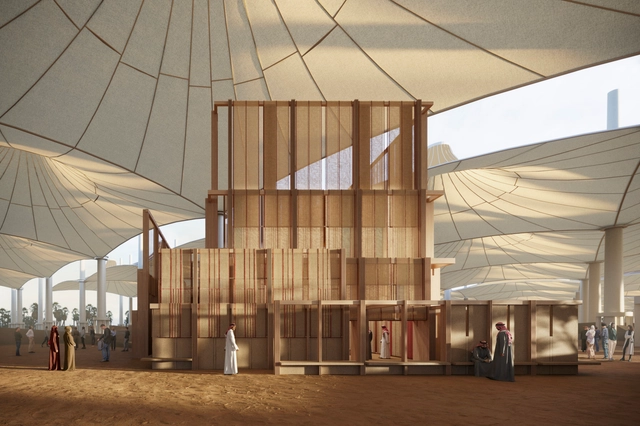
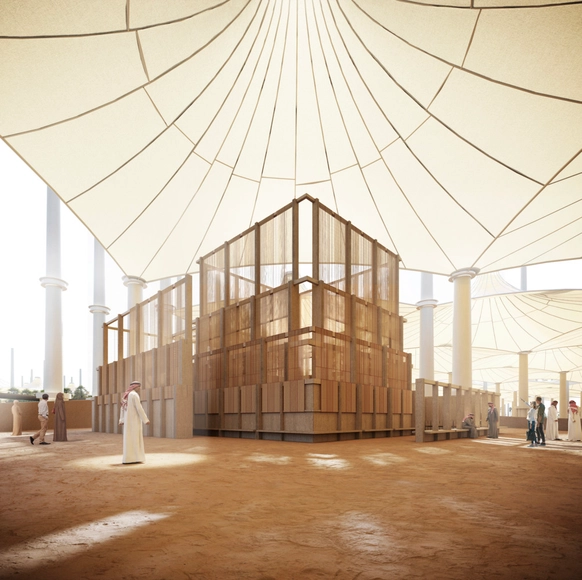
The Diriyah Biennale Foundation has announced Lebanon-based EAST Architecture Studio, in collaboration with artist Rayyane Tabet and engineering firm AKT II, as the winners of the inaugural AlMusalla Prize, a significant new architectural competition launched as part of the Islamic Arts Biennale. Their winning design, a modular structure inspired by regional weaving traditions, uses sustainable materials derived from local date palm waste, including palm fronds and fibers. After the four-month Biennale, the Musalla will be dismantled and reassembled at a new location.
In his book "Curation: The Power of Selection in a World of Excess," Michael Bhaskar defines curation as "using acts of selection and arrangement (but also refining, reducing, displaying, simplifying, presenting, and explaining) to add value." Originating from the Latin word curare, meaning to take care of, the curator's role in dissecting our understanding of the world around us cannot be overlooked. Over time, as the definition morphs into different bodies, the practice of curation continues to evolve, filling the roles of caretakers of our built environment and thinkers of different forms for the overall bettering of society.
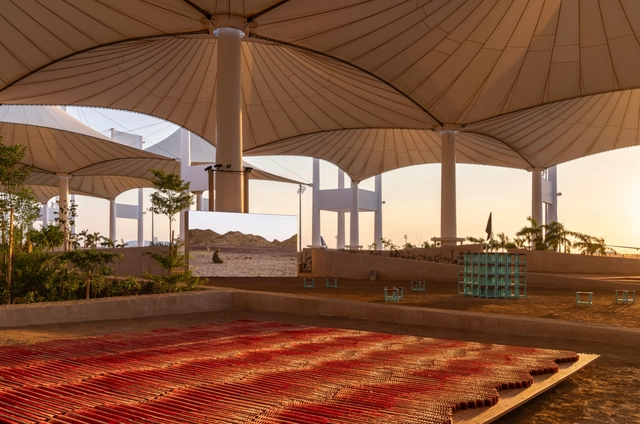
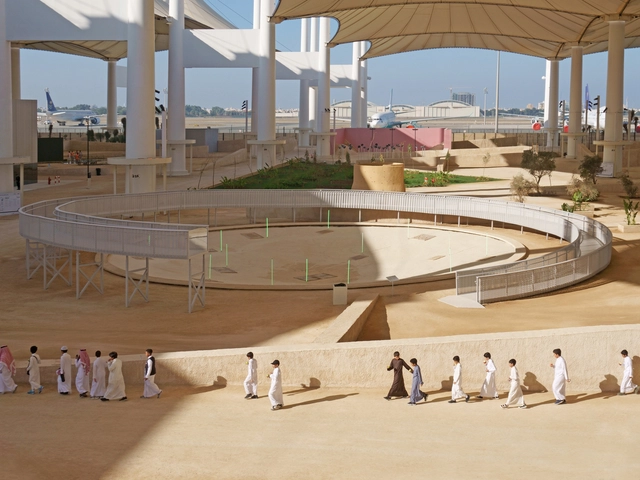
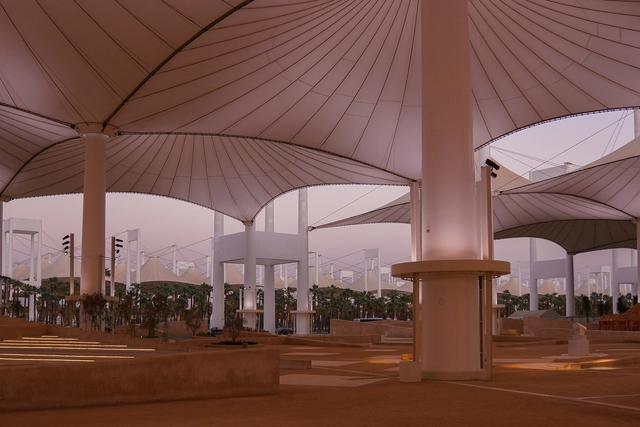
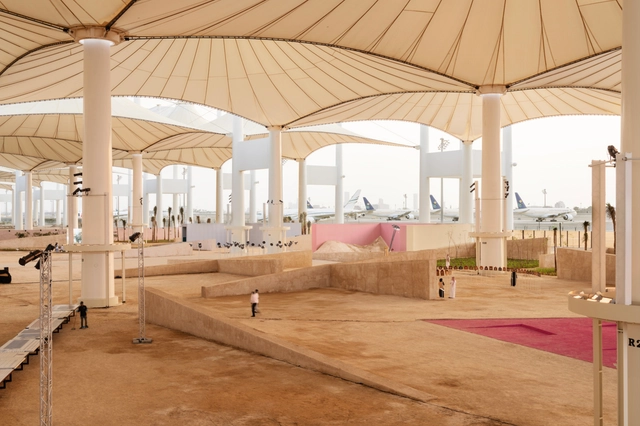
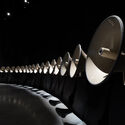
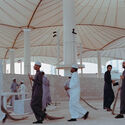
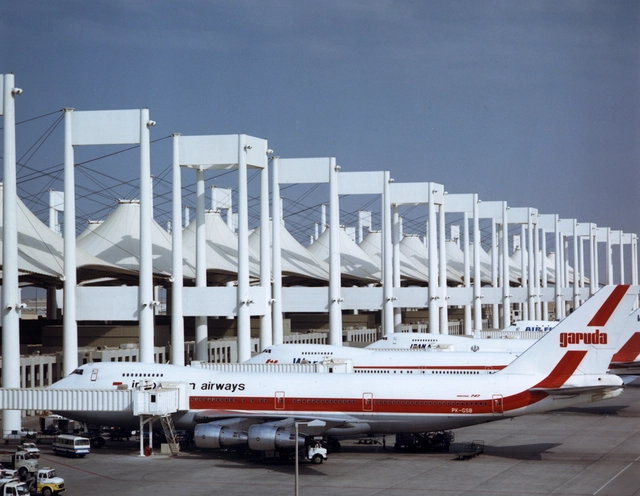
The 2023 Islamic Arts Biennale at the Western Hajj Terminal of King Abdulaziz International Airport. Image Courtesy of Diriyah Biennale Foundation
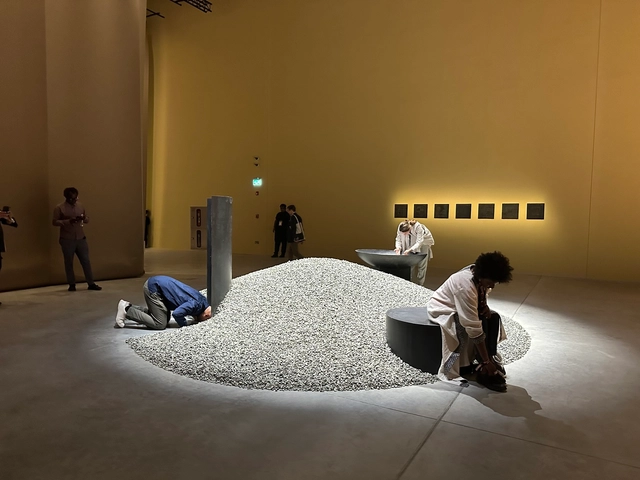
The Diriyah Biennale Foundation has revealed the theme and title for the 2025 Islamic Arts Biennale: And all that is in between. Scheduled from January 25 to May 25, 2025, at the Western Hajj Terminal of King Abdulaziz International Airport in Jeddah, this second edition will explore how faith is experienced, expressed, and celebrated through the acts of feeling, thinking, and making.
The Diriyah Biennale Foundation has just unveiled the competition details for the AlMusalla Prize, along with the shortlisted architecture studios and the jury. An addition to the Islamic Arts Biennale, this international architecture competition focuses on designing a musalla, a flexible space for prayer and reflection accessible to people of all faiths. Situated in the Western Hajj Terminal of King Abdulaziz International Airport in Jeddah, Saudi Arabia, the musalla will be an integral part of the Biennale’s upcoming edition. The winner of the competition will be announced later this year, and the opening of the musalla will be held on January 25th, 2025.
The First Islamic Arts Biennale, artistically directed by Sumayya Vally, opened on January 2023 and is still ongoing until May 23, 2023, in Jeddah, Saudi Arabia. The inaugural event was commissioned and produced by the Diriyah Biennale Foundation and was curated by Vally alongside Dr. Julian Raby, Dr. Omniya Abdel Barr, and Dr. Saad Al-Rashid. The biennale re-imagines the Western Hajj Terminal at King Abdulaziz Airport, designed by Skidmore, Owings & Merrill and winner of the 1983 Aga Khan Award, as a cultural space to redefine Islamic Arts from "within, in a way, that connects some of these art forms and forms of artistic expression to the experience and rituals" of those that live it.
Sumayya Vally is a South African architect, founder, and director of the Johannesburg-based collaborative architectural studio Counterspace. Designer of the Serpentine Pavilion in 2020/2021, she was the youngest architect to get this commission. Part of Time’s 100 emerging leaders who are shaping the future, in 2021, the only architect to make the list at that time, Sumayya started her career as a curator and teacher, and recently she was appointed as artistic director of the first Islamic Arts Biennale in Jeddah. ArchDaily had the chance to talk with Vally about her contribution to this biennale, her vision of the exhibition, the venue, the scenography, and the participating architects. Sumayya also shared some exclusive info about her entry for the 2023 Venice Architecture Biennale, starting on May 20th, in Venice, Italy.
The Islamic Arts Biennale re-imagines the Western Hajj Terminal at King Abdulaziz Airport in Jeddah, Saudi Arabia, as a cultural space to create an evocative journey to explore Islamic heritage. The terminal, designed by Skidmore, Owings & Merrill and a winner of the 1983 Aga Khan Award, will be extended and complemented to create the setting for the event. Through the contributions of over 60 artists from over 20 countries, the biennale aims to become a platform to explore and reflect the diversity of the Muslim experience worldwide. Themed Awwal Bait, or The First House, the event intertwines commissioned works with never-before exhibited historical artifacts to convey a holistic perspective of the Islamic arts. The Biennale, curated by Sumayya Vally, now in its inaugural edition, will be open from January 2023 to April 2023.
Diriyah Biennale Foundation recently revealed the curatorial team of Saudi Arabia's inaugural Islamic Arts Biennale, highlighting the past and present art of the Islamic culture. Among the curators is Sumayya Vally, co-founder of Johannesburg-based practice Counterspace, responsible for designing the 2021 Serpentine Pavilion. Taking place in Jeddah in early 2023, the Islamic Arts Biennale will foster artistic exchanges and further establish Saudi Arabia's status within the art scene.