What architecture leaves in the ground outlasts what it puts in the air. A demolished building disappears from the skyline in a matter of days, but its foundations remain embedded in the soil for generations. The contamination caused by an industrial complex does not clear when the complex is torn down. The legal boundaries inscribed across colonial territory do not dissolve when the colonial administration ends. The ground holds what architecture quickly forgets.
This is what makes soil so uncomfortable as a subject. The discipline tends to orient itself upward, toward the form, the façade, the spatial experience of inhabitation. The ground is where architecture begins and, in a certain sense, where it ends: the point at which building becomes geology, legal title becomes territorial claim, and construction becomes extraction. Treating soil as a medium rather than a datum means acknowledging that the acts of building carry consequences that run deeper than the visible object above grade.
“Art aims to represent not the outward appearance of things, but their inward significance”, Greek polymath Aristotle remarked. Public art in cities worldwide seeks to pursue this aim by offering a sense of meaning and identification to its residents. Taking the form of murals, installations, sculptures, and statues, public art engages with audiences outside of museums and in the public realm. This art presents a democratic manner of collectively redefining concepts like community, identity, and social engagement.
Videos
Background photograph courtesy of Charlie Hui, Viswerk. 2020
Led by architectural designers Khensani de Klerk and Solange Mbanefo, Matri-Archi is a collective based between Switzerland and South Africa that aims to bring African women together for the development of spatial education in African cities. Through design practice, writing, podcasts, and other initiatives, Matri-Archi — one of ArchDaily's Best New Practices of 2021 — focuses on the recognition and empowerment of women in the spatial field and architectural industry.
ArchDaily had the opportunity to talk to the co-directors of the collective on hegemonic space, informal architecture, technology, local idiosyncrasies, and the future of African and global cities. Read the full interview below.
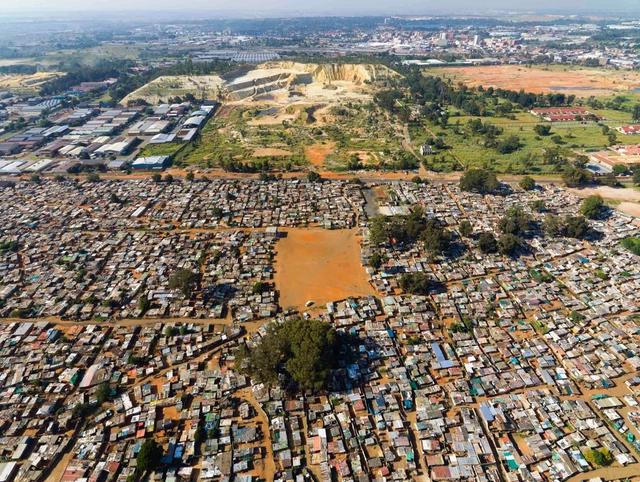
The urban settlements we inhabit today exist in their present form due to a host of reasons. There are cities that have grown due to their proximity to water – such as the growth of Dar es Salaam to the major port city it is today. There are the planned capital cities scattered around the world, governments of countries such as Brazil and Nigeria building cities from scratch from the input of acclaimed architects. There are also the settlements that exist and grow because of certain industries, such as Silicon Valley in the American state of California being home to giants of the technology industry. There’s an industry, however, that has spawned both pulsating cities and abandoned towns – the mining industry.
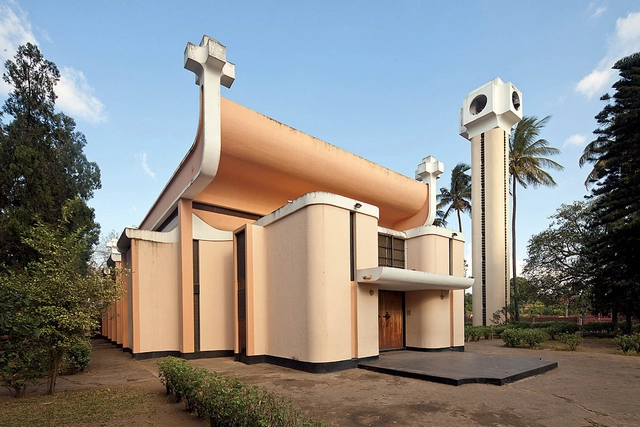
Amancio d'Alpoim Miranda Guedes, known as Pancho Guedes was an architect, painter, sculptor, and educator that is revered as one of the earliest post-modernist architects in Africa. Throughout his career, he has contributed to more than 500 building designs which were often characterized as eclectic, bringing together Lusophone African influence with his unique surrealist and experimental artistic style. It is said that having worked mainly in Mozambique, Angola, South Africa, and Portugal, Pancho Guedes was less well known than he ought to have been in the rest of the world, as he is a leading figure in modern African architecture.
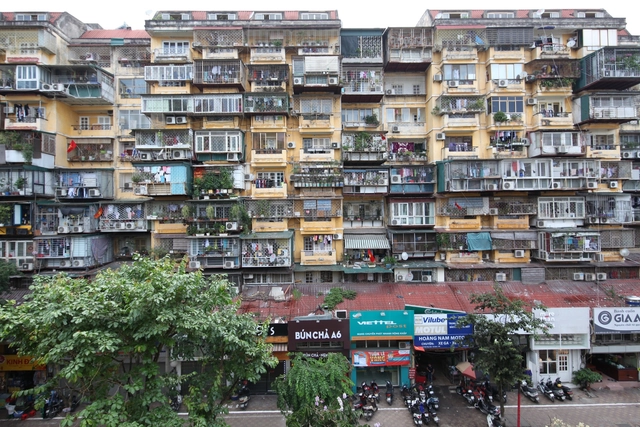
Overall view of a KTT apartment building; Hanoi, Vietnam – 2018. Image Courtesy of Christophe Hutin
The French pavilion at the 2021 Venice Biennale, “aims to reflect on the meeting between architectural know-how and the inhabitants’ own experiences of their living spaces”. Curated by Christophe Hutin, the intervention entitled “Communities at Work” will provide an immersive experience with the help of images in motion. Using five specific case studies on different continents: in Europe, Asia, America, and Africa, the exhibition presents a journey into a world where communities transformations their own living spaces, without following any formal schemes designed by an architect.
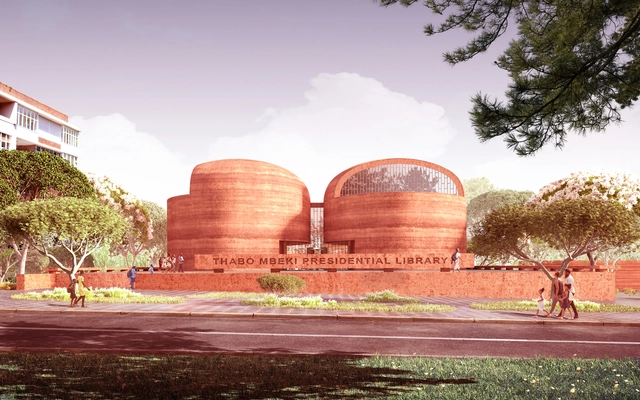
Adjaye Associates has unveiled its design for a new historical center for African consciousness, the Thabo Mbeki Presidential Library in Johannesburg. Named after the previous president of South Africa, the project is an opportunity to realize the dreams of Thabo Mbeki to advance and empower an African renaissance, according to the 2021 RIBA Royal Gold Medal winner Sir David Adjaye.



























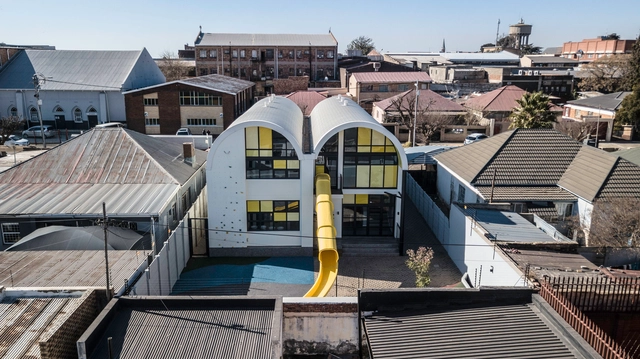

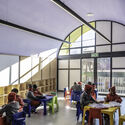
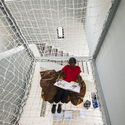
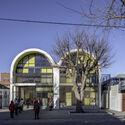










_copy.jpg?1561447437&format=webp&width=640&height=580)
.jpg?1561447385 "© Alexi Portokallis")
.jpg?1561447002 "© Alexi Portokallis")
.jpg?1561446946 "© Alexi Portokallis")
.jpg?1561447168 "© Alexi Portokallis")
_copy.jpg?1561447437)