1. ArchDaily
  2. Lacol

Lacol: The Latest Architecture and News

UIA 2026 Barcelona Announces Full Program, Detailing Formats, Exhibitions, and City-Wide Itineraries

The UIA World Congress of Architects 2026 Barcelona has released its full program, outlining the structure, participants, and range of activities scheduled to take place from June 28 to July 2, 2026. Expanding on the previously introduced theme, Becoming. Architectures for a Planet in Transition, the Congress is conceived as a distributed event across multiple venues and urban contexts rather than a single-site conference. Organized by the International Union of Architects (UIA) in collaboration with the Higher Council of the Colleges of Architects of Spain (CSCAE) and the Architects' Association of Catalonia (COAC), the event is expected to gather approximately 10,000 participants and 250 speakers from more than 130 countries.

UIA 2026 Barcelona Announces Full Program, Detailing Formats, Exhibitions, and City-Wide Itineraries - Image 1 of 4UIA 2026 Barcelona Announces Full Program, Detailing Formats, Exhibitions, and City-Wide Itineraries - Image 2 of 4UIA 2026 Barcelona Announces Full Program, Detailing Formats, Exhibitions, and City-Wide Itineraries - Image 3 of 4UIA 2026 Barcelona Announces Full Program, Detailing Formats, Exhibitions, and City-Wide Itineraries - Image 4 of 4UIA 2026 Barcelona Announces Full Program, Detailing Formats, Exhibitions, and City-Wide Itineraries - More Images+ 18

UIA 2026 Barcelona Reveals Program Structured Around Six Thematic “Becomings”

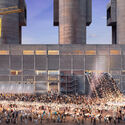
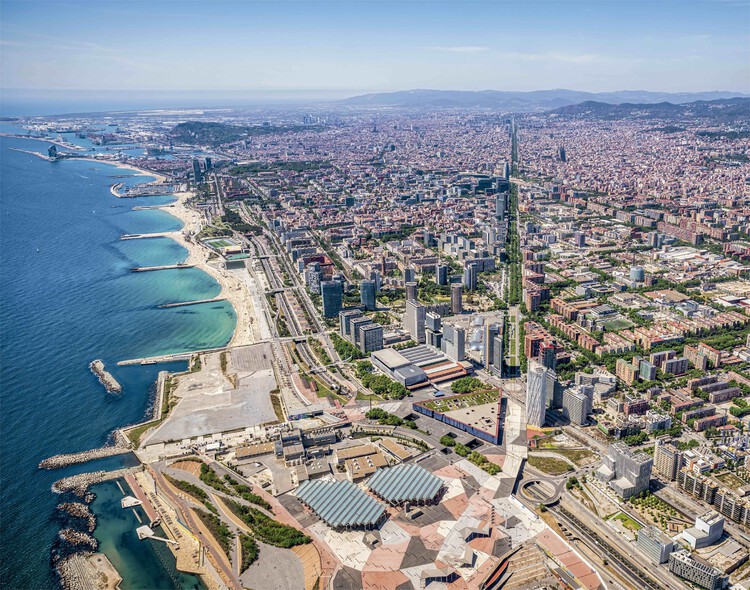
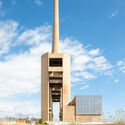
More than three decades after previously hosting the event, Barcelona is set to welcome the UIA World Congress of Architects 2026 Barcelona (UIA2026BCN), bringing the global architectural community back to the city between 28 June and 2 July 2026. Organized under the theme "Becoming. Architectures for a Planet in Transition," the Congress is expected to gather approximately 10,000 participants from over 130 countries, including practitioners, researchers, and students. Rather than being confined to a single venue, the event will unfold across multiple locations along the Mediterranean seafront, among them the Three Chimneys complex, positioning the city itself as an active platform for exchange, discussion, and public programming.

UIA 2026 Barcelona Reveals Program Structured Around Six Thematic “Becomings” - Image 1 of 4UIA 2026 Barcelona Reveals Program Structured Around Six Thematic “Becomings” - Image 2 of 4UIA 2026 Barcelona Reveals Program Structured Around Six Thematic “Becomings” - Image 3 of 4UIA 2026 Barcelona Reveals Program Structured Around Six Thematic “Becomings” - Image 4 of 4UIA 2026 Barcelona Reveals Program Structured Around Six Thematic “Becomings” - More Images+ 13

Architectural Authorship in the Age of the Collective Practices

Subscriber Access | 

This article is part of our new Opinion section, a format for argument-driven essays on critical questions shaping our field.

Who designs architecture today? In a professional landscape increasingly defined by collaborative workflows, generative software, and distributed teams, the figure of the architect as a singular creative author feels both anachronistic and inadequate. This article argues that architectural authorship is no longer an individual act, but a collective and distributed condition shaped by institutions, technologies, and shared forms of labor. The transition from individual to collective authorship is not simply a consequence of larger offices or digital tools; it signals a deeper structural shift in how architecture is produced, communicated, and validated.

Architectural Authorship in the Age of the Collective Practices - Image 1 of 4Architectural Authorship in the Age of the Collective Practices - Image 2 of 4Architectural Authorship in the Age of the Collective Practices - Image 3 of 4Architectural Authorship in the Age of the Collective Practices - Image 5 of 4Architectural Authorship in the Age of the Collective Practices - More Images+ 23

The Project as Argument: What is Architectural Thinking?

Architecture is shaped not only by buildings, but by the ideas that make them possible. Before the constraints of capital, regulation, and procurement, there is a moment when architecture is allowed to think aloud. The first confrontation with this fertile moment usually takes place in academia, in the thesis. It is not merely a requirement for graduation, but a space of speculative freedom where architecture formulates hypotheses, builds arguments, and tests positions.

For many, it is also the first opportunity to think beyond the structure of academic programs — a first chance to explore something more personal, unresolved, or even unreasonable. While often seen as an endpoint, the thesis is better understood as a beginning: the first engagement with architecture as a form of reasoning, where the project is not yet a response, but a question.

The Project as Argument: What is Architectural Thinking? - Image 1 of 4The Project as Argument: What is Architectural Thinking? - Image 2 of 4The Project as Argument: What is Architectural Thinking? - Image 3 of 4The Project as Argument: What is Architectural Thinking? - Image 4 of 4The Project as Argument: What is Architectural Thinking? - More Images+ 27

Reimagining Models for Living Together: 4 Projects Showcasing Cooperative Architecture

Subscriber Access | 

The International Day of Cooperatives, celebrated on the first Saturday of July each year, is an opportunity to raise awareness and celebrate the cooperative movement. Celebrated on this day by the United Nations since 1992, the cooperative movement is a social and economic movement empowering individuals and communities by creating enterprises that are collectively owned and democratically controlled by members. This year's theme is "Cooperatives: Partners for Accelerated Sustainable Development." Underscoring the critical role cooperatives play in achieving the Sustainable Development Goals, it also emphasizes the unique typology of cooperatives in exploring new ways of living together. With a belief in community growth, cooperatives believe in communal development, prioritizing people and supporting them to improve collective well-being.

Reimagining Models for Living Together: 4 Projects Showcasing Cooperative Architecture - Image 1 of 4Reimagining Models for Living Together: 4 Projects Showcasing Cooperative Architecture - Image 2 of 4Reimagining Models for Living Together: 4 Projects Showcasing Cooperative Architecture - Image 3 of 4Reimagining Models for Living Together: 4 Projects Showcasing Cooperative Architecture - Image 4 of 4Reimagining Models for Living Together: 4 Projects Showcasing Cooperative Architecture - More Images+ 5

Ammodo Architecture Announces Inaugural Global Awards Recipients for Social and Ecological Innovation

Ammodo Architecture has just revealed the first 23 recipients of its inaugural Ammodo Architecture Awards, an annual recognition dedicated to advancing socially and ecologically conscious architecture worldwide. The awardees, chosen for their exemplary contributions, will receive financial support ranging from €10,000 to €150,000 to further their work and projects across three categories: Social Architecture, Social Engagement, and Local Scale.

Ammodo Architecture Announces Inaugural Global Awards Recipients for Social and Ecological Innovation - Image 1 of 4Ammodo Architecture Announces Inaugural Global Awards Recipients for Social and Ecological Innovation - Image 2 of 4Ammodo Architecture Announces Inaugural Global Awards Recipients for Social and Ecological Innovation - Image 3 of 4Ammodo Architecture Announces Inaugural Global Awards Recipients for Social and Ecological Innovation - Image 4 of 4Ammodo Architecture Announces Inaugural Global Awards Recipients for Social and Ecological Innovation - More Images+ 18

Collective Housing in Barcelona: The Sustainable and Cooperative Model of Lacol

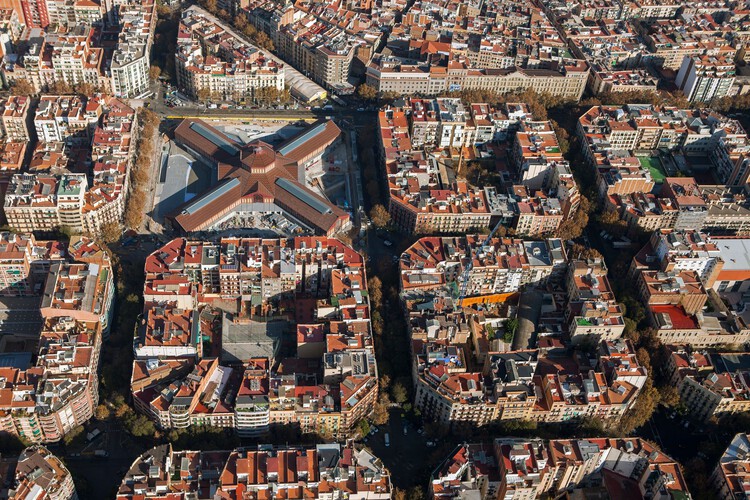
One of the biggest current challenges in large cities is the housing crisis and the lack of efficient solutions to mitigate its effects on citizens. This problem is exacerbated in cities where tourism and vacation or temporary housing dominate the market, distancing residents from the possibility of accessing affordable urban housing. Furthermore, gentrification, driven by rising rents and real estate speculation, contributes to the displacement of local communities, transforming traditional neighborhoods into areas exclusively oriented toward tourist consumption.

Collective Housing in Barcelona: The Sustainable and Cooperative Model of Lacol - Image 1 of 4Collective Housing in Barcelona: The Sustainable and Cooperative Model of Lacol - Image 2 of 4Collective Housing in Barcelona: The Sustainable and Cooperative Model of Lacol - Image 3 of 4Collective Housing in Barcelona: The Sustainable and Cooperative Model of Lacol - Image 4 of 4Collective Housing in Barcelona: The Sustainable and Cooperative Model of Lacol - More Images+ 3

"Individual Space is as Important as Collective Space": In Conversation with Pritzker Prize Laureate Anne Lacaton

Subscriber Access | 

Led by Pritzker Prize laureate Anne Lacaton, the jury of the European Collective Housing Awards has just selected the winners for its first edition. Established by the Basque Architecture Institute and Arc en Rêve Centre d’Architecture in collaboration with the Department of Territorial Planning, the award celebrates innovation and excellence in collective housing design, emphasizing aesthetics, social responsibility, and environmental sustainability. The winning projects - La Borda Housing Collective in Spain and the Conversation of a Wine Storage into Housing in Switzerland - were selected from 171 entries across 19 European countries for their contributions to new construction and renovation, respectively.

Anne Lacaton, renowned for her groundbreaking work with partner Jean-Philippe Vassal, has been working to push the boundaries of sustainable and socially responsible housing architecture for decades. The Pritzker Prize laureates are celebrated for their innovative approach to social housing and are committed to enhancing the quality of life for residents. Their philosophy centers around creating generous, adaptable spaces that rethink how we live together. Onsite in San Sebastián, ArchDaily had the chance to interview the Pritzker-Prize winner to delve into her architectural practice and philosophy. In the conversation, the architect explored core values, the significance of reuse in social housing, and the promising trends in collective housing design that emerged from the first edition of the awards.

 "Individual Space is as Important as Collective Space": In Conversation with Pritzker Prize Laureate Anne Lacaton - Image 1 of 4 "Individual Space is as Important as Collective Space": In Conversation with Pritzker Prize Laureate Anne Lacaton - Image 2 of 4 "Individual Space is as Important as Collective Space": In Conversation with Pritzker Prize Laureate Anne Lacaton - Image 3 of 4 "Individual Space is as Important as Collective Space": In Conversation with Pritzker Prize Laureate Anne Lacaton - Image 4 of 4 Individual Space is as Important as Collective Space: In Conversation with Pritzker Prize Laureate Anne Lacaton - More Images+ 9

European Collective Housing Award Announces Winners of First Edition

The European Collective Housing Award has selected the winners for the 2024 cycle. Created by The Basque Architecture Institute and Arc en Rêve Centre d’Architecture, in collaboration with the Department of Territorial Planning, the award highlights innovation and excellence in collective housing design, emphasizing aesthetics, social responsibility, and environmental sustainability. Selected from a category of 171 entries from 19 European countries, the winners are La Borda Housing Collectie in Spain and Construction of a Wine Storage into Housing in Switzerland for the new construction and renovation category, respectively. The inaugural edition of the European Collective Housing Award recognizes the importance of collective housing in creating sustainable and inclusive communities while also emphasizing the need to promote architectural excellence in this domain.

European Collective Housing Award Announces Winners of First Edition - Image 1 of 4European Collective Housing Award Announces Winners of First Edition - Image 2 of 4European Collective Housing Award Announces Winners of First Edition - Image 3 of 4European Collective Housing Award Announces Winners of First Edition - Image 4 of 4European Collective Housing Award Announces Winners of First Edition - More Images+ 2

Democratizing Architecture Practices: Restructuring Firms

Subscriber Access | 

Discontent among employees in architecture firms is at an all-time high, demonstrated in the push for architectural unionization in the US in response to the lack of overall well-being in the profession. This discontent can be largely attributed to the inherently exploitative nature of the regular top-down architectural firm structures, fostering a disconnect between the direction firms take and the people working to make it possible. In these, leadership often takes on projects beyond the firm's financial capacity, with the expectation of underpaid staff taking on the brunt of the work through unpaid overtime. In these structures, employees are not to be a voice guiding the firm but to be profited off of. So, what are ways to address this disconnect? Is it time to restructure firms to give architects more agency? What are ways to create non-hierarchical firm structures?

Democratizing Architecture Practices: Restructuring Firms - Image 1 of 4Democratizing Architecture Practices: Restructuring Firms - Image 2 of 4Democratizing Architecture Practices: Restructuring Firms - Image 3 of 4Democratizing Architecture Practices: Restructuring Firms - Image 4 of 4Democratizing Architecture Practices: Restructuring Firms - More Images

All Purpose Homes: Are Residential Spaces Taking Over the Role of First, Second, and 'Third Places'?

Dwellings can be understood as the most significant and primary form of architecture, as the house is intimately related to the idea of shelter, one of humanity’s basic needs. In the words of architect Mario Botta, “As long as there is a man who needs a house, architecture will still exist.” Yet, in spite of its ubiquity, or perhaps because of it, an exact definition of a home is difficult to find. Throughout history, different functions and spaces have been added and subtracted from this unit, reflecting directly the character of the society that produced it.

The list of expectations that a house has to fulfill is long and ever-evolving: to provide intimate and safe spaces where one can recharge their energy, but at the same time to allow for interaction, welcoming friends and family to join in; it is the purveyor of leisure and relaxation, but also the site of most labors of care, while also providing a small incubator for starting entrepreneurs. This tendency to demand a residential unit to fulfill multiple roles was heightened to unprecedented levels during the pandemic. Health concerns led to the closing of most workspaces, the second place where people spent most of their time, and of cafes, restaurants, cinemas, and malls, the “third places.” Suddenly, the home had to become an all-purpose space.

All Purpose Homes: Are Residential Spaces Taking Over the Role of First, Second, and 'Third Places'? - Image 1 of 4All Purpose Homes: Are Residential Spaces Taking Over the Role of First, Second, and 'Third Places'? - Image 2 of 4All Purpose Homes: Are Residential Spaces Taking Over the Role of First, Second, and 'Third Places'? - Image 3 of 4All Purpose Homes: Are Residential Spaces Taking Over the Role of First, Second, and 'Third Places'? - Image 4 of 4All Purpose Homes: Are Residential Spaces Taking Over the Role of First, Second, and 'Third Places'? - More Images+ 6

Redefining Domestic Spaces of the Future: 14 Projects in Europe

Unconstrained by the dogmas of established offices, new architectural practices can often challenge building norms and redefine living standards. The Young European Architecture Festival (YEAH!) is an event dedicated to highlighting these new and emerging practices and bringing their contributions to the built environment into focus. Many of these practices are challenging and redefining typologies of residential architecture. They are building upon ideas such as cooperative housing schemes, community-initiated developments, and circular economy. Others are exploring local identities and resources as a way to reinvigorate the profession while creating respectful and regionally relevant works of architecture.

Redefining Domestic Spaces of the Future: 14 Projects in Europe - Image 10 of 4Redefining Domestic Spaces of the Future: 14 Projects in Europe - Image 7 of 4Redefining Domestic Spaces of the Future: 14 Projects in Europe - Image 12 of 4Redefining Domestic Spaces of the Future: 14 Projects in Europe - Image 16 of 4Redefining Domestic Spaces of the Future: 14 Projects in Europe - More Images+ 14

Grafton Architects' Kingston University Town House and Lacol's La Borda Win the 2022 EU Mies Award

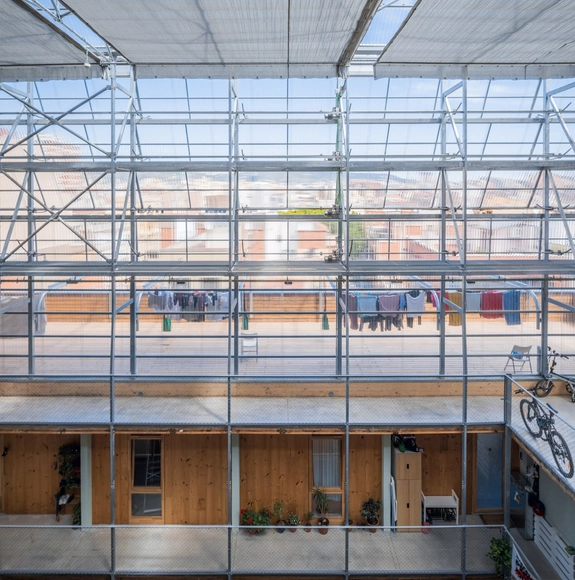
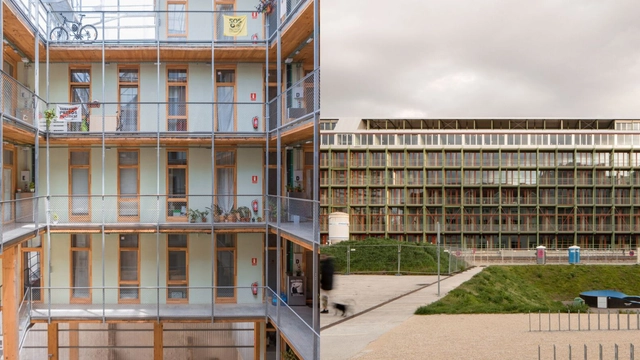
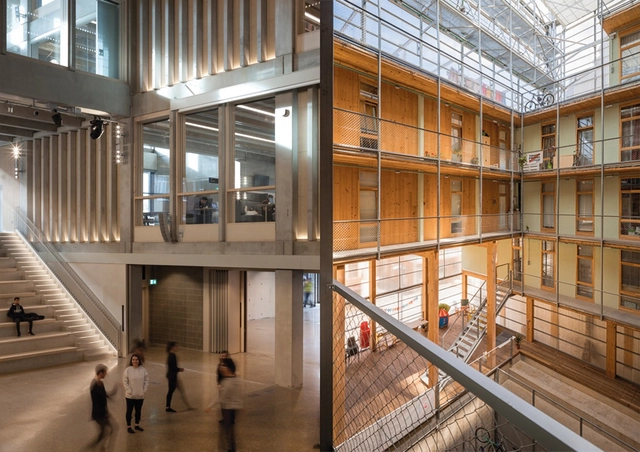
The European Commission and the Mies van der Rohe Foundation have announced that Kingston University Town House by Grafton Architects and La Borda cooperative housing by Lacol are the recipients of the 2022 European Union Prize for Contemporary Architecture - Mies van der Rohe Award. Winner of the Architecture Category, Kingston University Town House was awarded for its "remarkable environmental quality that creates an excellent atmosphere for studying, gathering, dancing and being together". The 2022 Emerging Architecture Prize was given to La Borda cooperative housing by Lacol in Barcelona, commended for its "co-ownership and co-management of shared resources and capacities".

Grafton Architects' Kingston University Town House and Lacol's La Borda Win the 2022 EU Mies Award - Image 1 of 4Grafton Architects' Kingston University Town House and Lacol's La Borda Win the 2022 EU Mies Award - Image 2 of 4Grafton Architects' Kingston University Town House and Lacol's La Borda Win the 2022 EU Mies Award - Image 3 of 4Grafton Architects' Kingston University Town House and Lacol's La Borda Win the 2022 EU Mies Award - Image 4 of 4Grafton Architects' Kingston University Town House and Lacol's La Borda Win the 2022 EU Mies Award - More Images+ 2