1. ArchDaily
  2. LAUS architectes

LAUS architectes: The Latest Architecture and News

When Eating Becomes Spatial: 14 Projects Built Around Shared Meals

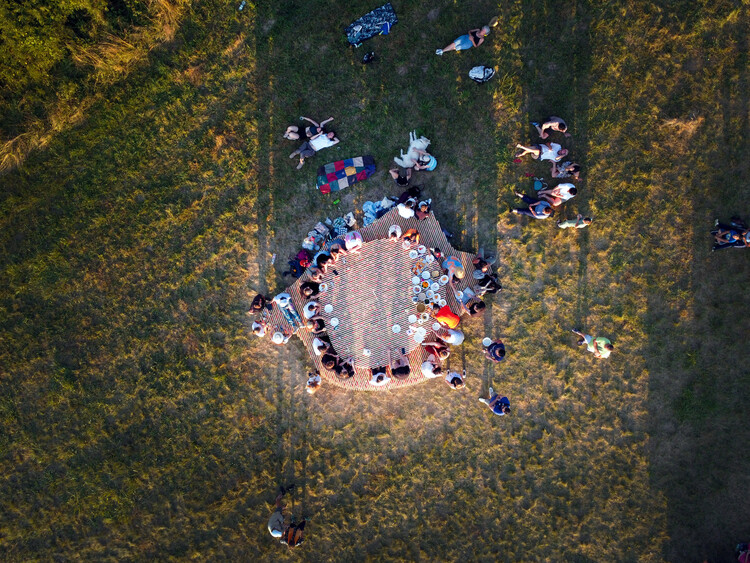
In recent years, food has taken on a renewed role within architecture, not simply as a program or typology, but as a shared spatial practice. Beyond restaurants or dining design, communal eating spaces are increasingly understood as environments where presence, ritual, and time intersect, allowing people to gather, stay, and coexist. In these settings, eating does not just happen within space; it actively shapes it, temporarily transforming ordinary, borrowed, or improvised environments into places of exchange.

This shift is visible across a wide range of built projects, installations, and community spaces that use shared meals as a way of bringing people together. Initiatives such as Fondo Supper Club frame dining as a social platform, using food to connect artists, designers, and local communities through conversation and collaboration. Similarly, sit.feast, presented during Milan Design Week 2024, approached the table as a spatial installation, one where sitting and eating together became the primary means of collectively producing space.
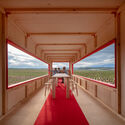
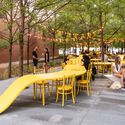
When Eating Becomes Spatial: 14 Projects Built Around Shared Meals - Image 1 of 4When Eating Becomes Spatial: 14 Projects Built Around Shared Meals - Image 2 of 4When Eating Becomes Spatial: 14 Projects Built Around Shared Meals - Image 3 of 4When Eating Becomes Spatial: 14 Projects Built Around Shared Meals - Image 4 of 4When Eating Becomes Spatial: 14 Projects Built Around Shared Meals - More Images+ 16

Designing the Public Market: Architecture for Gathering, Trading, and Belonging

The making of a place is not a difficult thing in principle; it is enough for people to come together in a regular set location for a purpose or activity, and a space becomes. This does not disregard the fact that a physical element needs to accompany this gathering for a space to become sheltering, accommodating, and alluring. This idea of the space that emerges from intent can most definitely be seen in one of the most ancient of functions, which is food or produce markets.

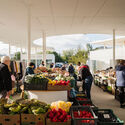
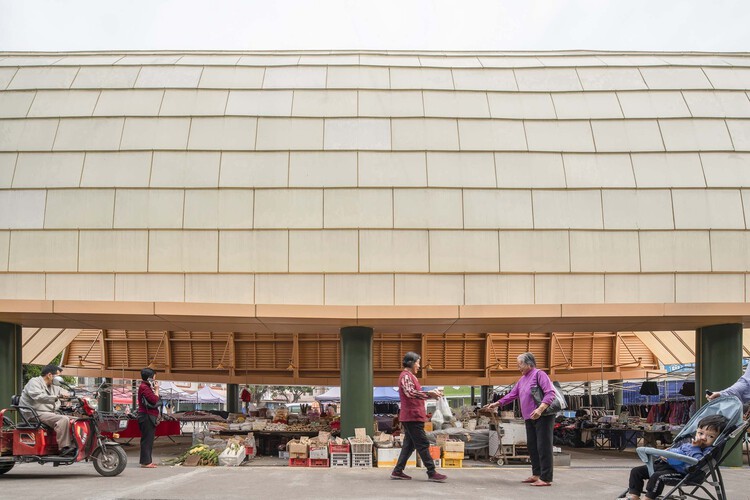
For a market to become, the architectural element can be as simple as a light roof, which would harbor merchants and offer a non-spoken boundary to the place, or it can be as resourceful as adaptively reusing an existing building or site to fit new needs. Finally, it can be a temporary and lightweight structure pitched for certain events or needs and then removed to be used elsewhere, or for other means.

Designing the Public Market: Architecture for Gathering, Trading, and Belonging - SustainabilityDesigning the Public Market: Architecture for Gathering, Trading, and Belonging - SustainabilityDesigning the Public Market: Architecture for Gathering, Trading, and Belonging - SustainabilityDesigning the Public Market: Architecture for Gathering, Trading, and Belonging - SustainabilityDesigning the Public Market: Architecture for Gathering, Trading, and Belonging - More Images+ 15