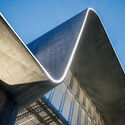
House of Wine in Berneck. Image Courtesy of Faruk Pinjo + Carlos Martinez Architekten
Bi-folding doors flood a room with light, offering the spatial flexibility to establish a dialogue with the surroundings. The Woodline series by Solarlux integrates manufacturing quality and technical expertise with architectural freedom, providing transparent facade solutions for versatile, sustainable architecture. The natural surfaces further enhance the building envelope with a distinct tactile quality.
In Hong Kong, where interiors and small buildings are routinely caught between two extremes—high-gloss "luxury" finishes on one end, and budget-cautious industrial roughness on the other—a third attitude has emerged through the calibration of both: a uniquely precise, relevant, and materially honest execution that is not dependent on price point. This is calibrated rawness. Calibrated rawness describes an architecture that retains the directness of matter and materiality—concrete, metal, blockwork, exposed structure, visible services—while subjecting it to rigorous control.
The "raw" is not a costume, and the "refined" is not polished; it is a discipline of precise execution, producing spaces that feel balanced and considered, yet never "made up" or overworked. Studio 1:1 demonstrates this attitude consistently across its work—and its upcoming publication, Architecture under the Radar: Three Projects in Asia (with a foreword by Nader Tehrani), offers a timely frame through which to read this ethos as more than an aesthetic, but as a repeatable architectural method.
The construction industry, traditionally reliant on the intensive use of non-renewable natural materials, is at a decisive moment to reevaluate its processes and mitigate its significant environmental impact. How can the growing demand for infrastructure, housing, healthcare, and education be met without depleting natural resources? While recycling initiatives are gaining traction, they remain insufficient. In this context, more innovative solutions are emerging, proposing the use of agricultural waste, such as sugarcane bagasse, to create sustainable and disruptive alternatives for construction.
Mud Frontiers. Image Courtesy of Rael San Fratello
Understanding a discipline from multiple perspectives and intersections is essential for acquiring a deep understanding of it. In architecture, the diversity of approaches to its study enriches our perception by allowing us to appreciate its complexity from different angles. For students and professionals alike, exploring aspects such as history, sources of materials and products, construction processes, implementation of new technologies, and contemporary social challenges is crucial. These aspects intertwine and expand the conventional notion of "architecture," transcending the mere creation of buildings or the definition of spaces.
Ronald Rael, an architect and the Eva Li Memorial Chair in Architecture at the University of California, Berkeley, exemplifies this vision through his practice, which spans from research to connecting indigenous and traditional material practices with contemporary technologies and issues. As an activist and designer, Rael's research interests explore additive fabrication, border-wall studies, and earth construction. Co-founder of Rael San Fratello, Emerging Objects, and Forust, his practice shows an approach to architecture that is highly relevant in contemporary times.
https://www.archdaily.com/1016555/we-can-transform-the-profession-by-rethinking-how-we-might-serve-society-a-conversation-with-ronald-raelEnrique Tovar
Christopher Payne’s fascination with factories goes back decades. As an architecture student at the University of Pennsylvania in the 1990s, Payne had the good fortune to find a summer job with an agency inside the National Park Service called the Historic American Buildings Survey. “They sent teams of architecture students, historians, and photographers to document all kinds of projects,” he says. “We documented grain elevators in Buffalo, cast iron bridges in Ohio, a power plant in Alabama, and national parks in Utah. That experience instilled a deep appreciation for industrial architecture.” After graduation, he worked for several years as an architect in New York City before transitioning full-time to photography. His previous books include New York’s Forgotten Substations: The Power Behind the Subway; Asylum: Inside the Closed World of State Mental Hospitals; North Brother Island: The Last Unknown Place in New York City; and Making Steinway: An American Workplace. Last month, Payne gave the School of Visual Art’s Ralph Caplan Memorial Lecture, and shortly afterward I reached out to him to talk about his most recent book, Made in America (Abrams), his long love affair with factories, and the photographic process.
The phrase “Demography is destiny” is repeated more than once in Smaller Cities in a Shrinking World (Island Press). This new book by noted urban researcher Alan Mallach tackles, in meticulous and fascinating detail, the “wicked problem” of shrinking cities in the U.S. and across the globe. But it’s not only our cities that are shrinking—the countries that contain them are, too. I spoke with Mallach about the imperative of planning for this new demographic reality.
When a country becomes known for its most famous export, the two together can become synonymous with quality. Combinations such as French wine, Italian marble and German engineering are examples of the hallmark of excellence provided simply by a product’s geographic birthplace. While Portugal’s most famous and most passionate exports could equally be cork, football, or egg-based sweet treats, there’s far more to the Portuguese culture and economy than preening soccer players and custard tarts.
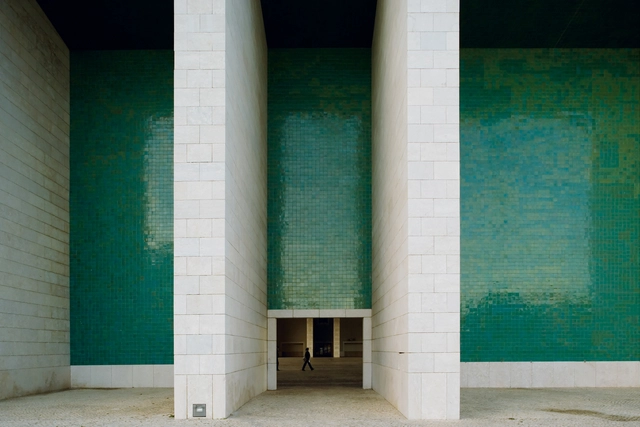
While Portuguese culture’s relationship with ceramics is known for the distinctively patterned plates, bowls, and jugs millions of tourists attempt to keep intact on the journey home, few are paying the extra baggage charge for 50 sqm of ceramic tiles. The country’s agreeable climate, however, along with a history of craftsmanship and the natural strength, durability, and pigment of Portuguese clay, means high-quality ceramic facades are an identifiable feature of Portuguese architecture. And the material is exported all over the world for both exterior and interior surfaces.
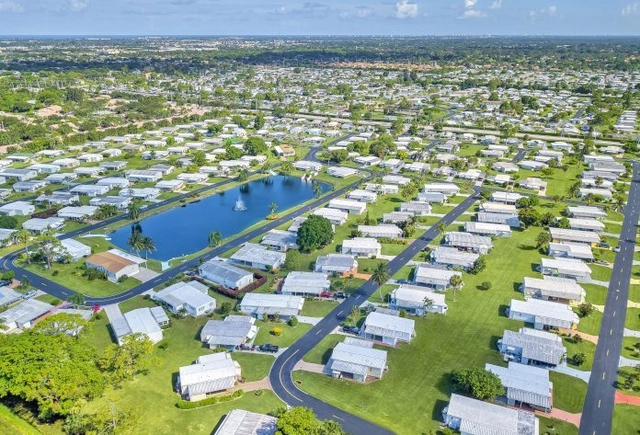
Royal Manor Mobile Home Park. Image Courtesy of MH Village
The future of manufactured homes may reinvent the form of something that already widely exists- trailer parks. All across the United States, these small homes are being reimagined by architects by utilizing more sustainable materials, inventive construction techniques, and value engineering to create affordable homes and reinvent the once negative connotation that surrounded this housing typology.
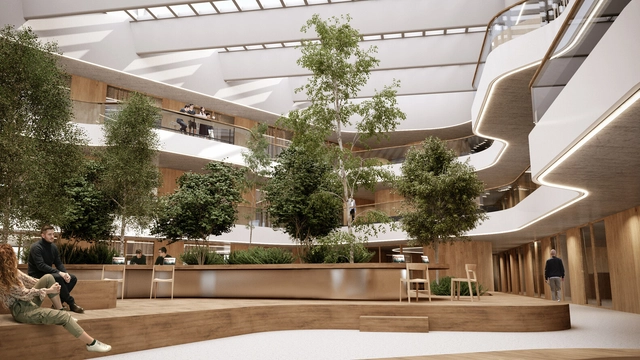
Designed by 3LHD Architects, the new campus for the Croatian electric hypercar manufacturer Rimac brings together a wide array of programs and spaces, from production plant and offices to kindergarten, dormitory and even a sheep meadow. Located in the outskirts of Zagreb, within a natural landscape, the Rimac Campus is organized around two main volumes that follow the site’s natural topography, with several accompanying facilities tucked underneath a green roof that stretches out, meeting the surrounding landscape.
Up-and-coming Ghent architecture studio TRANS focuses, in the projects presented here, on bringing manufacturing back into the city. City Made presents three recently built factory facilities in Flanders through interviews and high-quality drawings and pictures, offering precise documentation of their construction.
FABRICATE is a triennial international peer-reviewed conference with supporting publication on the theme of Digital Fabrication. The FABRICATE 2017 conference aims to instigate discussions on constructed projects and cutting-edge research in the context of computational design and digital fabrication between leading experts in academia and industry. The event will convene over April 6 - 8 2017 at the University of Stuttgart.