1. ArchDaily
  2. Membrane

Membrane: The Latest Architecture and News

"Calibrated Instability": Daryan Knoblauch on Building With Tension, Time, and Light

Daryan Knoblauch's work sits at the intersection of architecture and live cultural production, with a focus on how space is made legible through tension and atmosphere. Rather than treating temporary work as a lesser category of architecture, Knoblauch approaches installations, stages, and event architectures as full disciplinary problems—where enclosure, stability, light, and movement must be resolved with the same seriousness as any building, often under tighter constraints and faster timelines.

Across projects, a consistent thread is the productive tension between high-modern precision and an intentionally raw clarity of assembly. Membranes and lightweight systems are not deployed as surface effects, but as structural and spatial instruments—tuned to wind, load, and occupation, and calibrated to produce a sublimity that is felt as much as it is seen. Here, ephemerality is not simply a duration, but a design condition: temporality makes forces—weather, wear, performance—more visible, and demands an ethic of making that is both exacting and adaptable.
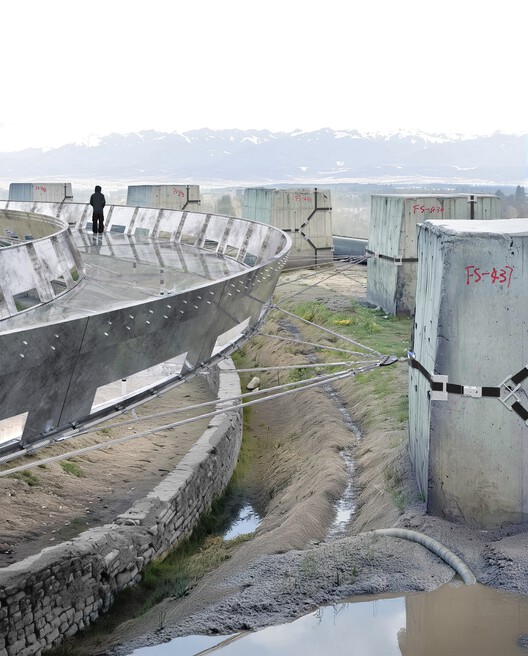
"Calibrated Instability": Daryan Knoblauch on Building With Tension, Time, and Light - Image 1 of 4"Calibrated Instability": Daryan Knoblauch on Building With Tension, Time, and Light - Image 2 of 4"Calibrated Instability": Daryan Knoblauch on Building With Tension, Time, and Light - Image 3 of 4"Calibrated Instability": Daryan Knoblauch on Building With Tension, Time, and Light - Image 4 of 4Calibrated Instability: Daryan Knoblauch on Building With Tension, Time, and Light - More Images+ 4

From Drainage to Waterproofing: How to Shape the Design and Performance of Shower Systems

 | Sponsored Content

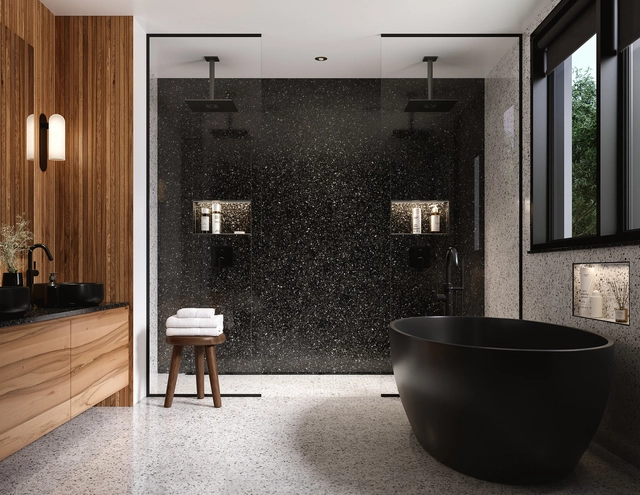
In contemporary bathroom architecture, the drain has evolved from a purely functional component into a design element that guides layout, accessibility, and long-term performance. When drainage, slope geometry, and waterproofing are designed as one system, the tiled surface achieves both visual refinement and reliable function—qualities that are critical for hotels, spas, and residences. Schluter® establishes the essential drain-to-waterproofing connection in a controlled factory setting, rather than relying on field assembly.

Architecture for Glamping: Embracing Nature with Comfort

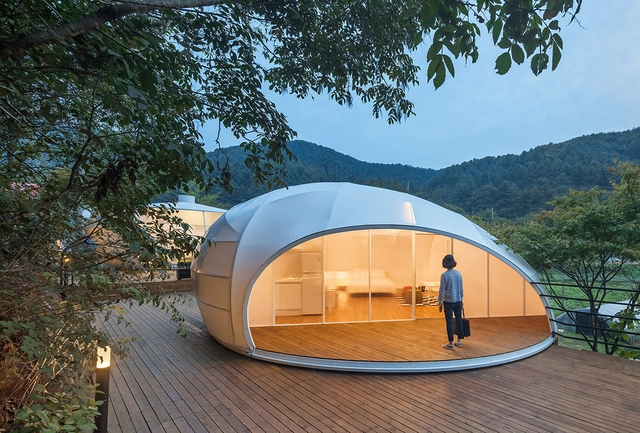
Camping, as defined in dictionaries, involves temporarily staying outdoors, setting up makeshift accommodations, and settling in natural surroundings. In architecture, tents symbolize these aspects, representing a typology that has endured across centuries and cultures, often linked with notions of impermanence and vulnerability.

In light of this common understanding, the term 'glamping' emerged in the early 2000s, blending 'camping' with 'glamour,' suggesting a fusion of camping with luxurious amenities. However, despite its recent popularization, the concept is far from original. Camping has not always been seen as the antithesis of luxury.

Architecture for Glamping: Embracing Nature with Comfort - Image 1 of 4Architecture for Glamping: Embracing Nature with Comfort - Image 2 of 4Architecture for Glamping: Embracing Nature with Comfort - Image 3 of 4Architecture for Glamping: Embracing Nature with Comfort - Image 4 of 4Architecture for Glamping: Embracing Nature with Comfort - More Images+ 12

Tensile Structures: How Do They Work and What Are the Different Types?

Subscriber Access | 

Historically inspired by some of the first man-made shelters—such as the black tents first developed using camel leather by the nomads of the Sahara Desert, Saudi Arabia, and Iran, as well as the structures used by Native American tribes—tensile structures offer a range of positive benefits compared to other structural models.

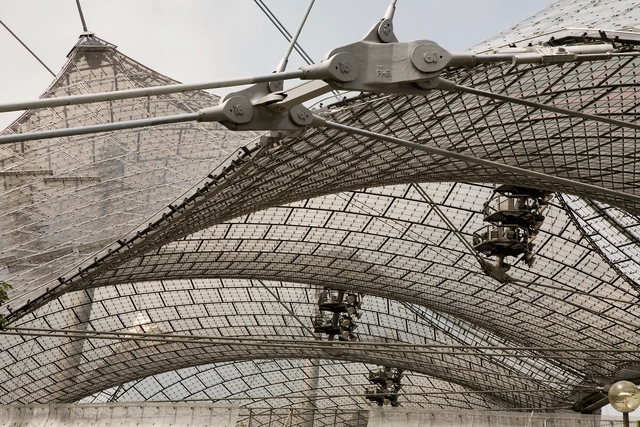
Tensile structure is the term usually used to refer to the construction of roofs using a membrane held in place on steel cables. Their main characteristics are the way in which they work under stress tensile, their ease of pre-fabrication, their ability to cover large spans, and their malleability. This structural system calls for a small amount of material thanks to the use of thin canvases, which when stretched using steel cables, create surfaces capable of overcoming the forces imposed upon them.

Tensile Structures: How Do They Work and What Are the Different Types? - Image 1 of 4Tensile Structures: How Do They Work and What Are the Different Types? - Image 2 of 4Tensile Structures: How Do They Work and What Are the Different Types? - Image 3 of 4Tensile Structures: How Do They Work and What Are the Different Types? - Image 4 of 4Tensile Structures: How Do They Work and What Are the Different Types? - More Images+ 11