1. ArchDaily
  2. Mexico-United States Border

Mexico-United States Border: The Latest Architecture and News

Tijuana-San Diego as a Creative Beacon: Exploring the World Design Capital's Growing Influence

Subscriber Access | 

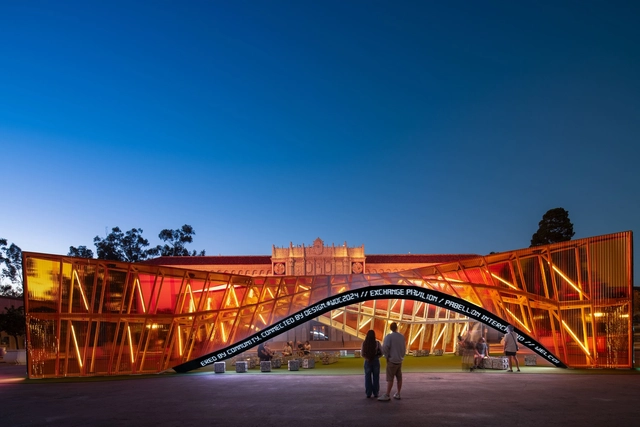
Global conferences, events, and exhibitions have profoundly influenced the evolution of architecture and design, serving as catalysts for innovation, new ideas, and pivotal debates. Some gatherings, like the historic Congrès International d'Architecture Moderne, have impacted the field. In contrast, others, such as the Venice Biennale and the World Design Capital (WDC), continue shaping the architectural landscape through periodic editions. Initiated in Turin, Italy, the WDC celebrates a different city every two years as a hub of design reflection and creativity. In the latest edition, the binational region of Tijuana-San Diego made history as the first cross-border WDC, emerging as a creative epicenter with a rich, innovative program that warrants special attention.
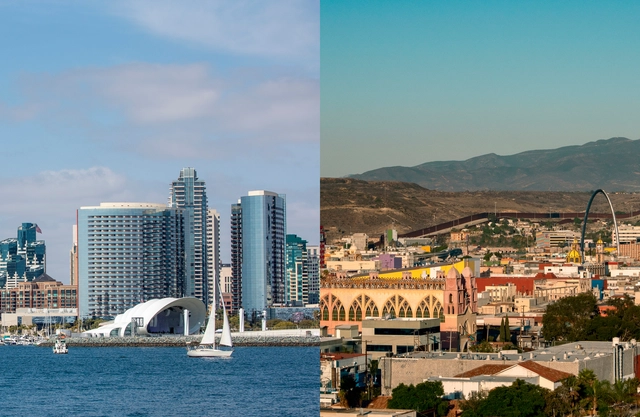
From Borderlines to Blurred Boundaries: San Diego-Tijuana as the World Design Capital 2024

Subscriber Access | 

When drawing, lines are fundamental elements of composition. They delineate space, outline structures, and define boundaries. When it comes to maps and borders, the line acquires a particular meaning, as this "simple" graphic expression marks a powerful division between regions, setting the beginning or the end of a territory. This line has a profound meaning at the limit between Mexico and the United States, where it constantly blurs and questions the border. In these places, multiculturalism is a daily occurrence, with a continuous negotiation of boundaries present in all aspects of life. The dynamic of these borders involves design and the generation of a complex network of interactions and collaborations.

Rather than being divided into Tijuanenses on one side and San Diegans on the other, this particular region stands out as a community whose essence harmonizes with a deep legacy of cross-border collaboration, rather than being seen as cities separated by a line. As the first binational designation in the history of the World Design Capital (WDC) program, the Tijuana-San Diego region shares a common interest in addressing urban, social, and economic issues through design. Thus, via conferences, policy summits, and workshops, the region seeks to enhance the catalyzation of ideas through its designation.

Tijuana City Guide: 9 Projects to Explore in the 2024 World Design Capital

Subscriber Access | 

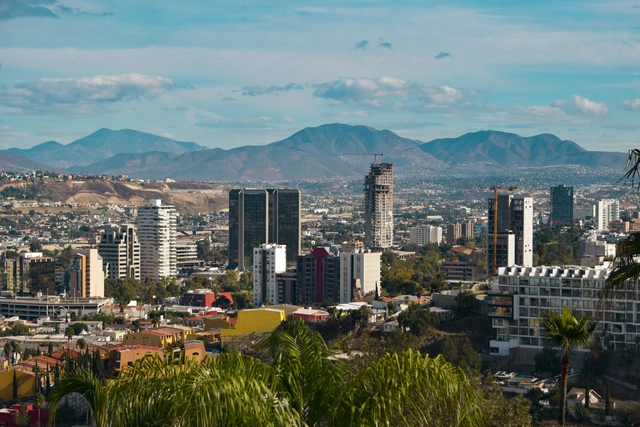
The U.S.-Mexico border is a region of vast historical, cultural, and economic significance, where cities of fundamental importance to North America have emerged. Tijuana—located in northeastern Mexico—, is one of these cities. Since its earliest beginnings in the 18th century, it has experienced exponential urban growth, closely linked to its northern neighbor, San Diego. Understanding Tijuana in its entirety is only possible by mentioning this connection. For this reason, along with San Diego, it was selected as the World Design Capital 2024, celebrating the interaction and cultural exchange between the two cities.

Historically, the city has been a melting pot of nuances reflected in its urban landscape. Examples such as the Tijuana Cultural Center, designed by Pedro Ramírez Vázquez and Manuel Rosen, show the city's search for a modern style. In parallel, the OTAY Cross Border Xpress Building illustrates the relationship between countries in a complex whose architectural program spans both sides of the border. Additionally, contemporary projects contribute to developing a new stage in the city's life by creating public spaces.

Tijuana City Guide: 9 Projects to Explore in the 2024 World Design Capital - Image 1 of 4Tijuana City Guide: 9 Projects to Explore in the 2024 World Design Capital - Image 2 of 4Tijuana City Guide: 9 Projects to Explore in the 2024 World Design Capital - Image 3 of 4Tijuana City Guide: 9 Projects to Explore in the 2024 World Design Capital - Image 4 of 4Tijuana City Guide: 9 Projects to Explore in the 2024 World Design Capital - More Images+ 5

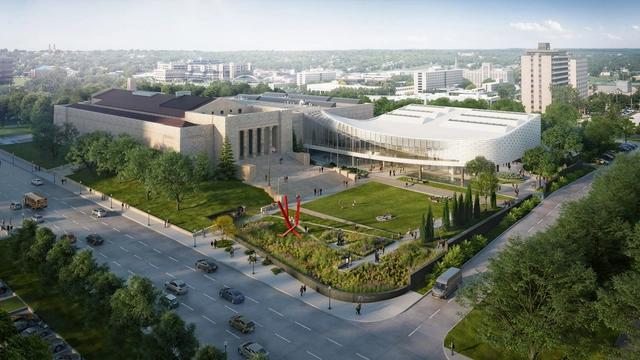
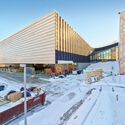
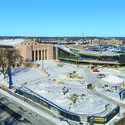
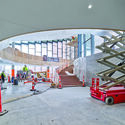
Snøhetta’s Expansion of the Joslyn Art Museum Set to Open in September 2024

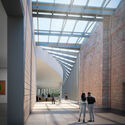
The Joslyn Art Museum in Nebraska announced that the restoration and expiation works led by Snøhetta and Alley Poyner Macchietto Architecture (APMA) are nearing completion, as the transformed institution is scheduled to reopen on September 10, 2024. The new 42,000-square-foot Rhonda & Howard Hawks Pavilion, designed by Snøhetta and APMA will add new gallery spaces to Nebraska’s largest art museum, becoming the centerpiece of the large-scale project for reimagining the visitor experience.

Snøhetta’s Expansion of the Joslyn Art Museum Set to Open in September 2024   - Image 1 of 4Snøhetta’s Expansion of the Joslyn Art Museum Set to Open in September 2024   - Image 2 of 4Snøhetta’s Expansion of the Joslyn Art Museum Set to Open in September 2024   - Image 3 of 4Snøhetta’s Expansion of the Joslyn Art Museum Set to Open in September 2024   - Image 4 of 4Snøhetta’s Expansion of the Joslyn Art Museum Set to Open in September 2024   - More Images+ 13

Overland Partners to Design a 6.3-mile Park On the US-Mexico Border

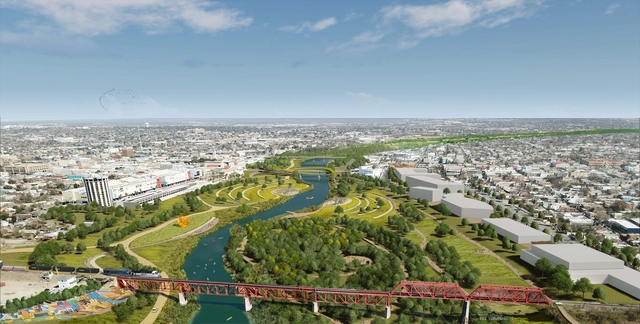
As part of a strategy developed in late 2021 by Ken Salazar (US Ambassador to Mexico), Deanna Kim (US Consul General in Nuevo Laredo), and Esteban Moctezuma (Mexico Ambassador) in collaboration with leaders politicians, and businessmen from the southern region of Texas and the Mexican state of Tamaulipas, Overland Partners has been announced in conjunction with Able City as the creators of the new 6.3-mile "Binational River Park" that will extend along the Rio Grande - Rio Grande between Laredo, Texas and Nuevo Laredo, Mexico. This new space aims to restore and revitalize the ecosystem as well as attract tourism and celebrate the multiculturalism that takes place in this border territory.

History, Public Space, and Urban Interventions Along the US-Mexican Border

History, Public Space, and Urban Interventions Along the US-Mexican Border  - Image 1 of 4History, Public Space, and Urban Interventions Along the US-Mexican Border  - Image 2 of 4History, Public Space, and Urban Interventions Along the US-Mexican Border  - Image 3 of 4History, Public Space, and Urban Interventions Along the US-Mexican Border  - Image 4 of 4History, Public Space, and Urban Interventions Along the US-Mexican Border  - More Images+ 5

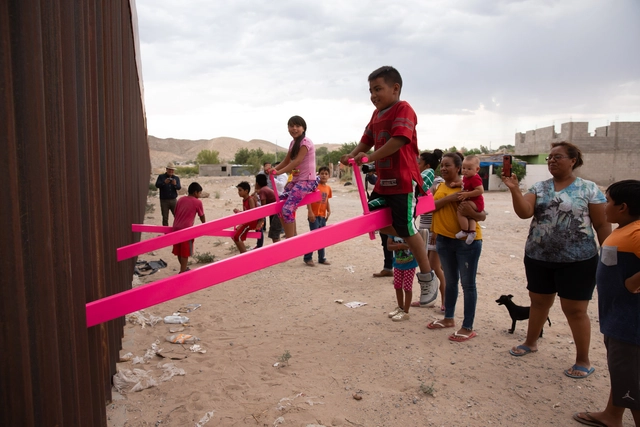
Mexico, a North American country spanning over 1,964,375 km2, features a vast mosaic of different cultures that extends far beyond its geographical boundaries. Nowhere is this diversity more evident than along the 3,141km border stretching from the Gulf of Mexico to the Pacific Ocean, running through 48 counties within the United States and 94 municipalities within the Mexican states.

Swiss Pavilion at the 2021 Venice Biennale Explores the Political and Social Implications of the Country's Border

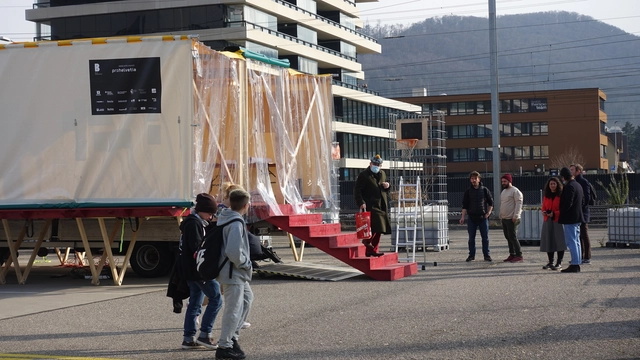
Titled Oræ -Experiences on the Border, (oræ, Latin for “borders”) the Swiss contribution to the 17th Venice Biennale explores the spatial and political dimension of the country’s border, investigating the social implications of this inhabited territory. Created by a Geneva-based team of architects and artists comprising Mounir Ayoub and Vanessa Lacaille from Laboratoire d’architecture, as well as filmmaker Fabrice Aragno and artist sculptor Pierre Szczepanski, the exhibition details a series of participative processes performed along the Swiss border that investigate the frontier and its inhabitants, revealing the poetic character of the space.

Swiss Pavilion at the 2021 Venice Biennale Explores the Political and Social Implications of the Country's Border - Image 1 of 4Swiss Pavilion at the 2021 Venice Biennale Explores the Political and Social Implications of the Country's Border - Image 2 of 4Swiss Pavilion at the 2021 Venice Biennale Explores the Political and Social Implications of the Country's Border - Image 3 of 4Swiss Pavilion at the 2021 Venice Biennale Explores the Political and Social Implications of the Country's Border - Image 4 of 4Swiss Pavilion at the 2021 Venice Biennale Explores the Political and Social Implications of the Country's Border - More Images+ 4