1. ArchDaily
  2. micro living

micro living: The Latest Architecture and News

Beyond Circulation: Stair Solutions for Small-Footprint Living in Asia

Subscriber Access | 

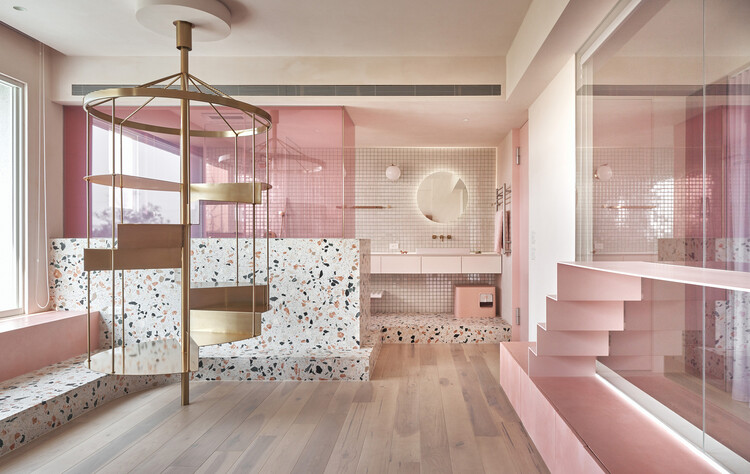
In many high-density cities across Asia, the staircase is often treated as a necessary evil. Whether in apartment buildings, private homes, or retail interiors, it is frequently hidden, tucked away, or pushed to the margins—an element to be minimized so more area can be given to "usable" space. Yet as density intensifies and square footage becomes increasingly scarce, architects and designers are forced to rethink this vertical puzzle.

The question shifts from how to conceal the staircase to how to make it work harder: can it become a productive addition to the interior—an architectural device that does more than connect levels, performing dual (or multiple) duties rather than simply consuming floor area?


Beyond Circulation: Stair Solutions for Small-Footprint Living in Asia - Image 1 of 4Beyond Circulation: Stair Solutions for Small-Footprint Living in Asia - Image 2 of 4Beyond Circulation: Stair Solutions for Small-Footprint Living in Asia - Image 3 of 4Beyond Circulation: Stair Solutions for Small-Footprint Living in Asia - Image 4 of 4Beyond Circulation: Stair Solutions for Small-Footprint Living in Asia - More Images+ 11

Explore 15 Houses That Get the Most Out of an Accessory Dwelling Unit (ADU)

Subscriber Access | 

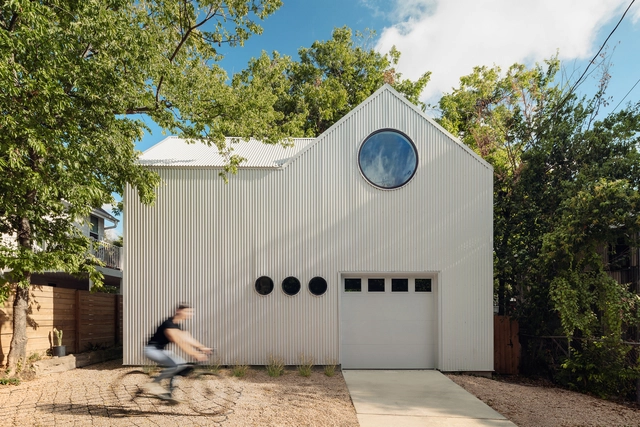
Contemporary family living setups mean parents and grandparents in need of care, teenagers and young adults in need of independence, and homeowners in need of the financial security of a guaranteed passive income are all finding themselves in the same situation, and under the same roof. With little extra space to move into, and few options in an increasingly squeezed housing market to move out to, the simple solution is just to add another roof.

For those in the market for more functional floorspace, detached single-story ADUs (accessory dwelling units) are a simple way to boost a home’s usability fast, while avoiding the regulatory wranglings inherent in more complex structural adaptations.

Explore 15 Houses That Get the Most Out of an Accessory Dwelling Unit (ADU) - Image 1 of 4Explore 15 Houses That Get the Most Out of an Accessory Dwelling Unit (ADU) - Image 2 of 4Explore 15 Houses That Get the Most Out of an Accessory Dwelling Unit (ADU) - Image 3 of 4Explore 15 Houses That Get the Most Out of an Accessory Dwelling Unit (ADU) - Image 4 of 4Explore 15 Houses That Get the Most Out of an Accessory Dwelling Unit (ADU) - More Images+ 16

How Architecture and Design on Earth Helps to Plan For Life on Mars

Subscriber Access | 

SpaceX founder and science-fiction fan Elon Musk is attempting to make the fiction of space travel a scientific reality. ‘In order to safeguard the existence of humanity,’ he explains, ‘we need to become a multi-planetary civilization.’ Musk says he’s laser-focused on ensuring we make a second home elsewhere in space, and has his sights set on Mars. He’s not alone, of course. NASA’s recently-released Moon to Mars Architecture Concept Review is a ‘study of the hardware and operations needed for human missions to the Moon and Mars,’ leading to long-term scientific discovery and human habitation in deep space.

But there’s a long way to go before we get there – and not just the 140 million miles (average distance to Mars). The biggest challenge to Mars habitation and eventual colonization is humanity itself, and our indecision. Many of us question why we should sink so much of our energy – both effort and resources – into such a task, when there are plenty of more pressing matters to address here on Earth?

How Architecture and Design on Earth Helps to Plan For Life on Mars - Image 1 of 4How Architecture and Design on Earth Helps to Plan For Life on Mars - Image 2 of 4How Architecture and Design on Earth Helps to Plan For Life on Mars - Image 3 of 4How Architecture and Design on Earth Helps to Plan For Life on Mars - Image 4 of 4How Architecture and Design on Earth Helps to Plan For Life on Mars - More Images+ 34

UN and Yale University Unveil "Tiny House" as the Future of Eco-Living

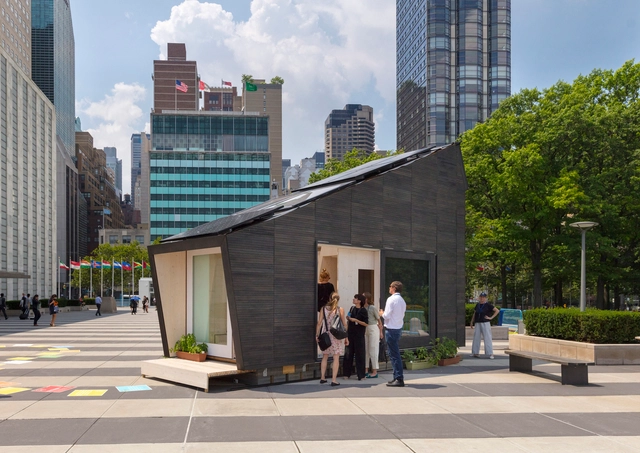
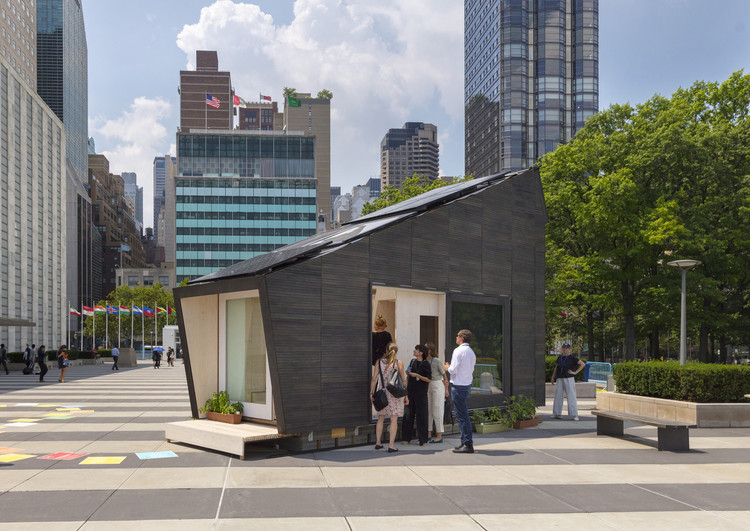
In an effort to spark public discussion and new ideas on how sustainable design can manifest as decent, affordable housing, Yale University has collaborated with UN Environment and UN-Habitat to unveil a “tiny house” fully powered by renewable energy. At 22-square-meters, the eco-house is designed to “test the potential for minimizing the use of natural resources such as water.”

The prototype was unveiled during the United Nations High-Level Political Forum on Sustainable Development, constructed from locally-sourced, bio-based renewable materials. While the first prototype is designed for the climate and context of New York, future iterations can be adapted for site-specific conditions around the globe. Design and fabrication of the module was carried out by Gray Organschi Architecture, working in direct partnership with the Yale Center for Ecosystems in Architecture.

UN and Yale University Unveil "Tiny House" as the Future of Eco-Living - Image 1 of 4UN and Yale University Unveil "Tiny House" as the Future of Eco-Living - Image 2 of 4UN and Yale University Unveil "Tiny House" as the Future of Eco-Living - Image 3 of 4UN and Yale University Unveil "Tiny House" as the Future of Eco-Living - Image 4 of 4UN and Yale University Unveil Tiny House as the Future of Eco-Living - More Images+ 21