1. ArchDaily
  2. Mid-Century

Mid-Century: The Latest Architecture and News

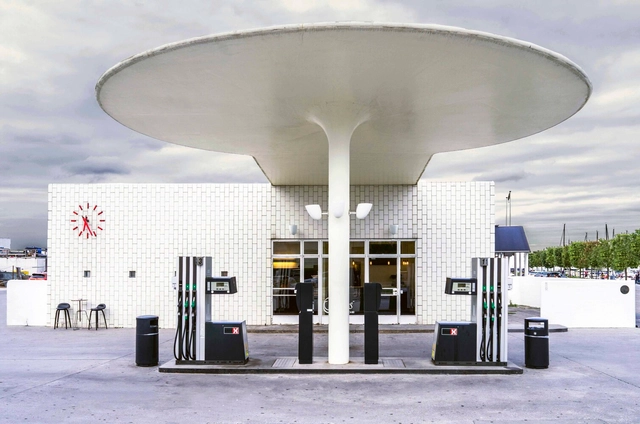
The Evolution of Gas Stations: From Roadside Stops to Architectural Landmarks

The gas station is an architectural typology that has undergone significant transformations since its inception. Initially, these structures were simple roadside refueling points designed for functionality rather than aesthetics. As automobile culture expanded, gas stations evolved to accommodate new technologies, shifting urban landscapes and changing consumer behaviors. Over time, they became more than just utilitarian stops — they developed into service hubs, integrating restaurants, motels, and leisure spaces, responding to contemporary transportation increasing demands.

By the late 20th century, however, the widespread standardization of gas stations led them to be perceived as "non-places", a concept defined by anthropologist Marc Augé to describe transient spaces that lack social or cultural significance. With uniform designs and a focus on efficiency, gas stations became interchangeable, reinforcing their role as purely functional infrastructure rather than meaningful architectural interventions. This standardization also departed from the era when fuel stations served as recognizable landmarks, contributing to a homogenized landscape devoid of local identity.

The Evolution of Gas Stations: From Roadside Stops to Architectural Landmarks - Image 1 of 4The Evolution of Gas Stations: From Roadside Stops to Architectural Landmarks - Image 2 of 4The Evolution of Gas Stations: From Roadside Stops to Architectural Landmarks - Image 3 of 4The Evolution of Gas Stations: From Roadside Stops to Architectural Landmarks - Image 4 of 4The Evolution of Gas Stations: From Roadside Stops to Architectural Landmarks - More Images+ 41

Mid-Century Modernism and East Coast Ruralism: A Study of Adaptive Design

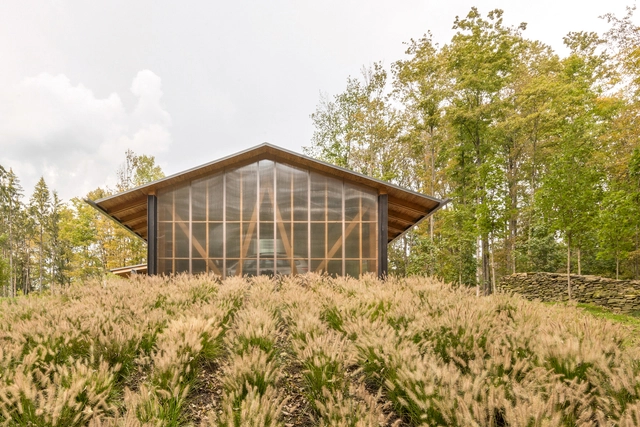
Mid-century modernism, celebrated for its simplicity, functionality, and direct connection with nature, is often associated with urban and suburban environments. However, its principles found fertile ground in the rural landscapes of the United States East Coast. The post-war architectural movement, characterized by innovative materials, clean lines, and harmony with natural surroundings, reveals its adaptability in the hands of architects and craftsmen working in rural regions of the East Coast. Although associated with metropolitan areas, its adoption in rural settings reveals a compelling story of cultural and environmental adaptation.

Mid-Century Modernism and East Coast Ruralism: A Study of Adaptive Design - Image 1 of 4Mid-Century Modernism and East Coast Ruralism: A Study of Adaptive Design - Image 2 of 4Mid-Century Modernism and East Coast Ruralism: A Study of Adaptive Design - Image 3 of 4Mid-Century Modernism and East Coast Ruralism: A Study of Adaptive Design - Image 4 of 4Mid-Century Modernism and East Coast Ruralism: A Study of Adaptive Design - More Images+ 11

Diller Scofidio + Renfro's London Wall West Redevelopment: Demolition of Iconic 1970s Buildings for New Office Space Set to Proceed

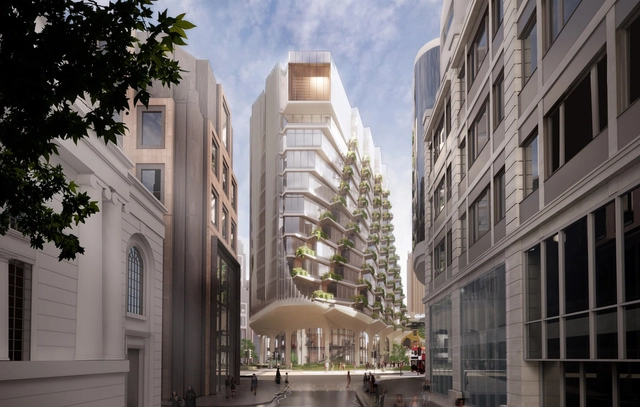
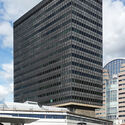
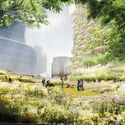
The controversial London Wall West redevelopment project, which involves the demolition of the former Museum of London and Bastion House, is set to proceed. The redevelopment, designed by architecture firms Diller Scofidio + Renfro and Sheppard Robson, will replace the landmark 1970s buildings with a modern office complex. The City of London has confirmed that the Secretary of State for Leveling Up, Housing, and Communities, Michael Gove, has decided not to call in the plans to reevaluate the former museum, allowing the project to move forward.

Diller Scofidio + Renfro's London Wall West Redevelopment: Demolition of Iconic 1970s Buildings for New Office Space Set to Proceed - Image 1 of 4Diller Scofidio + Renfro's London Wall West Redevelopment: Demolition of Iconic 1970s Buildings for New Office Space Set to Proceed - Image 2 of 4Diller Scofidio + Renfro's London Wall West Redevelopment: Demolition of Iconic 1970s Buildings for New Office Space Set to Proceed - Image 3 of 4Diller Scofidio + Renfro's London Wall West Redevelopment: Demolition of Iconic 1970s Buildings for New Office Space Set to Proceed - Image 4 of 4Diller Scofidio + Renfro's London Wall West Redevelopment: Demolition of Iconic 1970s Buildings for New Office Space Set to Proceed - More Images+ 3

From Festivals to Schools, Cathedrals, and Bomb Sites: The Story of Mid-Century Modernism in Britain

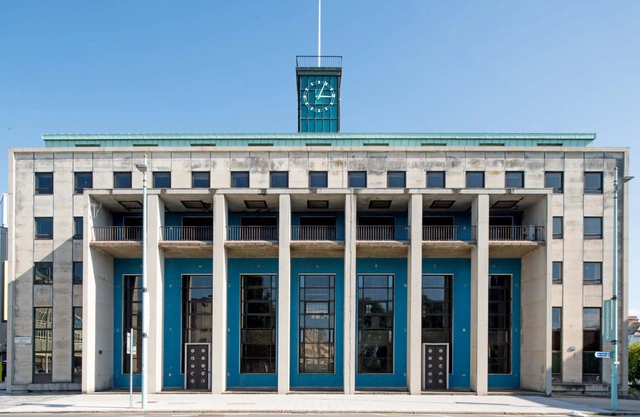
The term “mid-century modern” conjures up images of a sharp-suited Don Draper, slender teak cabinets, and suave chairs from Scandinavia. That is, at least, one perspective of the design movement and a view more of 1950s-era Manhattan offices than anything else. But in Britain, mid-century modernism manifested as something slightly different, coming in the form of schools, cathedrals, housing, and an era-defining festival, all eloquently described and illustrated by the prolific architectural historian Elain Harwood in Mid-Century Britain: Modern Architecture 1938-1963.

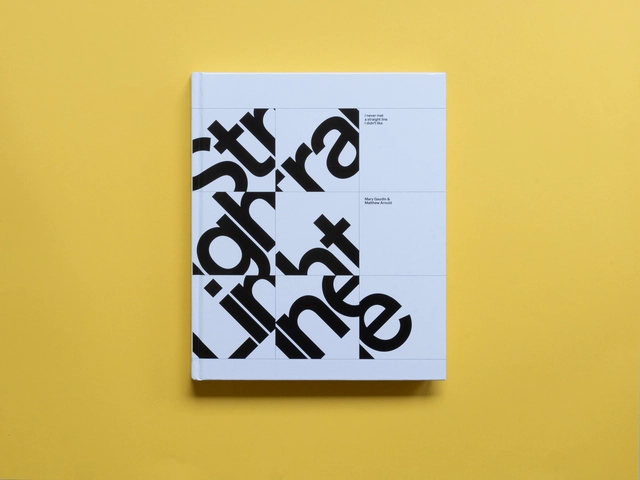
I never met a straight line I didn’t like.

This is a book about a modern architectural movement that bubbled up in a small, conservative city at the bottom of the world.

Frank Bros.: The Store That Modernized Modern

In January 2017, the University Art Museum will open the exhibition Frank Bros.: The Store That Modernized Modern. Long Beach retailer, Frank Bros. Furniture was the primary U.S. source for the most coveted mid-century design at the height of the modernist era, furnishing nearly half of the Case Study Houses for Arts & Architecture Magazine. The store emphasized the principles of aesthetics and functionality in furniture design, and blurred the boundaries between art, design, and commerce with their exhibitions, innovative graphic design, marketing, and public relations. The exhibition will celebrate the legacy of Frank Bros. Furniture, the Frank family, and the impact on modernism in California and the United States.

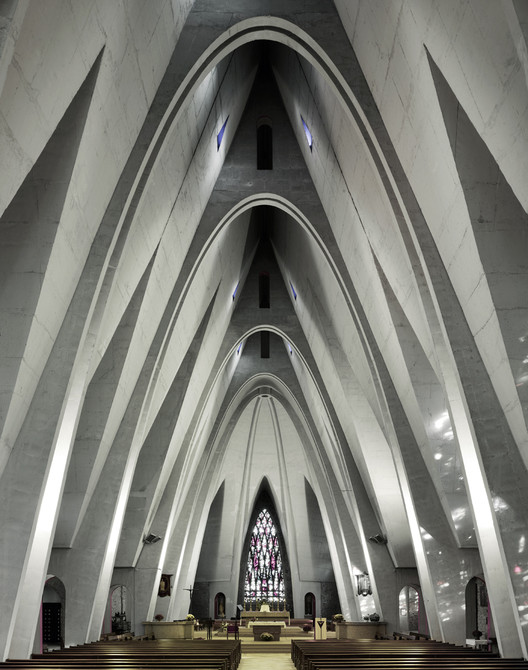
Photography: Mid-Century Modern Churches by Fabrice Fouillet

Subscriber Access | 
Photography: Mid-Century Modern Churches by Fabrice Fouillet - Image 2 of 4
© Fabrice Fouillet

As Europe recovered from the death and destruction of World War II, countries got back to the business of rebuilding their communities and, of course, their churches. The need to make sense of the madness of the War was palpable - as was the need to express this modern-day spirituality in a form that broke from the past and embraced this new world.

The result was a bevy of European churches that - although often misunderstood by practitioners - represent some of our best-preserved examples of Modernist architecture. Photographer Fabrice Fouillet made it his mission to photograph these beauties in a series he calls "Corpus Christi." You can see the images - as well as Fouillet's description of the work - after the break...

Photography: Mid-Century Modern Churches by Fabrice Fouillet - Image 1 of 4Photography: Mid-Century Modern Churches by Fabrice Fouillet - Image 4 of 4Photography: Mid-Century Modern Churches by Fabrice Fouillet - Image 8 of 4Photography: Mid-Century Modern Churches by Fabrice Fouillet - Image 13 of 4Photography: Mid-Century Modern Churches by Fabrice Fouillet - More Images+ 9