1. ArchDaily
  2. Peter Behrens

Peter Behrens: The Latest Architecture and News

Frankfurt Architecture City Guide: 20 Projects Tracing a Skyline Between History and Modernity

Subscriber Access | 

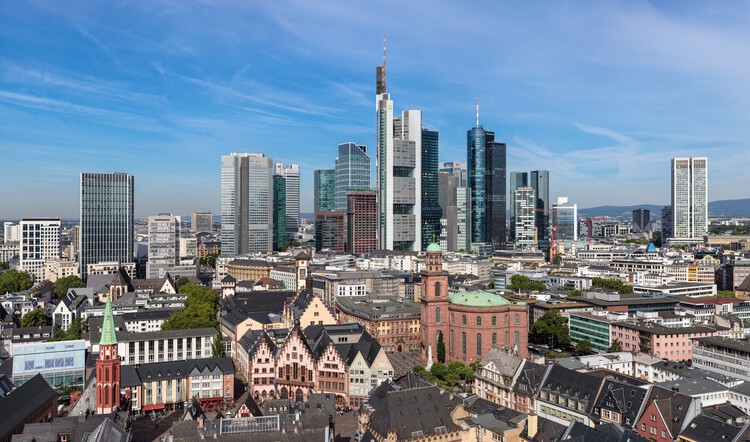
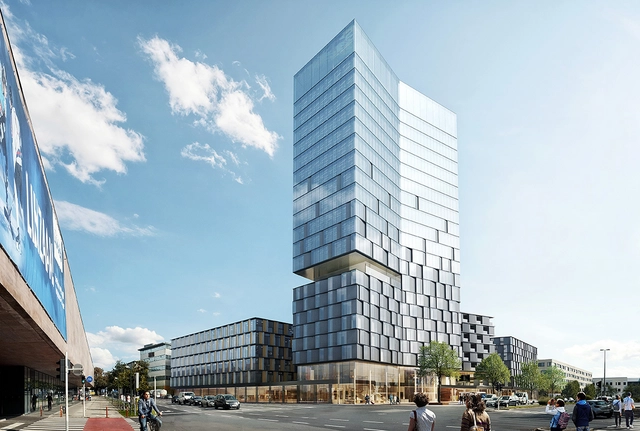
Frankfurt is often recognised for its distinctive skyline, a rare feature in European cities. Towering glass skyscrapers mark its role as a global financial hub, yet beneath this vertical image lies a city layered with centuries of history, destruction, and reconstruction. From medieval timber-framed houses to post-war modernism and contemporary high-rises, Frankfurt has consistently reinvented itself through architecture, producing a built environment where different periods coexist in dialogue.

The city's transformation accelerated after World War II, when much of its historic core was destroyed and planners sought to balance rapid economic growth with the need for cultural reconstruction. Landmarks such as the Römerberg square were meticulously rebuilt, while modernist interventions and infrastructural projects introduced new scales and languages. More recently, projects by internationally renowned offices have reshaped the riverfront and business districts, adding architectural icons that express Frankfurt's global role.

Frankfurt Architecture City Guide: 20 Projects Tracing a Skyline Between History and Modernity - Image 1 of 4Frankfurt Architecture City Guide: 20 Projects Tracing a Skyline Between History and Modernity - Image 2 of 4Frankfurt Architecture City Guide: 20 Projects Tracing a Skyline Between History and Modernity - Image 3 of 4Frankfurt Architecture City Guide: 20 Projects Tracing a Skyline Between History and Modernity - Image 4 of 4Frankfurt Architecture City Guide: 20 Projects Tracing a Skyline Between History and Modernity - More Images+ 23

"The Building as a Dance Between Design and Habitation": In Conversation with Níall McLaughlin

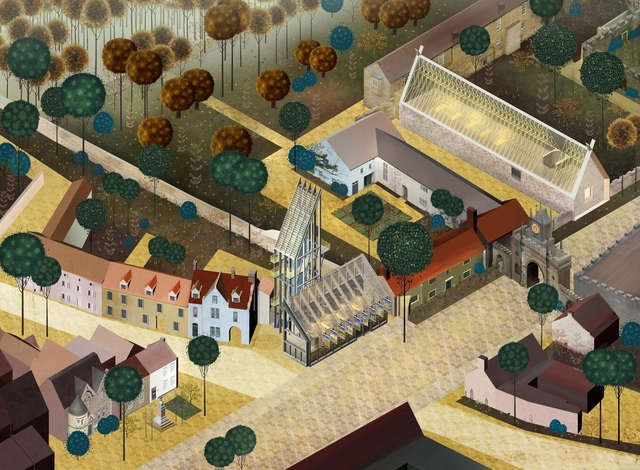
In an era marked by rapid urbanization, climate emergencies, and evolving societal needs, architecture has a complex role to play and a responsibility to engage actively yet sensibly with cultural, political, and economic considerations. In this context, Níall McLaughlin stands out for his balanced approach rooted in historical contexts, yet aware and responsive to contemporary challenges. His studio, Niall McLaughlin Architects, embraces a dialogue-centric approach, fostering a collaborative environment. ArchDaily's senior editor Maria-Cristina Florian had the chance to sit down with Níall McLaughlin and discuss his perspective on the role of architecture in today's society and the emerging challenges of architectural education.

"The Building as a Dance Between Design and Habitation": In Conversation with Níall McLaughlin - Image 1 of 4"The Building as a Dance Between Design and Habitation": In Conversation with Níall McLaughlin - Image 2 of 4"The Building as a Dance Between Design and Habitation": In Conversation with Níall McLaughlin - Image 3 of 4"The Building as a Dance Between Design and Habitation": In Conversation with Níall McLaughlin - Image 4 of 4The Building as a Dance Between Design and Habitation: In Conversation with Níall McLaughlin - More Images+ 21

Berlin Architecture City Guide: 25 Modern and Contemporary Projects to Discover in the German Capital

Subscriber Access | 

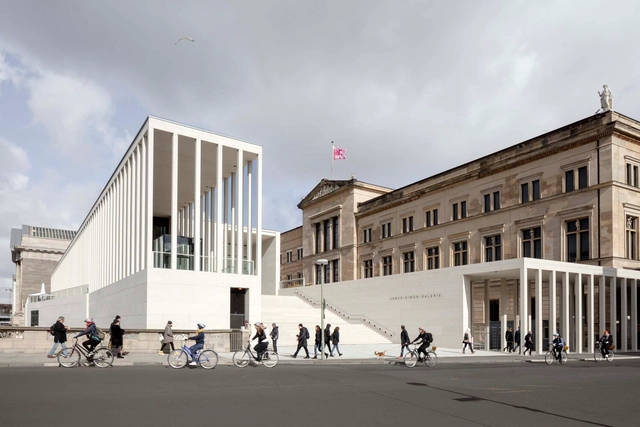
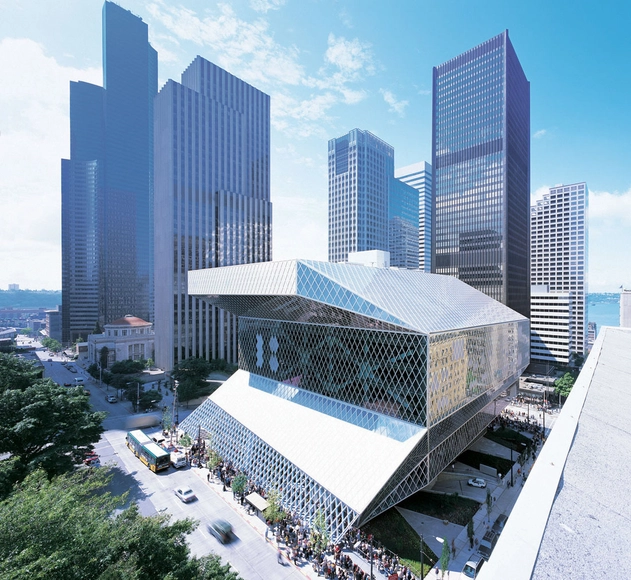
While the city of Berlin has a long history, dating back to the 13th century, its architecture and urban fabric has undergone the most significant changes during the last century, reflecting the impact of major historical events that took place in the German capital. During the early 20th century, Berlin transformed into a modern metropolis, marked through the construction of grand buildings and imposing structures to demonstrate the city’s growing economic and political power. The 1920s and 1930s saw the emergence of the Modernist movement, which, together with the Bauhaus school of architecture founded in 1919, influenced the image and urban fabric of Berlin.

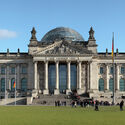
During the Second World War the city was heavily bombed, resulting in the destruction of many historical buildings. During the post-war period, reconstruction efforts focused on rebuilding infrastructure and housing, while the city remained divided until 1989, with the fall of the Berlin wall. After this period, Berlin witnessed a renewed interest in architecture and urban design. Interventions such as David Chipperfield’s Neues Museum aimed to rebuild historical monuments without erasing the markings of their difficult past. Other projects such as the renovation of the Reichstag had a different purpose. Norman Foster’s intervention intended to keep the image of this building but change its symbolism from a structure representative for the Nazi regime to one embracing the ideals of democracy and equality.

Berlin Architecture City Guide: 25 Modern and Contemporary Projects to Discover in the German Capital - Image 1 of 4Berlin Architecture City Guide: 25 Modern and Contemporary Projects to Discover in the German Capital - Image 2 of 4Berlin Architecture City Guide: 25 Modern and Contemporary Projects to Discover in the German Capital - Image 3 of 4Berlin Architecture City Guide: 25 Modern and Contemporary Projects to Discover in the German Capital - Image 4 of 4Berlin Architecture City Guide: 25 Modern and Contemporary Projects to Discover in the German Capital - More Images+ 21

A Rebellion Against Realism and Art: How Cubism Influenced Modern Architecture

Subscriber Access | 
A Rebellion Against Realism and Art: How Cubism Influenced Modern Architecture  - Featured Image

Historic art movements and their visual characteristics have considerably paved the way for modern day architecture. For years, architects have been borrowing techniques and stylistic approaches to create their own architectural compositions, merging both disciplines together. Cubism, one of the most influential styles of the twentieth century, and heavily criticized for its experimentation with its non-representational art approach, is perhaps the most significant architecture inspiration. Just as the radical art movement rejected the then-rooted concept that art should mimic nature, architects found themselves following suit and designing structures that borrow Cubism’s avant-gardist features, creating buildings that, to this day, stand as iconic landmarks of the practice.

A Rebellion Against Realism and Art: How Cubism Influenced Modern Architecture  - Image 1 of 4A Rebellion Against Realism and Art: How Cubism Influenced Modern Architecture  - Image 2 of 4A Rebellion Against Realism and Art: How Cubism Influenced Modern Architecture  - Image 3 of 4A Rebellion Against Realism and Art: How Cubism Influenced Modern Architecture  - Image 4 of 4A Rebellion Against Realism and Art: How Cubism Influenced Modern Architecture  - More Images+ 7

Spotlight: Peter Behrens

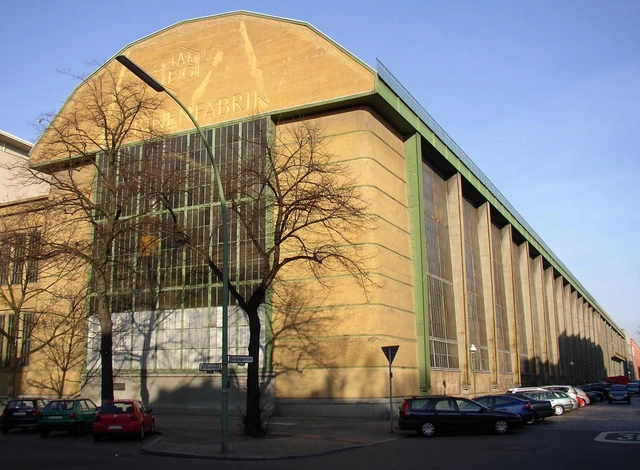
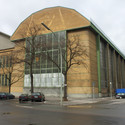
If asked to name buildings by German architect and designer Peter Behrens (14 April 1868 – 27 February 1940), few people would be able to answer with anything other than his AEG Turbine Factory in Berlin. His style was not one that lends itself easily to canonization; indeed, even the Turbine Factory itself is difficult to appreciate without an understanding of its historical context. Despite this, Behrens' achievements are not to be underestimated, and his importance to the development of architecture might best be understood by looking at three young architects who worked in his studio around 1910: Le Corbusier, Mies van der Rohe, and Walter Gropius.

Zechner & Zechner Create a Mixed-Use Complex Beside Peter Behrens' Modernist Icon

Viennese firm Zechner & Zechner has been announced as the winners of the competition for the new landmark complex NeuBau3—a mixed-use district at Peter-Behrens-Platz in Linz, Austria—after a unanimous decision by the jury. The proposed structure will complete the existing site of German architect and designer Peter Behrens' modernist Tabakfabrik Linz, a tobacco factory built between 1929 and 1935.

Zechner & Zechner Create a Mixed-Use Complex Beside Peter Behrens' Modernist Icon - Image 1 of 4Zechner & Zechner Create a Mixed-Use Complex Beside Peter Behrens' Modernist Icon - Image 2 of 4Zechner & Zechner Create a Mixed-Use Complex Beside Peter Behrens' Modernist Icon - Image 3 of 4Zechner & Zechner Create a Mixed-Use Complex Beside Peter Behrens' Modernist Icon - Image 4 of 4Zechner & Zechner Create a Mixed-Use Complex Beside Peter Behrens' Modernist Icon - More Images+ 4

"Baby Rems" and the Small World of Architecture Internships

The world of architecture is small. So small in fact, that Rem Koolhaas has been credited with the creation of over forty practices worldwide, led by the likes of Zaha Hadid and Bjarke Ingels. Dubbed “Baby Rems” by Metropolis Magazine, this Koolhaas effect is hardly an isolated pattern, with manifestations far beyond the walls of OMA. The phenomenon has dominated the world of architecture, assisted by the prevalence and increasing necessity of internships for burgeoning architects.

In a recent article for Curbed, Patrick Sisson dug into the storied history of internships to uncover some unexpected connections between the world's most prolific architects. With the help of Sisson's list, we've compiled a record of the humble beginnings of the household names of architecture. Where did Frank Gehry get his start? Find out after the break.

"Baby Rems" and the Small World of Architecture Internships - Image 1 of 4"Baby Rems" and the Small World of Architecture Internships - Image 2 of 4"Baby Rems" and the Small World of Architecture Internships - Image 3 of 4"Baby Rems" and the Small World of Architecture Internships - Image 4 of 4Baby Rems and the Small World of Architecture Internships - More Images+ 3