1. ArchDaily
  2. Pilotis

Pilotis: The Latest Architecture and News

The Illusion of Lightness: Designing Civic Voids for Public Life

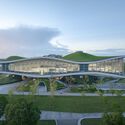
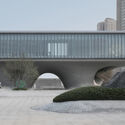
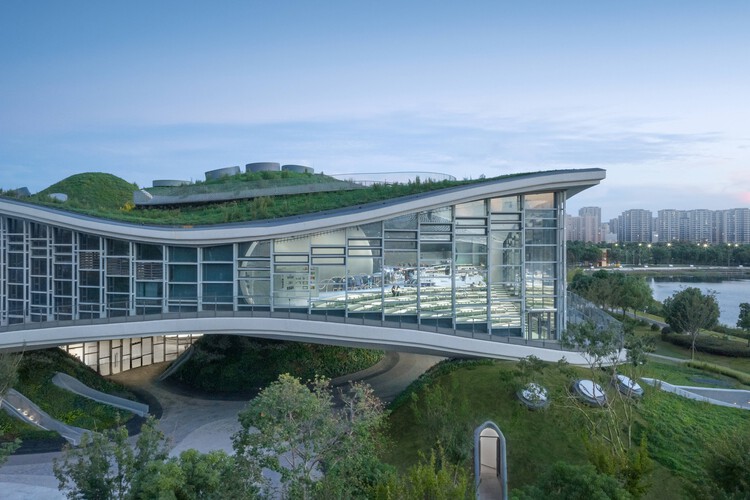
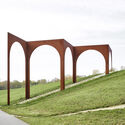
In our current cities, urban density and rising land values often force a choice between large-scale civic buildings and open public space. Traditionally, plazas have been treated as areas surrounding a building's footprint, but this strategy was modified when pilotis were introduced by the early 20th-century modernist movement. While the original intent was to create a sense of lightness that would allow circulation and light to flow beneath a structure, contemporary requirements for seismic loads, fire egress, and heavy occupancies render thin columns insufficient for the needs of current large-scale civic projects.

However, the pursuit of architectural lightness is not a strictly contemporary phenomenon. Following the modernist introduction of pilotis, several mid-century projects began experimenting with the illusion of suspension to achieve civic transparency. In 1953, the National Congress of Honduras in Tegucigalpa, designed by Mario Valenzuela, applied these principles to a legislative setting. The building consists of a solid assembly chamber elevated on a series of slender columns. Because the site sits on a terrace at the end of a sloping street, the resulting void does more than just provide circulation; it frames views of the city, creating the impression that the heavy legislative mass is lightly suspended above the urban fabric.
The Illusion of Lightness: Designing Civic Voids for Public Life - Image 1 of 4The Illusion of Lightness: Designing Civic Voids for Public Life - Image 2 of 4The Illusion of Lightness: Designing Civic Voids for Public Life - Image 3 of 4The Illusion of Lightness: Designing Civic Voids for Public Life - Image 4 of 4The Illusion of Lightness: Designing Civic Voids for Public Life - More Images+ 11

Light, Lighter, Lightest: ArchDaily’s April Editorial Focus

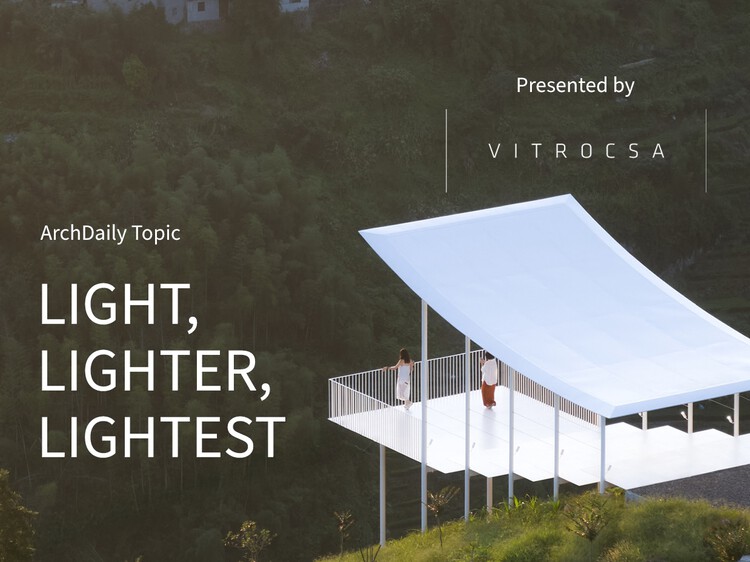
Architecture has long been drawn upward. In Air and Dreams, Gaston Bachelard writes about an imagination shaped by movement; by the urge to rise, to drift, to escape the pull of the ground. Air, for him, invites imagination to distort, to invent, to go beyond what is given rather than simply reproduce it. In that sense, lightness is not only a physical condition, but a feeling: a desire to transcend the weight of the earth and move toward something less tangible. This impulse can be traced across architecture's enduring attempts to lift itself, from pilotis and long spans to suspended systems and tensile membranes. To build lightly, then, is not only a technical ambition, but also a cultural one – a way of reaching toward the sky.

Today, this pursuit of lightness takes on renewed urgency. As environmental concerns, climate risks, and technological advancements reshape the built environment, building lightly is no longer only an aesthetic or structural ambition; it is increasingly framed as an ecological and ethical imperative.

Light, Lighter, Lightest: ArchDaily’s April Editorial Focus - Image 1 of 4Light, Lighter, Lightest: ArchDaily’s April Editorial Focus - Image 2 of 4Light, Lighter, Lightest: ArchDaily’s April Editorial Focus - Image 3 of 4Light, Lighter, Lightest: ArchDaily’s April Editorial Focus - Image 4 of 4Light, Lighter, Lightest: ArchDaily’s April Editorial Focus - More Images+ 6

Touching the Earth Lightly: How Freeing the Ground Plane Shapes Architectural Atmosphere

Architecture and its atmospheric qualities have long been a subject of discussion, yet reaching a consensus on the matter remains elusive. This is largely because spatial experience is deeply personal—rooted in emotions, sensory perceptions, and individual preferences that are difficult to articulate in words alone. The way one perceives, feels, and interacts with a space adds another layer of complexity, making it challenging to define and agree upon its atmospheric impact. Nevertheless, architects and designers continuously strive to shape environments that are not only functional and comfortable but also capable of evoking emotions and leaving a lasting impression on their occupants.

Touching the Earth Lightly: How Freeing the Ground Plane Shapes Architectural Atmosphere  - Image 5 of 4Touching the Earth Lightly: How Freeing the Ground Plane Shapes Architectural Atmosphere  - Image 1 of 4Touching the Earth Lightly: How Freeing the Ground Plane Shapes Architectural Atmosphere  - Image 2 of 4Touching the Earth Lightly: How Freeing the Ground Plane Shapes Architectural Atmosphere  - Image 3 of 4Touching the Earth Lightly: How Freeing the Ground Plane Shapes Architectural Atmosphere  - More Images+ 36

Modernism in Africa: Shedding Light on Nigeria’s Rich Heritage of Education Buildings

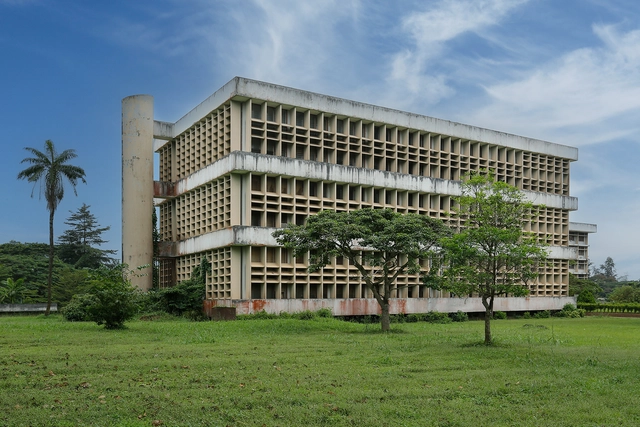
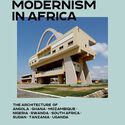
In late 2024, an important addition was made to the growing literature on Modern architecture in Africa. "Modernism in Africa: The Architecture of Angola, Ghana, Mozambique, Nigeria, Rwanda, South Africa, Sudan, Tanzania, Uganda" was published by Docomomo International and Birkhäuser, shedding light on multiple previously unpublished buildings. The book has a focus on education, although other building types are included. Amongst these are several university buildings in Nigeria which are explored here. Like other Modern buildings on the continent, they illustrate historical narratives of independence, decoloniality, international relations, and architectural education.

Modernism in Africa: Shedding Light on Nigeria’s Rich Heritage of Education Buildings - Image 1 of 4Modernism in Africa: Shedding Light on Nigeria’s Rich Heritage of Education Buildings - Featured ImageModernism in Africa: Shedding Light on Nigeria’s Rich Heritage of Education Buildings - Image 2 of 4Modernism in Africa: Shedding Light on Nigeria’s Rich Heritage of Education Buildings - Image 3 of 4Modernism in Africa: Shedding Light on Nigeria’s Rich Heritage of Education Buildings - More Images+ 10

Bali Architecture Guide: 25 Projects Blending Tradition with Innovation in Indonesia's Most Visited Island

Subscriber Access | 

Bali might most commonly be associated with its beaches and leisure sector. Rightfully so, since the Indonesian province received more than 2.9 tourists this year alone. Along with the temporary visitors, Bali also houses some longer-term inhabitants and digital nomads, which contributed to its fast population increase. This has naturally affected its urban density and its need for additional accommodation and services, offering opportunities for some creative architecture and materials exploration.

This often appears through the many bamboo-built projects, with the island being the stage for some of the oldest and most intricate bamboo vernacular construction. This knowledge can be transmitted to willing architects and professionals from all around the globe who seek to understand how this versatile material can be applied in their own countries. Many renowned global and local practices, such as IBUKU, and Bamboo U, have championed this ecologically aware architecture through their projects, which are always focused on nature preservation and the revival/ optimization of traditional building techniques.

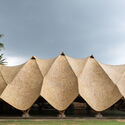
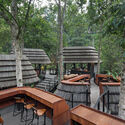
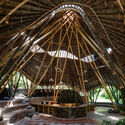
Bali Architecture Guide: 25 Projects Blending Tradition with Innovation in Indonesia's Most Visited Island - Image 1 of 4Bali Architecture Guide: 25 Projects Blending Tradition with Innovation in Indonesia's Most Visited Island - Image 2 of 4Bali Architecture Guide: 25 Projects Blending Tradition with Innovation in Indonesia's Most Visited Island - Image 3 of 4Bali Architecture Guide: 25 Projects Blending Tradition with Innovation in Indonesia's Most Visited Island - Image 4 of 4Bali Architecture Guide: 25 Projects Blending Tradition with Innovation in Indonesia's Most Visited Island - More Images+ 23

The 5 Points of Modern Architecture in Contemporary Projects

In 1926, Le Corbusier developed the five points that would become the foundations for modern architecture. Once materialized in 1929 in the iconic Villa Savoye project, Le Corbusier's principles - pilotis, free design of the ground plan, free design of the facade, horizontal window, and roof garden - have been extensively explored in modern architecture and continue to influence the most diverse contemporary architectural projects to this day.

The five points became a kind of guideline for the New Architecture, as Corbusier used to call it. Even after decades, new technologies, materials, and demands of society have continued to update those architectural solutions, announced almost a century ago as the basis for a new architecture.

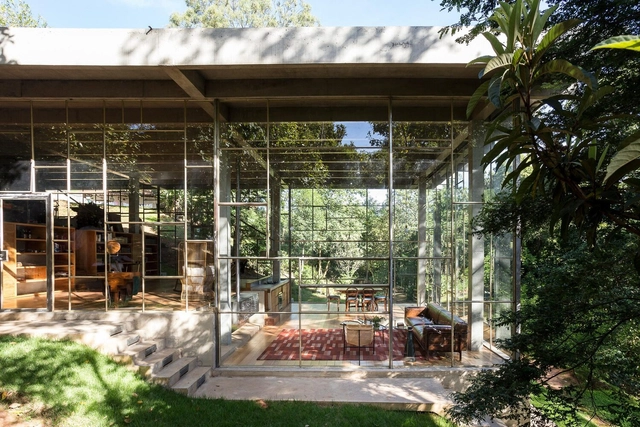
The 5 Points of Modern Architecture in Contemporary Projects - Image 1 of 4The 5 Points of Modern Architecture in Contemporary Projects - Image 6 of 4The 5 Points of Modern Architecture in Contemporary Projects - Image 21 of 4The 5 Points of Modern Architecture in Contemporary Projects - Image 24 of 4The 5 Points of Modern Architecture in Contemporary Projects - More Images+ 26