1. ArchDaily
  2. Production with CNC

Production with CNC: The Latest Architecture and News

Rural Lab: Latin America's Countryside as a Space for Experimentation

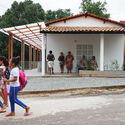
What if the future of architecture lies not in the cities, but beyond them? For decades, urbanization has dominated both discourse and statistics. We are constantly bombarded with data confirming the prevalence of urban life, but we rarely ask the opposite question: what did those who moved to the cities leave behind? What remains alive and evolving far from urban centers?

The countryside—long underestimated—is now emerging as fertile ground for possibility. More than a “marginalized space,” rural Latin America today asserts itself as a true laboratory for architectural, social, and ecological experimentation. From agroecological communities to low-impact technologies, from relationships between humans, machines, and other living beings to locally grounded solutions for global challenges—such as the climate crisis, food security, and migration—the rural world is actively and inventively reshaping its own future.

Rural Lab: Latin America's Countryside as a Space for Experimentation - Image 7 of 4Rural Lab: Latin America's Countryside as a Space for Experimentation - Image 1 of 4Rural Lab: Latin America's Countryside as a Space for Experimentation - Image 8 of 4Rural Lab: Latin America's Countryside as a Space for Experimentation - Image 10 of 4Rural Lab: Latin America's Countryside as a Space for Experimentation - More Images+ 9

Architectural Acts of Repair: Critical Themes from the 2025 ECC "Time Space Existence" Exhibition

The 2025 edition of the European Cultural Centre's (ECC) Time Space Existence exhibition in Venice is guided by the mandate to "Repair, Regenerate, and Reuse." Aiming to move beyond surface-level solutions and overused terminology, the exhibition showcases a cohort of practitioners who interpret architecture as an active agent of repair. The most compelling works presented in Venice demonstrate that "repair" is a multifaceted practice, operating across material, social, and historical registers. The varied approaches showcase a shift in the role of the architect, from a master builder and designer of physical objects, to that of a mender, able to combine technology, community, and material intelligence to restore narratives and build stronger cultural systems.

Architectural Acts of Repair: Critical Themes from the 2025 ECC "Time Space Existence" Exhibition - Image 2 of 4Architectural Acts of Repair: Critical Themes from the 2025 ECC "Time Space Existence" Exhibition - Image 7 of 4Architectural Acts of Repair: Critical Themes from the 2025 ECC "Time Space Existence" Exhibition - Image 18 of 4Architectural Acts of Repair: Critical Themes from the 2025 ECC "Time Space Existence" Exhibition - Image 16 of 4Architectural Acts of Repair: Critical Themes from the 2025 ECC Time Space Existence Exhibition - More Images+ 14

Digital Woodworking: Creating Structures, Furniture, and Surfaces Using CNC

Digital Woodworking: Creating Structures, Furniture, and Surfaces Using CNC - Image 13 of 4Digital Woodworking: Creating Structures, Furniture, and Surfaces Using CNC - Image 14 of 4Digital Woodworking: Creating Structures, Furniture, and Surfaces Using CNC - Image 15 of 4Digital Woodworking: Creating Structures, Furniture, and Surfaces Using CNC - Image 16 of 4Digital Woodworking: Creating Structures, Furniture, and Surfaces Using CNC - More Images+ 18

The automation of architectural design and rendering has been further accelerated by digital production tools. Tools such as 3D printers, assembly robots, and laser cutters, have all but perfected the design and construction process and have proven essential in optimizing resources, improving precision, and increasing control of the process.

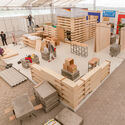
In woodworking, the most frequently used digital production tools are milling machines or CNC (computer numerical control) routers. These tools facilitate the rendering of 2D vectoral drawings and 3D models, codifying them into instructions for the machine to follow and execute. Through this process, which starts with digital archives (typically created using design software widely known as AutoCad), milling machines and CNC routers can rapidly and precisely cut wood, producing ready to assemble pieces.