1. ArchDaily
  2. Red Brick Studio

Red Brick Studio: The Latest Architecture and News

Extending Roofs from Brazil to India: Parallel Residential Design Elements as Seen in 10 Projects

Subscriber Access | 

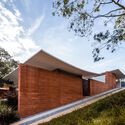
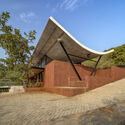
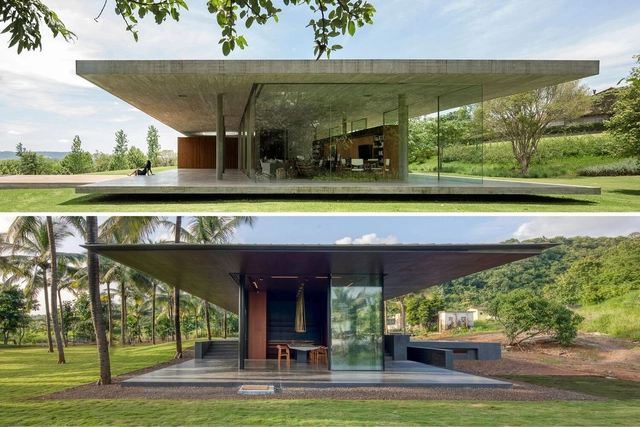
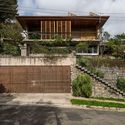
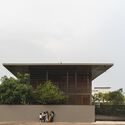
It shouldn't be too surprising that architectural concepts were traveling around the globe long before the online spread of information. While many regions share certain historical events and hence references (such as colonization and the mid-20th-century independence movement/ turn of political systems), others might have simply developed parallel solutions to similar climates and material availability. Additionally, it was only natural that with the dissemination of a more uniform architectural pedagogy acquired while studying abroad, followed by the internet boom, we would find almost twin projects from every corner of the world. While these might look nearly identical from some angles, they might bear different layers and stories. Then again, they might also display the same reasoning and prompts shared by counterparts from across the seas.
Extending Roofs from Brazil to India: Parallel Residential Design Elements as Seen in 10 Projects - Image 1 of 4Extending Roofs from Brazil to India: Parallel Residential Design Elements as Seen in 10 Projects - Image 2 of 4Extending Roofs from Brazil to India: Parallel Residential Design Elements as Seen in 10 Projects - Image 3 of 4Extending Roofs from Brazil to India: Parallel Residential Design Elements as Seen in 10 Projects - Image 4 of 4Extending Roofs from Brazil to India: Parallel Residential Design Elements as Seen in 10 Projects - More Images+ 6

Sloped to Fit: 14 Homes That Embrace the Hill as a Catalyst for Their Design

Subscriber Access | 

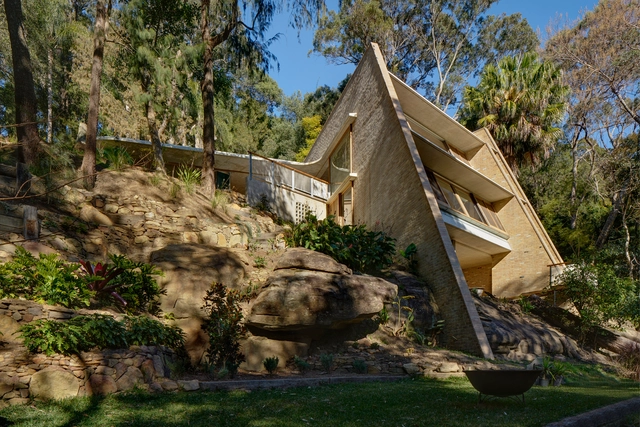
When we think about cities, we often assume the orthogonal grid is the norm: neat, predictable, and rational. However, many urban areas around the world, notably those shaped by hills and uneven terrain, defy this convention. In cities like Lisbon, in Portugal orthogonal grids appear only in flatter zones such as Baixa, while surrounding areas like Alfama adapt organically to topography. These areas create more layered, irregular, and visually dynamic urban forms. Yerevan in Armenia, offers another urban example of this adaptation: the Cascade Complex transforms a steep hill into a terraced public space that connects different city levels while framing panoramic views. For other countries, this response to topography becomes even more critical. Cities like Tegucigalpa in Honduras or Valparaiso in Chile are defined by steep, irregular terrain that requires architects to engage deeply with the land. Designing in these contexts, especially for residential projects, demands technical adaptation and a contextual understanding that allows the slope to become a generative element in the design process.

Sloped to Fit: 14 Homes That Embrace the Hill as a Catalyst for Their Design - Image 1 of 4Sloped to Fit: 14 Homes That Embrace the Hill as a Catalyst for Their Design - Image 2 of 4Sloped to Fit: 14 Homes That Embrace the Hill as a Catalyst for Their Design - Image 3 of 4Sloped to Fit: 14 Homes That Embrace the Hill as a Catalyst for Their Design - Image 4 of 4Sloped to Fit: 14 Homes That Embrace the Hill as a Catalyst for Their Design - More Images+ 25