1. ArchDaily
  2. renaissance

renaissance: The Latest Architecture and News

Shaping Spaces: The History and Impact of Fireplaces in Architecture

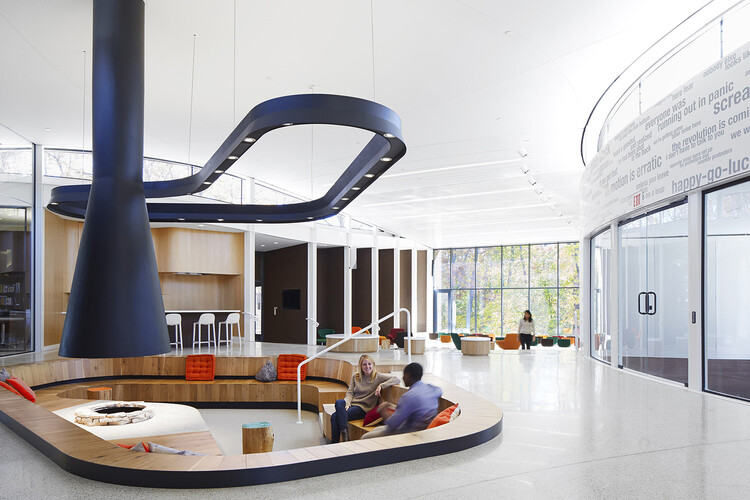
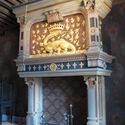
Fireplaces have profoundly shaped architectural design, influencing how spaces are organized, experienced, and perceived. More than merely functional elements, they represent symbols of power, community, comfort, and culture, tracing humanity's evolving relationship with the built environment. From the primitive hearths that characterized early human settlements to the sophisticated ecological designs of contemporary architecture, fireplaces have reflected broader cultural, social, and technological changes, serving as enduring focal points in the spatial narrative of architecture. Scholars have frequently explored the intimate relationship between architecture and fire. Luis Fernández-Galiano, in his seminal work "Fire and Memory: On Architecture and Energy" argues that architecture fundamentally mediates the relationship between humanity and energy. By understanding how these structures have shaped spaces, symbolized cultural values, and driven technological innovation, we gain deeper insight into architecture's complex interplay between form, function, and meaning.
Shaping Spaces: The History and Impact of Fireplaces in Architecture - Image 1 of 4Shaping Spaces: The History and Impact of Fireplaces in Architecture - Image 2 of 4Shaping Spaces: The History and Impact of Fireplaces in Architecture - Image 3 of 4Shaping Spaces: The History and Impact of Fireplaces in Architecture - Image 4 of 4Shaping Spaces: The History and Impact of Fireplaces in Architecture - More Images+ 21

The Continued Relevance of Models in Architecture's Digital Era

Subscriber Access | 

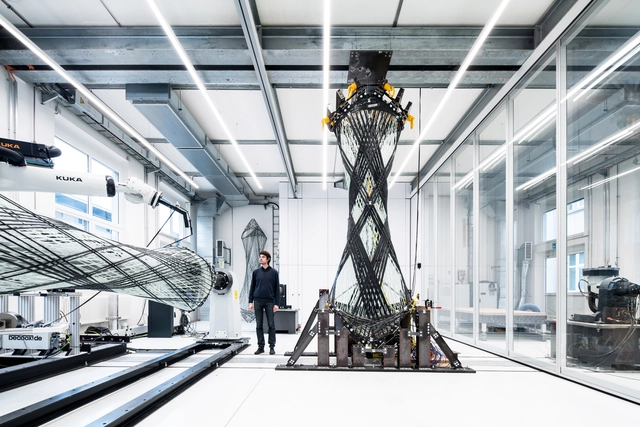
For centuries, models have been central to architectural design, providing architects with a tangible way to explore ideas, test concepts, and communicate their vision. From the Renaissance to Modernism, models have been instrumental in the construction and reflection processes, offering insights into form, proportion, and spatial relationships. However, in today's digital age, where 3D models and Virtual Reality (VR) have become powerful and efficient tools, the question arises: Are physical models still relevant in contemporary architecture?

The Continued Relevance of Models in Architecture's Digital Era - Image 1 of 4The Continued Relevance of Models in Architecture's Digital Era - Image 2 of 4The Continued Relevance of Models in Architecture's Digital Era - Image 3 of 4The Continued Relevance of Models in Architecture's Digital Era - Image 4 of 4The Continued Relevance of Models in Architecture's Digital Era - More Images+ 24

Fire Destroys Copenhagen’s 17th Century Stock Exchange, Causing the Collapse of Its Spire

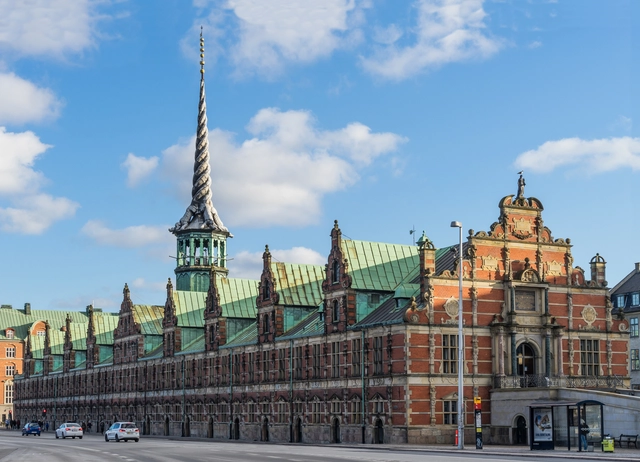
In the early morning of April 16, a fire broke out in the capital of Denmark, engulfing Copenhagen’s Old Stock Exchange, one of the oldest landmarks in the city. In the fire, the 56-meter-tall Dragon Spire, shaped as the tails of four entwined dragons, collapsed. In just a few hours after the fire begun, half of the 17th century Børsen building was destroyed according to authorities. The structure was undergoing renovation works at the time of the event. Emergency workers, staff members and passers-by collaborated to rescue the historic artworks housed in the former stock exchange.

Harmonizing Architecture: From Renaissance Masters to Al-Driven Design

Subscriber Access | 

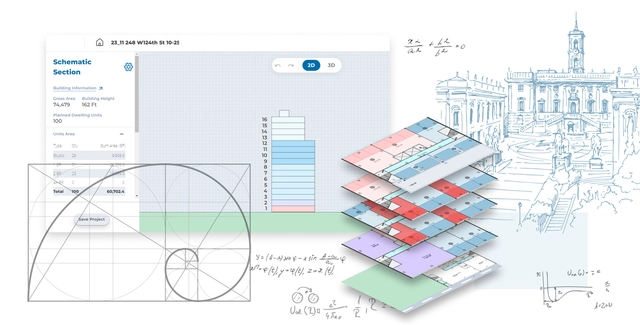
The world of architecture is a captivating fusion of artistic expression and scientific precision. My journey in the realm of architecture started with a profound exploration of its rich history. It was the awe-inspiring works of Renaissance masters that propelled me onto a transformative trajectory, guiding me toward harnessing the immense potential of artificial intelligence and algorithms in architectural design.

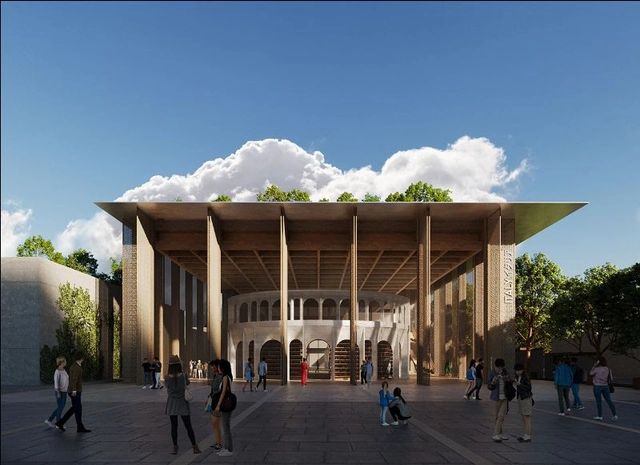
Mario Cucinella Architects Reveals Design for Italian Pavilion at Expo Osaka 2025

Mario Cucinella Architects has just revealed the design of the Italian Pavilion for Expo Osaka 2025. Envisioned as a dynamic entity, the pavilion aims to foster knowledge and innovation through the interplay of different generations and cultures. It will serve as a collaborative repository of Italian expertise, encompassing artistic, scientific, entrepreneurial, and social experiments. The display is designed around Italy's cultural treasures and aims to highlight, deconstruct, and then reinterpret them in a contemporary manner.

Mario Cucinella Architects Reveals Design for Italian Pavilion at Expo Osaka 2025 - Image 1 of 4Mario Cucinella Architects Reveals Design for Italian Pavilion at Expo Osaka 2025 - Image 2 of 4Mario Cucinella Architects Reveals Design for Italian Pavilion at Expo Osaka 2025 - Image 3 of 4Mario Cucinella Architects Reveals Design for Italian Pavilion at Expo Osaka 2025 - Image 4 of 4Mario Cucinella Architects Reveals Design for Italian Pavilion at Expo Osaka 2025 - More Images

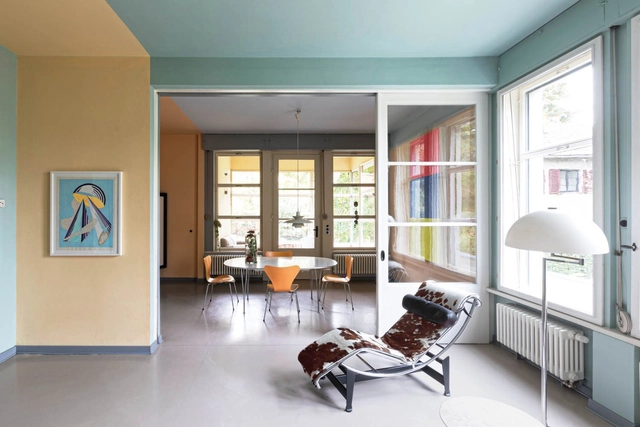
From Art Nouveau to the Bauhaus: How Home Interiors Looked in Popular Art Movements

Subscriber Access | 

Art has always been a means for people to connect with space, and art movements have served as a platform for exploring new relationships with architecture. By incorporating art into buildings and interior spaces, they have been transformed, resulting in a fusion that creates beautiful, inspiring, and spiritually uplifting environments. Throughout history, various art movements, such as the Renaissance in the 17th century, Baroque in the 18th century, and Art Nouveau, Art Déco, and Bauhaus in the early 20th century, have had a significant impact on architecture. Architects drew inspiration from the ideals, concepts, stylistic approaches, and techniques of these movements, using them to create large-scale habitable structures. As the home is a fundamental expression of an architectural movement and the simplest canvas to exhibit the artistic ethos of any particular era, studying the interior spaces of houses provides a detailed picture of art's influence on spatial organization, furniture design, product patterns, and user interaction.

From Art Nouveau to the Bauhaus: How Home Interiors Looked in Popular Art Movements - Image 1 of 4From Art Nouveau to the Bauhaus: How Home Interiors Looked in Popular Art Movements - Image 2 of 4From Art Nouveau to the Bauhaus: How Home Interiors Looked in Popular Art Movements - Image 3 of 4From Art Nouveau to the Bauhaus: How Home Interiors Looked in Popular Art Movements - Image 4 of 4From Art Nouveau to the Bauhaus: How Home Interiors Looked in Popular Art Movements - More Images+ 18

The Story Behind Frankfurt's New Old Town and how the Community Revived its Medieval Identity

Subscriber Access | 

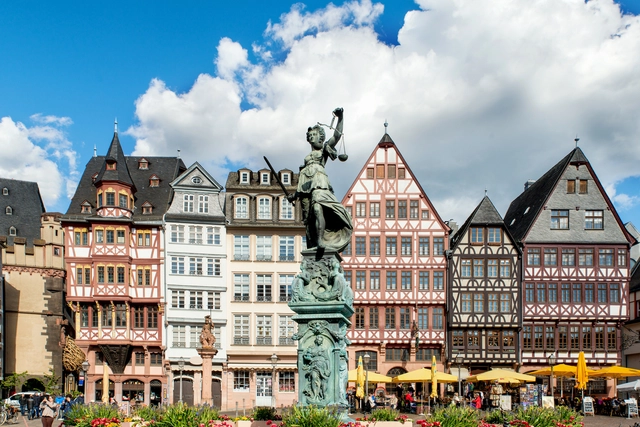
The architectural identity and urban fabric of the old city of Frankfurt has grown organically over centuries. Shops, bars, and craftsmen's workshops have always attracted a lot of visitors to the area between the Cathedral, or "Dom" in German, and the Römer, the main square in the center of Frankfurt. Historically, the area included buildings of many different styles, such as Gothic, Renaissance, Baroque and Classical architecture, which most locals only knew about from black and white photographs, the town’s famous miniature model in the historic museum, or stories passed down through generations.

However, the quarter’s picturesque buildings and alleyways, were almost entirely destroyed during the Second World War, but the collaborative work of the community and local authorities have made it seem as though time before the war stood still. The entire quarter was reconstructed exactly as its original plans, bringing Frankfurt’s medieval history back to life and creating what is now known as the Neue Alstadt, a project considered by some to be controversial.

The Story Behind Frankfurt's New Old Town and how the Community Revived its Medieval Identity - Image 1 of 4The Story Behind Frankfurt's New Old Town and how the Community Revived its Medieval Identity - Image 2 of 4The Story Behind Frankfurt's New Old Town and how the Community Revived its Medieval Identity - Image 3 of 4The Story Behind Frankfurt's New Old Town and how the Community Revived its Medieval Identity - Image 4 of 4The Story Behind Frankfurt's New Old Town and how the Community Revived its Medieval Identity - More Images+ 9

Enriching Architecture: Stained Glass

Subscriber Access | 

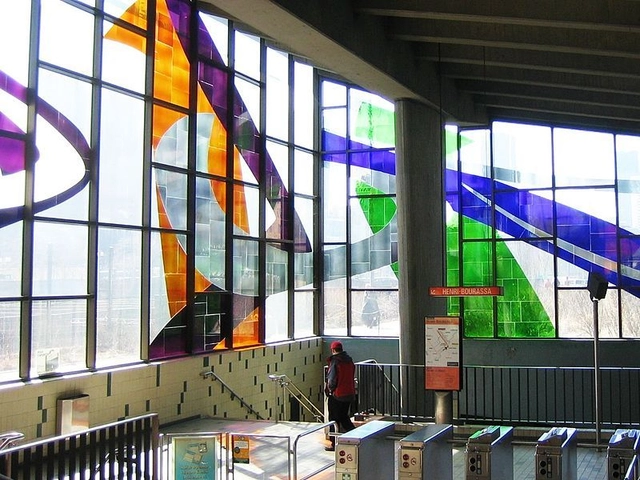
Predominantly associated with places of worship, stained glass has been used by artisans across the globe for thousands of years in an array of art ventures and installations. Intensifying architecture with vivid color, the process of stained glass refers to a particular action in which glass has been colored via metallic oxides during its manufacture, using different additives in order to create a range of hues and tones.

In terms of architectural enhancement, stained glass is often pieced together in order to produce depictions of decorative art, allowing light to filter and penetrate a particular structure or building. As a component it is both decorative and a variety of window, allowing a substantial and sufficient amount of light into a space, for atmospheric and beneficial effect. 

Enriching Architecture: Stained Glass  - Image 1 of 4Enriching Architecture: Stained Glass  - Image 2 of 4Enriching Architecture: Stained Glass  - Image 3 of 4Enriching Architecture: Stained Glass  - Image 4 of 4Enriching Architecture: Stained Glass  - More Images+ 9

How the Renaissance Influenced Architecture

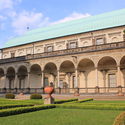
After a prolonged period known as the Middle-Ages, a growing desire to both study and mimic nature itself began to emerge, with an inclination to discover and explore the world. Between 1400-1600 A.D. Europe was to witness a significant revival of the fine arts, painting, sculpture, and Architecture. The ‘Renaissance’, meaning ‘rebirth’ in French typically refers to this period of European history, although most closely associated with Italy, countries including England and France went through many of the same cultural changes at varying timescales.

Prior to the dawn of the Renaissance, Europe was dominated by ornate and asymmetrical Gothic Architecture. Devoured by the plague, the continent lost approximately a third of its population, vastly changing society in terms of economic, social and religious effect. Contributing to Europe’s emergence into the Renaissance, the period ushered in a new era of architecture after a phase of Gothic art, with the rise of notions of ‘Humanism’. The idea of attaching much importance to the essence of individualism. The effect of Humanism included the emergence of the individual figure, greater realism and attention to detail, especially in depictions in art.

How the Renaissance Influenced Architecture  - Image 1 of 4How the Renaissance Influenced Architecture  - Image 2 of 4How the Renaissance Influenced Architecture  - Image 3 of 4How the Renaissance Influenced Architecture  - Image 5 of 4How the Renaissance Influenced Architecture  - More Images+ 7

Exploring the History of the Ideal Renaissance Cities

Subscriber Access | 

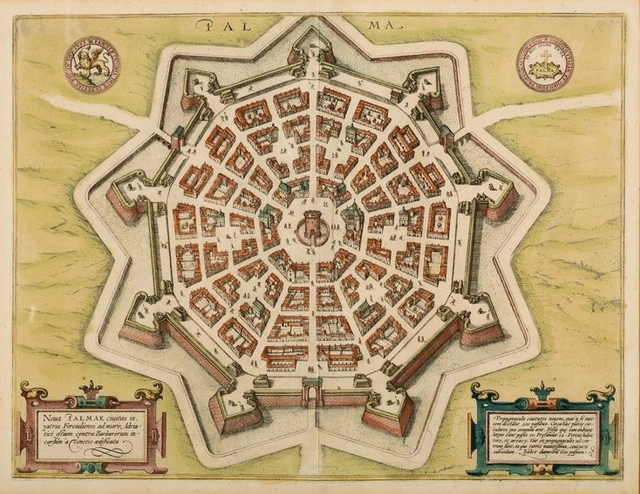
The concept of an “ideal city” is something that is often talked about today, as we look towards the future and think about what aspects of urban life we feel are most important for residents to thrive in a healthy community. However, ideal cities were conceived during the Italian Renaissance, as planners and architects prioritized rationale in their designs focusing on human values, urban capacities, and the recursive waves of cultural and artistic revolutions that influenced large-scale planning schemes.

Freestyle - Architectural Adventures in Mass Media

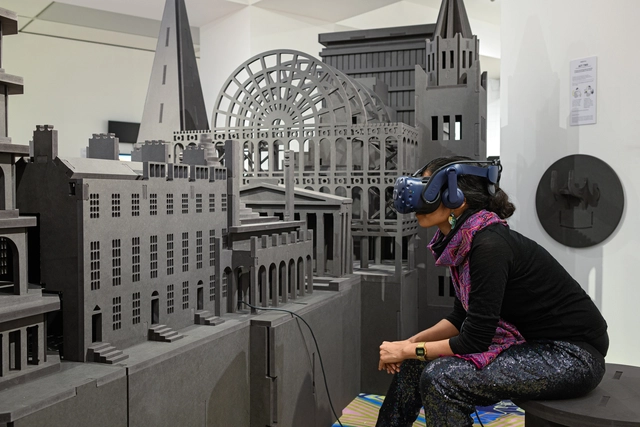
RIBA presents its first virtual reality (VR) exhibition, exploring moments across 500 years of aesthetics in architecture.

What makes a style? How is a style collectively agreed upon and shared? Drawing on RIBA’s world-class collections, Space Popular uses virtual reality to examine styles of the past and to consider the technology’s impact on contemporary spaces and buildings. Historic artefacts will be displayed alongside newly commissioned content, inviting you to enter a beguiling virtual universe to experience how popular cultures and technologies impact architecture and its style evolution.

AD Classics: Säynätsalo Town Hall / Alvar Aalto

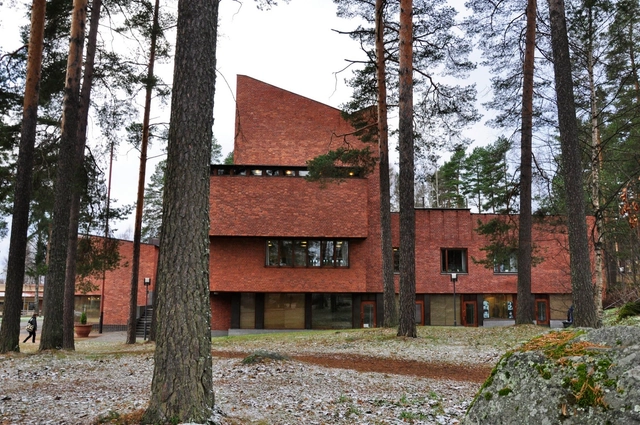
Occupying the center of a small farming town in Finland, Säynätsalo’s Town Hall might appear almost too monumental for its context. Designed by Alvar Aalto in 1949, the town hall is a study in opposition: elements of classicism and the monumental blended with modernity and intimacy to form a cohesive new center-point for the community. These and other aspects of the design initially proved somewhat divisive, and the Town Hall has not been without controversy since its inception.

AD Classics: Säynätsalo Town Hall / Alvar Aalto - Retail , Facade, Door, Beam, Handrail, Lighting, Chair, TableAD Classics: Säynätsalo Town Hall / Alvar Aalto - Retail , Garden, Stairs, FacadeAD Classics: Säynätsalo Town Hall / Alvar Aalto - Retail , BeamAD Classics: Säynätsalo Town Hall / Alvar Aalto - Retail , FacadeAD Classics: Säynätsalo Town Hall / Alvar Aalto - More Images+ 8