1. ArchDaily
  2. Senses

Senses: The Latest Architecture and News

Mapping Space Without Sight: Inside SEAlab’s Sensory Architecture

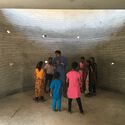
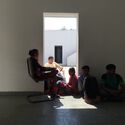
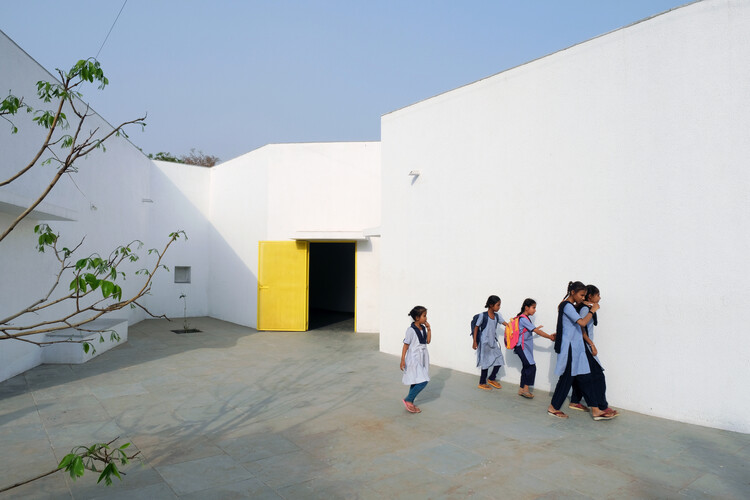
Founded in 2015 in Ahmedabad by Anand Sonecha, SEAlab is a practice shaped by a slow, contemplative engagement with place, proportion, and participation. Recognized as one of the winners of the ArchDaily 2025 Next Practices Awards, the studio builds with simple materials and local techniques, pursuing environments that are experienced as much as they are seen. This ethos became particularly tangible in Gandhinagar, where the School for Blind and Visually Impaired Children did not begin as a purpose-built institution. The school had been operating from an existing primary school building, with classrooms stacked above dormitories and twelve children sharing a single room. Space was limited, and so were growth opportunities. The new academic building was required to expand capacity, improve living conditions, and support greater student independence.

Mapping Space Without Sight: Inside SEAlab’s Sensory Architecture - Image 1 of 4Mapping Space Without Sight: Inside SEAlab’s Sensory Architecture - Image 2 of 4Mapping Space Without Sight: Inside SEAlab’s Sensory Architecture - Image 3 of 4Mapping Space Without Sight: Inside SEAlab’s Sensory Architecture - Image 4 of 4Mapping Space Without Sight: Inside SEAlab’s Sensory Architecture - More Images+ 33

Designing with Empathy: From Smart to Sensitive Cities

Subscriber Access | 

The future of cities has long been defined by intelligence: networks of sensors, data, and engineered systems. From traffic-flow algorithms to climate dashboards, the smart city promised to make urban life optimized, measurable, and predictable. Yet amid this technological abundance, something essential feels absent: sensitivity. Cities are becoming increasingly equipped to process information but less able to perceive atmosphere, emotion, or care.

As recent global debates on urban innovation reveal, the next challenge is not about adding more devices but cultivating new forms of awareness. A sensitive city listens to its climate, adapts to its inhabitants, and responds to the subtle rhythms of the environment. In this shift from computation to perception, architecture and urban design are rediscovering intelligence as a form of empathy.

Designing with Empathy: From Smart to Sensitive Cities - Image 1 of 4Designing with Empathy: From Smart to Sensitive Cities - Image 2 of 4Designing with Empathy: From Smart to Sensitive Cities - Image 3 of 4Designing with Empathy: From Smart to Sensitive Cities - Image 4 of 4Designing with Empathy: From Smart to Sensitive Cities - More Images+ 14

The Bathroom, Reawakened: Contemporary Design Concepts for a Sensory Experience

 | Sponsored Content

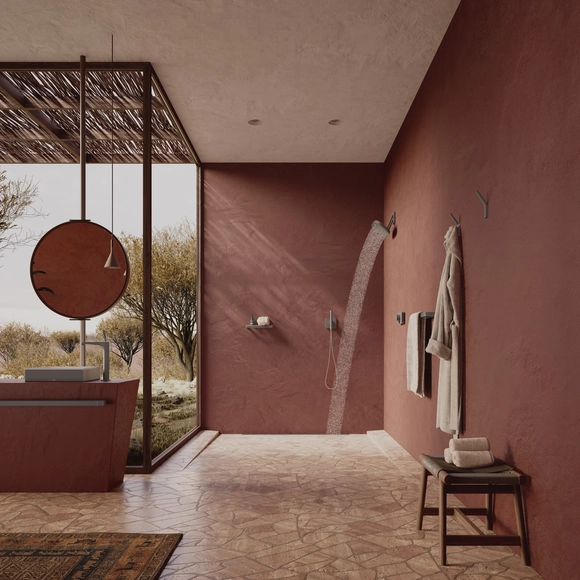
Water is a catalyst for sensory experiences: it manifests through direct contact when touched, through its presence when heard or seen reflected, and through its transformations—whether by temperature, from cold to heat, or by state, from liquid to vapor. It is a key element in designing for the senses, capable of evoking physically and emotionally perceived atmospheres. As Juhani Pallasmaa suggests, architecture does not address the eye alone but involves the whole body and sensory memory. The bathroom, in particular, concentrates much of the physical and emotional experience associated with water, opening up possibilities for creating environments that intensify that sensory connection. Consequently, the question arises: what elements or concepts should shape this space so that the shower experience escapes the ordinary?

Designing the Senses: How Does Synesthesia Shape Our Built World?

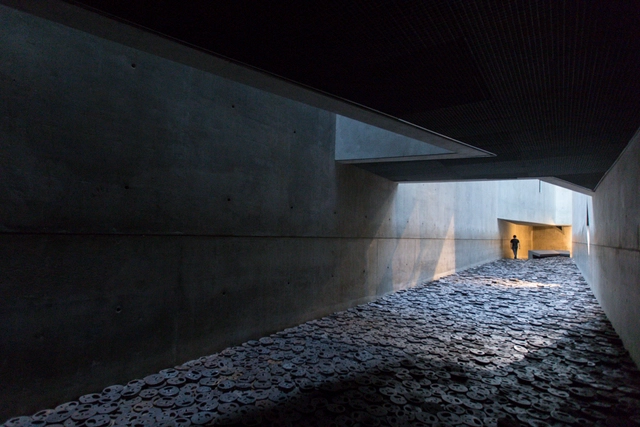
The Jewish Museum in Berlin, designed by Daniel Libeskind, employs synesthesia to evoke feelings of disorientation, loss, and memory through fragmented geometry, contrasting lighting, and material choices. Inspired by a shattered Star of David, the building guides visitors through slanted and narrow corridors, creating instability and discomfort. Light, either filtered through slits or almost entirely absent in certain areas, reinforces the oppressive atmosphere. The raw concrete, with its cold and rigid texture, intensifies this experience, while the void resonates with echoes and silence. In the Shalekhet (Fallen Leaves) space, metal plates shaped like faces emit unsettling sounds when stepped on, creating a disturbing auditory experience. The museum transcends its function as an exhibition space and becomes an immersive architectural experience, where light, sound, texture, and form combine to convey the pain and memory of the Holocaust.