1. ArchDaily
  2. Soft Baroque

Soft Baroque: The Latest Architecture and News

Concéntrico 2025: The Politics of Urban Presence

Subscriber Access | 

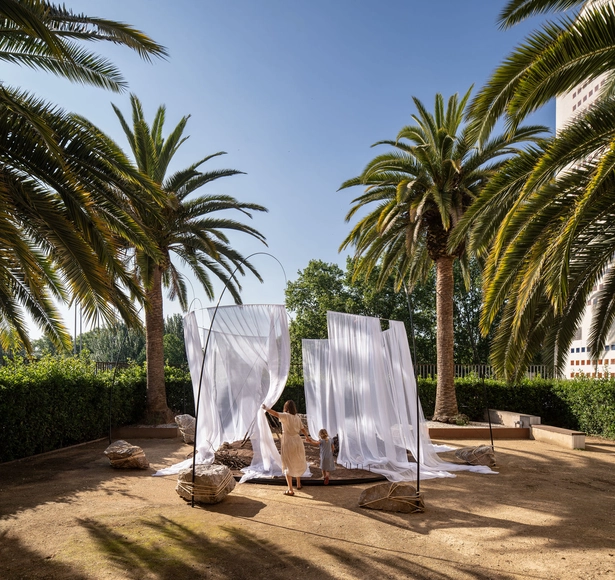
Every June, the Spanish city of Logroño transforms into a space of architectural dialogue, opening its streets, plazas, riverbanks, and traffic islands to temporary structures that redefine how cities are inhabited. For ten editions, Concéntrico has worked not as a specialized fair or an architecture biennale, but as a portable museum — a curatorial gesture that brings a dispersed collection of contemporary architecture into public space. Set in a city suspended between arid plains and distant mountains, far from the circuits of capital cities and cultural institutions, Concéntrico presents itself as a temporary promise. It's a reminder that even cities that are often overlooked can host architecture that is current, diverse, and speculative. In this sense, the festival is less about celebration and more about activation.

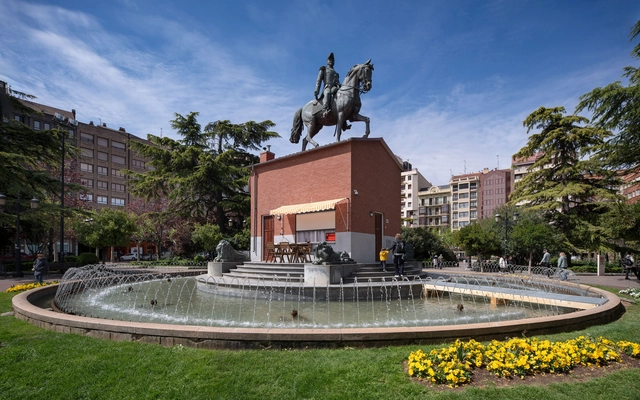
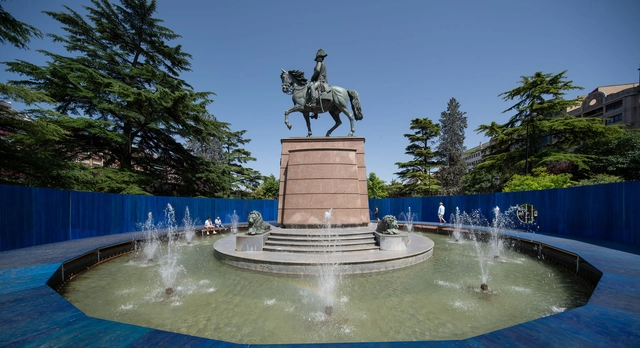
But beyond its curatorial logic, Concéntrico operates as a political structure. In the ancient sense of polis, it invites citizens, architects, and institutions to reassess what public space can be. The interventions offer speculative proposals for urban life that reveal what is missing, what is possible, and what should be questioned. A temporary pool over a fountain, a bathhouse in a roundabout, or a shared meal on a major avenue are not just spatial gestures — they are political statements, asking how urban infrastructure might be redirected from control to care, from efficiency to encounter. In that way, the festival becomes not just a reflection of the city, but an instrument for its transformation.

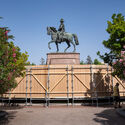
Concéntrico 2025: The Politics of Urban Presence - Image 1 of 4Concéntrico 2025: The Politics of Urban Presence - Image 2 of 4Concéntrico 2025: The Politics of Urban Presence - Image 3 of 4Concéntrico 2025: The Politics of Urban Presence - Image 4 of 4Concéntrico 2025: The Politics of Urban Presence - More Images+ 58

Concéntrico 2025 Opens in Logroño, Spain, With 24 Urban Interventions

The 11th edition of Concéntrico, the International Festival of Architecture and Design, is currently taking place in Logroño, Spain, from June 19 to 24, 2025. This year's edition broadens the scope of the festival with a multifaceted programme that includes not only temporary installations but also permanent projects, exhibitions, educational initiatives, and traveling events. Through 24 urban interventions, Concéntrico 2025 explores themes such as material reuse and circular design, food as a collective practice, the recovery of water-related spaces, the activation of urban voids, and interspecies connections in the urban context, while emphasizing the need to imagine new ways of inhabiting the city, placing care, sustainability, empathy, and active listening at the core of public architecture.

Concéntrico 2025 Opens in Logroño, Spain, With 24 Urban Interventions - Image 1 of 4Concéntrico 2025 Opens in Logroño, Spain, With 24 Urban Interventions - Image 2 of 4Concéntrico 2025 Opens in Logroño, Spain, With 24 Urban Interventions - Image 3 of 4Concéntrico 2025 Opens in Logroño, Spain, With 24 Urban Interventions - Image 4 of 4Concéntrico 2025 Opens in Logroño, Spain, With 24 Urban Interventions - More Images+ 148

Concéntrico 10 Opens with 20 Urban Installations to Explore in the Spanish City of Logroño

From April 25 to May 1, 2024, Logroño hosts the tenth edition of Concéntrico, a celebration of urban innovation and transformation. This year, the festival explores the future of cities, incorporating new formats, engaging diverse audiences, and tackling urban challenges through the lens of time as a catalyst for change in design. Featuring 20 interventions and activities involving over 100 professionals from 17 countries, the program encompasses processes such as renaturalizing public spaces, reimagining urban structures, and integrating recycled materials from previous editions.

Additionally, collaborations with educational centers ensure a lasting impact beyond the festival, fostering new collective practices in public spaces. Special projects such as  "The street in 10 years" or initiatives involving students and pupils from local schools and educational centers further enrich the festival's engagement with communities across Spain.

Concéntrico 10 Opens with 20 Urban Installations to Explore in the Spanish City of Logroño - Image 39 of 4Concéntrico 10 Opens with 20 Urban Installations to Explore in the Spanish City of Logroño - Image 18 of 4Concéntrico 10 Opens with 20 Urban Installations to Explore in the Spanish City of Logroño - Image 47 of 4Concéntrico 10 Opens with 20 Urban Installations to Explore in the Spanish City of Logroño - Image 63 of 4Concéntrico 10 Opens with 20 Urban Installations to Explore in the Spanish City of Logroño - More Images+ 141

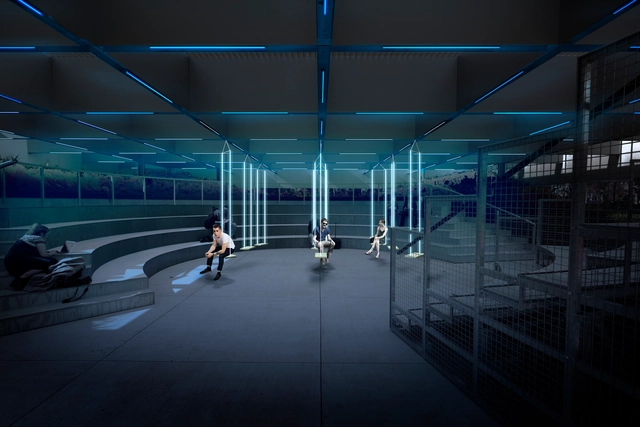
Rem Koolhaas and David Gianotten Discuss 2017 MPavilion, Reveal Temporary Installation 'Swings'

Two months after the opening of the 2017 MPavilion in Melbourne, its designers, OMA’s Rem Koolhaas & David Gianotten, have returned to discuss the commission and design process, as well as their reactions to its use thus far.

“The opening was an opening with many formal obligations and many excellencies, and that was exciting,” said Koolhaas about the pavilions opening events. “But frankly more exciting was this morning, when the thing performed really wonderfully spontaneously in terms of raising a lot of issues and having from the very first second a really animated discussion about a whole range of issues. And that’s exactly we intended it go.”

In the Swedish City of Järfälla, Ten Radical "Superbenches" Are Unveiled as Community Incubators

Sweden is home to the world’s longest public bench. At 240 feet (around 72 meters) in length, the Långa Soffan (“long sofa”) was installed by the citizens of Oskarshamn in 1867 to overlook its rather unspectacular harbour, which opens toward the Baltic Sea. The function of this bench was not for passing time and taking in the coastal views, however; in times gone by it was rhythmically occupied by the wives of sailors awaiting their husband’s return from sea voyages. It allowed people to gather under a sense of common melancholy and collectively recall the smiles of their distant spouses before the ocean’s broad, blue canvas.