1. ArchDaily
  2. Spatial Intelligence

Spatial Intelligence: The Latest Architecture and News

Rethinking Architecture at the Scale of Planetary Systems

Architecture has traditionally been described as a discipline concerned with space, form, and material presence. Yet this understanding becomes increasingly limited when confronted with the conditions that shape contemporary construction. Buildings no longer emerge from a stable relationship between site, program, and material. Instead, they are produced within a dense web of technological systems that operate across territorial, ecological, and temporal scales. Energy networks, data infrastructures, extraction processes, and global logistics shape architecture as decisively as climate or urban context.

Seen from this angle, architecture is less a discrete object than a moment within a larger technical field. Supply chains, data systems, automated maintenance, and energy grids do not sit "behind" the built environment. In a certain way, they influence what can be built, what is affordable, how buildings perform over time, and what kinds of waste they produce. When architecture is assessed primarily through form, it risks overlooking the systems that condition its production and afterlife.


Rethinking Architecture at the Scale of Planetary Systems - Image 1 of 4Rethinking Architecture at the Scale of Planetary Systems - Image 2 of 4Rethinking Architecture at the Scale of Planetary Systems - Image 3 of 4Rethinking Architecture at the Scale of Planetary Systems - Image 4 of 4Rethinking Architecture at the Scale of Planetary Systems - More Images+ 30

A Day in the Bazaar: When Architecture Is Observed in Time

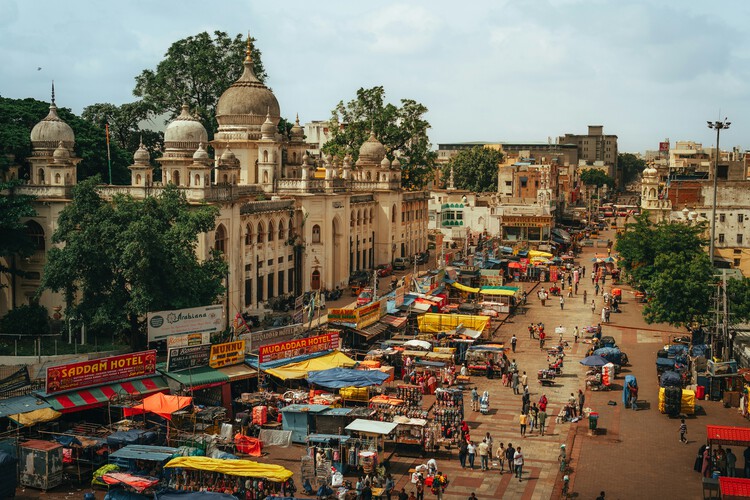
Architecture is most often represented as a stable object: a building captured at a moment of visual clarity, isolated from surrounding contingencies. Plans, sections, and photographs promise legibility by suspending time. Yet many of the world's most enduring public environments resist this mode of representation altogether. They are not designed to be read instantaneously, nor do they reveal their logic through form alone. Their spatial intelligence emerges gradually, through repetition, occupation, and duration.

The bazaar belongs firmly within this category. It cannot be understood through a single drawing or a finished elevation. Its organization is not fixed but rehearsed. What sustains it is not purely architectural composition, but shared timing, collective memory, and long-standing patterns of use. Togetherness in the bazaar does not arise from formal design decisions; it is produced through repeated encounters, negotiated proximities, and social familiarity accumulated over time.

A Day in the Bazaar: When Architecture Is Observed in Time - Image 1 of 4A Day in the Bazaar: When Architecture Is Observed in Time - Image 2 of 4A Day in the Bazaar: When Architecture Is Observed in Time - Image 3 of 4A Day in the Bazaar: When Architecture Is Observed in Time - Image 4 of 4A Day in the Bazaar: When Architecture Is Observed in Time - More Images+ 3

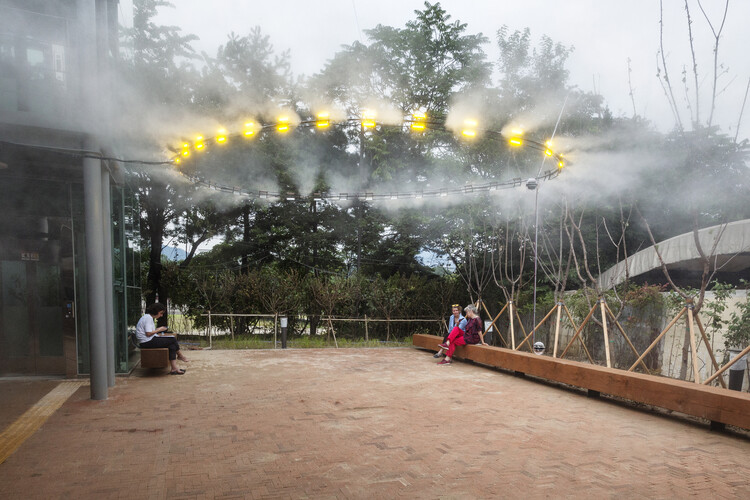
Designing with Empathy: From Smart to Sensitive Cities

Subscriber Access | 

The future of cities has long been defined by intelligence: networks of sensors, data, and engineered systems. From traffic-flow algorithms to climate dashboards, the smart city promised to make urban life optimized, measurable, and predictable. Yet amid this technological abundance, something essential feels absent: sensitivity. Cities are becoming increasingly equipped to process information but less able to perceive atmosphere, emotion, or care.

As recent global debates on urban innovation reveal, the next challenge is not about adding more devices but cultivating new forms of awareness. A sensitive city listens to its climate, adapts to its inhabitants, and responds to the subtle rhythms of the environment. In this shift from computation to perception, architecture and urban design are rediscovering intelligence as a form of empathy.

Designing with Empathy: From Smart to Sensitive Cities - Image 1 of 4Designing with Empathy: From Smart to Sensitive Cities - Image 2 of 4Designing with Empathy: From Smart to Sensitive Cities - Image 3 of 4Designing with Empathy: From Smart to Sensitive Cities - Image 4 of 4Designing with Empathy: From Smart to Sensitive Cities - More Images+ 14

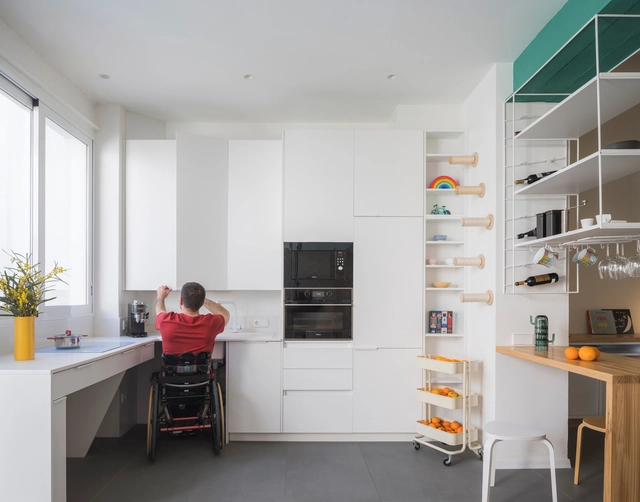
The Kitchen in the New Spatial Economy: 5 Contemporary Design Approaches

Subscriber Access | 

Space has become a luxury in many of the world's most densely populated cities—a growing reality that's hard to ignore. Megacities like Tokyo, Shanghai, Mumbai, Mexico City, and São Paulo already have populations exceeding 20 million, while other urban centers across Asia and Africa continue to expand rapidly. Among these, Delhi stands out: if current trends continue, it is projected to become the most populous city by 2028. As these cities expand, housing—especially new developments—follows a new logic: as square meters shrink, furniture adapts, and daily life learns to fit and thrive in high-density environments. This change isn't just about size; it reflects a new way of living. Where spaciousness once dominated, density now rules. Every corner gains spatial and commercial value, with the kitchen emerging as one of the biggest challenges in housing design today.

The Kitchen in the New Spatial Economy: 5 Contemporary Design Approaches - Image 1 of 4The Kitchen in the New Spatial Economy: 5 Contemporary Design Approaches - Image 2 of 4The Kitchen in the New Spatial Economy: 5 Contemporary Design Approaches - Image 3 of 4The Kitchen in the New Spatial Economy: 5 Contemporary Design Approaches - Image 4 of 4The Kitchen in the New Spatial Economy: 5 Contemporary Design Approaches - More Images+ 18

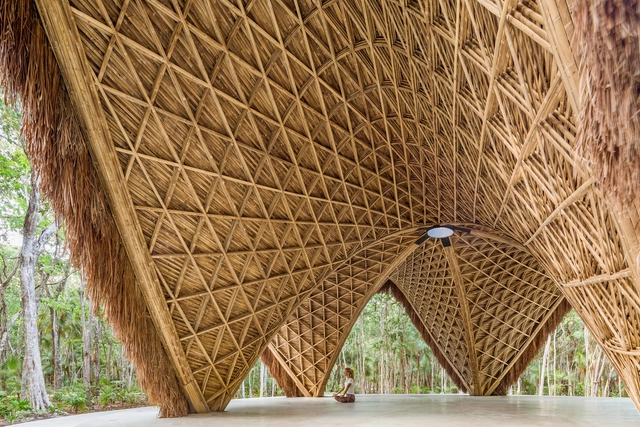
Between Algorithms and Ancestral Knowledge: Expanding the Concept of Architectural Intelligence

Artificial intelligence (AI) is no longer a futuristic idea in architecture — it is a concrete reality that is reshaping how we design. In seconds, computational systems can process and evaluate a wide range of variables — formal, programmatic, contextual, and regulatory — guiding architects toward highly optimized solutions. But as we embrace this algorithmic revolution, a critical question arises: can architectural intelligence be reduced to data-driven logic? In response, alternative approaches are gaining momentum — ones that value ways of building grounded in sensory experience, adaptation to place, and the intergenerational transmission of knowledge. In the exchange between artificial and ancestral forms of intelligence, a deeper understanding begins to take shape. Intelligence does not reside in the tools themselves, but in the intention and sensitivity with which we use them to navigate complex realities.

Between Algorithms and Ancestral Knowledge: Expanding the Concept of Architectural Intelligence - Image 1 of 4Between Algorithms and Ancestral Knowledge: Expanding the Concept of Architectural Intelligence - Image 2 of 4Between Algorithms and Ancestral Knowledge: Expanding the Concept of Architectural Intelligence - Image 3 of 4Between Algorithms and Ancestral Knowledge: Expanding the Concept of Architectural Intelligence - Image 4 of 4Between Algorithms and Ancestral Knowledge: Expanding the Concept of Architectural Intelligence - More Images+ 8

Dorte Mandrup and an Architecture Not Afraid to Contrast the Context

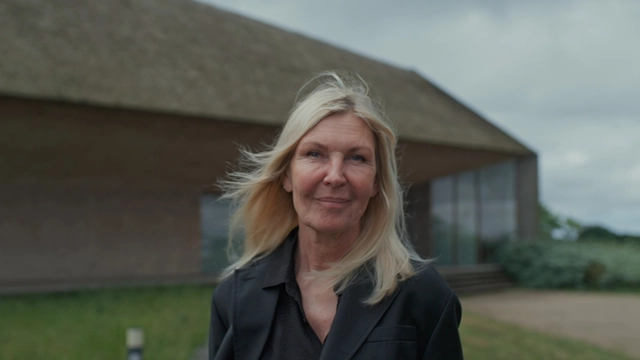
Buildings are deeply interconnected with their surroundings—the climate, culture, landscape, and the lives of their occupants. For Dorte Mandrup, a renowned Danish architect, context is more than a mere consideration; it is the driving force behind her designs. Her work demonstrates a profound curiosity about the people who will inhabit her buildings and the unique stories embedded within each site. Her buildings aren't just structures; they're thoughtful responses to their surroundings, without aiming to disappear within them.

Dorte Mandrup is featured, alongside Tosin Oshinowo, in the second installment of the documentary Women in Architecture, released November 12, 2024. Produced by Sky-Frame in collaboration with ArchDaily and directed by Boris Noir, the film builds upon the first episode, which highlighted Toshiko Mori, Gabriela Carrillo, and Johanna Meyer-Grohbrügge, offering a continued exploration of diverse perspectives within architecture.

Dorte Mandrup and an Architecture Not Afraid to Contrast the Context - Image 1 of 4Dorte Mandrup and an Architecture Not Afraid to Contrast the Context - Image 2 of 4Dorte Mandrup and an Architecture Not Afraid to Contrast the Context - Image 3 of 4Dorte Mandrup and an Architecture Not Afraid to Contrast the Context - Image 4 of 4Dorte Mandrup and an Architecture Not Afraid to Contrast the Context - More Images+ 26

9 Everyday Activities to Increase Your Spatial Intelligence

Subscriber Access | 

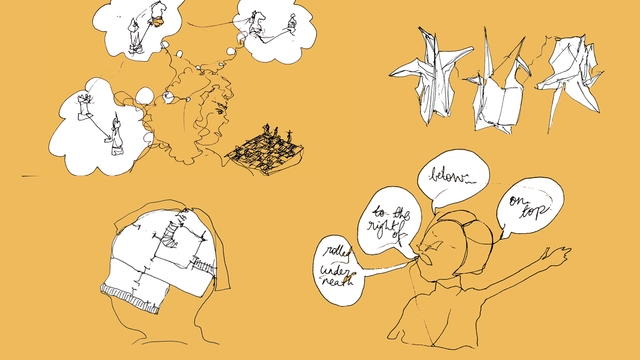
Architects design and organize spaces; without space, there is no architecture. So it goes without saying, therefore, that spatial intelligence is of high importance to architects. Luckily for us, spatial intelligence is not something you’re inherently gifted at or just “born with,” it’s something that can be trained and improved through practice. More practice means more advancement, so why not make it enjoyable and easy—easy enough even to do in your everyday life? From drawing to speaking to engaging in play, here are 9 everyday activities to improve your spatial intelligence.