1. ArchDaily
  2. sponge city

sponge city: The Latest Architecture and News

Kongjian Yu, Creator of the Sponge City Concept, Passes Away in Brazil Plane Crash

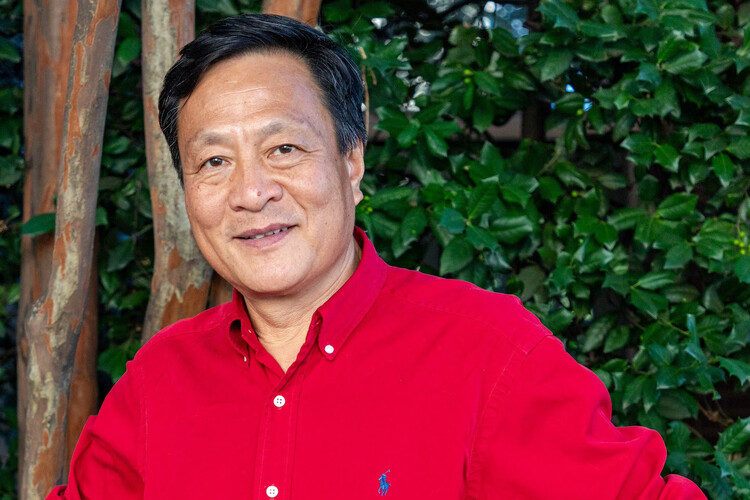
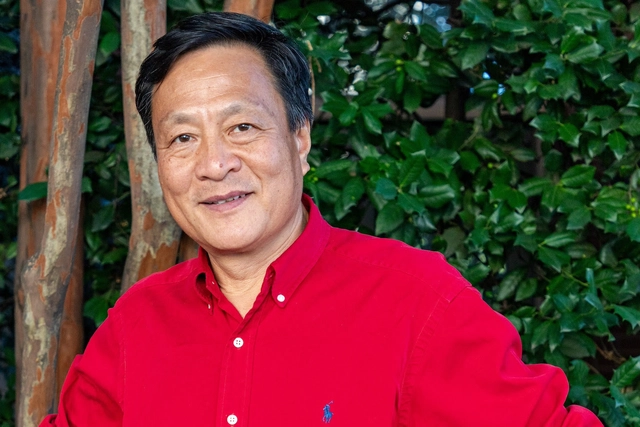
Kongjian Yu, the pioneering Chinese landscape architect and urban planner credited with coining the "sponge city" concept, has passed away at 62. According to Reuters, he was killed in a plane crash on Tuesday in the wetlands of Mato Grosso do Sul state, in Brazil, while reportedly filming a documentary about his work, after being featured in the opening program of the São Paulo International Architecture Biennale last week.

A globally-recognized advocate for ecological urbanism, Yu gained international relevance after his "sponge city" philosophy was adopted as a national policy in China in 2013. The approach prioritizes nature-based solutions, such as wetlands, parks, and permeable pavements, to absorb and retain water. This novel method stood in stark contrast to traditional concrete infrastructure, offering cities a way to combat urban flooding and accelerate climate change by working with nature rather than against it. His ideas have since been implemented in hundreds of cities worldwide.
Kongjian Yu, Creator of the Sponge City Concept, Passes Away in Brazil Plane Crash - Image 1 of 4Kongjian Yu, Creator of the Sponge City Concept, Passes Away in Brazil Plane Crash - Image 2 of 4Kongjian Yu, Creator of the Sponge City Concept, Passes Away in Brazil Plane Crash - Image 3 of 4Kongjian Yu, Creator of the Sponge City Concept, Passes Away in Brazil Plane Crash - Image 4 of 4Kongjian Yu, Creator of the Sponge City Concept, Passes Away in Brazil Plane Crash - More Images+ 1

Absorb, Filter, Store: 9 Projects Showcasing How Sponge Cities Adapt to Climate Challenges

Subscriber Access | 

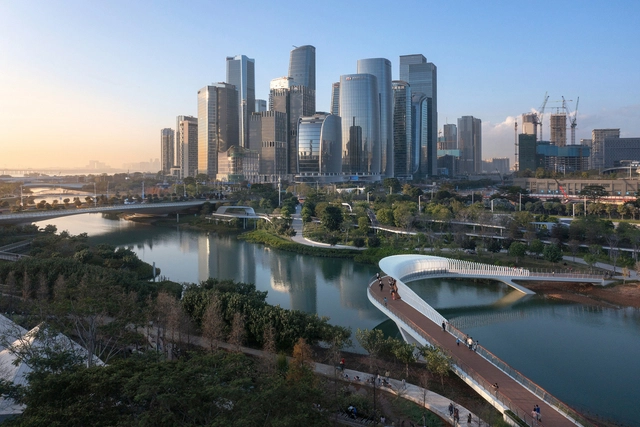
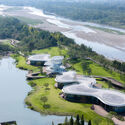
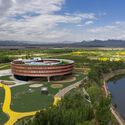
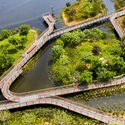
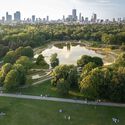
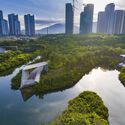
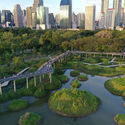
The concept of "sponge cities" has gained prominence since it was introduced by Chinese landscape architect Kongjian Yu, founder of Turenscape, and was officially adopted as a national policy in China in 2013 to combat urban flooding. This approach prioritizes nature-based infrastructure such as wetlands, rain gardens, and permeable pavements, creating landscapes with porous soil where native plants can thrive with minimal maintenance. When it rains, these systems absorb and slow down water flow, reducing flood risks. In contrast, traditional concrete- and pipe-based drainage solutions, though widely used, are costly, rigid, and require frequent maintenance, sometimes even making cities more vulnerable to flooding due to blockages and overflows.

Absorb, Filter, Store: 9 Projects  Showcasing How Sponge Cities Adapt to Climate Challenges - Image 1 of 4Absorb, Filter, Store: 9 Projects  Showcasing How Sponge Cities Adapt to Climate Challenges - Image 2 of 4Absorb, Filter, Store: 9 Projects  Showcasing How Sponge Cities Adapt to Climate Challenges - Image 3 of 4Absorb, Filter, Store: 9 Projects  Showcasing How Sponge Cities Adapt to Climate Challenges - Image 4 of 4Absorb, Filter, Store: 9 Projects  Showcasing How Sponge Cities Adapt to Climate Challenges - More Images+ 5