1. ArchDaily
  2. Structure

Structure: The Latest Architecture and News

Jaali, Mashrabiya, Cobogó: The Lightest Skins in Architecture

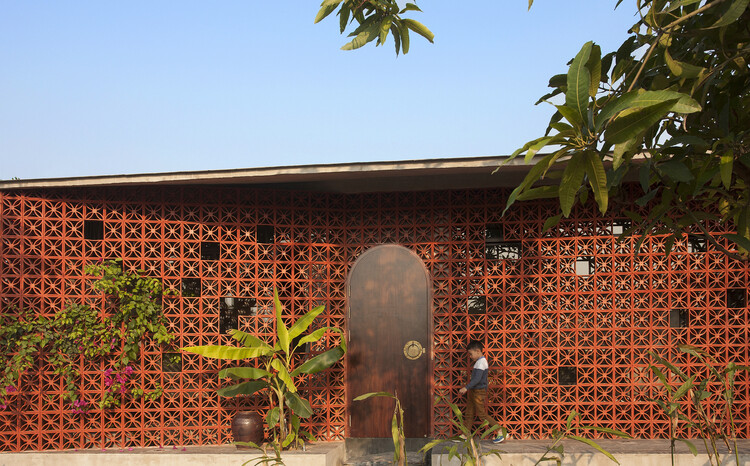
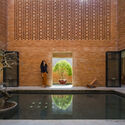
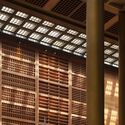
A perforated screen is often treated as an afterthought, something applied to soften light, to decorate a façade, or to add texture where a wall might otherwise feel flat. It is photographed as a surface, drawn as a pattern, and discussed as a craft. But in many buildings across the Indian subcontinent and the Islamic world, the screen was never an addition. It was the wall itself. Remove it, and the building does not simply change in appearance; it loses its ability to regulate heat, move air, and mediate between inside and outside.

This misreading reveals more about contemporary habits than about the screen itself. Architectural thinking has long separated structure from envelope, performance from expression. Within that framework, elements like the jaali or mashrabiya are easy to categorize as ornamental, visually rich but technically secondary. Yet these screens were conceived as integrated systems, where geometry, material, and climate operate together. Their intelligence lies in what they do.
Jaali, Mashrabiya, Cobogó: The Lightest Skins in Architecture - Image 1 of 4Jaali, Mashrabiya, Cobogó: The Lightest Skins in Architecture - Image 2 of 4Jaali, Mashrabiya, Cobogó: The Lightest Skins in Architecture - Image 3 of 4Jaali, Mashrabiya, Cobogó: The Lightest Skins in Architecture - Image 4 of 4Jaali, Mashrabiya, Cobogó: The Lightest Skins in Architecture - More Images+ 11

Building with the “Blue Note”: Tension, Deviation, and Structure in Architecture

Subscriber Access | 

By operating with only five notes, the pentatonic scale establishes a stable and intuitive musical system in which structural clarity allows for variation without the risk of excessive dissonance. From this consolidated structure, which forms the basis of countless musical styles, especially popular music, the blues introduced a decisive inflection by incorporating additional notes into the scale. Without delving into excessive technicalities, these are subtle tonal deviations, small dissonances often associated with a more melancholic sound, known as blue notes. Played fleetingly rather than as emphatic accents, they briefly tension the system, adding expressiveness and depth while keeping the underlying structure intact.

If in music the blues scale operates through a subtle deviation that "seasons" the underlying structure, a similar principle can be identified in architecture. Although comparisons between different artistic languages are always delicate, it is possible to recognize projects that find their expressive strength not in rupture, but in localized inflections introduced within clear systems, whether of modulation, subtraction, materiality, or typology. Localized displacements and asymmetries function as internal tensions that do not compromise the coherence of the whole, revealing how expressiveness can emerge from controlled deviation rather than from permanent exception.

Laying the Groundwork: Six Creative Strategies for Reusing Architectural Foundations

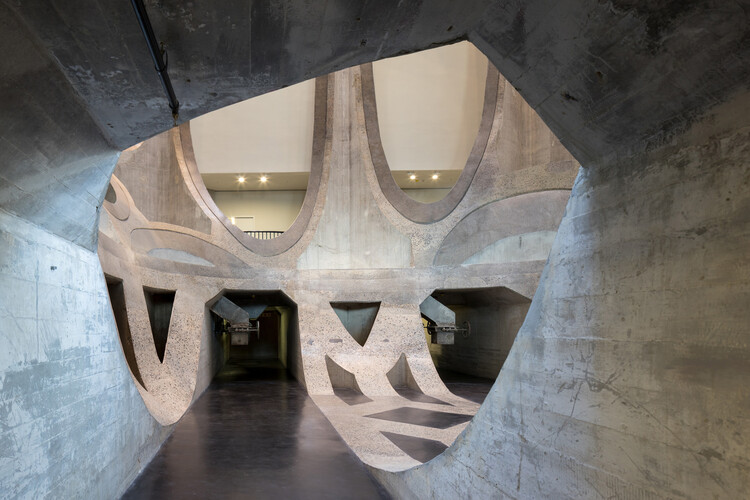
Adaptive reuse allows architects to conserve resources, reduce waste, and extend the life of existing structures. By working with what already exists, architects lessen the need for new materials, lower energy consumption, and limit demolition debris. This approach protects natural habitats and green spaces by reducing the demand for new land development. Through reuse, cities become more sustainable and less carbon-intensive while preserving the material and cultural value of the built environment.

Laying the Groundwork: Six Creative Strategies for Reusing Architectural Foundations - Image 1 of 4Laying the Groundwork: Six Creative Strategies for Reusing Architectural Foundations - Image 2 of 4Laying the Groundwork: Six Creative Strategies for Reusing Architectural Foundations - Image 3 of 4Laying the Groundwork: Six Creative Strategies for Reusing Architectural Foundations - Image 4 of 4Laying the Groundwork: Six Creative Strategies for Reusing Architectural Foundations - More Images+ 11

Rising Above: Environmental Conditions for Elevating Architectural Foundations

Subscriber Access | 

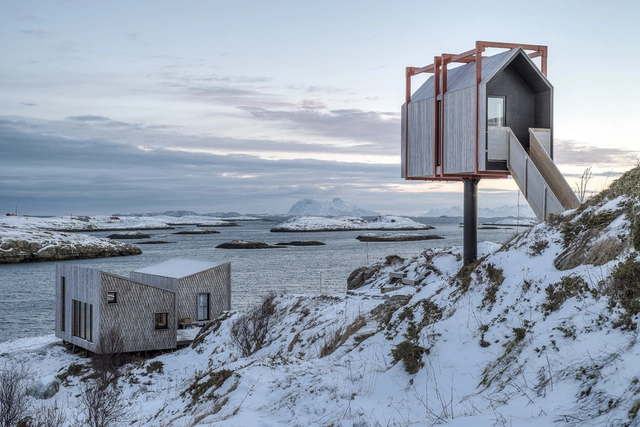
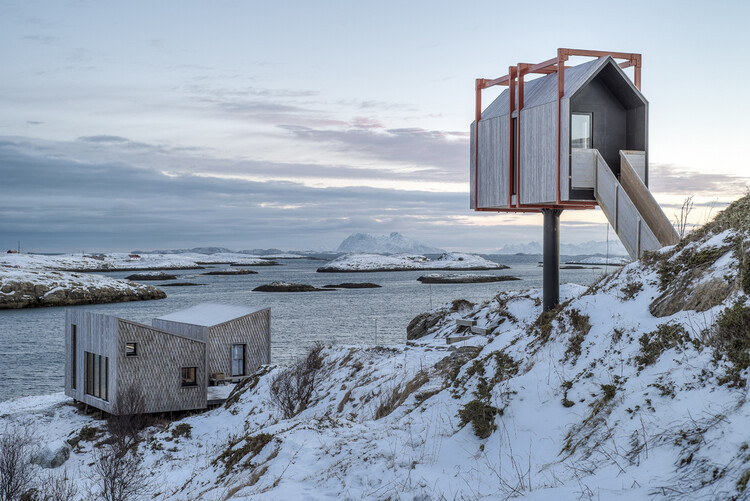
The decision to lift a building off the ground is a technical maneuver that requires substantial planning, expertise, and careful consideration. It is a deliberate architectural response to the site's forces and fragilities. Floodplains, wetlands, and thawing tundra share a common thread: Architects reconcile risk and vulnerability through elevated structures. In this sense, it is a spatial response and a structural necessity.

Rising Above: Environmental Conditions for Elevating Architectural Foundations - Image 1 of 4Rising Above: Environmental Conditions for Elevating Architectural Foundations - Image 2 of 4Rising Above: Environmental Conditions for Elevating Architectural Foundations - Featured ImageRising Above: Environmental Conditions for Elevating Architectural Foundations - Image 3 of 4Rising Above: Environmental Conditions for Elevating Architectural Foundations - More Images+ 11

Designing with Humidity: How Architecture Adapts to the World’s Dampest Climates

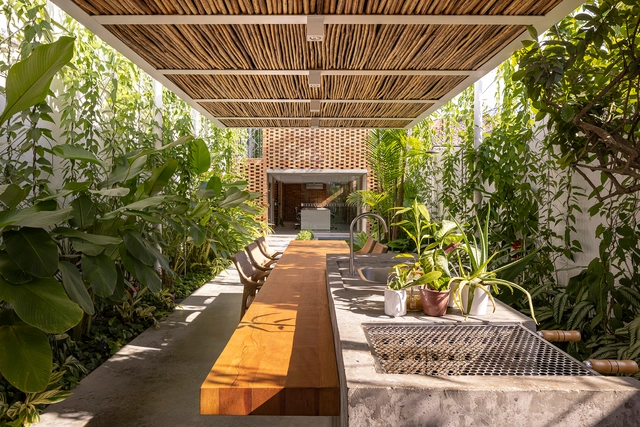
Humid environments present some of the most complex challenges in architectural design. From the tropical monsoon season of Southeast Asia to the equatorial heat of Central Africa, these environments demand solutions that account for intense moisture, high temperatures, and the constant battle against mold, decay, and stagnation. Yet, for centuries, communities in these regions have developed architectural techniques that do not fight against humidity but instead work with it, leveraging local materials, climate-responsive design, and passive cooling techniques to create sustainable and livable spaces. By considering atmosphere as a sensory and climatic phenomenon, architects will craft spaces that are not only evocative but also responsive, adaptive, and sustainable.

Designing with Humidity: How Architecture Adapts to the World’s Dampest Climates - Image 1 of 4Designing with Humidity: How Architecture Adapts to the World’s Dampest Climates - Image 4 of 4Designing with Humidity: How Architecture Adapts to the World’s Dampest Climates - Image 5 of 4Designing with Humidity: How Architecture Adapts to the World’s Dampest Climates - Image 7 of 4Designing with Humidity: How Architecture Adapts to the World’s Dampest Climates - More Images+ 13

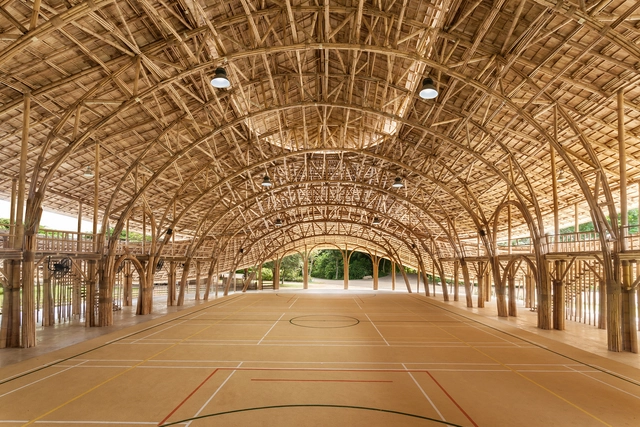
Keys to Bamboo Engineering in Structural Design: The Case of Panyaden Hall

Subscriber Access | 

In the heart of Chiang Mai, a city rich in history and the cultural heritage of northern Thailand, the Panyaden Hall, completed in 2017, carries a story of technical innovation and reverence for tradition, brought to life through bamboo. Combining centuries-old Thai craftsmanship with modern design solutions, the project reflects the ethos of Chiangmai Life Architects, a firm devoted to elevating natural materials to their highest potential. In this article, we will explore some of the contemporary structural solutions applied to this iconic project, further revealing bamboo's true potential and inviting a fresh perspective on sustainable architecture and bamboo engineering.