1. ArchDaily
  2. Territorial Agency

Territorial Agency: The Latest Architecture and News

Expanding Practice: Architecture Think Tanks at the Intersection of Research and Design

In architecture, most practices revolve around delivering projects to clients. Offices are shaped by deadlines, budgets, and clear briefs. While this structure produces buildings, it rarely leaves space for architects to question broader issues — about how we live, how cities are changing, or what the future demands of design. But alongside this production-focused system, a quieter movement has emerged: studios, collectives, and foundations that prioritize research, experimentation, and reflection. These are the architecture think tanks — spaces designed not to build immediately, but to think first.

The idea of a think tank is not new. Traditionally found in politics, economics, or science, think tanks bring together experts to study complex problems and propose solutions. In architecture, their rise reveals a tension at the heart of the discipline. If architecture is to remain socially and environmentally relevant, can it continue to rely only on client-driven practice? Or must it carve out space for slower, deeper inquiry?

Expanding Practice: Architecture Think Tanks at the Intersection of Research and Design - Image 1 of 4Expanding Practice: Architecture Think Tanks at the Intersection of Research and Design - Image 2 of 4Expanding Practice: Architecture Think Tanks at the Intersection of Research and Design - Image 3 of 4Expanding Practice: Architecture Think Tanks at the Intersection of Research and Design - Image 4 of 4Expanding Practice: Architecture Think Tanks at the Intersection of Research and Design - More Images+ 48

The Spatial Agency Gap: Rethinking Public Space through Co-Designing with Foreign Domestic Workers

Subscriber Access | 

Domestic workers in Hong Kong and Singapore are the city's quiet infrastructure. In Hong Kong alone, there are a total of roughly 300,000 domestic workers, serving a portion of the approximate 2.7 million households. Their care labor sustains dual-income family routines: childcare, eldercare, cooking, cleaning, and the everyday logistics that make professional life possible. Yet the people who hold this balance together remain largely invisible in policy—and, crucially, in space.

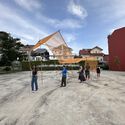
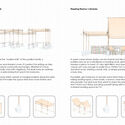
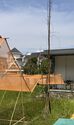
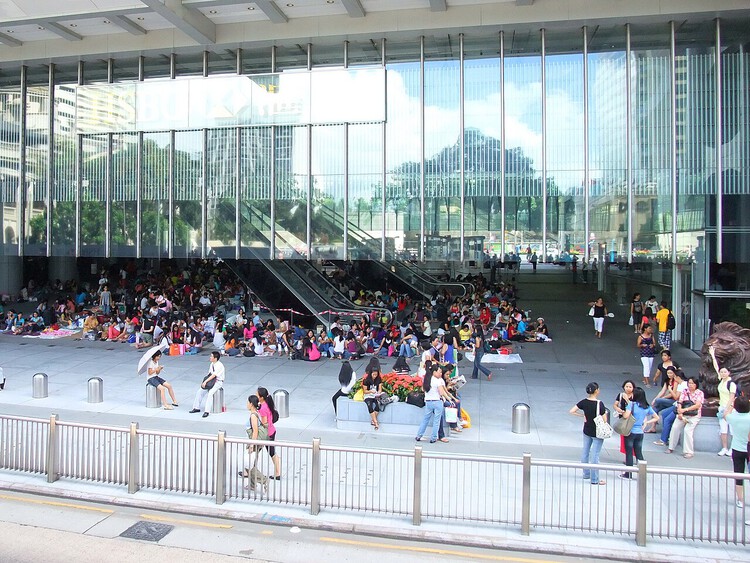
On Sundays in Hong Kong's financial district, that invisibility becomes visible. Elevated walkways and podium forecourts—underused on weekends—turn into ad-hoc commons. With cardboard mats, small tents, towels, food and water, and a music speaker or two, domestic workers assemble places to sit, rest, and socialize. These improvised rooms in the city are often their only chance to exercise spatial agency—something they rarely have in the homes they maintain or in formal public infrastructure. In the absence of sanctioned, serviced places for rest, quieter bridges and passages become practical stand-ins.

The Spatial Agency Gap: Rethinking Public Space through Co-Designing with Foreign Domestic Workers - Image 1 of 4The Spatial Agency Gap: Rethinking Public Space through Co-Designing with Foreign Domestic Workers - Image 2 of 4The Spatial Agency Gap: Rethinking Public Space through Co-Designing with Foreign Domestic Workers - Image 3 of 4The Spatial Agency Gap: Rethinking Public Space through Co-Designing with Foreign Domestic Workers - Image 4 of 4The Spatial Agency Gap: Rethinking Public Space through Co-Designing with Foreign Domestic Workers - More Images+ 17

Lisbon Architecture Triennale 2025 Examines the Technosphere and Human Impact on Earth

Subscriber Access | 

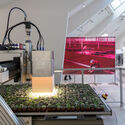
Thirty trillion tons. This is the estimated mass of all human-made matter on Earth, and the starting point for the 7th edition of the Lisbon Architecture Triennale. Curated by Ann-Sofi Rönnskog and John Palmesino, founders of Territorial Agency, the event asks a deceptively simple question: How heavy is a city? To answer it requires more than data. It demands a shift in perception: from the scale of the city to the planetary technosphere.

The technosphere, a term borrowed from Earth sciences, defines the vast system of infrastructures, technologies, and materials that sustain human life while reshaping the planet. Cities, in this view, are not only territories but dense nodes within this planetary metabolism. From October to December 2025, Lisbon becomes a lens to examine that magnitude, hosting three main exhibitions (Fluxes, Spectres, Lighter), a book of essays, a talks program, and more than twenty independent projects across the city.

Lisbon Architecture Triennale 2025 Examines the Technosphere and Human Impact on Earth - Image 1 of 4Lisbon Architecture Triennale 2025 Examines the Technosphere and Human Impact on Earth - Image 2 of 4Lisbon Architecture Triennale 2025 Examines the Technosphere and Human Impact on Earth - Image 3 of 4Lisbon Architecture Triennale 2025 Examines the Technosphere and Human Impact on Earth - Image 4 of 4Lisbon Architecture Triennale 2025 Examines the Technosphere and Human Impact on Earth - More Images+ 8

Exploring Territorial Relations: The Swiss Pavilion at the 2023 Venice Biennale is Curated by Karin Sander and Philip Ursprung

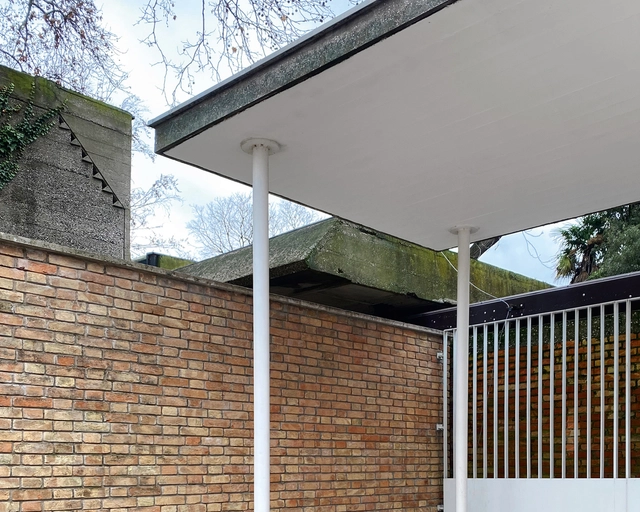
Switzerland’s project for its national pavilion at the 18th International Architecture Exhibition–La Biennale di Venezia will be curated by Karin Sander and Philip Ursprung to explore territorial relationships within the Giardini of La Biennale. Titled “Neighbours,” their project is focused on the spatial and structural proximity between the Swiss Pavilion and its Venezuelan neighbor. By turning architecture itself into the exhibit, the project also highlights the bond between the architects of the two structures: the Swiss Bruno Giacometti (1907 - 2012) and the Italian Carlo Scarpa (1906 - 1978). The exhibition will be on display from May 20 to November 26, 2023.

Exploring Territorial Relations: The Swiss Pavilion at the 2023 Venice Biennale is Curated by Karin Sander and Philip Ursprung - Image 1 of 4Exploring Territorial Relations: The Swiss Pavilion at the 2023 Venice Biennale is Curated by Karin Sander and Philip Ursprung - Image 2 of 4Exploring Territorial Relations: The Swiss Pavilion at the 2023 Venice Biennale is Curated by Karin Sander and Philip Ursprung - Image 3 of 4Exploring Territorial Relations: The Swiss Pavilion at the 2023 Venice Biennale is Curated by Karin Sander and Philip Ursprung - Image 4 of 4Exploring Territorial Relations: The Swiss Pavilion at the 2023 Venice Biennale is Curated by Karin Sander and Philip Ursprung - More Images+ 1

Chicago Architecture Biennial Announces 2019 Early Highlight Contributors

The third Chicago Architecture Biennial will occur from September 19, 2019, to January 5, 2020, and yesterday the first group of contributors to the 2019 edition and publication was announced. This year’s theme, “...and other such stories,” will bring together a multi-faceted and international exploration of architecture and the built environment. Newly commissioned projects for the Biennial will highlight issues including public housing, social justice, and the appropriation and preservation of the natural environment.

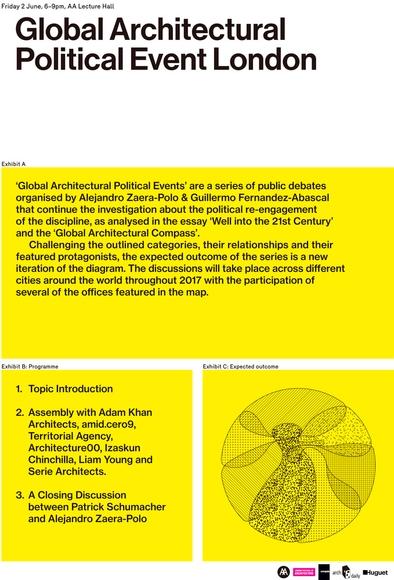
Global Architectural Political Event London

‘Global Architectural Political Events’ are a series of public debates organised by Alejandro Zaera-Polo & Guillermo Fernandez-Abascal that continue the investigation about the political re-engagement of the discipline, as analysed in the essay ‘Well into the 21st Century’ and the ‘Global Architectural Compass’.

Atelier Bow-Wow, OMA, and Amale Andraos Live From the 2016 Oslo Architecture Triennale

Atelier Bow-Wow, OMA, and Amale Andraos Live From the 2016 Oslo Architecture Triennale - Featured Image
The After Belonging Agency: Carlos Minguez Carrasco, Ignacio Galán, Alejandra Navarrese Llopis, Lluís Alexandre Casanovas Blanco and Marina Otero Verzier. Image Courtesy of Oslo Architecture Triennale

“Belonging,” the curatorial quintet of the 2016 Oslo Architecture Triennale, After Belonging, argue, “is no longer something bound to one’s own space of residence, or to the territory of a nation.” For this group of Spanish-born architects, academics and theorists—Lluís Alexandre Casanovas Blanco, Ignacio Galán, Carlos Minguez Carrasco, Alejandra Navarrese Llopis and Marina Otero Verzier—the very notion of our belongings and what it means to belong is becoming increasingly unstable.

After Belonging is the sixth incarnation of the Triennale and the first one in which a single curatorial thread has woven all of the festival’s activities together, including the international conference. The goal of the two primary exhibitions—On Residence and In Residence, including a series of Intervention Strategies—is to develop platforms with the aim of “rehearsing research strategies,” providing new ways for architects to engage with “contemporary changing realities."

After Belonging Agency Announce Conference Speakers for the 2016 Oslo Architecture Triennale

After Belonging Agency Announce Conference Speakers for the 2016 Oslo Architecture Triennale - Image 1 of 4
2016 Oslo Architecture Triennale Conference

The After Belonging Agency, the curatorial team behind the 2016 Oslo Architecture Triennale (OAT), have revealed sixteen speakers who will present at the event's central conference at the Oslo Opera House this coming September. Atelier Bow-Wow, Snøhetta alongside a number of other academics, practitioners and decision-makers will come together to "address architecture’s relation to current pressing questions such as refugeeism, migration and homelessness, new mediated forms of domesticity and foreignness, environmental displacements, tourism, and the technologies and economies of sharing."