1. ArchDaily
  2. Territory

Territory: The Latest Architecture and News

“Material Is Where the Story Begins”: Studio NEiDA on Building Through Craft and Context

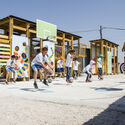
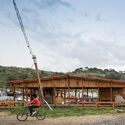
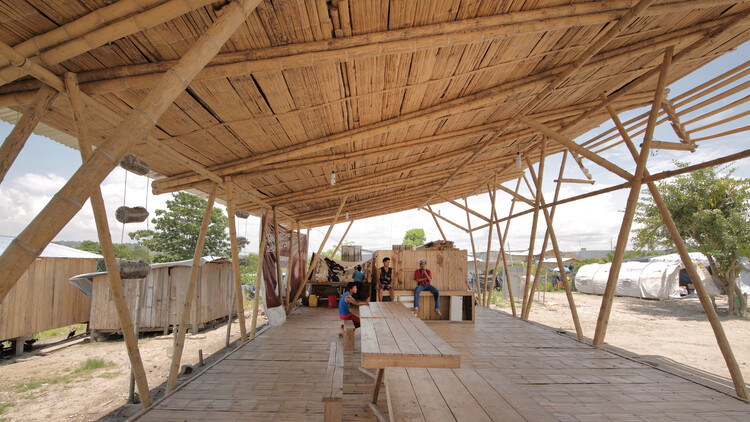
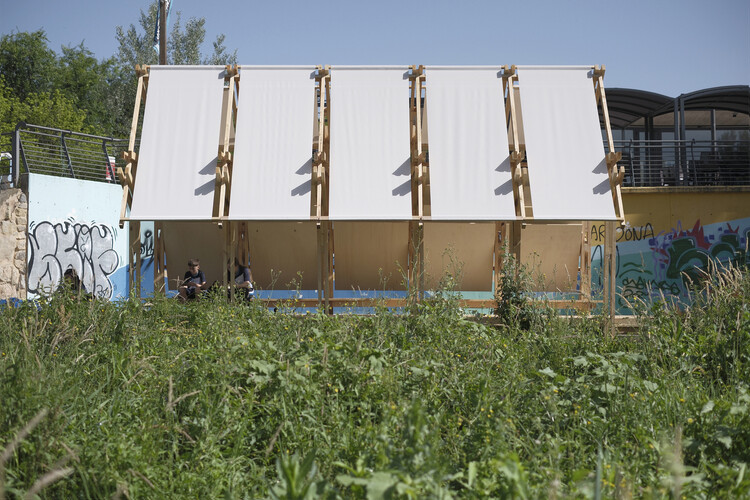
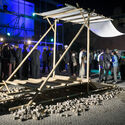
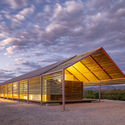
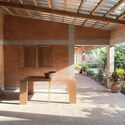
Studio NEiDA operates at the intersection of architectural practice, research, and curatorial work, with a consistent focus on how buildings emerge from the material and cultural conditions of a place. Rather than treating materiality as a finishing language, the studio frames it as the beginning of an architectural narrative—starting from what is locally available, they look at what craft knowledge exists on the ground, and how those resources and skills situate a project within an architectural lineage. This approach foregrounds limitations and possibilities as productive forces, and positions design as an iterative process of aligning spatial intent with the realities of construction culture and vernacular intelligence.

Across their work, NEiDA's interests extend beyond form toward the socio-political and climatic contexts that shape how architecture is made and inhabited. They emphasize learning from non-authored, vernacular, and informal building practices as a way of establishing a shared grammar for intervention, and they describe an indoor–outdoor continuity not as a stylistic preference but as a response to local life and ventilation logics—where outdoor rooms can be as spatially defined and programmatically central as interior ones. Collaboration, in this framework, is not auxiliary: the studio highlights on-site exchange with craftspeople and builders as a core methodology, where projects evolve through collective intelligence and adaptive communication.
“Material Is Where the Story Begins”: Studio NEiDA on Building Through Craft and Context - Image 1 of 4“Material Is Where the Story Begins”: Studio NEiDA on Building Through Craft and Context - Image 2 of 4“Material Is Where the Story Begins”: Studio NEiDA on Building Through Craft and Context - Image 3 of 4“Material Is Where the Story Begins”: Studio NEiDA on Building Through Craft and Context - Image 9 of 4“Material Is Where the Story Begins”: Studio NEiDA on Building Through Craft and Context - More Images+ 12

Energy Landscapes: How Infrastructure Reshapes Territory in South America

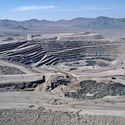
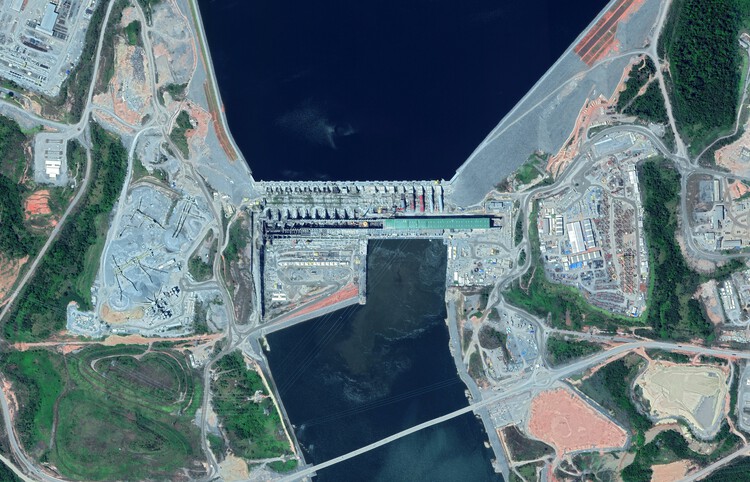
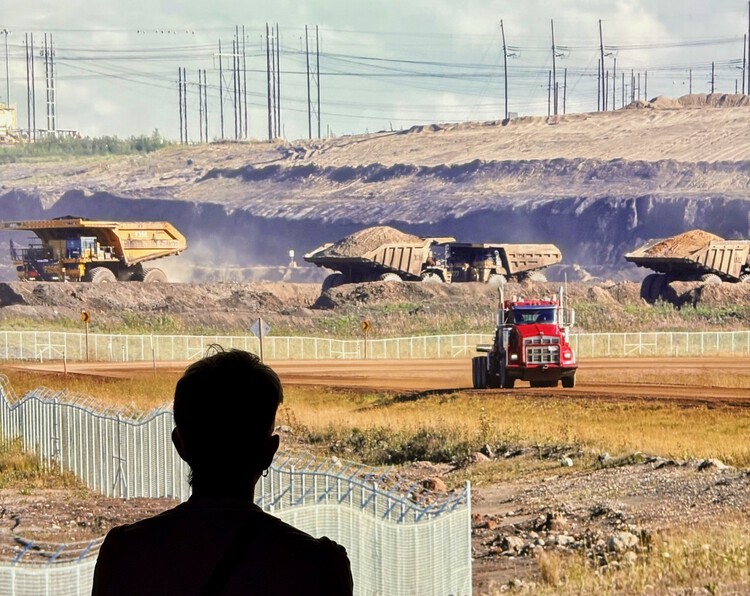
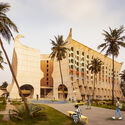
Some of the most significant transformations of South American landscapes have been produced not by cities, but by large infrastructures built to extract and distribute natural resources. Mining operations, energy systems, and transport networks have connected remote landscapes to broader economic structures while transforming rural territories and urban settlements throughout the continent. These infrastructures do not simply occupy space; they reorganize it. They have not only supported economic growth but also reconfigured territories in ways that continue to generate political, environmental, and social debate across the continent. From this perspective, territories can be understood not as fixed geographic areas but as socio-ecological systems shaped by cultural, environmental, and political relations, a point emphasized by anthropologist Arturo Escobar in his work on territorial thinking in Latin America.

Energy Landscapes: How Infrastructure Reshapes Territory in South America - Image 1 of 4Energy Landscapes: How Infrastructure Reshapes Territory in South America - Image 2 of 4Energy Landscapes: How Infrastructure Reshapes Territory in South America - Image 3 of 4Energy Landscapes: How Infrastructure Reshapes Territory in South America - Image 4 of 4Energy Landscapes: How Infrastructure Reshapes Territory in South America - More Images+ 7

On International Migrants Day: A Look at Architectural Responses to Displacement

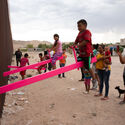
December 18 marks the United Nations' International Migrants Day, which aims to highlight the need for safer, fairer, and more inclusive migration systems. Proclaimed on December 4, 2000, the day seeks to recognize the multiple dimensions of migration beyond its economic and humanitarian aspects. According to the UN, mounting evidence indicates that international migration is beneficial for both countries of origin and destination. In this sense, International Migrants Day offers an opportunity to spotlight the value of the possibility to migrate and the contributions of millions of migrants worldwide to the cities and cultures in which they are integrated.
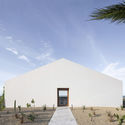
Aligned with this perspective, the UN's 2025 theme, "My Great Story: Cultures and Development," emphasizes how human mobility drives growth, enriches societies, and helps communities connect, adapt, and support one another. At the same time, International Migrants Day also acknowledges the increasingly complex environment in which migration occurs. Conflicts, climate-related disasters, and economic pressures continue to force millions of people from their homes in search of safety or opportunity. From both perspectives, it is essential to recognize the role of architecture in building integrated, multicultural communities and in responding to the conditions that lead people to migrate from their territories in the first place.

On International Migrants Day: A Look at Architectural Responses to Displacement - Image 1 of 4On International Migrants Day: A Look at Architectural Responses to Displacement - Image 2 of 4On International Migrants Day: A Look at Architectural Responses to Displacement - Image 3 of 4On International Migrants Day: A Look at Architectural Responses to Displacement - Image 4 of 4On International Migrants Day: A Look at Architectural Responses to Displacement - More Images+ 6

Beyond Universal Models: The Turn Toward Situated Architecture

Subscriber Access | 

Specificity has re-emerged as a central language in architectural discourse. In an increasingly globalized field, where projects often follow familiar models regardless of context, architects are now turning toward approaches rooted in the particularities of each site. This renewed attention to context reflects broader social, climatic, and political pressures: cities are facing extreme heat, ecological challenges, shifting demographics, and new forms of collective life that demand responses grounded in their immediate conditions.

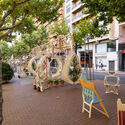
Situated architecture describes this shift. It refers to design approaches in which form, program, and materiality emerge from the specific environment that produces them: its microclimates, cultural structures, and everyday rituals. Rather than beginning with universal templates, these practices start with observation, prototyping, and direct engagement with local dynamics. This logic is visible in the climatic and material experiments of TAKK in Spain, such as Portable Garden and 10k House, which operate as lightweight prototypes tuned to thermal and ecological gradients; in Studio Ossidiana's Art Pavilion M, shaped by layered soils and ecological cycles in the Netherlands; in Izaskun Chinchilla's reinterpretations of vernacular objects and her later experiments with 100 Sillas and 3 Salones Urbanos; in the narrative-driven domestic spaces explored by Common Accounts; and in Raumlabor's urban interventions that respond directly to the specificities of post-industrial Berlin.

Beyond Universal Models: The Turn Toward Situated Architecture - Image 1 of 4Beyond Universal Models: The Turn Toward Situated Architecture - Image 2 of 4Beyond Universal Models: The Turn Toward Situated Architecture - Image 3 of 4Beyond Universal Models: The Turn Toward Situated Architecture - Image 4 of 4Beyond Universal Models: The Turn Toward Situated Architecture - More Images+ 56

Lisbon Architecture Triennale 2025 Examines the Technosphere and Human Impact on Earth

Subscriber Access | 

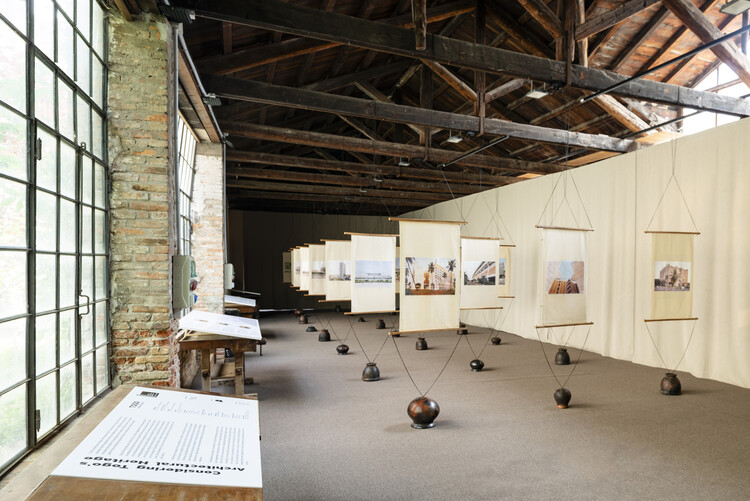
Thirty trillion tons. This is the estimated mass of all human-made matter on Earth, and the starting point for the 7th edition of the Lisbon Architecture Triennale. Curated by Ann-Sofi Rönnskog and John Palmesino, founders of Territorial Agency, the event asks a deceptively simple question: How heavy is a city? To answer it requires more than data. It demands a shift in perception: from the scale of the city to the planetary technosphere.

The technosphere, a term borrowed from Earth sciences, defines the vast system of infrastructures, technologies, and materials that sustain human life while reshaping the planet. Cities, in this view, are not only territories but dense nodes within this planetary metabolism. From October to December 2025, Lisbon becomes a lens to examine that magnitude, hosting three main exhibitions (Fluxes, Spectres, Lighter), a book of essays, a talks program, and more than twenty independent projects across the city.

Lisbon Architecture Triennale 2025 Examines the Technosphere and Human Impact on Earth - Image 1 of 4Lisbon Architecture Triennale 2025 Examines the Technosphere and Human Impact on Earth - Image 2 of 4Lisbon Architecture Triennale 2025 Examines the Technosphere and Human Impact on Earth - Image 3 of 4Lisbon Architecture Triennale 2025 Examines the Technosphere and Human Impact on Earth - Image 4 of 4Lisbon Architecture Triennale 2025 Examines the Technosphere and Human Impact on Earth - More Images+ 8

Architecture and Territory: Houses in the Five Regions of Brazil

Subscriber Access | 

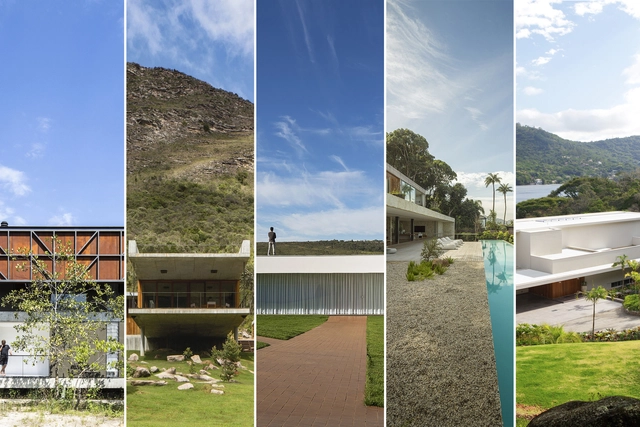
Italian architect Vittorio Gregotti, author of The Territory of Architecture (1966), believed that architecture had its origin when mankind placed the first stone on the ground. Recognizing a place is the first step towards an architectural project, whether intentionally or not. Understanding the project's location and its context is the basis for many design choices and is, therefore, a key aspect in the field of architecture.

Architecture and Territory: Houses in the Five Regions of Brazil - Image 2 of 4Architecture and Territory: Houses in the Five Regions of Brazil - Image 11 of 4Architecture and Territory: Houses in the Five Regions of Brazil - Image 17 of 4Architecture and Territory: Houses in the Five Regions of Brazil - Image 32 of 4Architecture and Territory: Houses in the Five Regions of Brazil - More Images+ 36