1. ArchDaily
  2. Textiles

Textiles: The Latest Architecture and News

What Textiles and Translucency Bring to Public Space: 5 Lightweight Interventions

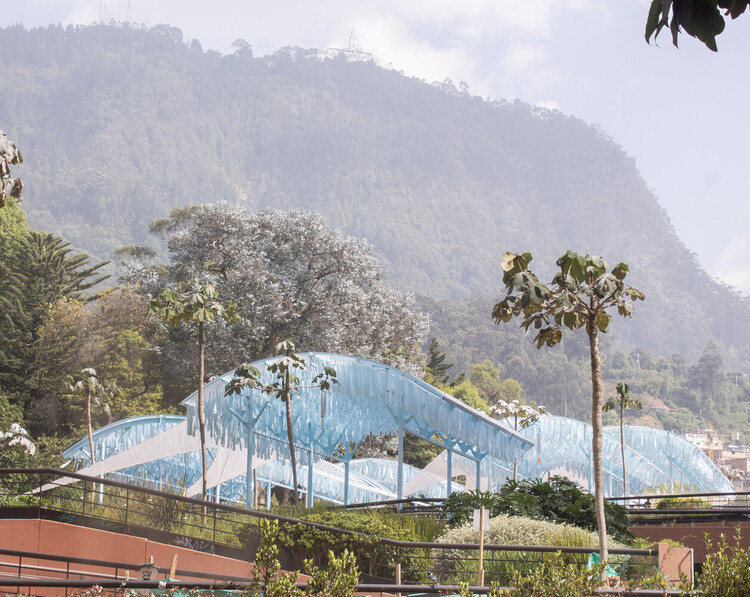
What do lightweight materials bring to public space with an ethical, ecological, and non-extractive design principle? Various textile textures offer a point of entry, being closer to the body than heavy conventional structural materials. Through its flexibility and responsiveness, it enables a form of soft enclosure rather than a fixed boundary in architectural space. Responding to minimal environmental stimuli, the fabric brings continuous movements into space. When layered or assembled, it produces gradations of density, depth, and enclosure, while recent innovative fabrication technologies extend the possibilities of its form and structural durability.

Semi-transparent materials further mediate the conditions of visual permeability and bodily experience of the space. By transmitting and filtering light, they blur clear separations between interior and exterior, solid and void, creating thresholds that are neither fully open nor fully enclosed, but constantly in negotiation. Reinterpreting structure in urban space through lightweight, translucency, and softness opens up alternative modes of spatial perception and bodily engagement.

What Textiles and Translucency Bring to Public Space: 5 Lightweight Interventions - Image 1 of 4What Textiles and Translucency Bring to Public Space: 5 Lightweight Interventions - Image 2 of 4What Textiles and Translucency Bring to Public Space: 5 Lightweight Interventions - Image 3 of 4What Textiles and Translucency Bring to Public Space: 5 Lightweight Interventions - Image 4 of 4What Textiles and Translucency Bring to Public Space: 5 Lightweight Interventions - More Images+ 15

Rugs as Woven Memory: How Origin and Materiality Shape Interiors

 | In Collaboration

Materials can carry memory. They do more than finish a space; they can anchor it, shape atmosphere, and connect interiors to broader cultural and material narratives. Some architects and designers explore local techniques, natural resources, and craft traditions to balance cultural preservation with modern functionality, introducing context and depth. This is not necessarily a return to the past, but a reinterpretation of inherited knowledge to create architecture that resonates with contemporary needs.