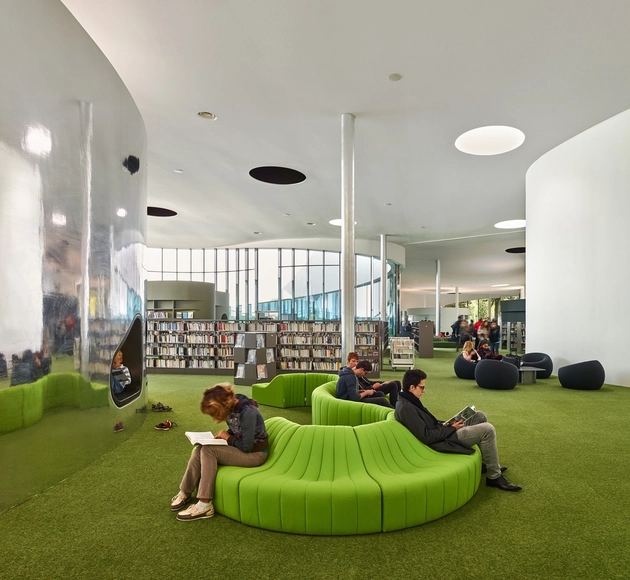
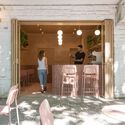
The modern world is disconnected. Online interactions dominate the daily lives of people across the world. This shift is not just a result of the rise of the internet, but also a stark reflection of the decline of public spaces, particularly third places. Third places, once essential for promoting community and social cohesion, have evolved drastically over the past few decades. In today's commercialized landscape, third places face plenty of demands from users and designers alike, calling for a need to reconsider their accessibility and purpose.
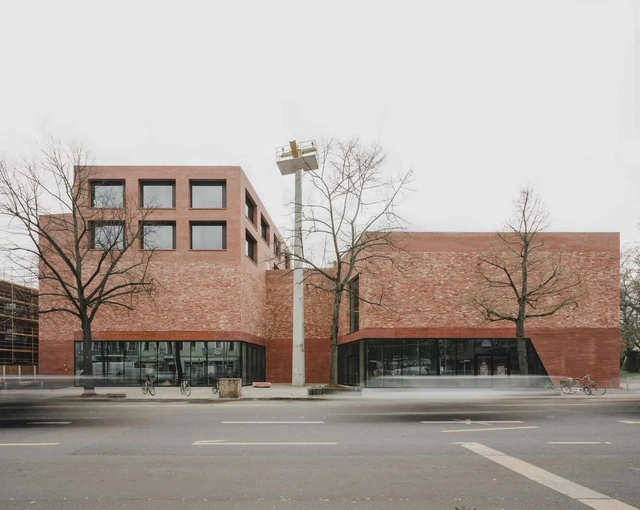
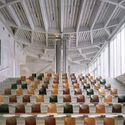
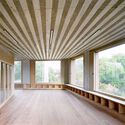
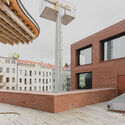
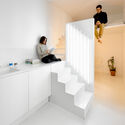
Spore Haus / AFF Architekten. Image Courtesy of DAM Preis 2025
The DAM Preis 2025, presented by the Deutsches Architekturmuseum (DAM), has been awarded to AFF Architekten for their project, Spore Haus, in Berlin. As one of Germany's most recognized architecture awards, the DAM Preis highlights significant contributions to contemporary architectural practice. This year's winner, Spore Haus, was selected for its "thoughtful design and careful integration" into the urban context, as well as its contribution to public life.
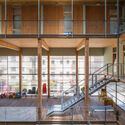
Cantercel, France, 2022. Image Courtesy of forty five degrees
When talking about space-making practices, architects and urban planners are usually thinking about participatory planning and collaborative processes, often overlooking the ways in which the communities themselves can become their own agents of change. As the people poses an intimate knowledge of not only their environment, but also of social and cultural norms, the needs of their communities and latent opportunities within their surroundings, they are often the ones initiating actions, supporting their peers and contributing positively to their locality. Research-focused office forty five degrees set out to explore these grass-roots initiatives, to meet the locals and gather their stories in an effort to gain a better understanding of the complex and diverse cultural territories across Europe. Their journey, organized under the “Radical Rituals” project, follows the 45°N parallel line that transverses Europe from East to West. The office has been selected as part of ArchDaily's 2023 New Practices, an annual survey aimed at showcasing those who adress the ever-growing challanges of our times and take architecture to new directions.
Dwellings can be understood as the most significant and primary form of architecture, as the house is intimately related to the idea of shelter, one of humanity’s basic needs. In the words of architect Mario Botta, “As long as there is a man who needs a house, architecture will still exist.” Yet, in spite of its ubiquity, or perhaps because of it, an exact definition of a home is difficult to find. Throughout history, different functions and spaces have been added and subtracted from this unit, reflecting directly the character of the society that produced it.
The list of expectations that a house has to fulfill is long and ever-evolving: to provide intimate and safe spaces where one can recharge their energy, but at the same time to allow for interaction, welcoming friends and family to join in; it is the purveyor of leisure and relaxation, but also the site of most labors of care, while also providing a small incubator for starting entrepreneurs. This tendency to demand a residential unit to fulfill multiple roles was heightened to unprecedented levels during the pandemic. Health concerns led to the closing of most workspaces, the second place where people spent most of their time, and of cafes, restaurants, cinemas, and malls, the “third places.” Suddenly, the home had to become an all-purpose space.
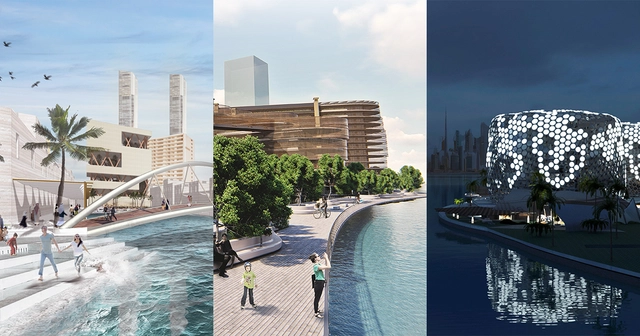
Students from South Africa, Belarus, and Germany have been chosen as the winners of the 14th edition MultiComfort House Students Contest, a contest created in 2004 and organized by Saint-Gobain. Entrants were to develop a project based on the principles of the multi-comfort concept, that is, "an optimum indoor environment ensuring the right level of fresh air, thermal, visual and acoustic comfort provided in a sustainable and energy efficient manner," as explained by the organizers.
In close collaboration with the Department of Planning of the Municipality of Dubai and the Dubai Properties Group, Saint-Gobain presented the challenge of designing a cross-cultural community project in the cultural village of Dubai, on the shores of the Al Jaddaf inlet.
Considering Dubai's hot and humid climate, the students had to find a way to reconcile reducing the energy consumption of the refrigeration and ventilation systems without compromising any of the comforts of the inhabitants; while at the same time providing an optimal relationship with the environment.