1. ArchDaily
  2. Transportations network

Transportations network: The Latest Architecture and News

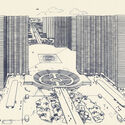
After Le Corbusier: How Southeast Asia Turned the Satellite City Into a Transit Megaproject

Southeast Asia is often narrated as a kind of architectural playground—an arena where modern and contemporary ideals have been tested at full scale through singular, iconic buildings. One can trace an easy lineage through names that have helped shape the region's skyline imagination: Paul Rudolph's Lippo Centre in Hong Kong and The Concourse in Singapore, I.M. Pei's OCBC Centre and Hong Kong's Bank of China Tower, Norman Foster's Supreme Court of Singapore and the HSBC Main Building in Hong Kong, Ron Phillips' Hong Kong City Hall, Moshe Safdie's Marina Bay Sands. Yet this familiar history—told through objects, colonialism, authorship, and signature forms—risks missing a deeper, more consequential layer of influence: the planning logics and infrastructural frameworks that have quietly structured how these cities expand, densify, and distribute everyday life.
After Le Corbusier: How Southeast Asia Turned the Satellite City Into a Transit Megaproject - Image 1 of 4After Le Corbusier: How Southeast Asia Turned the Satellite City Into a Transit Megaproject - Image 2 of 4After Le Corbusier: How Southeast Asia Turned the Satellite City Into a Transit Megaproject - Image 3 of 4After Le Corbusier: How Southeast Asia Turned the Satellite City Into a Transit Megaproject - Image 4 of 4After Le Corbusier: How Southeast Asia Turned the Satellite City Into a Transit Megaproject - More Images+ 12

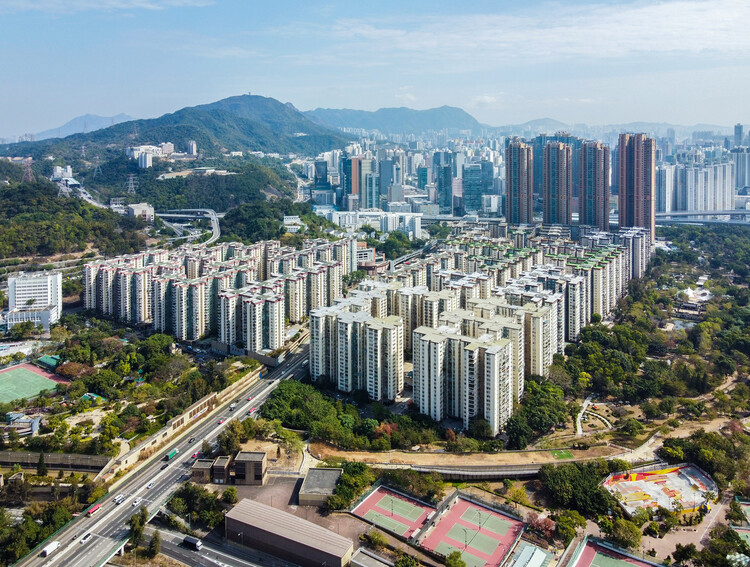
Podium–Tower Urbanism in Southeast Asia: Density, Management, and the Disappearing Street

Subscriber Access | 

If elevated networks reveal a city that increasingly walks above the street, the podium–tower is the typology that often makes that condition feel inevitable. Across Southeast Asia, podium–tower projects have become one of the dominant languages of metropolitan growth: a system that concentrates housing, jobs, retail, and transit connections into highly legible and managed parcels. From an urban planning perspective, the model can be remarkably effective—absorbing congestion, formalizing circulation, and delivering density quickly. Yet as it spreads, the typology also raises a quieter question: what does it optimize for, and what does it erode—especially at the level of the street, where urban life is meant to be negotiated rather than curated?
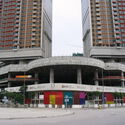
At its simplest, the podium–tower is a hybrid structure consisting of a high-coverage, low-rise podium supporting one or more slender vertical towers. The podium typically carries the logistical and commercial weight of the development—retail, parking, loading, drop-offs, back-of-house services, and often amenity decks—while the tower stacks private programs above, whether residential, office, hotel, or mixed use. The promise is twofold: maximize urban density while maintaining a "human-scaled" street wall, and separate the messy logistics of city life from the quieter domain of living and work.

Podium–Tower Urbanism in Southeast Asia: Density, Management, and the Disappearing Street - Image 1 of 4Podium–Tower Urbanism in Southeast Asia: Density, Management, and the Disappearing Street - Image 2 of 4Podium–Tower Urbanism in Southeast Asia: Density, Management, and the Disappearing Street - Image 3 of 4Podium–Tower Urbanism in Southeast Asia: Density, Management, and the Disappearing Street - Image 4 of 4Podium–Tower Urbanism in Southeast Asia: Density, Management, and the Disappearing Street - More Images+ 14

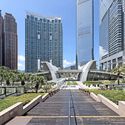
Beyond the Street: Climate, Commerce, and the Evolution of Hong Kong’s Elevated Networks

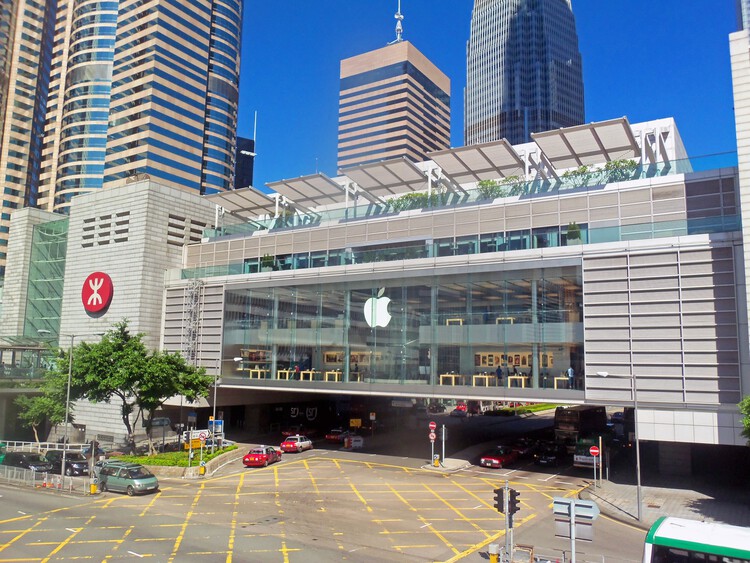
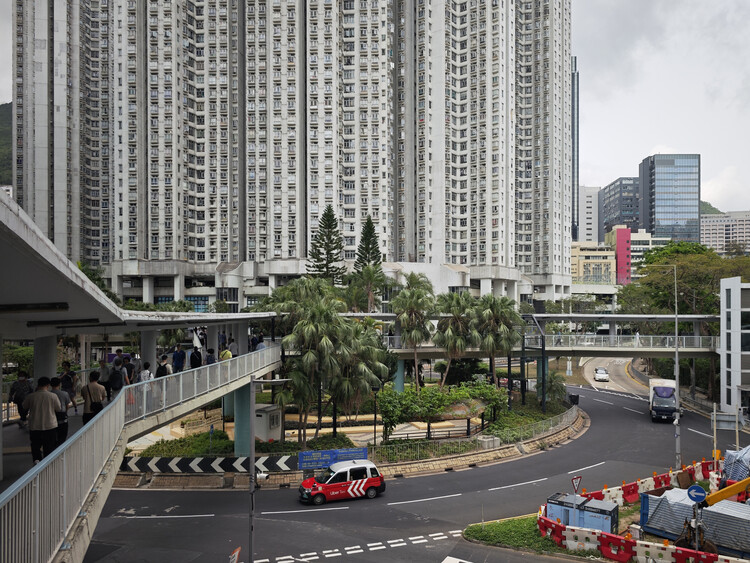
In 2012, Cities Without Ground: A Hong Kong Guidebook offered one of the clearest documentations of a condition that many residents experience intuitively but rarely name: Hong Kong's dependence on elevated, second-storey urbanism. Through drawings and careful mapping, the book captured how the city's pedestrian networks are routinely lifted above the street—separating people from traffic, extending commercial frontage beyond ground level, and negotiating a hilly topography where "flat" circulation is often an engineered achievement. Since its publication, these systems have only grown in prominence—not only for their sheer spatial complexity, but for the way they recast public space as something continuous yet selective, connective yet curated.

This fascination, however, has always carried a parallel unease. Elevated passages can be generous and effective, offering sheltered movement and reliable connectivity. Yet they also raise persistent questions: where do these routes lead, who gets to connect, and what kinds of programs are invited—or excluded—by this "privileged" level of circulation? The second-storey city does not simply bypass vehicles; it can also bypass the street as a civic stage. Over time, it risks shifting architectural attention away from ground-level public life, relieving designers from having to negotiate pedestrian scale, frontage, and the messy reciprocity of the street. In its worst moments, the result is a landscape of podium clusters and sealed megastructures—buildings that perform connectivity at Level 2 while remaining indifferent to the neighborhood at Level 0.

Beyond the Street: Climate, Commerce, and the Evolution of Hong Kong’s Elevated Networks - Image 1 of 4Beyond the Street: Climate, Commerce, and the Evolution of Hong Kong’s Elevated Networks - Image 2 of 4Beyond the Street: Climate, Commerce, and the Evolution of Hong Kong’s Elevated Networks - Image 3 of 4Beyond the Street: Climate, Commerce, and the Evolution of Hong Kong’s Elevated Networks - Image 4 of 4Beyond the Street: Climate, Commerce, and the Evolution of Hong Kong’s Elevated Networks - More Images+ 17

Rural Transportation Hubs: Infrastructure Design, Access, and Regional Mobility

Subscriber Access | 

The future of transportation hubs in the United States will not be defined by iconic metropolitan airport terminals and expansive central train stations. Rural communities contain the majority of the nation's road miles, carry nearly half of all truck vehicle miles traveled, and originate two-thirds of rail freight. These realities position rural transportation hubs as vital regional access points and distribution centers that shape national mobility outside models of urban extensions.

Rural transportation hubs in the United States are essential civic and logistical anchors whose success cannot be measured against urban metrics. Instead of replicating transport hubs of dense urban typologies, designers are developing architectural models that reflect rural realities: dispersed populations, freight-dominant infrastructure, modest multimodality, safety challenges, and social access needs. In many rural regions, a modest airport terminal sustains economic viability, a rail transfer facility connects resource-based industries to national markets, and a regional bus depot provides access to employment, education, and essential services.

Rural Transportation Hubs: Infrastructure Design, Access, and Regional Mobility - Image 1 of 4Rural Transportation Hubs: Infrastructure Design, Access, and Regional Mobility - Image 2 of 4Rural Transportation Hubs: Infrastructure Design, Access, and Regional Mobility - Image 3 of 4Rural Transportation Hubs: Infrastructure Design, Access, and Regional Mobility - Image 4 of 4Rural Transportation Hubs: Infrastructure Design, Access, and Regional Mobility - More Images+ 44

Becoming a City Scientist: How to Draw Urban Spaces with Data

City Science, a rapidly expanding profession, is the scientific study and engineering of urban systems. It uses advanced technologies, big data, and complex systems physics to tackle challenges such as decarbonization, mobility, and livability. At its core, city science is about data-driven solutions. It employs statistics, modeling, and artificial intelligence to reveal the hidden dynamics of cities, from energy use to human movement. It employs strategies that reduce carbon emissions, enhance efficiency, and foster urban environments that are more sustainable and resilient.

Becoming a City Scientist: How to Draw Urban Spaces with Data - Image 1 of 4Becoming a City Scientist: How to Draw Urban Spaces with Data - Image 2 of 4Becoming a City Scientist: How to Draw Urban Spaces with Data - Image 3 of 4Becoming a City Scientist: How to Draw Urban Spaces with Data - Image 4 of 4Becoming a City Scientist: How to Draw Urban Spaces with Data - More Images+ 11

RIBA Awards the 2024 Stirling Prize to the Elizabeth Line by Grimshaw, Maynard, Equation, and AtkinsRéalis

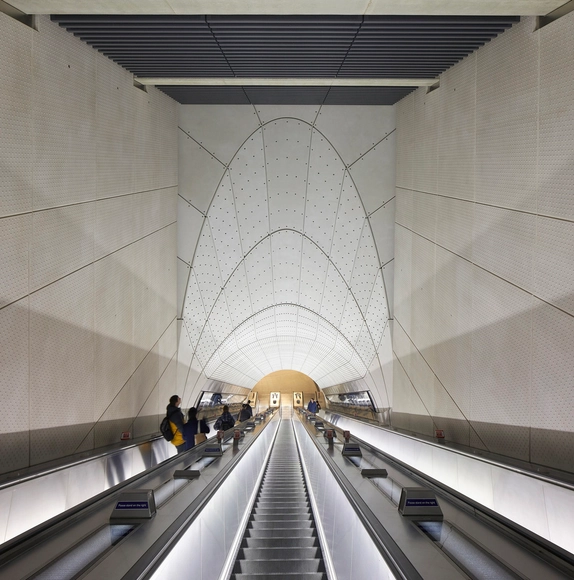
The Royal Institute of British Architects (RIBA) has announced the Elizabeth Line, designed by Grimshaw, Maynard, Equation, and AtkinsRéalis, as the winner of the 2024 RIBA Stirling Prize. Since its inception in 1996, the prestigious annual award sets out to recognize UK's best new architecture. Named in honor of Queen Elizabeth II, the Elizabeth Line represents an important development for London's transportation network. Connecting Reading and Heathrow to Essex and South East London, the development spans 62 miles of track and 26 miles of tunnels, a complex and expansive undertaking accommodating 700,000 passengers every weekday.

RIBA Awards the 2024 Stirling Prize to the Elizabeth Line by Grimshaw, Maynard, Equation, and AtkinsRéalis - Image 1 of 4RIBA Awards the 2024 Stirling Prize to the Elizabeth Line by Grimshaw, Maynard, Equation, and AtkinsRéalis - Image 2 of 4RIBA Awards the 2024 Stirling Prize to the Elizabeth Line by Grimshaw, Maynard, Equation, and AtkinsRéalis - Image 3 of 4RIBA Awards the 2024 Stirling Prize to the Elizabeth Line by Grimshaw, Maynard, Equation, and AtkinsRéalis - Image 4 of 4RIBA Awards the 2024 Stirling Prize to the Elizabeth Line by Grimshaw, Maynard, Equation, and AtkinsRéalis - More Images+ 2

The Future of Smart Cities: How Digital Technologies are Transforming Urban Living in Barcelona and Dublin

Subscriber Access | 

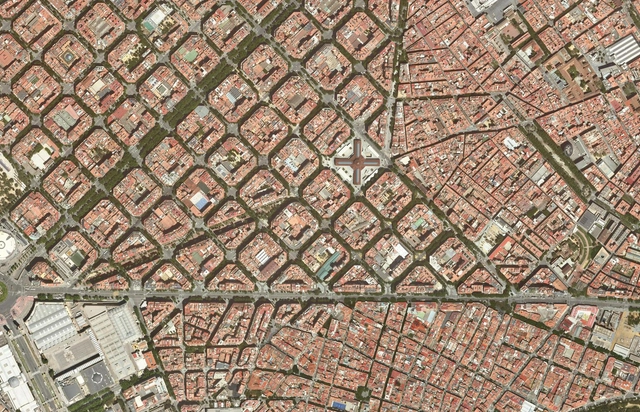
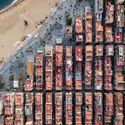
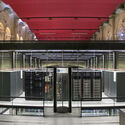
As the world witnesses an unprecedented exodus from rural to urban areas, cities face a monumental challenge: how to accommodate a constantly growing population? This phenomenon, characterized by rapid population growth and increasing density, puts pressure on resources, infrastructure, and urban services. As significant problems demand even larger solutions, it becomes necessary, more than ever, to rethink the tools at our disposal. In this challenging context, the rise of emerging technologies such as the Internet of Things (IoT), data analytics, and artificial intelligence (AI) presents itself as a light at the end of the tunnel. These technologies, initially conceived to simplify everyday tasks and facilitate communication, are potential instruments that enable an effective response to contemporary urban challenges.

The Future of Smart Cities: How Digital Technologies are Transforming Urban Living in Barcelona and Dublin - Image 5 of 4The Future of Smart Cities: How Digital Technologies are Transforming Urban Living in Barcelona and Dublin - Image 2 of 4The Future of Smart Cities: How Digital Technologies are Transforming Urban Living in Barcelona and Dublin - Image 1 of 4The Future of Smart Cities: How Digital Technologies are Transforming Urban Living in Barcelona and Dublin - Image 4 of 4The Future of Smart Cities: How Digital Technologies are Transforming Urban Living in Barcelona and Dublin - More Images+ 4