1. ArchDaily
  2. tropical weather

tropical weather: The Latest Architecture and News

Tropical Hotels in Costa Rica: Six Projects to Explore Climate-Sensitive Architecture in Central America

Subscriber Access | 

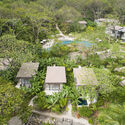
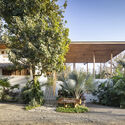
In the coastal and jungle regions of Costa Rica, high humidity and intense solar radiation dictate an architectural strategy centered on permeability rather than enclosure. Unlike the airtight envelopes required in cold climates to retain heat, Costa Rican architecture uses the building envelope as a climatic filter to maximize air exchange. The primary mechanism for managing these thermal gradients seems to be the oversized roof overhang. By extending the roof plane significantly beyond the floor plate, architects create a permanent buffer of deep shade that reduces solar gain and lowers the ambient temperature before air enters the structure. This strategy, combined with permeable or non-existent walls, allows for constant airflow. This is a critical technical requirement for humidity control and the prevention of material degradation through mold and rot.
Tropical Hotels in Costa Rica: Six Projects to Explore Climate-Sensitive Architecture in Central America - Image 1 of 4Tropical Hotels in Costa Rica: Six Projects to Explore Climate-Sensitive Architecture in Central America - Image 2 of 4Tropical Hotels in Costa Rica: Six Projects to Explore Climate-Sensitive Architecture in Central America - Image 3 of 4Tropical Hotels in Costa Rica: Six Projects to Explore Climate-Sensitive Architecture in Central America - Image 4 of 4Tropical Hotels in Costa Rica: Six Projects to Explore Climate-Sensitive Architecture in Central America - More Images+ 4

Amazonian Cities: What It Is Like to Live Close to the Largest Tropical Rainforest on the Planet

Subscriber Access | 

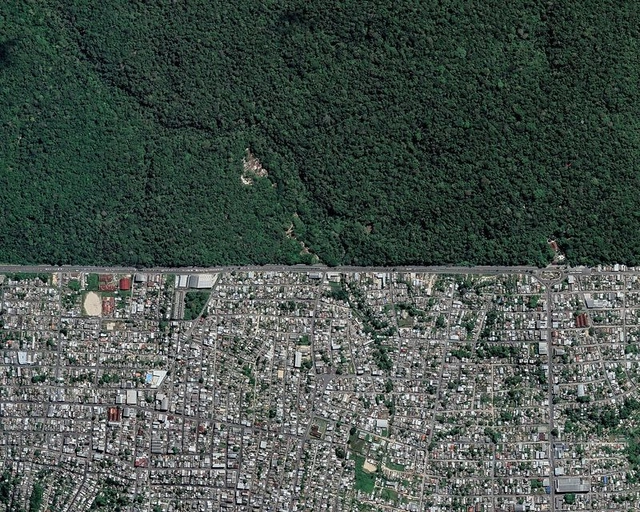
The world has its eyes on the Amazon. Geographical data about this vast territory, spanning 6.74 million square kilometers across eight countries in Latin America, is constantly featured in national and international media. Headlines often highlight its sheer magnitude as the largest tropical rainforest in the world, home to 10% of the planet's biodiversity, and responsible for 15% of the Earth's freshwater. However, little attention is paid to what transpires beneath its canopy, on the ground where people live.

Amazonian Cities: What It Is Like to Live Close to the Largest Tropical Rainforest on the Planet - Image 1 of 4Amazonian Cities: What It Is Like to Live Close to the Largest Tropical Rainforest on the Planet - Image 2 of 4Amazonian Cities: What It Is Like to Live Close to the Largest Tropical Rainforest on the Planet - Image 3 of 4Amazonian Cities: What It Is Like to Live Close to the Largest Tropical Rainforest on the Planet - Image 4 of 4Amazonian Cities: What It Is Like to Live Close to the Largest Tropical Rainforest on the Planet - More Images+ 7

How To Apply Biophilic Design In Contemporary Architecture? A Selection Of Works In The Philippines

Subscriber Access | 

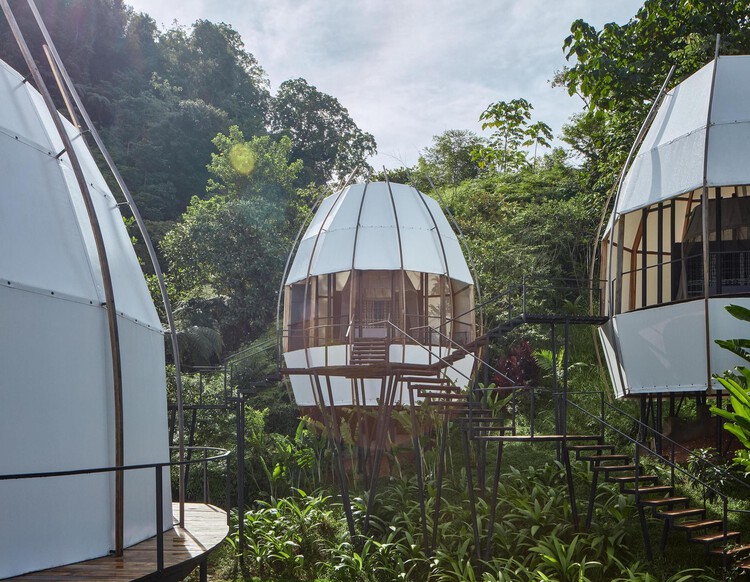
Since the first civilizations, nature has been a fundamental pillar to serve humanity as a natural habitat, offering shelter, food, and medicine. In modern times, industrial and technological revolutions have taken over the landscape, reshaping the way humans interact with nature. However, today and due to the events that we have experienced as a society, it is necessary to focus on creating cities and spaces that integrate nature into everyday life.