1. ArchDaily
  2. Underground Architecture

Underground Architecture: The Latest Architecture and News

Naples Architecture City Guide: 15 Projects of History, Density, and Continuity

Subscriber Access | 

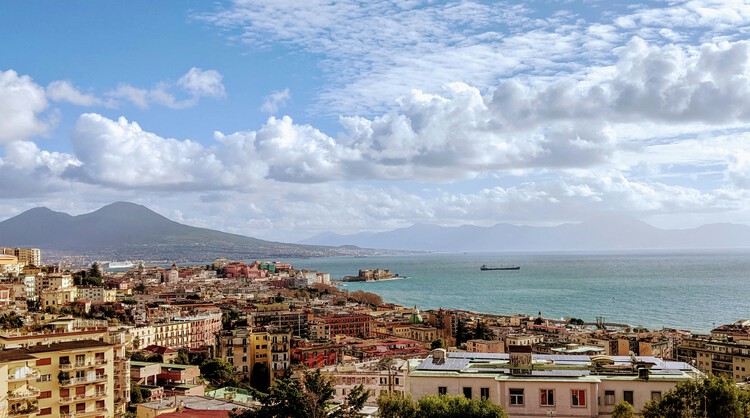
Set on the edge of the Mediterranean and shaped by centuries of continuous occupation, Naples is a city where architecture is inseparable from time. Layers of Greek foundations, Roman infrastructures, medieval churches, Baroque palaces, and Modern interventions coexist within a dense and compact urban fabric. Naples reveals itself as an accumulation of structures, adaptations, and reuse, where buildings are rarely isolated objects and more often part of a larger spatial, social, and historical system.

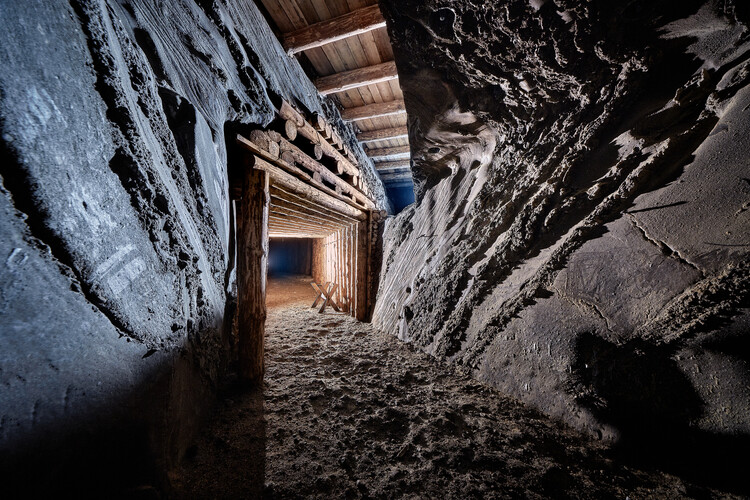
The city's architecture is deeply tied to its geography and construction culture. Built between the sea and volcanic terrain, Naples developed vertically and inward, relying on courtyards, narrow streets, and thick masonry walls to mediate light, climate, and movement. Underground spaces, reused Roman cisterns, and carved tuff structures extend the city below ground, creating a parallel architectural dimension that supports daily life above.

Naples Architecture City Guide: 15 Projects of History, Density, and Continuity - Image 1 of 4Naples Architecture City Guide: 15 Projects of History, Density, and Continuity - Image 2 of 4Naples Architecture City Guide: 15 Projects of History, Density, and Continuity - Image 3 of 4Naples Architecture City Guide: 15 Projects of History, Density, and Continuity - Image 4 of 4Naples Architecture City Guide: 15 Projects of History, Density, and Continuity - More Images+ 18

Unearthing the Ground: Architecture and the Politics of the Subterranean

Subscriber Access | 

Beneath the visible surface of cities lies an invisible architecture. Subways, tunnels, water systems, data cables, and bunkers form a dense network that sustains urban life while remaining largely unseen. The ground beneath our feet is not a void but a complex territory that holds the infrastructures, memories, and anxieties of our age. In recent years, as land becomes scarce and climate pressures intensify, architects and urbanists have turned their gaze downward, rediscovering the subterranean as both a physical and conceptual frontier. To design underground is to engage with the unseen mechanisms that shape the world above.

The subterranean has long been a site where architecture intersects with politics, technology, and belief. From the catacombs of Rome to the industrial subways of modernity, descent has symbolized both protection and exposure. Twentieth-century urbanism transformed this gesture into a system: metros, shelters, and utilities redefined the city section as an instrument of governance. Beneath the promise of efficiency and progress, the underground absorbed the anxieties of an era of war, surveillance, and collapse. Its evolution reveals not only how societies build, but also how they fear.

Today, the ground has become the new frontier of urban expansion and ecological adaptation. As digital infrastructures, energy systems, and climatic buffers migrate below grade, architecture confronts a space both technical and metaphysical — essential yet marginal, invisible yet decisive. To think in sections rather than in plan is to recognise that contemporary cities no longer exist solely in their skylines but also in their depths. The challenge for architecture is not only to occupy that space, but to render it legible, to turn the unseen into knowledge, and the hidden into a new terrain of design.

Unearthing the Ground: Architecture and the Politics of the Subterranean - Image 1 of 4Unearthing the Ground: Architecture and the Politics of the Subterranean - Image 2 of 4Unearthing the Ground: Architecture and the Politics of the Subterranean - Image 3 of 4Unearthing the Ground: Architecture and the Politics of the Subterranean - Image 4 of 4Unearthing the Ground: Architecture and the Politics of the Subterranean - More Images+ 36

A Modernist Church Set in Stone: The Story Behind the Temppeliaukio Kirkko in Helsinki, Finland

Subscriber Access | 

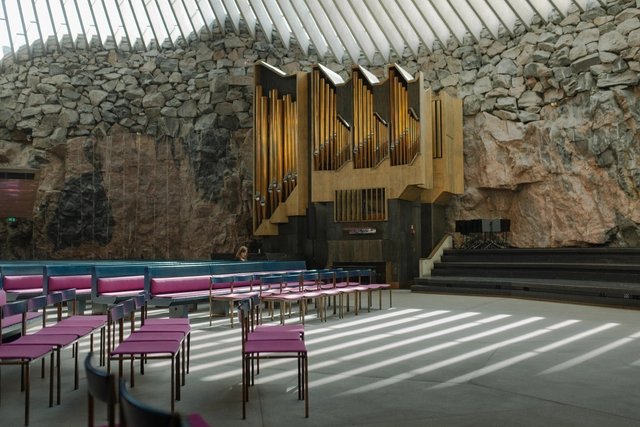
Near the center of Helsinki, Finland, in the Töölö neighborhood, one can find the Temppeliaukio Church, an unusual-looking Lutheran church nestled between granite rocks. Approaching the square from Fredrikinkatu street, the church appears subtly, a flat dome barely rising above its surrounding landscape. An unassuming entrance, flanked by concrete walls, leads visitors through a dark hallway, and into the light-filled sanctuary carved directly into the bedrock. The exposed rock walls earned it the alternative name “The Church of the Rock.” To contrast the heaviness of the materials, skylights surrounding the dome create a play of light and shadows and a feeling of airiness.

The church is the result of an architectural competition won by the architect brothers Timo and Tuomo Suomalainen in 1961. Their original solution was recognized not only for its creativity but also for the respect it showed to the competition’s goal: “to include the organization plan for the whole Temppeliaukio Square, taking into attention that as great part as possible of the rock outcrop of the square to be preserved.” The winning proposal achieves this by embedding the church inside the rock and placing parish facilities on the edges of the hillock. This article explores the story behind the Temppeliaukio Church both narratively and visually, through the lens of Aleksandra Kostadinovska, a professional photographer from Skopje.

A Modernist Church Set in Stone: The Story Behind the Temppeliaukio Kirkko in Helsinki, Finland - Image 1 of 4A Modernist Church Set in Stone: The Story Behind the Temppeliaukio Kirkko in Helsinki, Finland - Image 2 of 4A Modernist Church Set in Stone: The Story Behind the Temppeliaukio Kirkko in Helsinki, Finland - Image 3 of 4A Modernist Church Set in Stone: The Story Behind the Temppeliaukio Kirkko in Helsinki, Finland - Image 4 of 4A Modernist Church Set in Stone: The Story Behind the Temppeliaukio Kirkko in Helsinki, Finland - More Images+ 29

RIBA Awards the 2024 Stirling Prize to the Elizabeth Line by Grimshaw, Maynard, Equation, and AtkinsRéalis

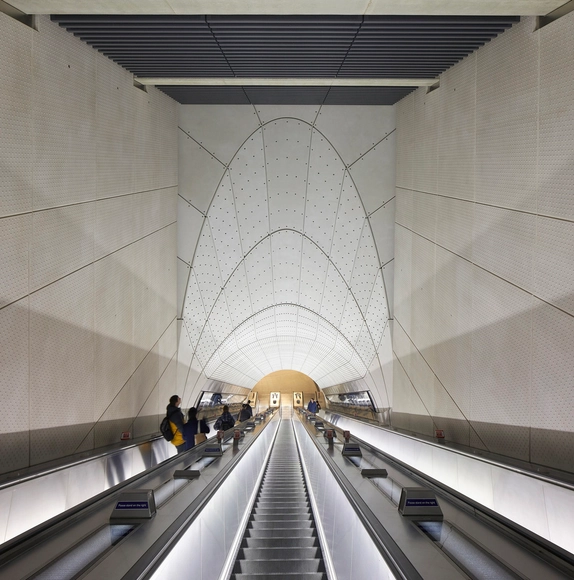
The Royal Institute of British Architects (RIBA) has announced the Elizabeth Line, designed by Grimshaw, Maynard, Equation, and AtkinsRéalis, as the winner of the 2024 RIBA Stirling Prize. Since its inception in 1996, the prestigious annual award sets out to recognize UK's best new architecture. Named in honor of Queen Elizabeth II, the Elizabeth Line represents an important development for London's transportation network. Connecting Reading and Heathrow to Essex and South East London, the development spans 62 miles of track and 26 miles of tunnels, a complex and expansive undertaking accommodating 700,000 passengers every weekday.

RIBA Awards the 2024 Stirling Prize to the Elizabeth Line by Grimshaw, Maynard, Equation, and AtkinsRéalis - Image 1 of 4RIBA Awards the 2024 Stirling Prize to the Elizabeth Line by Grimshaw, Maynard, Equation, and AtkinsRéalis - Image 2 of 4RIBA Awards the 2024 Stirling Prize to the Elizabeth Line by Grimshaw, Maynard, Equation, and AtkinsRéalis - Image 3 of 4RIBA Awards the 2024 Stirling Prize to the Elizabeth Line by Grimshaw, Maynard, Equation, and AtkinsRéalis - Image 4 of 4RIBA Awards the 2024 Stirling Prize to the Elizabeth Line by Grimshaw, Maynard, Equation, and AtkinsRéalis - More Images+ 2

Introspection, Elevation, Covering-Up: Radical Architectural Operations for Adverse Climates

Subscriber Access | 

The flexibility of architecture allows it to continuously change and adjust its form in response to technological progress, social and artistic trends, and the collective experiences we undergo. Large-scale global events, such as the transatlantic migrations of the 19th century, the impact of tuberculosis on design, and most recently, the effects of the last major global health crisis (COVID-19), have all played significant roles in shaping the evolution of architecture.

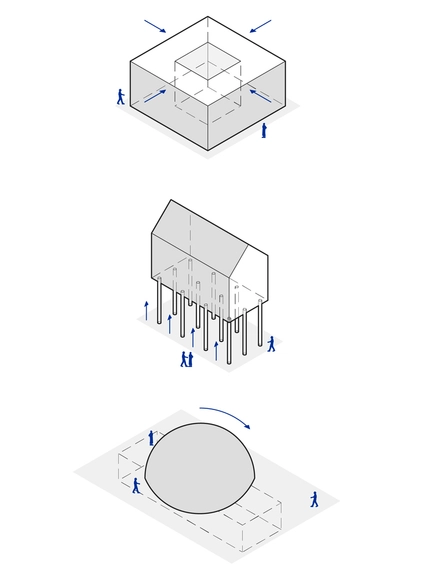
In the context of the climate crisis, the role of architecture and urbanism has been extensively debated, as it represents one of the greatest challenges of this century. It is undeniable that while there are active efforts through policies and innovation to prevent reaching a point of no return, architecture is already adapting to the changes and extreme conditions caused by it. Rather than thinking of a distant or dystopian future scenario, the gradual changes in climatic conditions have been drivers for modifying, through architectural operations, how we conceive contemporary buildings.

New Open Course by Dominique Perrault to Explore the Potential of Underground Architecture

Subscriber Access | 
New Open Course by Dominique Perrault to Explore the Potential of Underground Architecture - Featured Image
Courtesy of Dominique Perrault Architecture

Ecole Polytechnique Federale de Lausanne and architect Dominique Perrault have jointly announced a new MOOC (Massive Open Online Course) exploring the subterranean architecture of cities. The course, entitled “Groundscape Architecture Design Lab, rethinking cities underground” is available on open course hub edx and is free to registered users. Classes will begin on the 15 October.