1. ArchDaily
  2. Urban Economy

Urban Economy: The Latest Architecture and News

How Amsterdam Uses the Doughnut Economics Model to Create a Balanced Strategy for Both the People and the Environment

In 2020, in the midst of the first wave of lockdowns due to the pandemic, the municipality of Amsterdam announced its strategy for recovering from this crisis by embracing the concept of the “Doughnut Economy.” The model is developed by British economist Kate Raworth and popularized through her book, “Doughnut Economics: Seven Ways to Think Like a 21st-Century Economist”, released in 2017. Here, she argues that the true purpose of economics does not have to equal growth. Instead, the aim is to find a sweet spot, a way to balance the need to provide everyone with what they need to live a good life, a “social foundation” while limiting our impact on the environment, “the environmental ceiling.” With the help of Raworth, Amsterdam has downscaled this approach to the size of a city. The model is now used to inform city-wide strategies and developments in support of this overarching idea: providing a good quality of life for all without putting additional pressure on the planet. Other cities are following this example.

How Amsterdam Uses the Doughnut Economics Model to Create a Balanced Strategy for Both the People and the Environment - Image 1 of 4How Amsterdam Uses the Doughnut Economics Model to Create a Balanced Strategy for Both the People and the Environment - Image 2 of 4How Amsterdam Uses the Doughnut Economics Model to Create a Balanced Strategy for Both the People and the Environment - Image 3 of 4How Amsterdam Uses the Doughnut Economics Model to Create a Balanced Strategy for Both the People and the Environment - Image 4 of 4How Amsterdam Uses the Doughnut Economics Model to Create a Balanced Strategy for Both the People and the Environment - More Images+ 5

Village in the Vertical City: Tai Hang and the Afterlife of Vernacular Hong Kong

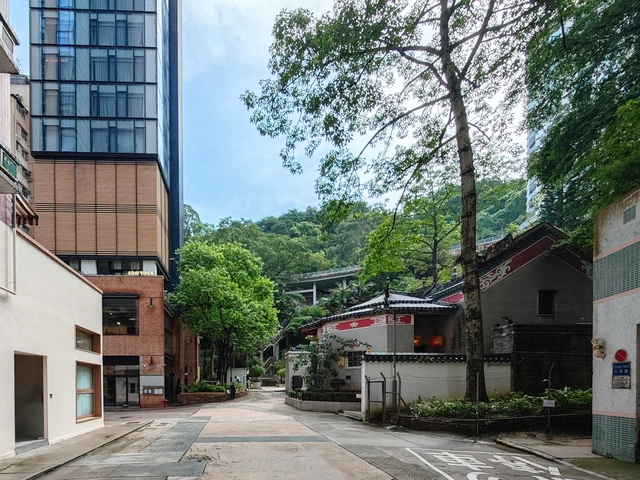
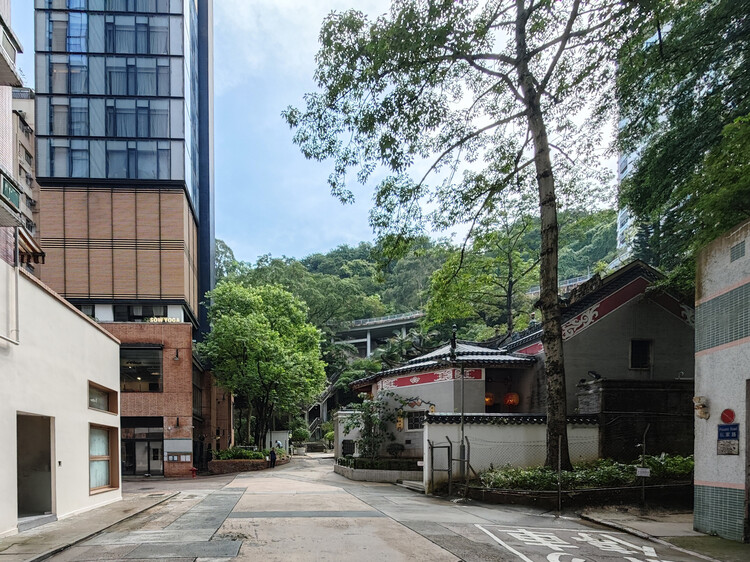
Vernacular architecture in Hong Kong originated as a series of small, coastal settlements—simple, village-like communities that reflected the city's early identity as a fishing hub. These seaside villages were typically composed of low-rise, timber-framed houses clustered around temples, forming tight-knit communities closely tied to the rhythms of the water.

One notable example is Tai Hang, among the earlier settlements established by the Hakka people in Hong Kong. Originally located along a water channel that flowed from the nearby mountains to the sea, the area was once a vital washing site for villagers—hence its name, which literally means "Big Drainage." Before extensive land reclamation, Tai Hang sat quite close to the shoreline. Today, it lies nearly 700 meters inland.

Village in the Vertical City: Tai Hang and the Afterlife of Vernacular Hong Kong - Image 1 of 4Village in the Vertical City: Tai Hang and the Afterlife of Vernacular Hong Kong - Image 2 of 4Village in the Vertical City: Tai Hang and the Afterlife of Vernacular Hong Kong - Image 3 of 4Village in the Vertical City: Tai Hang and the Afterlife of Vernacular Hong Kong - Image 4 of 4Village in the Vertical City: Tai Hang and the Afterlife of Vernacular Hong Kong - More Images+ 11

2023's Public Architecture in China: Exploring Emerging Hubs and Established Urban Centers

Subscriber Access | 

In the dynamic landscape of contemporary urban development, public architecture is an essential force in reshaping cities. In fact, this element of urban regeneration can revitalize economies and reactivate surrounding commercial schemes. In this transformative era, cities across China have evolved into financial hubs, attracting world-renowned firms and architects who are redefining these skylines. In turn, these metropolises become embodiments of future innovation and lifestyle.

China's cities have become centers of modernity as a result of its explosive prominence in the world economy. These cities have become magnets for architectural marvels that go beyond simple functionality, from Shanghai's ceaseless reinvention to Beijing's cultural renaissance and Shenzhen's undeniable emergence as a global center in technology, research, manufacturing, business, economics, finance, tourism, and transportation, complete with the Port of Shenzhen, the world's fourth busiest container port. Overall, these cities are a crucial gateway in understanding the developing dynamics in metropolitan environments.

2023's Public Architecture in China: Exploring Emerging Hubs and Established Urban Centers - Image 1 of 42023's Public Architecture in China: Exploring Emerging Hubs and Established Urban Centers - Image 2 of 42023's Public Architecture in China: Exploring Emerging Hubs and Established Urban Centers - Image 3 of 42023's Public Architecture in China: Exploring Emerging Hubs and Established Urban Centers - Image 4 of 42023's Public Architecture in China: Exploring Emerging Hubs and Established Urban Centers - More Images+ 1

URB Reveals Design for Africa’s Largest Sustainable City

URB has unveiled plans to develop Africa's most sustainable city, a development that can host 150,000 residents. Known as The Parks, the city plans to produce 100% of its energy, water & food on-site through biodomes, solar-powered air-to-water generators, and biogas production. The 1,700-hectare project will feature residential, medical, ecotourism, and educational hubs to become one of the significant contributors to the growing green and tech economy in South Africa.

URB Reveals Design for Africa’s Largest Sustainable City - Image 1 of 4URB Reveals Design for Africa’s Largest Sustainable City - Image 2 of 4URB Reveals Design for Africa’s Largest Sustainable City - Image 3 of 4URB Reveals Design for Africa’s Largest Sustainable City - Image 4 of 4URB Reveals Design for Africa’s Largest Sustainable City - More Images

Economic Concepts That Every Architect Should Know

Subscriber Access | 

We talk about sustainability, livability, and land use to describe a project, but we often avoid the profitability, capital gains, and externalities that go along with them simply because we don’t know how to use the terms. Architecture doesn’t exist outside of the economy and in fact, how we build each building directly affects the economy of our cities.

As a profession, architecture acts as the mediator between different specialties, and it is very important to speak the official language of each of them. This article will help you easily understand some basic economic concepts that relate to architecture.