1. ArchDaily
  2. Warehouse

Warehouse: The Latest Architecture and News

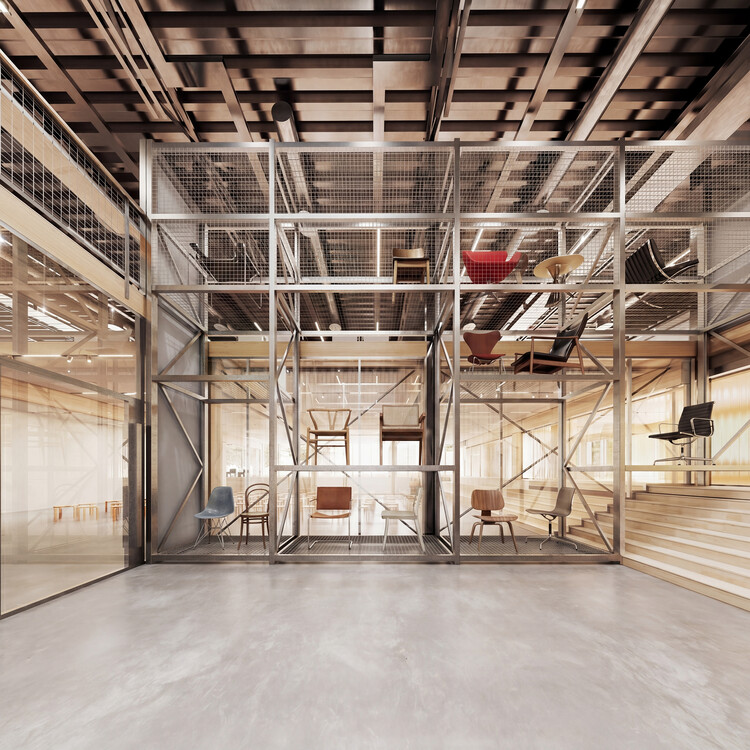
Cobe to Transform Former IKEA Warehouse into a New Site for the Museum of Furniture Studies in Älmhult, Sweden

The Museum of Furniture Studies was founded in 2017 in Stockholm, showcasing a collection of more than 1,300 furniture pieces by over 44 international designers. The museum's physical location closed in 2022, maintaining its visibility through its Digital Archive for Design Furniture until it was acquired by IKEA in 2024. This week, Danish architecture studio Cobe announced the transformation of a former IKEA warehouse in Älmhult, Sweden, into a new home for the museum. The project involves converting a closed storage facility into an open and accessible space for design while preserving its industrial structure. The building is scheduled to open in early February 2027.


Cobe to Transform Former IKEA Warehouse into a New Site for the Museum of Furniture Studies in Älmhult, Sweden - Image 1 of 4Cobe to Transform Former IKEA Warehouse into a New Site for the Museum of Furniture Studies in Älmhult, Sweden - Image 2 of 4Cobe to Transform Former IKEA Warehouse into a New Site for the Museum of Furniture Studies in Älmhult, Sweden - Image 3 of 4Cobe to Transform Former IKEA Warehouse into a New Site for the Museum of Furniture Studies in Älmhult, Sweden - Image 4 of 4Cobe to Transform Former IKEA Warehouse into a New Site for the Museum of Furniture Studies in Älmhult, Sweden - More Images

From Warehouse to Innovation Hub: Renovation, Reuse and Human-Centered Design for Lower Environmental Impact

 | Sponsored Content

What happens when you choose reuse over demolition? In Østbirk, Denmark, a 30-year-old timber warehouse has been transformed into a 14,000-square-meter world-class innovation hub for nearly 500 VELUX employees. This article explores how the LKR Innovation House project challenges conventional building practices, preserves material legacy, and offers practical lessons for architects working with existing structures. A new book documents the process through essays, interviews, and photographs.

Logistics Landscapes: The Architecture of the 24-Hour Supply Chain

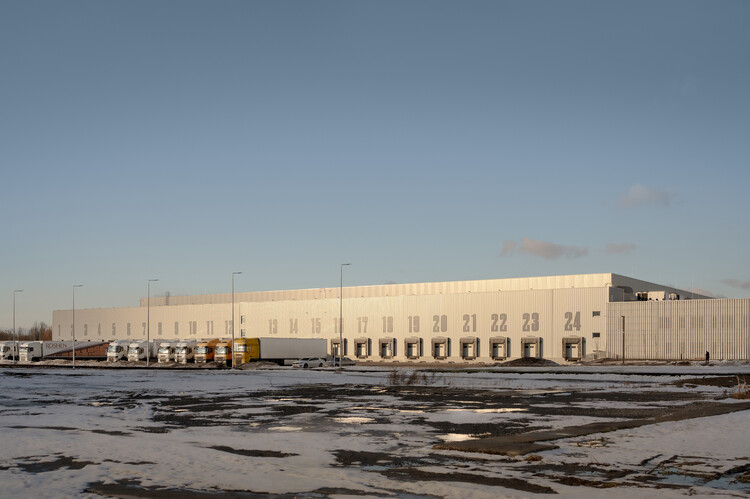
At the edge of most cities, beyond the ring roads and interchanges, a different kind of architecture is taking shape. It is not designed to be seen, visited, or remembered. It does not gather people; it moves things. Inside, thousands of parcels travel continuously, being sorted, lifted, scanned, and dispatched with minimal interruption. These buildings rarely enter architectural discourse, yet they are among the most consequential spaces of our time. The defining typology of the 21st century is increasingly the warehouse.

The scale of this transformation is difficult to grasp because it unfolds horizontally, across territories rather than skylines. Global warehouse space now exceeds tens of billions of square feet, expanding rapidly alongside the rise of e-commerce. During the COVID-19 pandemic, demand for logistics infrastructure accelerated by several years, compressing future growth into an already strained present. In India, the warehousing sector continues to grow at double-digit rates, reshaping peri-urban land into storage and distribution corridors. Logistics is no longer a background system; it is a territorial condition.

Logistics Landscapes: The Architecture of the 24-Hour Supply Chain - Image 1 of 4Logistics Landscapes: The Architecture of the 24-Hour Supply Chain - Image 2 of 4Logistics Landscapes: The Architecture of the 24-Hour Supply Chain - Image 3 of 4Logistics Landscapes: The Architecture of the 24-Hour Supply Chain - Image 4 of 4Logistics Landscapes: The Architecture of the 24-Hour Supply Chain - More Images+ 9