1. ArchDaily
  2. Weaving

Weaving: The Latest Architecture and News

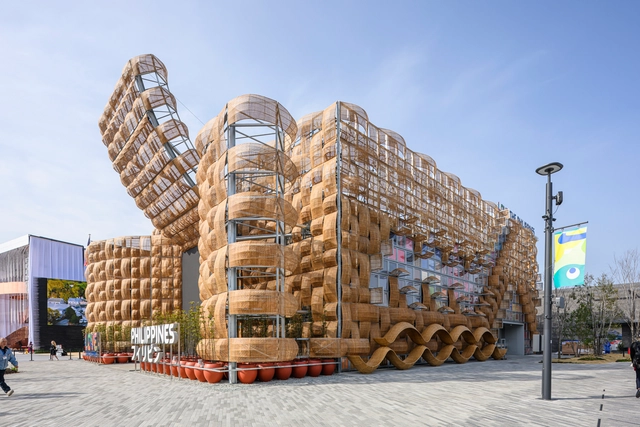
The Philippine Pavilion at Expo Osaka 2025 Explores Interconnectedness Through Nature, Culture, and Community

Expo Osaka 2025 officially opened its doors on April 13 in Osaka, Japan. The Philippines' exhibition for this edition opened with a pavilion designed by the Filipino-led architectural firm Carlo Calma Consultancy Inc., in partnership with Japanese executive architect Cat Inc., who also handled project management. Titled "Woven," the pavilion reflects the country's connections to nature, its cultural heritage, and its community values. With the theme "Nature, Culture & Community: Woven Together for a Better Future," the pavilion aims to highlight the Philippines' creativity, diversity, and aspirations for sustainable development while inviting visitors to engage with its cultural and environmental priorities.

The Philippine Pavilion at Expo Osaka 2025 Explores Interconnectedness Through Nature, Culture, and Community - Image 1 of 4The Philippine Pavilion at Expo Osaka 2025 Explores Interconnectedness Through Nature, Culture, and Community - Image 2 of 4The Philippine Pavilion at Expo Osaka 2025 Explores Interconnectedness Through Nature, Culture, and Community - Image 3 of 4The Philippine Pavilion at Expo Osaka 2025 Explores Interconnectedness Through Nature, Culture, and Community - Image 4 of 4The Philippine Pavilion at Expo Osaka 2025 Explores Interconnectedness Through Nature, Culture, and Community - More Images+ 35

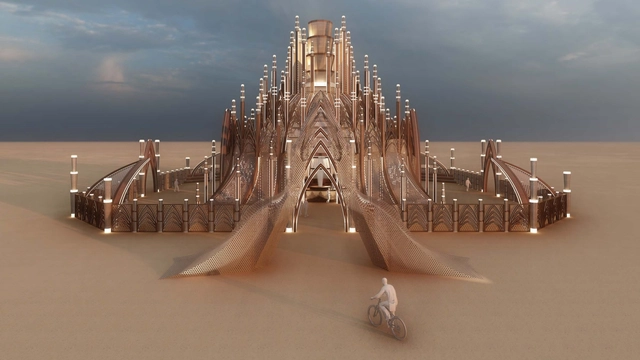
Burning Man Reveals the 2024 Temple, Designed with Neo-Gothic and Khaizaran Influences

The annual festival Burning Man has revealed the design of the 2024 Temple at Black Rock City, which will become the central installation during the festival happening between August 25th and September 2nd, 2024, in Black Rock Desert, Nevada. Titled “The Temple of Together,” the proposal is designed by Caroline Ghosn, the first BIPOC, female Temple lead artist. The proposal takes cues from neo-gothic religious architecture, combined with Art Deco styles and Lebanese Khaizaran weaving techniques to create a symbol of unity and respect. The design was selected following an international competition that seeks to find novel interventions that fit within the Burning Man tradition.

Burning Man Reveals the 2024 Temple, Designed with Neo-Gothic and Khaizaran Influences - Image 1 of 4Burning Man Reveals the 2024 Temple, Designed with Neo-Gothic and Khaizaran Influences - Image 2 of 4Burning Man Reveals the 2024 Temple, Designed with Neo-Gothic and Khaizaran Influences - Image 3 of 4Burning Man Reveals the 2024 Temple, Designed with Neo-Gothic and Khaizaran Influences - Image 4 of 4Burning Man Reveals the 2024 Temple, Designed with Neo-Gothic and Khaizaran Influences - More Images+ 1

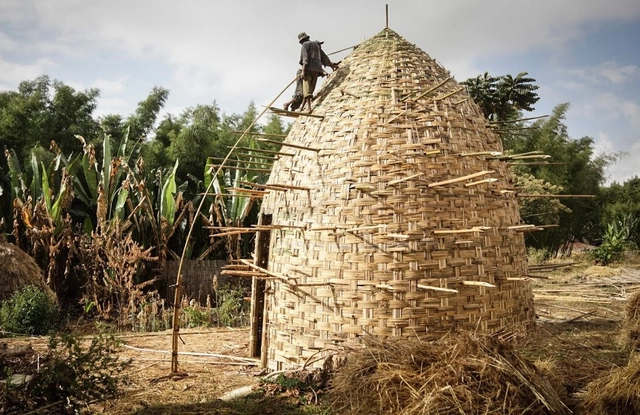
Exploring African Vernacular Huts: Weaving as a Climatic and Social Architecture

Subscriber Access | 

Weaving is not only a technical craft but also a way to design material experiences. Engaging in the process of weaving allows us to structure, communicate, reflect on, and connect with our designs. By experimenting with different fabric structures, we gain insight into how materials behave under tension and compression. This understanding helps us push the boundaries of textiles and their limitations, resulting in designs that stretch and test the properties of the materials.

In architecture, the construction mechanism of weaving centers the shelter to the building process. In this sense, shelter becomes a direct manifestation of material production. Additionally, weaving offers numerous environmental and social benefits by creating shelters that actively engage with materials, tools, technologies, and creative potentials, thereby supporting placemaking.

Exploring African Vernacular Huts: Weaving as a Climatic and Social Architecture - Image 1 of 4Exploring African Vernacular Huts: Weaving as a Climatic and Social Architecture - Image 2 of 4Exploring African Vernacular Huts: Weaving as a Climatic and Social Architecture - Image 3 of 4Exploring African Vernacular Huts: Weaving as a Climatic and Social Architecture - Image 4 of 4Exploring African Vernacular Huts: Weaving as a Climatic and Social Architecture - More Images+ 8