.jpg?1583323900&format=webp&width=640&height=580)

.jpg?1583322992 "© Mark Kovalsky")
.jpg?1583322971 "© Mark Kovalsky")
.jpg?1583323900)
-
Architects: Gerstner Architects
- Area: 350 m²
- Year: 2020
-
Manufacturers: AutoDesk, Google, Knoll International, REHAU, TCI
-
Professionals: InDan


Estonian Centre for Architecture announces the curatorial competition for the 6th international Tallinn Architecture Biennale (TAB) 2021. Tallinn Architecture Biennale (TAB) is an international architecture festival which addresses relevant issues in architecture and delves into the present and the future of the field. TAB is intended for both experienced and young architects as well as members of the general public interested in architecture.

SCI-Arc Main Event 2020, which will be held on May 2 at SCI-Arc’s campus in downtown LA’s Arts District, is the most glittering and lively affair of the academic year, supporting the SCI-Arc Scholarship Endowment. At the gala guests can enjoy drinks, music, and alimentary fare, all while experiencing an exclusive site-specific multimedia installation and performance that will be unlike anything ever seen before at SCI-Arc. Main Event brings together alumni and friends as well as leading designers, builders, and creative professionals to celebrate SCI-Arc's reputation as a world-renowned center for innovation and architectural thinking.

For decades, the seaside activity and the privatization of the seashores have participated in the transformation of the French and international coasts by the construction of facilities inherent to these mass tourist flows. Whether fortunate or unfortunate, these constructions have often had a negative impact on their environment and the stability of the surrounding biodiversity. It is therefore essential today to reduce the environmental impact of this activity. The challenge of the competition will be to find sufficiently innovative architectural responses to limit the environmental impact of construction and allow the development of biodiversity.

This landmark exhibition at the Building Centre will explore the potential of stone to revolutionise architecture and construction in light of the current climate crisis. It may seem like an ancient building material but stone has serious sustainability credentials; with the ability to reduce a project’s embodied carbon by an incredible 90 per cent compared to typical steel or concrete frames. The New Stone Age will celebrate the sustainability, practicality and inherent beauty of the world’s oldest natural material.
![Taksim Pavilion / IND [Inter.National.Design] - Exterior Photography, Pavilion](https://snoopy.archdaily.com/images/archdaily/media/images/5e5d/0824/6ee6/7e0f/0100/09c5/slideshow/1-HCR_8487.jpg?1583155223&format=webp&width=640&height=580)
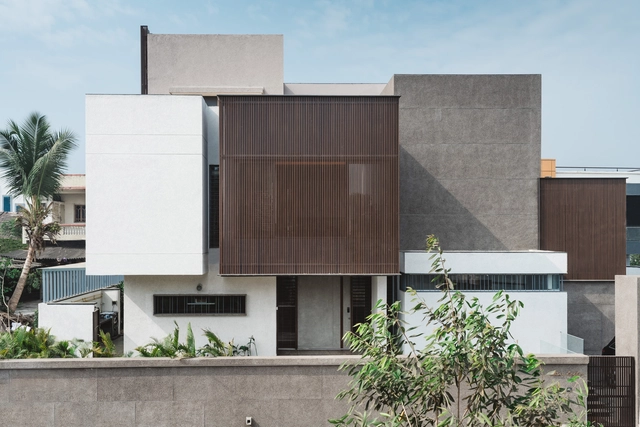
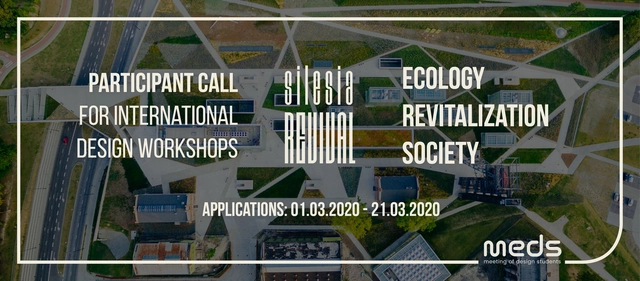
The 11th edition of MEDS workshop, held in the industrial region of Poland - Silesia, is now open for entries! Apply as a participant up to the 21st of March.
MEDS Workshop
“Meetings of Design Students” is an international workshop organized each summer in a different country. Every year it gathers around 200 participants associated with various fields of art, design, and architecture. In a span of two weeks, guided by experienced tutors, the participants create and construct group projects, getting in touch with different approaches to design and mastering their skills in a wide range of building techniques. Each project combines practical, educational and cultural aspects, creating a meaningful impact on the space and tackling both current issues, and long-standing local traditions.
Previous workshops have taken place in Turkey, Slovenia, Portugal, Ireland, Serbia, Romania, Belgium, Lebanon and Greece.
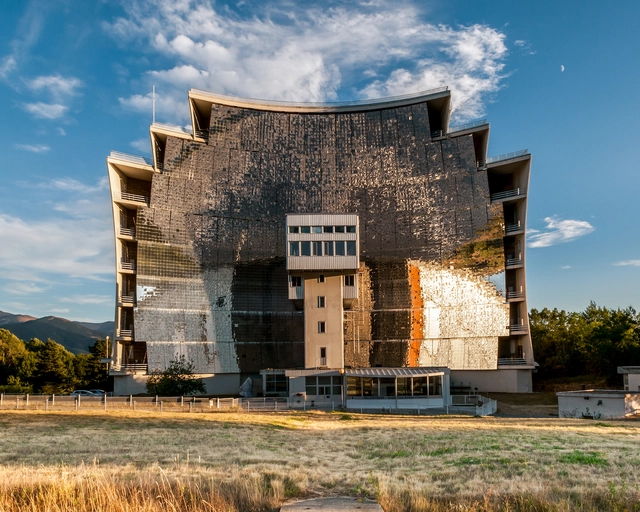
RIBA presents Forms of Industry, an exhibition of contemporary photographs by Alastair Philip Wiper (1980) and archival images by Eric de Maré (1910-2002) from the RIBA Collections. Separated by more than 50 years, the two photographers share a common interest in industrial buildings and landscapes, yet their differing approaches create a commentary on changing attitudes towards industrialisation and sustainability.
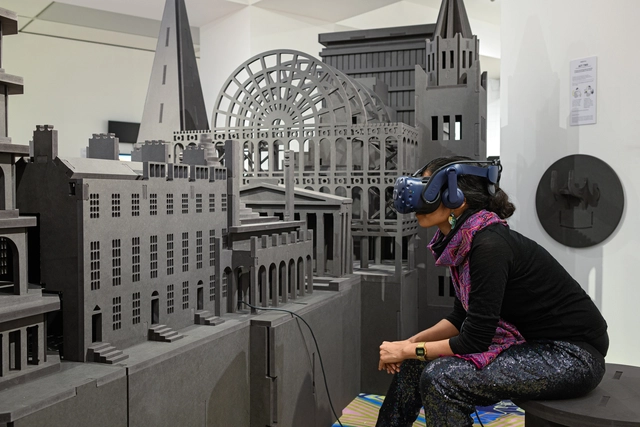
RIBA presents its first virtual reality (VR) exhibition, exploring moments across 500 years of aesthetics in architecture.
What makes a style? How is a style collectively agreed upon and shared? Drawing on RIBA’s world-class collections, Space Popular uses virtual reality to examine styles of the past and to consider the technology’s impact on contemporary spaces and buildings. Historic artefacts will be displayed alongside newly commissioned content, inviting you to enter a beguiling virtual universe to experience how popular cultures and technologies impact architecture and its style evolution.
.jpg?1582658058&format=webp&width=640&height=580)
IE School of Architecture and Design and ArchDaily would like to invite you to join this outstanding online masterclass by Xiaolin Gu, currently Ideation Workplaces Strategist at Haworth.
A systematic concept of workplace strategy advances with the times. It’s closely related to the evolvement of technology and the work patterns of the new generation workforce.
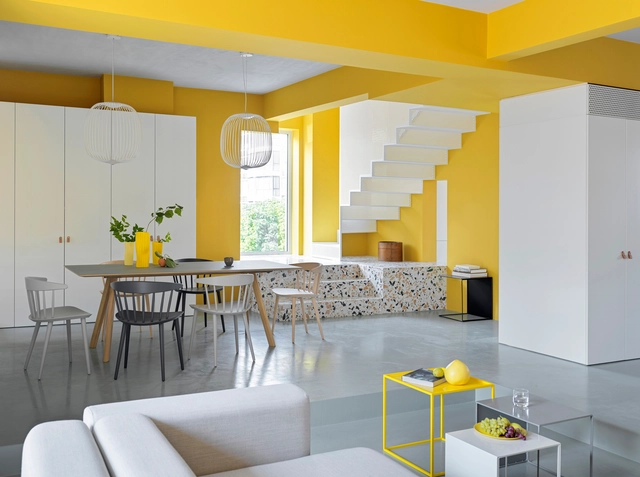
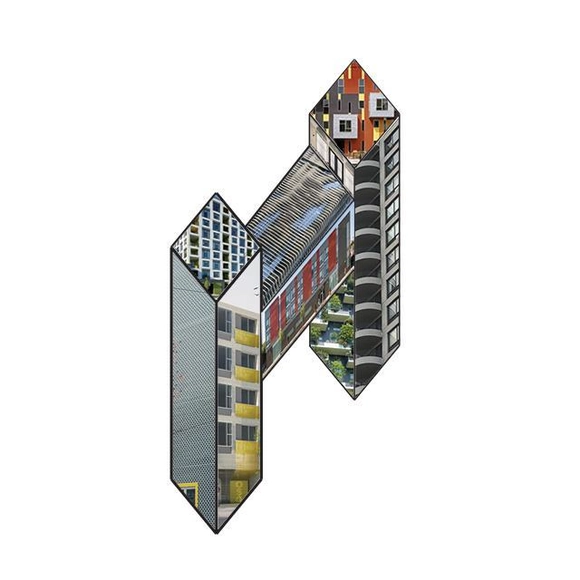
Between the Leaves is seeking submissions for visioning on the future of housing in a more equitable world.
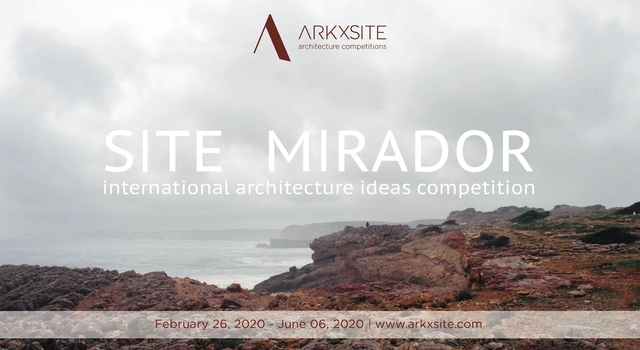
ARKxSITE is pleased to announce the ‘SITE MIRADOR’ international architecture ideas competition for architecture and landscape architecture students and young professionals (≤ 40 years old).

Tanzania suffers from a terrible shortage of good quality and affordable housing. So dire is this shortage that the nation currently carries a 3 million housing deficit coupled with a 200.000 unit annual demand. Over seventy percent of its urban residents live in unplanned and unserviced informal settlements.

In the challenging context of accelerating climate dynamics, the core discipline of architectural design is evolving and embracing new forms of action. New York-based nonprofit Terreform ONE has established a distinctive design tactic that investigates projects through the regenerative use of natural materials, science, and the emergent field of socio-ecological design. This kind of design approach uses actual living matter (not abstracted imitations of nature) to create new functional elements and spaces.


![Taksim Pavilion / IND [Inter.National.Design] - Exterior Photography, Pavilion](https://images.adsttc.com/media/images/5e5d/0b74/6ee6/7e88/ef00/01fd/thumb_jpg/7-HCR_8536.jpg?1583156073 "© Hacer Bozkurt")
![Taksim Pavilion / IND [Inter.National.Design] - Exterior Photography, Pavilion](https://images.adsttc.com/media/images/5e5d/0ee1/6ee6/7e0f/0100/09dc/thumb_jpg/17-HCR_8841.jpg?1583156948 "© Hacer Bozkurt")
![Taksim Pavilion / IND [Inter.National.Design] - Exterior Photography, Pavilion, Stairs, Handrail](https://images.adsttc.com/media/images/5e5d/0b95/6ee6/7e88/ef00/01fe/thumb_jpg/9-HCR_8525.jpg?1583156105 "© Hacer Bozkurt")
![Taksim Pavilion / IND [Inter.National.Design] - Exterior Photography, Pavilion](https://images.adsttc.com/media/images/5e5d/0ebb/6ee6/7e88/ef00/0207/thumb_jpg/F4BC784E-4C45-4E91-9158-77D4E1D05B64.jpg?1583156908 "Courtesy of IND [Inter.National.Design]")
![Taksim Pavilion / IND [Inter.National.Design] - More Images](https://images.adsttc.com/media/images/5e5d/0824/6ee6/7e0f/0100/09c5/newsletter/1-HCR_8487.jpg?1583155223)