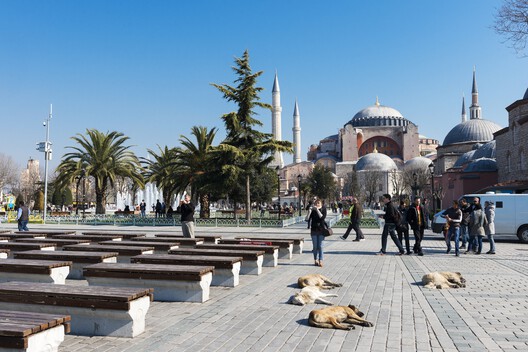
Architecture continues to draw cities as though humans occupy them alone. Plans trace circulation routes, zoning maps assign functions, and buildings are evaluated according to human comfort, safety, and efficiency. Walking through cities across India and Southwest Asia reveals something much more complex. Dogs sleep beneath market stalls, monkeys move across rooftops, birds nest in temple towers and mosque façades, and insects pollinate urban landscapes hidden in plain sight. These species are woven into daily urban life as consistently as human occupants. Streets, courtyards, roofs, drainage systems, markets, and vacant lots are already occupied by multiple species simultaneously. Architectural thinking has been slower to account for this reality.
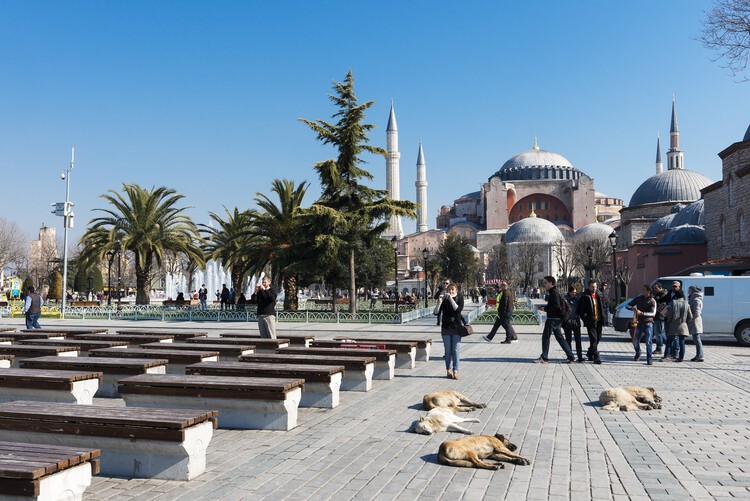
For more than a century, urban design has largely treated animals as either infrastructure problems or ecological concerns. Their presence is discussed through sanitation, conflict, conservation, or public health. Rarely are they considered occupants of architectural space. Millions of animals move through the same streets, thresholds, courtyards, parks, and buildings that humans do. In India alone, official estimates place the population of free-ranging dogs at over seventeen million. Researchers have long argued that these animals are not external to urban life but deeply embedded within it, adapting their behavior to traffic patterns, waste systems, neighborhood territories, and daily human routines. Urban life emerges through overlapping relationships between people, animals, vegetation, waste systems, water networks, and built form.
This reality becomes visible through everyday observation. A street dog resting beneath a tea stall is responding to shade, proximity to food, and social familiarity. Pigeons gather beneath overhangs because architecture protects them from the weather and predators. Monkeys move across walls, balconies, and electrical infrastructure because the city offers a continuous network of elevated routes. Even scavenger species participate in complex urban systems. Recent studies of Indian cities have documented networks involving dogs, crows, mynas, kites, and other animals whose interactions are closely tied to patterns of waste, vegetation, and human activity. These relationships form part of ordinary urban life. They shape how cities function daily.
Related Article
Architecture for Animals: Biodiversity, Shelter and Habitat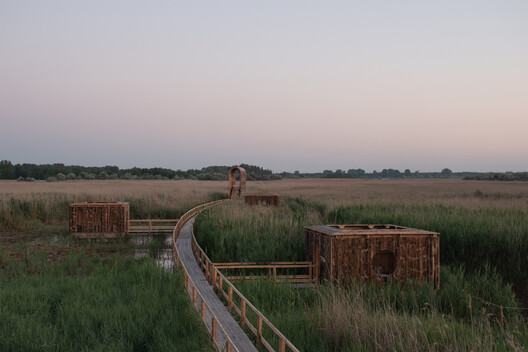
Historic environments often reveal a different relationship. Such spaces accommodated animal life not through specialized ecological design but through the ordinary characteristics of their construction. Thick masonry walls, recessed openings, towers, courtyards, and water systems created opportunities for nesting, roosting, feeding, and shelter. Religious architecture across India offers countless examples. Temple towers, shaded colonnades, and temple tanks have long supported birds, bats, fish, and insects. These species were rarely treated as external occupants. Their presence became part of everyday occupation.
In some cases, architecture moved beyond accommodation and was actively designed for other species. Across Iran, historic pigeon towers known as Kabootar Khaneh were constructed specifically to house thousands of birds. Their interiors were organized around intricate systems of nesting cavities, creating highly specialized environments that supported both agriculture and local ecosystems. The buildings were organized around avian occupation at an architectural scale rarely seen today. Rather than excluding animals from architecture, the architecture itself was shaped around their needs. Birds occupied the center of the architectural brief.
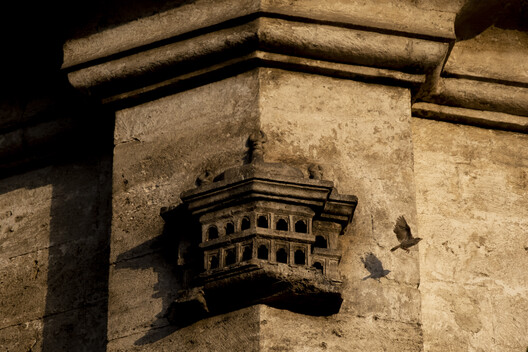
A similar attitude appeared in the Ottoman Empire, where elaborate bird houses were integrated into mosques, schools, libraries, and civic buildings. Projecting from façades like miniature palaces, these structures provided permanent nesting spaces while expressing a broader cultural acceptance of coexistence. Physically small, they were integrated into some of the empire's most important civic structures. They suggest that accommodation of other species once sat comfortably within architectural ambition.
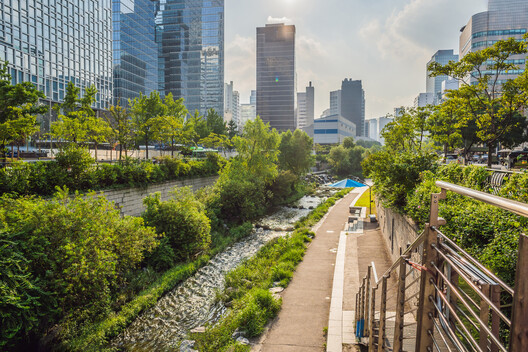
Contemporary buildings often produce a different condition. Modern buildings tend toward sealed façades, smooth surfaces, controlled access, and highly regulated landscapes. These choices are rarely intended to exclude wildlife directly, yet they frequently reduce opportunities for occupation. Nesting sites disappear. Habitat becomes fragmented. Species that once occupied architectural space are pushed toward residual conditions and leftover territories. Animals continue to inhabit cities, occupying residual spaces, service corridors, fragments of landscape, and conditions largely outside design intention.
Free-ranging dogs make this contradiction especially visible. Across India, regulations concerning free-ranging dogs increasingly operate from the assumption that coexistence is unavoidable. Under the Animal Birth Control Rules, dogs are sterilized, vaccinated, and generally returned to the territories from which they were removed. The policy framework implicitly recognizes that these animals are permanent urban residents. Architecture, meanwhile, often continues to behave as though their presence is temporary or accidental. Planning frameworks increasingly acknowledge coexistence, while architecture rarely incorporates it spatially.
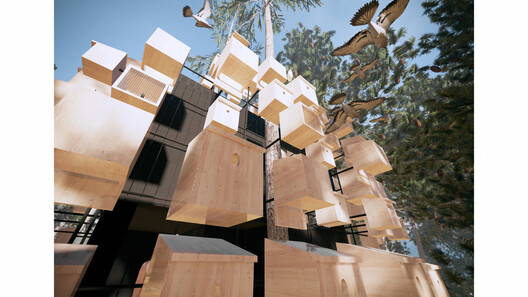
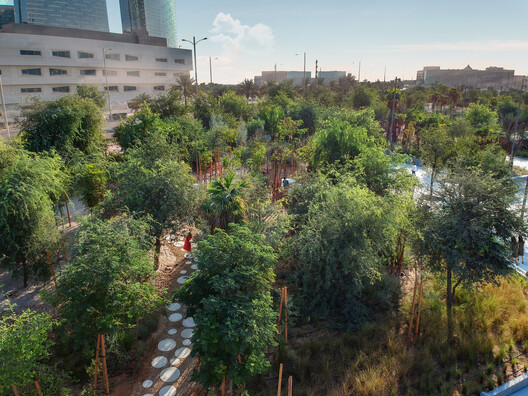
This gap becomes even more apparent when examining urban biodiversity. Discussions around biodiversity are often framed through environmental policy, conservation targets, or landscape management. As many of these biodiversity-supporting conditions are architectural and spatial, habitat connectivity depends on how landscapes are linked. Nesting opportunities emerge through material depth, cavities, ledges, and roof conditions. Pollinators depend on planting strategies, water availability, and microclimates shaped by shade and surface temperatures. These conditions emerge through design decisions concerning materials, planting, water, shade, and spatial continuity.
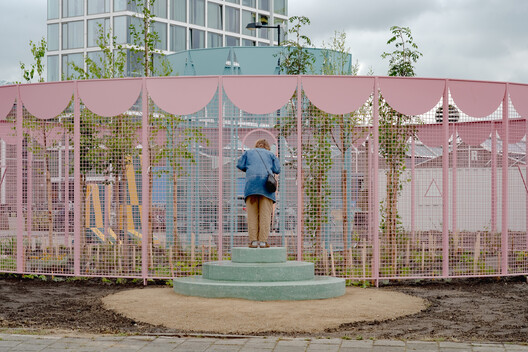
Few contemporary environments illustrate this more clearly than large urban campuses. Within Bengaluru, the campus of the Indian Institute of Science functions as an ecological refuge surrounded by one of India's fastest-growing metropolitan regions. Its biodiversity is not the result of a single conservation initiative. It evolves from decades of spatial continuity. Mature tree canopies, connected landscapes, water bodies, and relatively low levels of fragmentation have created conditions that support birds, insects, reptiles, and mammals within a dense urban context. The campus shows how species persistence often depends on long-term spatial continuity.
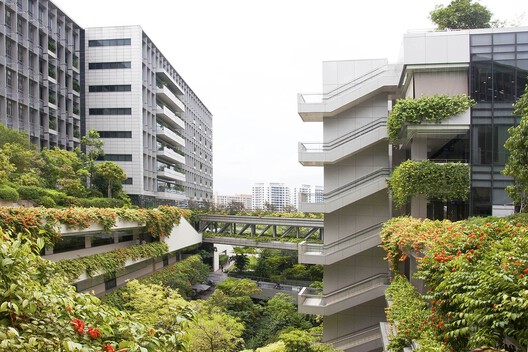
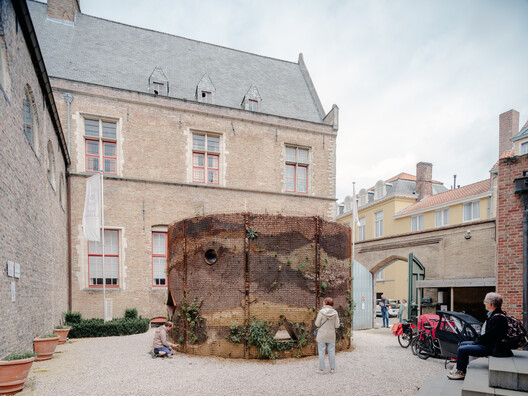
Animals already occupy the cities and need no introduction. The challenge is learning to see them as participants in urban space rather than interruptions to it. Emerging architectural strategies increasingly point toward this possibility. Habitat-integrated façades incorporate nesting opportunities directly into building envelopes. Native planting systems support pollinators and urban bird populations. Wetlands are reintroduced as ecological infrastructure rather than decorative amenities. Wildlife crossings reconnect fragmented territories. Most of these physically modest interventions alter the assumptions underpinning design. They begin with coexistence as a baseline condition of urban life.
Designing for other species is not separate from designing for climate, resilience, or urban quality of life. In many cases, the same strategies support all three. Shade benefits humans and animals alike. Biodiverse landscapes improve ecological health while reducing urban heat. Connected green networks enhance habitat while strengthening public space. Many of these relationships already sit within existing concerns around climate, landscape, and public space.
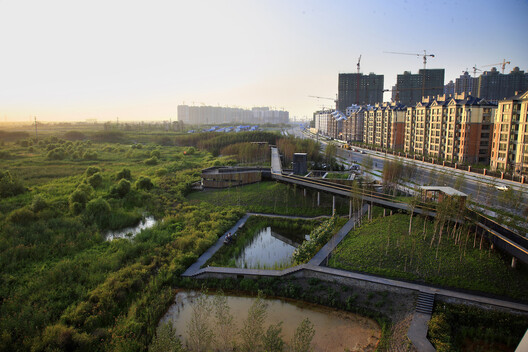
For generations, architecture has largely imagined the city through a human lens. Yet urban life has never been exclusively human. Dogs navigate territories shaped by streets and thresholds. Birds occupy towers, roofs, and façades. Insects animate gardens, courtyards, and wetlands. Monkeys, bats, and countless other species participate in urban environments in ways both visible and overlooked. The city has always been more crowded than our drawings suggest. The challenge may be less about inventing new forms of coexistence than recognizing the ones already embedded within urban space.
This article is part of the ArchDaily Topic: Transspecies Architecture: The Life of Materials, Ecological Alliances, and Nature's Agency. Every month we explore a topic in-depth through articles, interviews, news, and architecture projects. We invite you to learn more about our ArchDaily Topics. And, as always, at ArchDaily we welcome the contributions of our readers; if you want to submit an article or project, contact us.