

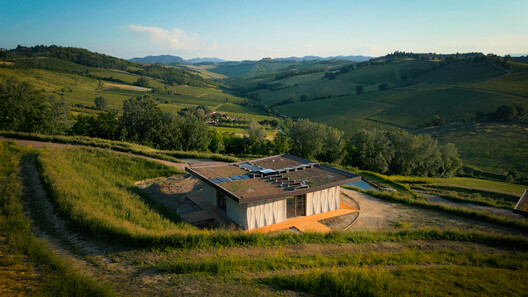
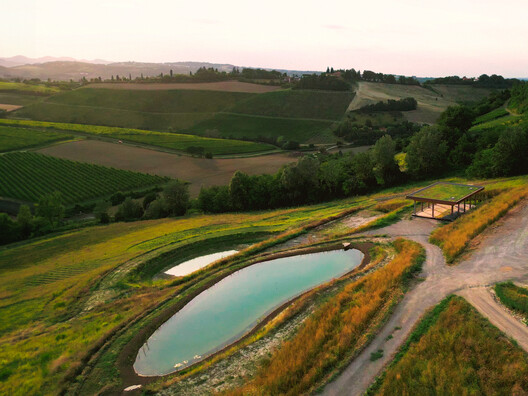
Shamballa, an 8-hectare open-air laboratory and research site dedicated to sustainable living and advanced architectural 3D printing, was inaugurated on June 8, 2026, in the hills of the Emilia-Romagna region in northern Italy. The project is a collaboration between WASP, a 3D printing technology company, and Olfattiva, an aromatherapy and botanical perfumery company, hosting a makers laboratory, a medicinal botanical garden, and "Itaca," a self-sufficient farm built using 3D printing. The building was designed as a model for 3D-printed construction, representing a certified and replicable structure. The outdoor areas host research and development centers, forming an experimental "ecosystem" to develop new ideas in bio-construction and sustainable living, along with automated gardens, rainwater harvesting systems, and initiatives focused on micro circular economies.
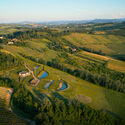
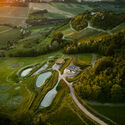
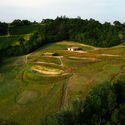
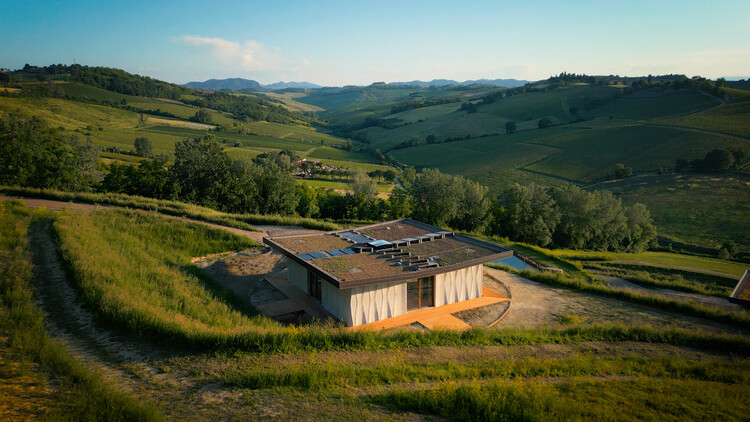
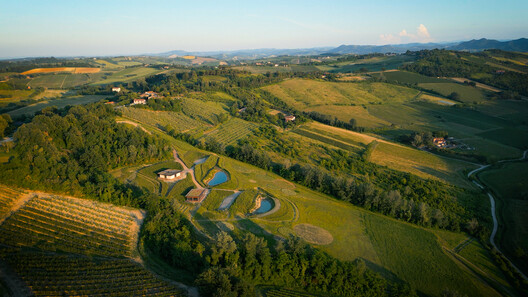
The new research complex is a private initiative developed by Olfattiva, an artisan company creating aromatherapy and botanical perfumery products based on essential oils, and WASP, a 3D printing company specializing in large-scale additive manufacturing, developing modular 3D printers able to construct full-sized homes using locally sourced materials such as raw earth and clay. After years of collaborative research on land cultivation and the design of the necessary spaces, the two Italian companies inaugurated the Shamballa project. The design responds to the belief that housing, food, employment, and healthcare are the basic human necessities of life, and the project is meant to serve as a test for its replication as an alternative building method and living economy for a more sustainable future.
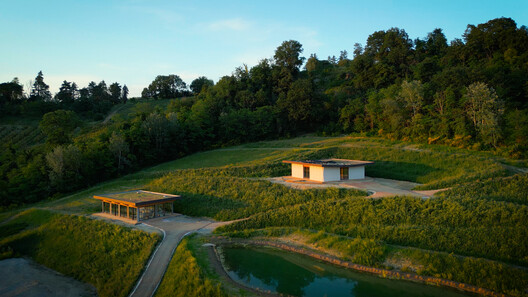
The complex is composed of a printed house built with local materials at near-zero cost. Next to it stands a vertical 3D-printed garden for hydroponic cultivation. In the companies' vision, maximizing yield within a minimal footprint requires reducing cultivation space, water consumption, and exposure to weather and pests. Hydroponic cultivation enables harvesting in otherwise unusable ground with significantly less water than traditional methods. In addition to the house and the garden, the project includes a lab with compact 3D printers for work and production at various scales, such as houses and vertical vegetable gardens of different sizes; objects like furniture, biomedical devices, jewellery, and ceramics; and cultural projects developed in collaboration with artists.
Related Article
Designing with Living Matter: 5 Installations Using Bio-Based Materials and Digital FabricationThe building aims to be a model for large-scale 3D-printed construction, low-cost, replicable, and compliant with traditional regional seismic and safety standards, meeting the requirements for conventional construction. Electrical systems and radiant heating were integrated during the printing process to optimize time and costs. The wall envelope was printed using a mixture based on pure NHL lime and Geolegante, supplied by Kerakoll, selected for its lower carbon emissions compared to traditional cement. The materials, combined with rice husk and integrated natural insulation, were chosen for their thermal performance, breathability, and reduced environmental impact.
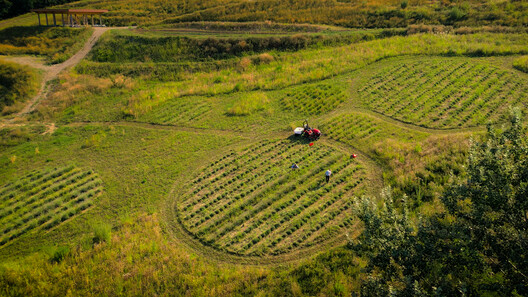
The eight-hectare botanical garden was developed through a reforestation and agroforestry initiative involving around 500 fruit trees of ancient local varieties and 50,000 aromatic and medicinal plants. The objective is to cultivate aromatic and medicinal plants to extract essential oils, experiment with crops designed to promote biodiversity, and serve as a research ground for plant-based raw materials and natural fragrances. The garden is expected to welcome the local public for sensory workshops, immersive olfactory experiences, and educational activities dedicated to plants and fragrances. As the first infrastructure model designed both as a shelter and an open-air space, Shamballa aims to serve as a community laboratory for exploring alternative strategies for sustainable living.
Recently in Africa, Studio NEiDA unveiled the first images of The Falcon Cinema in Ghana, a community art center dedicated to African film, to be built from earth materials and featuring a thatched roof made from palm leaves, referencing Asante traditional buildings. In Panama, a new project for the Museum of Contemporary Art designed by Mexican architects Palma + Taller TO also draws on local architectural tradition in its choice of brick for the façade, as well as its exploration of the material's potential to work with light. In the Netherlands, nature-inspired architecture practice ORGA completed the design of a carbon-negative neighborhood comprising 12 affordable rental homes built with a high percentage of biobased materials. Its main objective is to develop scalable housing solutions that minimize CO₂ emissions and reduce reliance on fossil resources.


