Olivia Poston
•••
Olivia Poston is a designer, researcher, writer, and educator based in Boston, Massachusetts. Her design practice studies environmental narratives of resource security and landscape urbanism by employing data visualizations and cartographies to reveal the spatial relationships between urbanism, labor, landscape, and minerals. Her research on the energy transition, climate infrastructure, and resource extraction has received generous support from the Norman Foster Foundation, the Penny White Project Grant, the Climate Solutions Living Lab, and the London Centre for Interdisciplinary Research. Olivia holds a Masters of Design Studies at Harvard’s Graduate School of Design within the Ecologies domain and a Bachelors of Architecture from the University of Tennessee in Knoxville.
BROWSE ALL FROM THIS AUTHOR HERE
↓
Subscriber Access | June 03, 2026
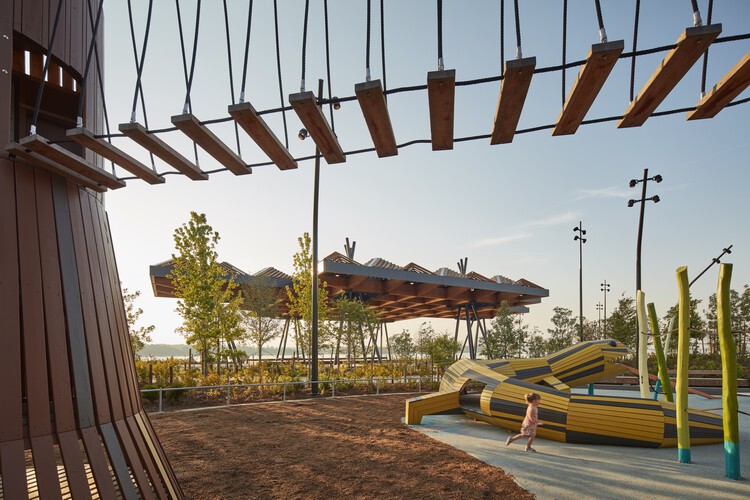
Tom Lee Park / SCAPE + Studio Gang. Image © Tom Harris
Environmental justice confronts a simple but uncomfortable truth: the benefits and burdens of the environment are not shared equally. Marginalized communities bear a disproportionate share of polluted air, unsafe water, toxic land uses, extreme heat, and the accelerating risks of climate change in cities around the world. These are the consequential products of decades of policy decisions, investment patterns, exclusionary planning practices, and planning choices that have consistently favored certain communities over others.
In cities and landscapes alike, these injustices are written into the physical fabric of places, even revealing extreme differences in environmental conditions between neighborhoods and districts . Dense neighborhoods with little tree canopy, for example, absorb and hold heat, exposing residents to higher rates of heat-related illness. Highways, industrial corridors, ports, and waste facilities cluster near low-income neighborhoods and communities of color, shaping conditions of health, air and soil quality, and long-term safety.
+ 35
https://www.archdaily.com/1042032/design-as-repair-how-architecture-is-advancing-environmental-justice Olivia Poston
Subscriber Access | May 27, 2026
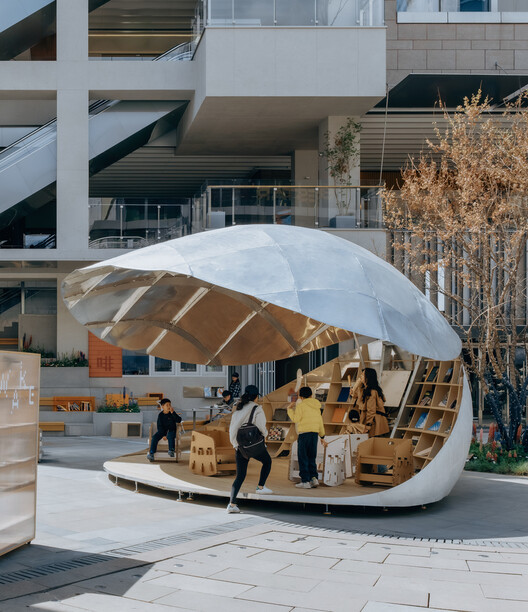
Shell Book Pavilion / LUO studio. Image © Yumeng Zhu
For centuries, architecture has been defined by unmoving permanence. A building is assumed to be fixed, its walls and foundation immobile in space. A growing number of architects are now challenging this assumption by incorporating movement into the very fabric and tectonic structures of buildings .
When roofs hinge, walls slide, and entire structures respond to their occupants, something remarkable happens: the architectural spaces become an active component of daily rituals. These moments of opening, closing, shifting, and translating spaces ground buildings in the present moment and demand active engagement from users. The architecture becomes less of an object or a monument and more of a choreography of participation.
+ 36
https://www.archdaily.com/1041693/when-architecture-moves-kinetic-design-and-the-rituals-of-space Olivia Poston
May 20, 2026
Alligator / buildingstudio. Image © Will Crocker
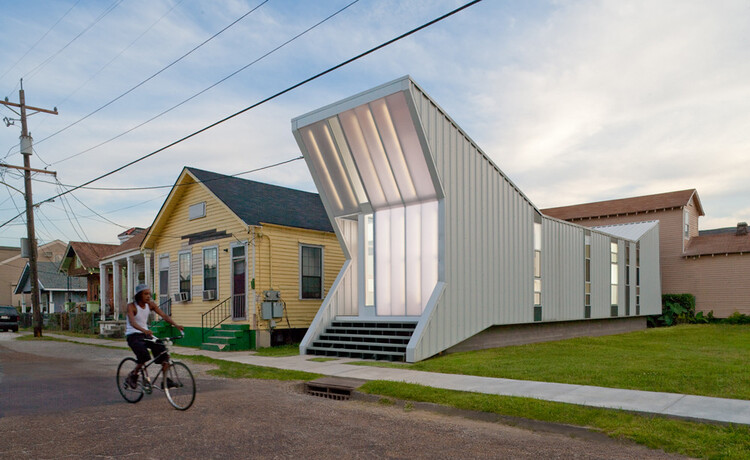
Emerging in port cities and working-class neighborhoods throughout the nineteenth century, the shotgun house became a durable response to density, climate, and constrained urban parcels, becoming one of the defining domestic forms of the Southern United States . Its narrow footprint, sequential plan, and deeply shaded porches produced a spatial logic that was economical and environmentally responsive before either term became central to architectural discourse. From New Orleans and Mobile to Houston and Louisville, shotgun houses formed the physical fabric of neighborhoods shaped by migration, labor, community, and cultural life. Though often dismissed as ordinary, vernacular construction, the housing typology has long embodied sophisticated ideas about climate adaptation, social adjacency, and incremental urban growth, making it one of the most influential domestic forms in the history of the American city.
+ 20
https://www.archdaily.com/1041562/reconsidering-the-shotgun-house-between-preservation-experimentation-and-displacement Olivia Poston
May 13, 2026
Grist Mill Cabin / modus studio. Image © Timothy Hursley
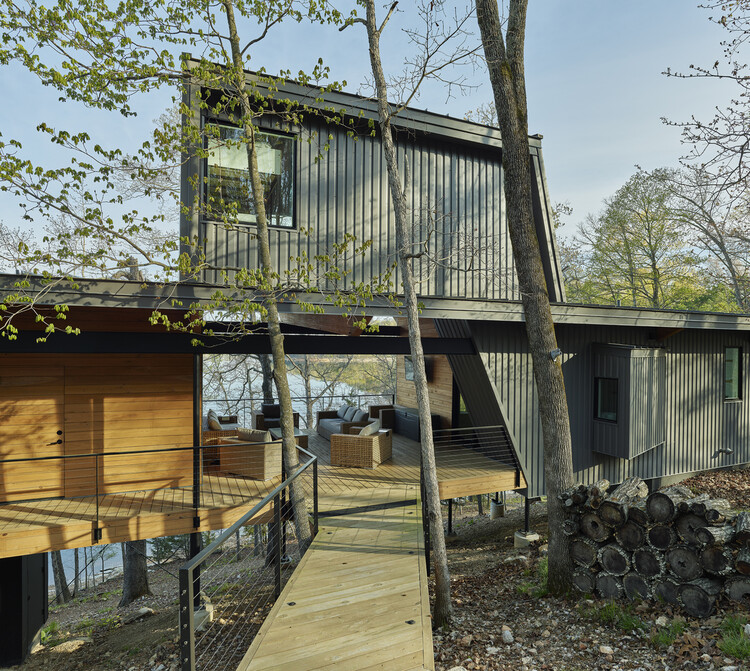
The dogtrot house emerged across the South of the United States during the late nineteenth century as a direct response to humid climates, material availability, and patterns of rural habitation . Found throughout the Appalachian Mountains, coastal Carolinas, and lowlands of Louisiana, the dogtrot house appeared in numerous regional variations, yet its fundamental spatial logic remained remarkably consistent. Two enclosed living masses are separated by an open central passage and unified beneath a continuous roof, creating a dwelling that is simultaneously economical and responsive to long, hot summers. Although architectural historians continue to debate the precise geographic origins of the dogtrot, the typology represents a broader vernacular intelligence that emerged through the convergence of environmental necessity, local construction practices, and rural living.
+ 36
https://www.archdaily.com/1041195/dogtrot-house-vernacular-knowledge-and-climate-responsive-design Olivia Poston
Subscriber Access | May 07, 2026
Suitree Experience Hotel / Studio Saxe. Image © Danta Collective
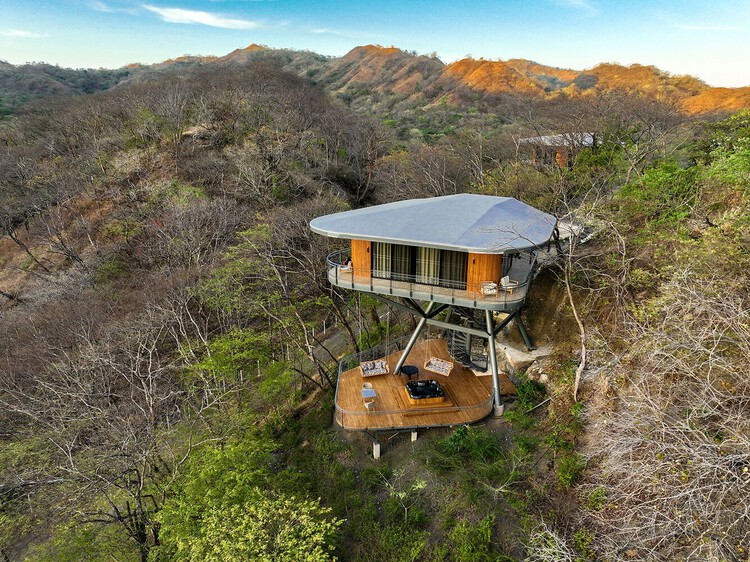
The relationship between constraint and design excellence is well established in architectural theory, yet often remains underexplored in discussions of site-specific practices. When architects encounter extreme topography, they face a fundamental choice: transform the landscape to accommodate the building, or modify the building to fit the landscape . The first approach is straightforward and requires the builder to cut, fill, terrace, and build on level ground. This choice, however, carries cascading consequences as any amount of earth moved may destabilize slopes, disrupt drainage, and fracture ecosystems. A growing body of innovative architectural work demonstrates an alternative to earth-moving and retaining walls.
+ 76
https://www.archdaily.com/1041153/building-with-the-landscape-non-invasive-design-strategies-for-steep-terrain Olivia Poston
Subscriber Access | April 30, 2026
Escuelita Lochiel. Image © Leslie Ponce-Diaz
In the high desert of the San Rafael Valley, a few miles from the United States-Mexico border in Lochiel, Arizona, an adobe schoolhouse has stood for more than a century. Built before 1905, before Arizona was an incorporated state, the schoolhouse served generations of Mexican American students from Arizona and Sonora, cultivating shared cultural experiences, stories, and relationships that transcend physical and political boundaries. Over decades of education and shared histories, it became a place where language and narrative moved freely, even as geopolitical tensions continued to rise along the border. Today, it is one of the last remaining one-room adobe schoolhouses in the United States.
Adobe is among the oldest building technologies in the American Southwest, and among the most demanding to steward. In desert climates, earthen walls face intense weathering from temperature extremes, cracking due to seasonal shifts, and accelerated decay after storm events. These vulnerabilities require sustained and skilled maintenance over many seasons and compounding decades. After years of encroaching abandonment and structural threats, a twelve-year restoration effort by local community members who understood this building as critical cultural infrastructure brought the schoolhouse back from the edge of demolition. That the community chose to undertake this effort, given everything Adobe construction demands of those who care for it, is a statement about what the loss of this building would have cost. The result is a structure that now stands as a monument to Mexican American heritage and a living archive of rural border education.
+ 5
https://www.archdaily.com/1041005/escuelita-lochiel-an-archdaily-student-project-awards-winner-reframing-education-through-adobe Olivia Poston
April 23, 2026
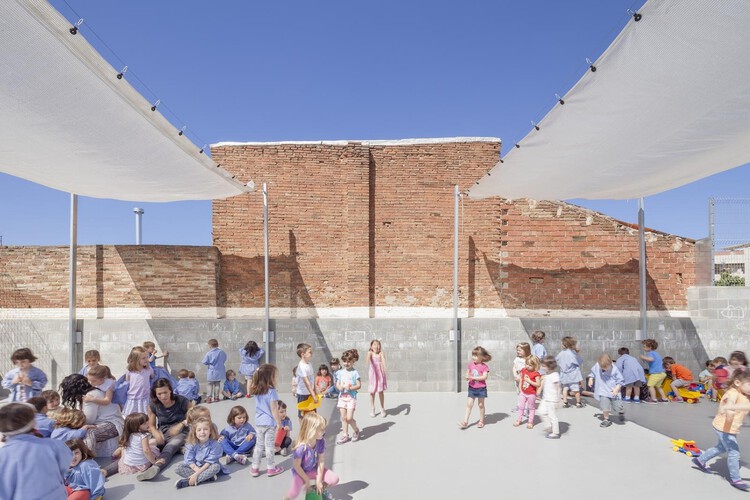
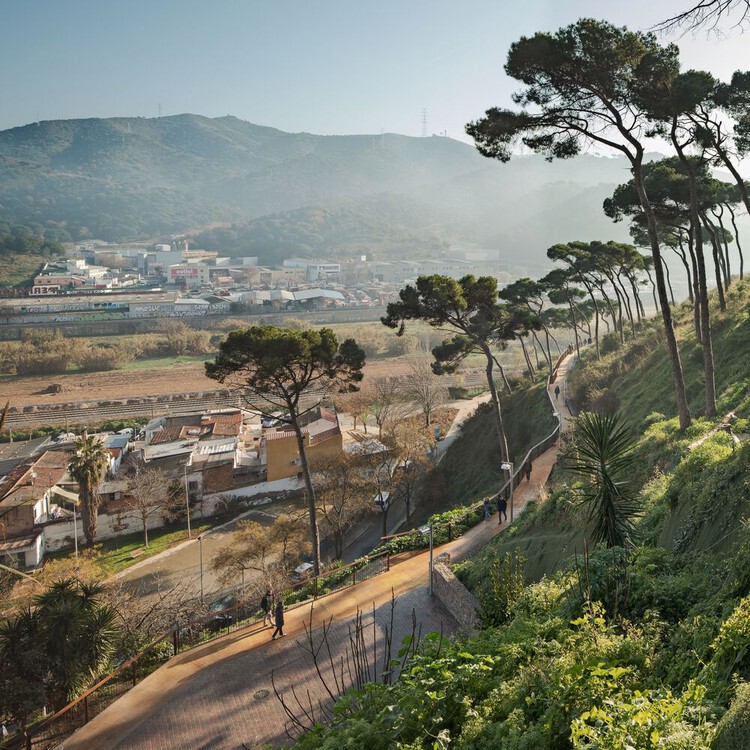
Refurbishment Of 906 School In Sabadell / H Arquitectes. Image © Adrià Goula
This article is part of our new Opinion section, a format for argument-driven essays on critical questions shaping our field.
The modern sustainability project is built on the promise that evolving technologies can reconcile urban and economic growth with ecological responsibility . By the metrics developed by the built environment professions and the policies adopted by governments, progress is tangible and accelerating : buildings consume less energy per square foot than they did a generation ago, vehicles emit fewer pollutants per mile, and urban infrastructure is more integrated and measurably cleaner in many cities . And yet total resource consumption continues to rise. Sustainability , as currently practiced across the built environment professions, has become a strategy for optimizing consumption rather than reducing it. Until the profession is willing to question the scale and structure of demand rather than the efficiency with which that demand is met, its most celebrated achievements will continue to fall short of the problem they claim to address.
+ 23
https://www.archdaily.com/1040795/ideology-of-performance-sustainability-and-the-limits-of-efficiency Olivia Poston
Subscriber Access | April 19, 2026
European City Context. Image Courtesy of ReGreeneration
The ReGreeneration project, a Horizon Europe project led by Inetum and supported by C40 Cities, ARUP , Placemaking Europe, and several others, operates as an active collaboration with local governments, private companies, academia, and civil society organizations at the intersection of urban regeneration, green public spaces, and neighborhood-scale design. Its premise addresses how European cities are built and maintained and how they experience a changing climate , arguing that cities must fundamentally change to remain livable under accelerating climate pressures.
+ 12
https://www.archdaily.com/1040595/reimagining-the-complete-neighborhood-through-urban-renaturing Olivia Poston
April 08, 2026
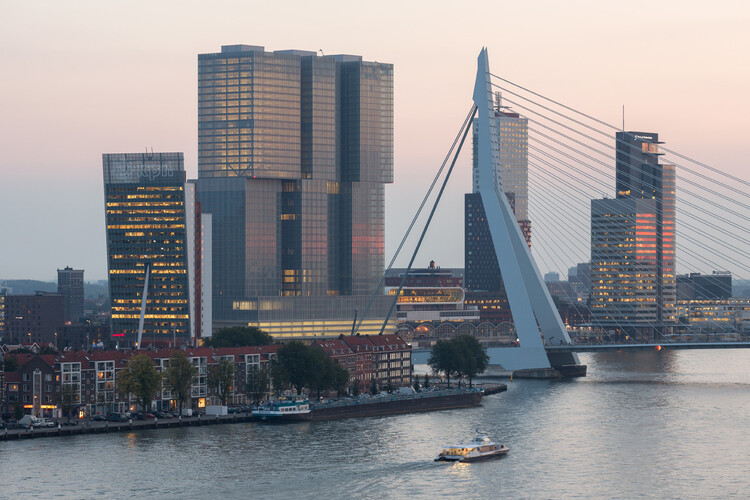
De Rotterdam / OMA. Image © Ossip van Duivenbode
Architects carefully calibrate their relationship to the earth, adjusting foundations to soil, groundwater, climate, risk, and culture. Driven timber piles, rammed-earth platforms, and poured concrete slabs are each a response to a specific set of ground conditions , and each shapes the architecture that rises from it. The way a building meets the earth determines its durability and its limits because foundations are among the most consequential design choices an architect makes.
The city of Rotterdam sits approximately one meter below sea level, an organizing condition that shapes daily life in the Netherlands ' second-largest city and is a growing preoccupation amid unstable coastal conditions. The city occupies the delta of the Rhine and Maas rivers, a landscape that was never naturally dry but has been kept functional through centuries of hydraulic intervention . The water boards in this region are among the oldest democratic institutions in the world, created in the thirteenth century to manage shared water drainage and still operating today as elected bodies with technical capacity . As sea levels rise and rainfall across Northern Europe grows less predictable and more extreme , Rotterdam faces a significantly increased risk of coastal storm surges and urban flooding driven by overwhelmed drainage infrastructure .
+ 65
https://www.archdaily.com/1040325/no-solid-ground-three-approaches-to-building-below-sea-level-in-rotterdam Olivia Poston
Subscriber Access | April 05, 2026
https://www.archdaily.com/1040104/the-built-path-pilgrimage-and-architectural-sequence-on-the-camino-de-santiago Olivia Poston
March 29, 2026
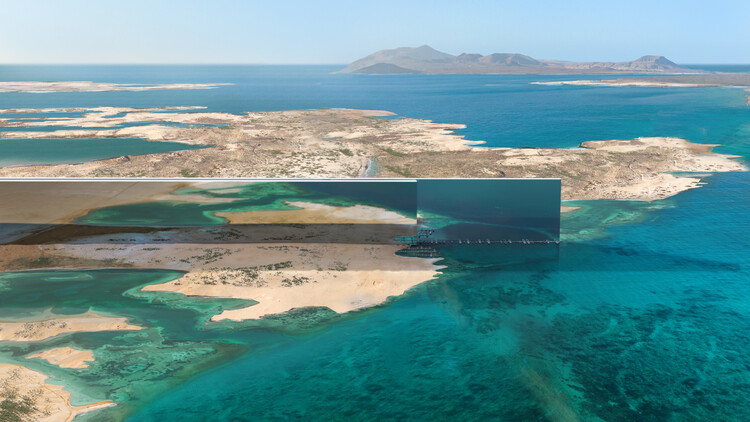
THE LINE, Phase One Strategic Partners. Image © NEOM
In 2023, ArchDaily's editor-in-chief sat down with Tarek Qaddumi , Executive Director of the Line Design at NEOM , at the closing of the Line Exhibition in Riyadh. Qaddumi described a layered, three-dimensional city organized around the idea of a "five-minute sphere" of access : walkable communities stacked vertically, connected by high-speed rail, freed from cars and conventional street infrastructure, and designed to coexist symbiotically with the surrounding natural landscape. It was a compelling vision, and in the context of the moment, it was simultaneously credible and appealing. For architects and urban thinkers grappling with the failures of twentieth-century city-building, the ideas articulated were worth engaging and planning.
+ 5
https://www.archdaily.com/1039911/the-line-at-a-crossroads-revisiting-neoms-vision-for-a-utopian-city Olivia Poston
Subscriber Access | March 18, 2026
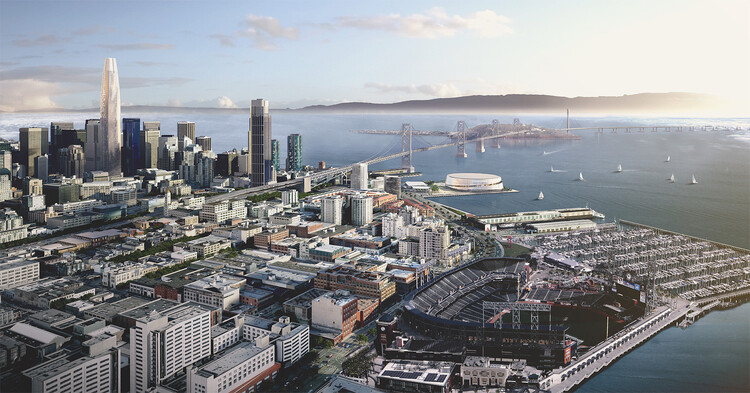
Stadium Rendering, Version 2.0- Aerial; Rendering by steelblue.. Image Courtesy of Snohetta
San Francisco is a city that has always remade itself under pressure. Its Victorian streetscapes have survived seismic retrofits and glass towers , its neighborhoods defined as much by change as by its resistance to change. But no force in the city's history has reshaped the built environment as completely, or as quickly, as the technology economy . What began in the postwar sprawl of Silicon Valley migrated north and inscribed its logic onto the skyline and the lives of residents. The result of this logic is an architectural culture of considerable technical refinement and refined material palettes , yet one that remains largely indifferent to the existing population.
The cost of indifference is measurable and mounting. San Francisco must accommodate more than 82,000 additional housing units by 2031 under California's Regional Housing Needs Allocation framework, in a city where median rent already ranks among the highest of any American metropolitan area. Teachers, healthcare workers, and service employees are actively displaced by a real estate market calibrated to a single sector's income levels rather than the city's largest workforce.
+ 25
https://www.archdaily.com/1039650/form-function-and-funding-the-high-tech-urbanism-of-san-francisco Olivia Poston
Subscriber Access | March 12, 2026
https://www.archdaily.com/1039450/mobility-justice-urban-equity-in-an-era-of-innovation Olivia Poston
Subscriber Access | March 05, 2026
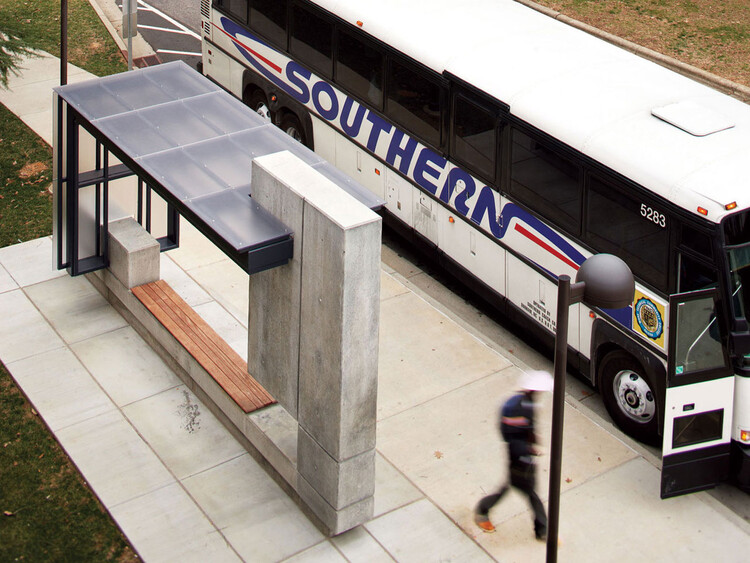
Bus Shelter / Pearce Brinkley Cease + Lee . Image Courtesy of JWest Productions
The future of transportation hubs in the United States will not be defined by iconic metropolitan airport terminals and expansive central train stations. Rural communities contain the majority of the nation's road miles, carry nearly half of all truck vehicle miles traveled, and originate two-thirds of rail freight. These realities position rural transportation hubs as vital regional access points and distribution centers that shape national mobility outside models of urban extensions.
Rural transportation hubs in the United States are essential civic and logistical anchors whose success cannot be measured against urban metrics . Instead of replicating transport hubs of dense urban typologies, designers are developing architectural models that reflect rural realities: dispersed populations, freight-dominant infrastructure, modest multimodality, safety challenges, and social access needs. In many rural regions , a modest airport terminal sustains economic viability, a rail transfer facility connects resource-based industries to national markets, and a regional bus depot provides access to employment, education, and essential services.
+ 44
https://www.archdaily.com/1039225/rural-transportation-hubs-infrastructure-design-access-and-regional-mobility Olivia Poston
Subscriber Access | February 26, 2026
https://www.archdaily.com/1035353/how-to-design-with-the-rain-architectural-strategies-for-rainwater-collection-across-climates Olivia Poston
February 19, 2026
https://www.archdaily.com/1035354/dispatched-architecture-of-the-american-post-office-and-the-privatization-of-civic-space Olivia Poston
February 12, 2026
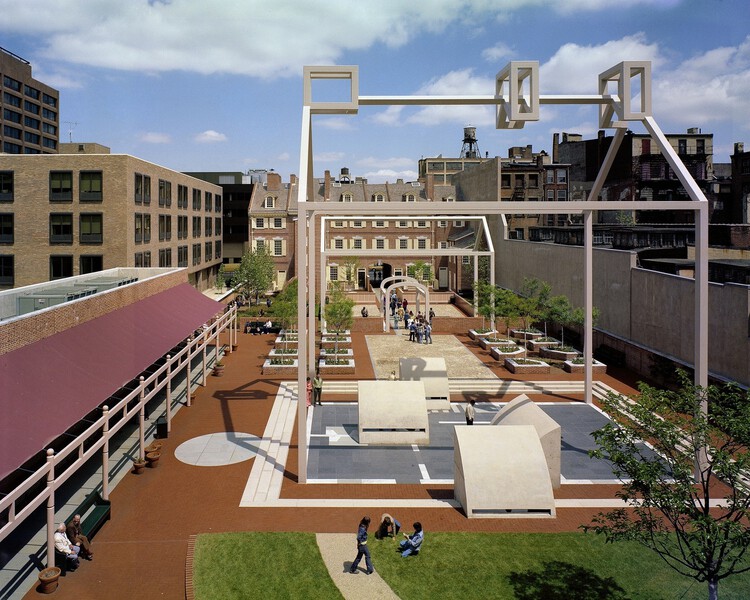
Franklin Court, Philadelphia / Venturi Scott Brown. Image © Mark Cohn
Postmodernism in the United States turned architecture into a stage for cultural memory, irony, and heritage at a moment when the built environment was becoming less civic and more commercial and curated . By the late twentieth century, architectural investment no longer centered on monumental public institutions or shared federal commitment to civic space . Private development, corporate expansion, and consumer environments increasingly shaped cities across the country. Buildings took on a new role as cultural images, expected to communicate identity and meaning as much as they provided function.
Postmodernism began as a critique of modernism's exhausted promises. By the late 1960s and early 1970s, many designers no longer treated modernism as radical or socially redemptive . Urban renewal projects accelerated the demolition of historic neighborhoods, and landmark preservation battles raised urgent questions about what the United States valued and, ultimately, protected. The loss of major civic icons, including New York's Penn Station, sharpened public awareness that progress often arrives through erasure. In Chicago, architect and provocateur Stanley Tigerman captured this sense of rupture in his 1978 photomontage The Titanic, which depicts Mies van der Rohe's Crown Hall sinking into Lake Michigan , a blunt image of modernism's symbolic collapse. Postmodern architects worked inside this turbulence, shaped by economic shocks, corporate excess, shifting cultural production, and a growing skepticism toward grand architectural solutions.
+ 19
https://www.archdaily.com/1038681/playful-and-ironic-the-legacy-of-postmodernist-architecture-in-the-united-states Olivia Poston
Subscriber Access | February 08, 2026
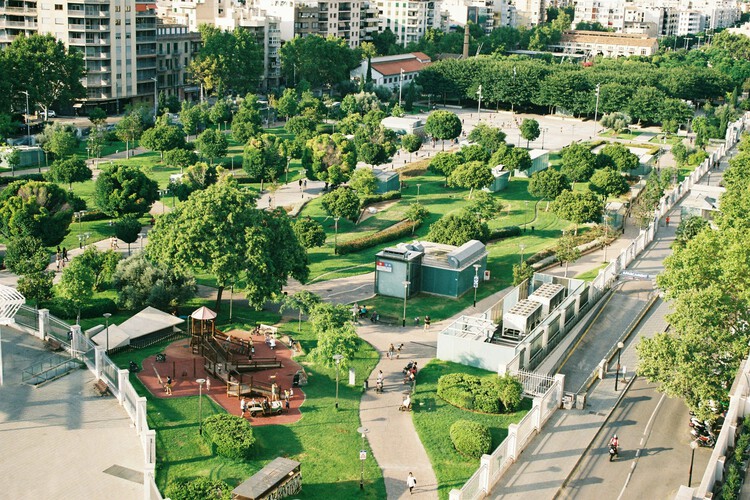
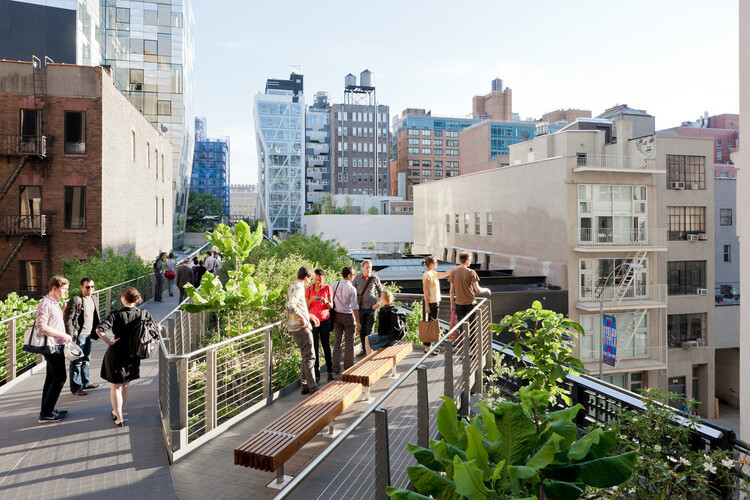
Elizabeth Diller to Produce Opera for the High Line. Image © Iwan Baan
Cities around the world share a common goal: to become healthier and greener, supported by civic infrastructure that restores ecosystems and strengthens public life. The question is how to reach this. Global climate targets, local building codes, and municipal standards increasingly guide designers and planners toward better choices. Still, many cities struggle to translate these frameworks into everyday, street-level comfort and long-term ecological protection. What happens if the city is no longer treated as a traditional city, but as a national park?
National parks operate through systems of protection that treat land as a network of ecological relationships rather than a collection of isolated sites. They establish a shared baseline for what must be preserved, maintained, and made accessible over time. When this logic is applied to the urban environment , success can inspire pride and a sense of shared responsibility among designers, policymakers, and residents, fostering a collective commitment to health , habitat, and civic infrastructure .
+ 13
https://www.archdaily.com/1038320/health-habitat-and-civic-infrastructure-designing-the-city-as-a-national-park Olivia Poston