This publication focuses on the shift from building for construction’s sake to that of building for progress. After decades of extraordinary development and urbanization, Chinese cities have arrived at a stage of ‘New Normal’. Urban development is now shifting from quantity-driven to quality-driven, with art and culture as a tasty topping for countless developments. It examines the future of (Chinese) cities as a ‘testimony from the battleground’, and how their current metamorphosis can impact cities worldwide – especially in the Global South. The key argument is: China has developed a very appealing urban model. Could this be a blueprint for cities worldwide, like the Italian city was once a blueprint for the Northern European city?
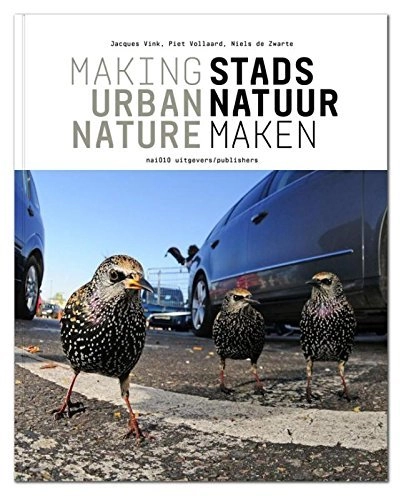
Description via Amazon. The city is a rich habitat of great biodiversity. Many animal and plant species are now more common in cities than in rural areas. However, urban nature is fragile, and threatened by the tendency of planners and policymakers to see the city exclusively as a habitat for people. Nature-inclusive design, which considers nature an integral part of the urban organism and an important part of a city’s quality of life (for human and nonhuman residents), is a pioneer practice that has only recently started to become part of urban planning. Making Urban Nature is an inspirational book of examples about nature-inclusive designing in European cities. Simultaneously utopian and pragmatic, it discusses the unique nature of urban habitats and calls for the purposeful integration of nature in the designs of buildings and urban outdoor spaces, while offering practical examples and design suggestions.
OASE 98 explores the historical foundation of the concept of narration in reading and designing the urban landscape, in search of the relevance of narrative methods to today’s practice. This issue presents a new angle on the work of (landscape) architects and urban planners of the 1960s and 1970s (Edmund Bacon, Kevin Lynch and Jacques Simon) and of today (Günter Vogt, Anke Schmidt and Bas Smets), and sheds light on recent experiments in academia.OASE 98 presents narration as a means with which to reposition design and the designer as a mediator between the expert and the inhabitant, addressing issues such as bodily experience, socio-spatial fragmentation and participation.
Every two years, Archiprix International invites all 1,700 university-level courses in the field of architecture, urban planning and landscape architecture to select their best graduation projects and submit these for participation. This publication displays a representative selection of the projects submitted, including the nominees and winners chosen by an independent jury, and the favourites chosen by the participants themselves, supplemented by a representative selection that offers a picture of the range of designs and the graphical distribution across all continents. In addition, the book contains the personal data of the projects’ designers. Archiprix is well-known at home and abroad as a platform for promising architects, urban designers and landscape architects. Not just clients, employers and schools, but also the organizers of competitions and workshops are becoming increasingly adept at locating gifted ‘designers in the making’ as presented by Archiprix.
Where there are vacancies, there is room for new uses, such as housing and leisure and health-care facilities. This often results in surprising combinations, such as a school or a community centre in a factory complex, a shop in a church or a recreation area in a military zone. Reuse, Redevelop and Design presents 20 inspiring redevelopment projects. The book addresses the story behind the success of redevelopment in essays on heritage policy, public-private partnerships, financing and design. The creative way Dutch architecture offices deal with heritage is also catching on abroad, as evidenced by OMA’s projects in Italy and Germany, West 8’s in Russia, Mecanoo’s in the United States and Maurer’s in China.
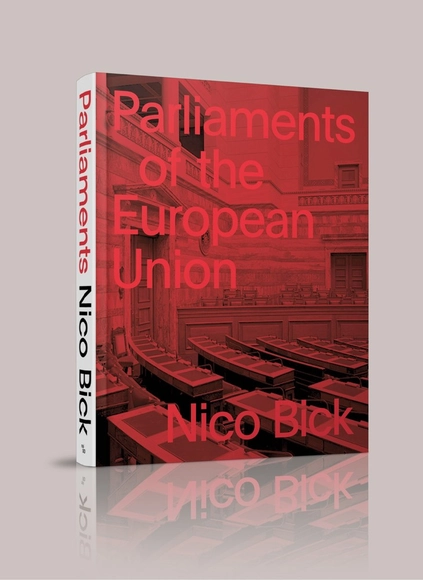
In Parliaments of the European Union Dutch photographer Nico Bick presents a unique photographic view of the plenary chambers where the European democracy is actually realized. The book features photographs of the plenary chamber in the parliaments of the twenty-eight European Union member states and the two European Parliaments in Brussels and Strasbourg. Each plenary chamber is photographed from one viewpoint, from the floor itself, in three or four photographs and presented in a triptych or tetraptych fold out. As a series this project makes the European democratic landscape and its significance visible. Key element of the project is to allow the observer of the photo series a feeling of being ‘part of the room’. The result is a stunning monument for European democracy.
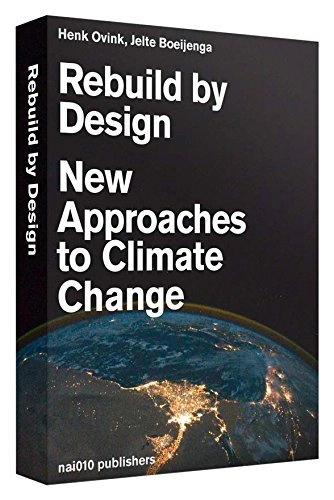
Description via Amazon.Rebuild by Design was developed for the Presidential Hurricane Sandy Rebuilding Task Force, a response to the destruction that followed Hurricane Sandy hitting the Northeast coast of the United States in October and November of 2012. Using an innovative, design-driven process based on the design competition model, Rebuild by Design places local communities and civic leaders at the heart of a robust, interdisciplinary creative process to generate implementable solutions for building more resilient regions. Its signal initiative was the Hurricane Sandy Design Competition, which produced ten visionary design proposals addressing the intersection of physical, social and ecological resiliency.
Description via Amazon. Lessons for Students in Architecture, written by Dutch architect and educator Herman Hertzberger (born 1932), was first published in 1991 as an elaborated version of lectures Hertzberger had given since 1973 at Delft University of Technology. Since its first edition, the book has become a classic for students the world over; this immensely successful volume has gone through many reprints and has also been published in Japanese, German, Italian, Portuguese, Taiwanese, Dutch, Greek, Chinese, French, Polish and Persian.
How can places you go to other than your workplace or your home, such as libraries, idea hubs, cultural centres, parks, start-up cafés and other indispensable public spaces, so-called ‘third places’, make a valuable contribution to a vital society , now and in the future? How to Make a Relevant Public Space answers these questions from different angles, based on the five most important developments within the public space.
Supported by numerous interviews and primary data, this book points out the threats posed by typical large-scale projects of single SOEs (state owned enterprises), and further shows alternative development potentials that match the long-term socioeconomic demand, by learning from self-evolving SOE areas shaped by the combined forces of various public and private stakeholders.
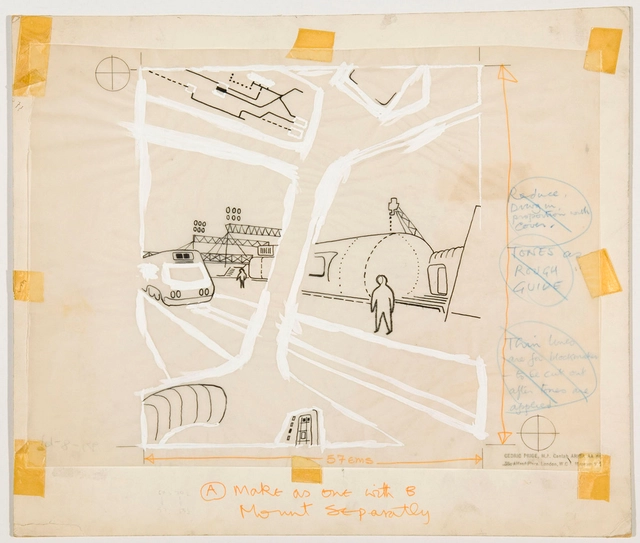
Cedric Price's "Potteries Thinkbelt" project. Image Courtesy of Canadian Centre for Architecture
Samantha Hardingham's recently-published work, A Forward-Minded Retrospective: Cedric Price Works—1953-2003, traces the architect's career through a comprehensive collection of his drawings and renders. The exhaustive two-volume work acknowledges Cedric Price not just as the entertaining novelty he is often regarded as, but as a great mind who was ahead of his time. While the vast majority of work produced during his lifetime was never built, Hardingham draws out the radical genius behind such projects as the hybrid office complex-highway "Officebar," a zoo restaurant whose column-less interior paved the way for its later conversion to a giraffe habitat, and many others—built and unbuilt.
In addition to the uncanny future forecasting expressed in many of Price's works, they are also known for serving as inspiration for the functionalist designs of Renzo Piano and Richard Rogers, making them necessary to a complete understanding of the modern architectural canon. In an article on Metropolis Magazine, Samuel Medina takes a whistle-stop tour of some of the most intriguing works presented in Hardingham's new book.
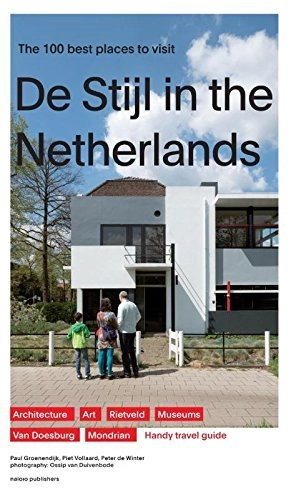
Description via Amazon. The Dutch art movement De Stijl and its eponymous magazine have long exerted a strong influence on art and architecture, at home in the Netherlands and abroad. Published on the occasion of De Stijl’s centenary anniversary, the Guide to De Stijl in the Netherlands: The 100 Best Spots to Visit is the first publication to assemble, in a single practical and accessible guide, the 100 most important buildings, monuments and places of interest related to De Stijl. From icons such as the Rietveld-Schröderhuis in Utrecht and Café De Unie in Rotterdam to less well-known objects and places of interest (like De Stijl stained glass windows), all accompanied by surprising facts, details and practical information, this handy volume will become the De Stijl bible for those wanting to discover the Netherlands in primary colors.
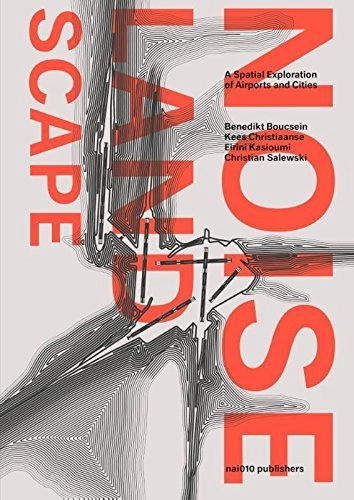
The expansive areas around large airports, affected by noise, infrastructure, and transient forms of architecture, have until now not been researched as a phenomenon. But these noise landscapes are emerging worldwide, often surpassing the neighbouring city in size, and sometimes rivalling it in economic importance. On the basis of eight European case studies (Amsterdam, Zurich, London-Heathrow, Frankfurt, Munich, Madrid and the two Paris airports) this book provides the first account of how these landscapes emerged as the result of technical determinations, what is taking place in them, and how they can be interpreted.
The Netherlands has many thousands of dikes. A pivotal element in the Dutch landscape and one of the oldest features of the country's extensive water management program, the dikes of the Netherlands have significant cultural, historical and environmental value. But despite their importance to the history, economy and culture of the Netherlands (and their contemporary international relevance as the world scrambles to develop and implement effective flood-control strategies), Dutch dikes have never been properly mapped out or systematically studied. Many of them fail to meet current safety standards, though they are still a ubiquitous presence in the Dutch landscape. In this book, built around research producing the first dike map of the Netherlands, the Dutch dikes are for the first time described, interpreted and portrayed in all of their surprising variety of functions and guises.
Europe was hurt badly during the Second World War. The Netherlands, despite the dimensions of the task ahead, the poverty and the signifi cant war damage, took up reconstruction expeditiously. Bombed cities and villages re-emerged from the rubble and thanks to central management, the Netherlands were redeveloped spatially. In economic and social terms, signifi cant innovations took place as well.
Writingplace marks an emerging discussion on the relationship of literature and architecture. The book, which grows out of an online platform of the same name, offers reflections on the role played by written language as a crucial element of architecture culture, and on the potential of using literary methods in architectural and urban research, education and design.For readers interested in the transdisciplinary encounters between architecture and literature, this volume offers both theoretical contributions that address concepts such as narrative and literary imagination, and contemporary explorations regarding the practical operability of literary approaches.
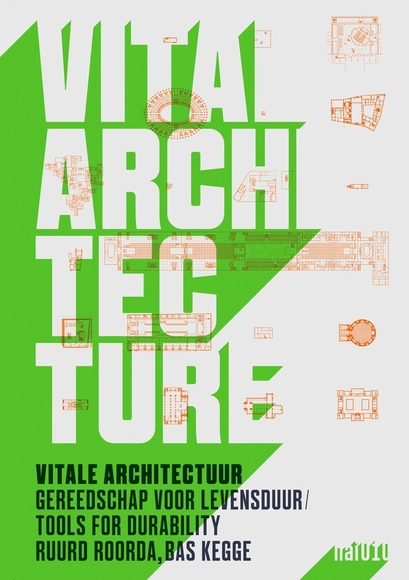
From the Pantheon in Rome to the Zollverein in Essen, “vital architecture” describes buildings with a future value, buildings whose architecture determines and guarantees their lifespan. The spatial quality of such buildings is the core of their value and sustainability, even--or especially--when their use changes. Vital Architecture focuses on the clients, users, architects and designers of such buildings.
In 2014, a 3D-printed Canal House by DUS architects caught the attention of the world. Imagine 10 explores the potentials of Additive Manufacturing for architecture by discussing its implications for design and construction processes, and presents research projects and ideas for future applications.
Description via Amazon. Mark Mills was a visionary architect, a Frank Lloyd Wright apprentice whose innovative designs grow beyond Wright's work to uniquely blend structural principles and the organic forms of seashells. When he heard Wright say that seashells are Nature’s perfect architecture, Mark made that idea the foundation of his life’s work. As seashells change their forms to meet the needs of their inhabitants, so Mark adapted structural roof systems to shelter his clients, and he made them spectacularly beautiful.
Since its first iterations in the early 19th century, the architectural museum has been one of the most significant forces in the creation and dissemination of architectural culture to a wide audience, while also serving as an important locus of authority for architectural discourse and practice. Architect and scholar Sergio Figueiredo’s new study, The NAi Effect: Creating Architecture Culture, elucidates the social and cultural aims of architecture museums and their impact in creating architecture culture through a critical survey of the history and the legacy of one such institution, the Netherlands Architecture Institute (NAi) in Rotterdam. This volume embarks on a probing exploration of one of the most important architectural institutions in the world, offering new insights into its history, how cultural policy operates on the ground, and how cultural institutions relate to a fast-changing global context.
Ever since the 18th Century when Alexander Pope advised his peers to “consult the genius of place,” the idea that designers could interpret and then express the essential identity of a place has been venerated in landscape architecture. This issue of LA+ is devoted to critically exploring the nexus between place and identity with contributions from disciplines as varied as landscape architecture, architecture, philosophy, literature, ethics, marketing, anthropology, history, politics, and visual arts.
Description via Amazon.Chandigarh Rethink captures the rich, ongoing discourse on radically transforming urbanities within the Global South with specific reference to India’s social, historical, economic and cultural repositioning. It examines urban edge ‘figures’ and their rural ‘grounds’―relevant not just to Chandigarh, but also to cities in general―while suggesting narrative strategies via provocative design studio design work. These introspections are framed within themed contributions from a globally recognized group of scholars who represent the diverse disciplines of architecture, planning, urban design, landscape ecologies and the humanities. As a topical publication on global urbanities transforming a ‘signature’ urban project, Chandigarh Rethink anticipates the Buildings-Landscapes-Cultures (blc) program and SARUP’s efforts to uniquely aligning urban research, pedagogy and critical design practice towards examining global urbanities that continue to defy normative urban analysis. Beyond serving as an exemplar for globally aware architectural schools nationwide and beyond, it is also directed to serve as an instructive primer for design students and instructors examining global urban sites.
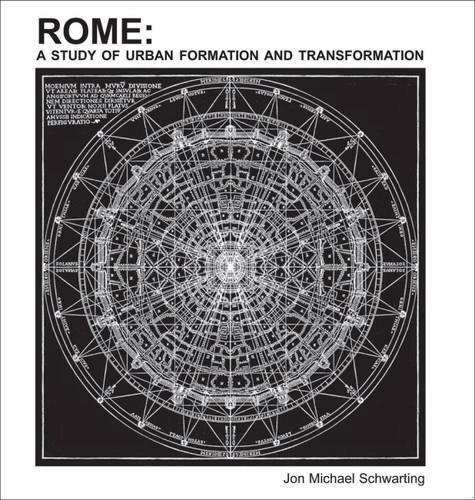
Description via Amazon. In this book, Formation is ideal and utopian thinking, and Transformation is the adaptation of the ideal to the real or existing conditions. The book examines the dialectical relationship of these in the creation of the city. The subject is a contextual theory of urban design, utilizing Italian Renaissance and Baroque architecture and urban development of Rome, as a case study. It demonstrates the complexity of Roman urbanism and the inter-relationship and role of Roman architecture to its urban context.The theory of urban ’Contextualism’ has not been adequately discussed and presented in regards to this historical city. Why it is important as a theory and as a method for designing Roman cities today? And therefore, it needs to be discussed. The book is an exploration and demonstration of urban analysis and visual diagramming, it is an urban and architectural analysis of significant Ancient, Renaissance and Baroque historical developments in the great city of Rome. There has rarely been a discussion and visual presentation of the relationship of Roman architecture to its urban context.
Description via Amazon. ‘Merrick House’ is an exhaustive documentation of one of Western Architectural period jewels, a home Merrick as a young architect built by hand on the steep wooded slopes of West Vancouver, BC in the early seventies. The photographs, by Michael Perlmutter, bring out the wonders of architectural space and materiality, and Robins’ text explores in great detail the influences that Merrick drew from, the way it was constructed, the many spatial moves he employed, and how it changed over time with successive renovations. The 17 level edifice is both contextual and truly eccentric, with spatial majesty.