Montreal, located along the Saint Laurent River in Southern Quebec, is Canada’s second-largest city. Often renowned for its architectural diversity, its built environment reflects both its colonial past and modern evolution. As a former territory of "Nouvelle France," French language and culture remain dominant, which has in turn influenced the city's architectural character. Notably, Old Montreal features well-preserved buildings from the 18th and 19th centuries, most of which are a testament to the city’s industrial growth after the construction of the Lachine Canal. The area's heritage has been protected and restored through efforts by figures like Phyllis Lambert and organizations such as Heritage Montreal, allowing the city’s rich architectural history to coexist with its modern developments.
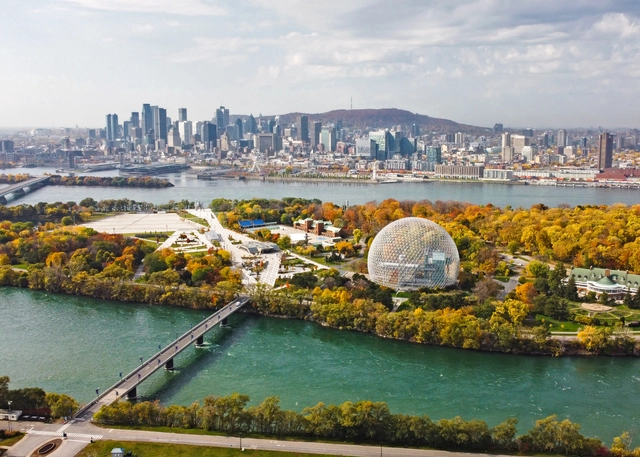
Montreal's multiculturalism is evident in neighborhoods like Little Italy and Little Portugal, with its diversity fueling a vibrant cultural scene. The city hosts a multitude of festivals every year, many held in open-air venues like Place des Festivals. Parc Jean-Drapeau, built for the 1967 World Expo, is another popular spot for large events while offering stunning views of the city skyline. Another relevant site is Mont Royal Hill, a park offering panoramic views of downtown and access to hiking trails, Saint Joseph’s Oratory, Beaver’s Lake, and other areas of architectural interest such as the Plateau.
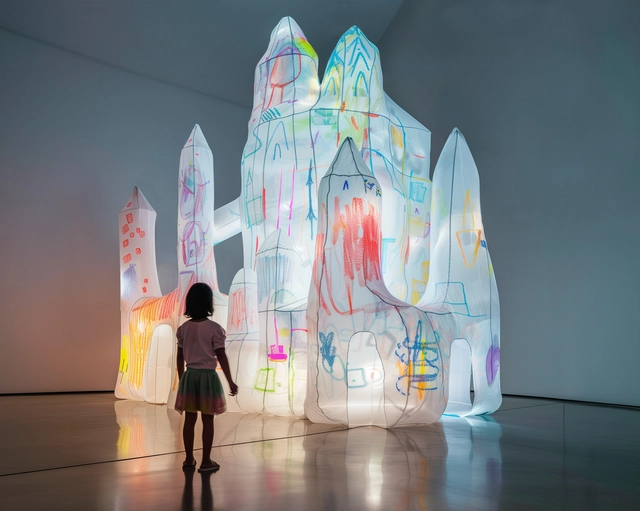
Leah Wulfman Poster Image. Image Courtesy of Architectural League Prize for Young Architects + Designers
The Architectural League Prize for Young Architects + Designers is an annual portfolio competition for early-career practitioners in North America. Established in 1981, the competition is entered around a yearly theme. This year, the 2024 Young Architects + Designers Committee proposed the theme “Dirty,” prompting designers to “look beyond their presentations of professionalism, respectability, and expertise” and reject the sanitized ways of working.
The original work of the six winners of the 2024 League Prize for Young Architects + Designers is now on view in an online exhibition. The installations created for this occasion showcase the wide variety of responses and interpretations of the overarching theme. The projects presented online and in some instances also locally on-site, challenge traditional architectural practices and offer an immersive introduction to the works of the winners. In addition to the installations, a diverse program of lectures has been scheduled to develop the theme further.
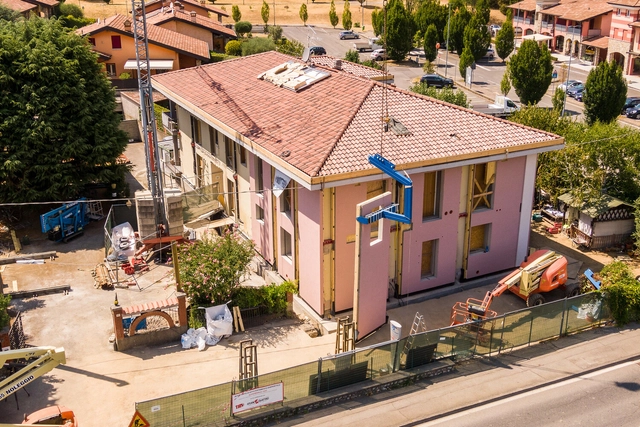
of Energiesprong, an innovative system that uses prefabricated insulated wall and roof panels . Image Courtesy of World Habitat
International non-profit organization World Habitat, in partnership with UN-Habitat, has announced the World Habitat Awards 2024. The prizes strive to highlight projects that demonstrate novel and transformative approaches to housing that incorporate principles of climate change adaptation and community-driven solutions. This year, 8 projects have been selected, out of which 2 projects were recognized with the Gold World Habitat Award.
What about architecture in North America – its history, policies, but also building codes – makes it particularly vulnerable to the global housing crisis? And how can those inherent flaws be counteracted with purposeful residential design and a more inclusive approach to the architecture discipline?
The window for solving climate change is narrowing; any solution must include embodied carbon. TheSixth Assessment Report published by the IPCC (Intergovernmental Panel on Climate Change) concludes that the world can emit just500 gigatonnes more of carbon dioxide, starting in January 2020, if we want a 50 percent chance of staying below 1.5 degrees. In 2021 alone, the world emitted about36.3 gigatonnes of carbon, the highest amount ever recorded. We’re on track to blow through our carbon budget in the next several years. To quote the IPCC directly: “The choices and actions implemented in this decade will have impacts now and for thousands of years (high confidence).”
Origin myths,” “founding myths,” and “creation legends” provide a way for us to see into and imagine the distant past in metaphorical, poetic, and compelling ways. The oldest origin myths help us understand how a people or a place (such as the universe) were believed to have come into existence. Anthropologists describe these as creation myths or “cosmogonic” myths. They might explain how the world came to be. For example, Native North American peoples such as the Cherokee, Ojibwe, and Aztecs share an origin myth that land was first created on top of a great ocean. One of the most common Western origin myths is the creation of Adam and Eve. But founding stories exist for all kinds of social conditions, historical customs, and objects, as well as places—think of the myth of the brothers Romulus and Remus, suckled as babies by a wolf, who survive to found the city of Rome (after Romulus got rid of his brother).
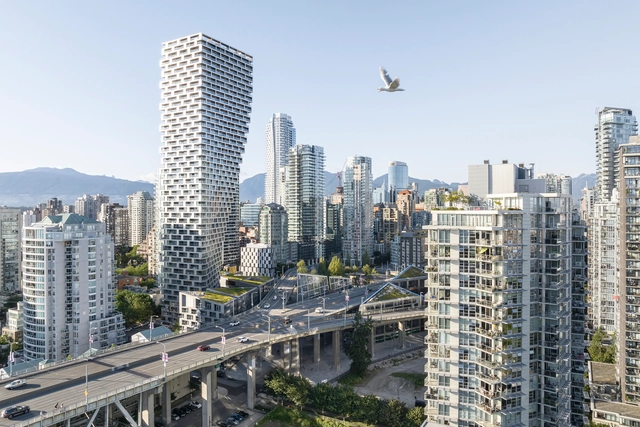
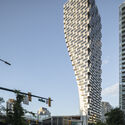
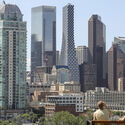
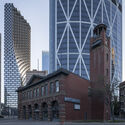
BIG – Bjarke Ingels Group has released a photo series of the Vancouver House and the Telus Sky towers, captured for the first time since their opening in 2020 during the pandemic. In a sort of "yin and yang," both skyscrapers are shaped by a curvilinear silhouette that involves the surrounding like a giant curtain revealing the building to the skyline.
The 220-meter-tall Telus Sky tower, and the 149 meters high Vancouver House, accommodate mixed-use offices and residential spaces, with connections to cycling and pedestrian pathways in their platforms. Moreover, both hold the highest level of Energy and Environmental Design. Vancouver House is the city's first LEED Platinum building, and TELUS in Calgary now occupies the largest LEED Platinum footprint in North America, with 70,725 square meters.
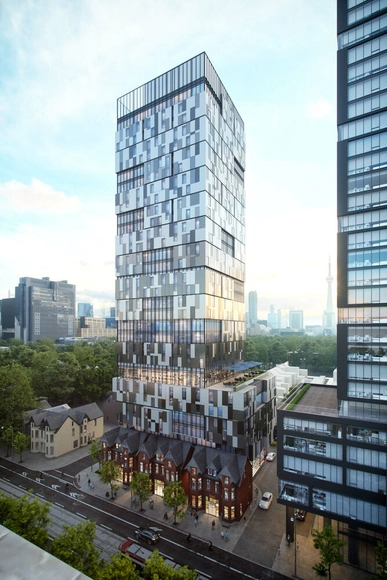
Icon Architects unveiled the design of a 90 meters tall timber tower in Toronto, Canada, which would become, once completed, North America's tallest building made of wood. Named the "191-199 College Street," the project is aligned with the master plan led by Alison Brooks Architects, Adjaye Associates, Henning Larsen, and SLA to develop Toronto's Waterfront that seeks to turn the Canadian city into a hub of affordable housing, robust public spaces, and new business opportunities. The construction of the CLT tower will cut over 3,300 metric tons of greenhouse gas emissions and accommodate around 400 affordable rental units.
Reinvention is one of the founding myths of the United States of America. For those lucky enough to come here on the decks of ships rather than chained in the hold, this country offered a chance to be someone else, somewhere else. For them and generations of immigrants who followed, America seemed to put a safe distance between their pasts and a boundless future.
But the illusion was eventually flipped on its head. Around the turn of the millennium, reinvention was a prevailing theme for movie characters intent on getting out of small-town America; in architecture, that sentiment took the form of building dream cities anywhere but here. In Dubai and Shanghai our brightest design minds conjured up hermetically sealed towers, malls, and museums largely disconnected from history, community, and climate.
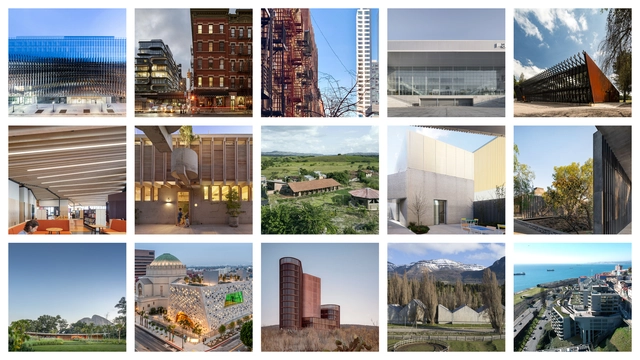
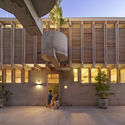
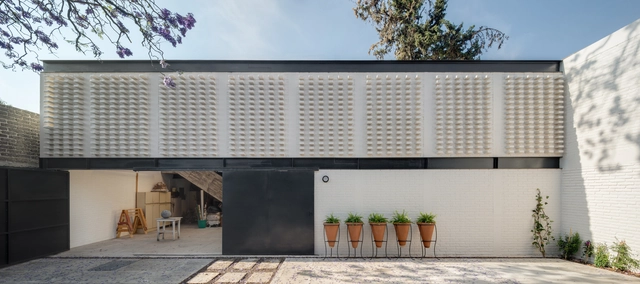
The Mies Crown Hall Americas Prize (MCHAP) announced the 48 outstanding projects selected by the MCHAP 2022 jury. From the body of nominated projects, the jury elected 38 entries in MCHAP as outstanding among other submissions. The fourth prize cycle considers built works completed in the Americas between January 2018 to December 2021, nominated by an anonymous network of international experts and professionals.
Mies Crown Hall Americas Prize announced the full list of jurors for its fourth edition, chaired by Sandra Barclay of Barclay and Crousse Architecture, and just released the nominated projects comprising 200 built works in North and South America, for MCHAP 2022 and 50 projects for MCHAP.emerge 2022.
In this week's piece by Metropolis, author Kelly Beamon explores in her original article "the patriotism associated with pitched roofs and shares how architects are reimagining this staple of suburban house styles". According to its definition, a gable roof is a classic roof shape, usually in cold or temperate climates, consisting of two roof sections sloping in opposite directions and placed such that the highest, horizontal edges meet to form the roof ridge. Emblematic of the US, this article discusses its return to the urban fabric.
The Architectural League of New York has announced the winners of the 2020 Architectural League Prize for Young Architects + Designers. Focusing on fresh talent, North America’s most prestigious award encourages the development of distinctive individuals and underlines their work.
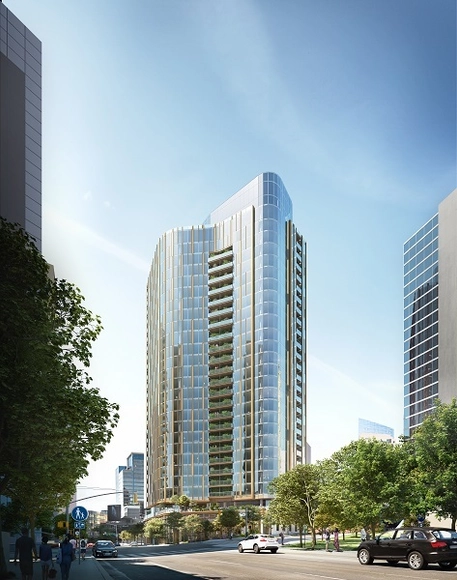
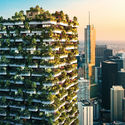
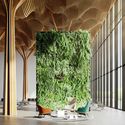
The Rastegar Property Company has announced plans to develop the tallest living wall in North America as part of a 26-story tower in Dallas. The building aims to improve local air quality with over 40,000 plants estimated to capture over 1,600 pounds of carbon dioxide and produce 1,200 pounds of oxygen annually. The development will be located across the street from the Union mixed-use complex.
The destruction of a building in Mexico following the 2017 earthquake. Image via Infobae
Following the devastating earthquake measuring 7.1 in magnitude that struck Mexico yesterday at 13:14 local time, many—over 200 people at the time of writing—are feared either dead or trapped in collapsed buildings or unsafe structures. While rescue efforts continue and information surrounding the scope of devastation is preliminary, schools are closed indefinitely and major companies and organizations have requested their employees not to work.
The death toll continues to rise while ArchDaily México, which is located in Mexico City, reports wide-reaching destruction of the built fabric of the capital. Footage captured by terrified residents show the final moments of buildings—many taller than four stories—that were reduced to dust and debris in seconds.
https://www.archdaily.com/880010/many-feared-dead-or-trapped-after-earthquake-topples-buildings-throughout-mexicoAD Editorial Team
Courtesy of North American Copper in Architecture Awards
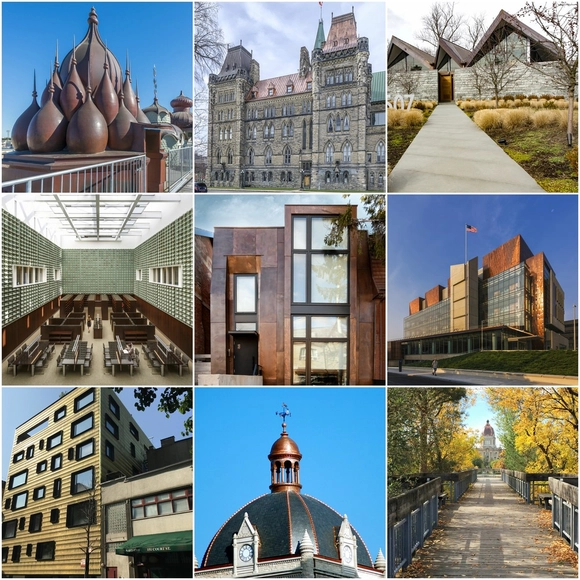
With a combination of resilience, sustainability, and pleasing aesthetics, the use of copper in architectural design is often indicative of a building’s craft and attention to detail, as demonstrated by fifteen projects selected as recipients for the 2017 North AmericanCopper in Architecture Awards (NACIA). The 10th edition of the annual awards celebrates a variety of projects throughout North America for their “outstanding use of architectural copper and copper alloys.” Projects were selected across three categories: New Construction, Renovation/Restoration, and Ornamental Applications.
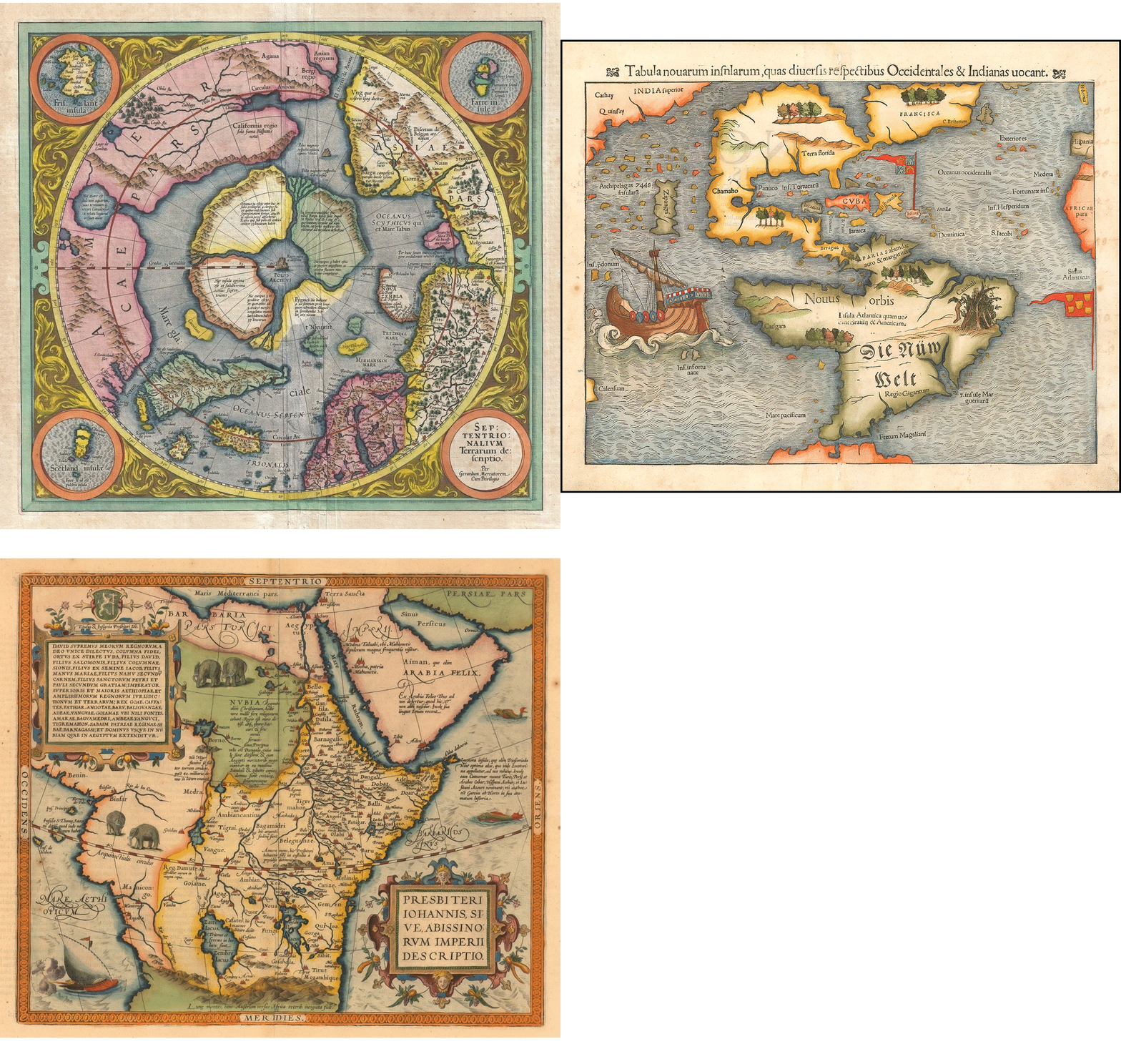
It's difficult to imagine an uncharted world. Today, GPS and satellite maps guide us around cities both familiar and new, while scanning and mapping techniques are gradually drawing the last air of mystery away our planet's remaining unexplored territories. At one time, however, cartography was based on little more than anecdotal evidence and a series of educated guesses. But map-making in the 16th and 17th Centuries was an art nonetheless, even if these examples testify to the fact that just because you're missing important facts, total fabrication may not be the best way forward.
https://www.archdaily.com/870609/these-maps-show-why-its-a-bad-idea-to-make-things-up-munster-ortelius-mercatorAD Editorial Team
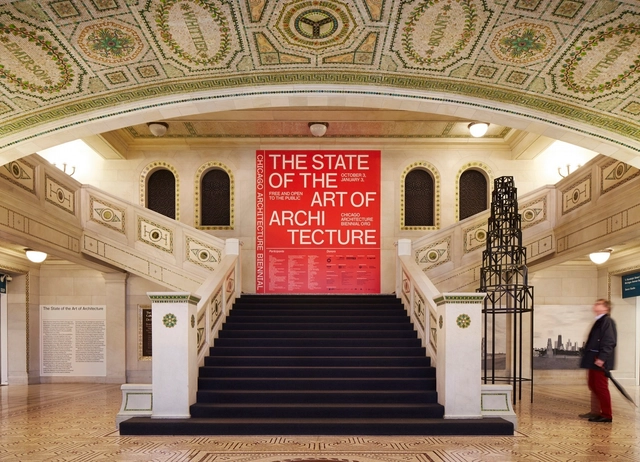
The first ever Chicago Architecture Biennial closed January 3, with over half a million visitors having attended the event. An architecture exhibition of unprecedented size on the continent, the Biennial gathered 93 projects from 120 offices from over 30 countries to discuss the “State of the Art of Architecture.” We take a look at some of the Biennial's highlights after the break.


















.jpg?1654104044&format=webp&width=640&height=580)

.jpg?1654104708 "© Roland Halbe")
.jpg?1654104468 "Bonpland 2169 Building by Adamo-Faiden Buenos Aires, Argentina. Image © Javier Agustín Rojas")
.jpg?1654104406 "Damero Building by Francisco Cadau Oficina de Arquitectura, Campana, Argentina. Image © Gustavo Sosa Pinilla")
.jpg?1654104044)