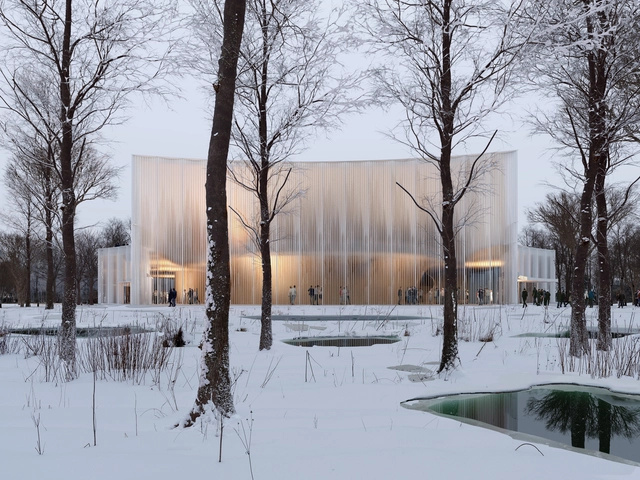
Over the past decade, the definition of a performing arts venue has shifted. No longer singular-purpose destinations, today's cultural facilities are expected to operate as flexible, revenue-generating, community-centered ecosystems. This evolution has challenged architects, operators, and owners to rethink not just how venues are designed, but how they function over time.
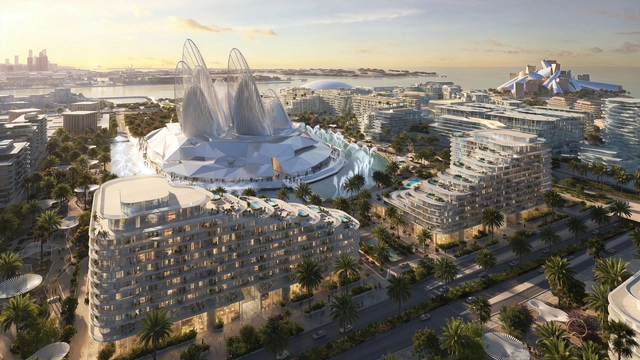
Mandarin Oriental Residences in Abu Dhabi's Saadiyat Cultural District / BIG. Image Courtesy of BIG
Recent architectural announcements showcase a global range of projects. This month, some of the most recognized architectural offices in the world have announced ambitious projects, some engaging with local communities, rediscovering and revitalizing existing structures, or contributing to complex architectural landscapes. Among them, BIG revealed their proposal for Saadiyat Island, a cultural district that gathers some of the world's most famous designers. Additionally, Populous revealed a new performance center, KCAP is developing a framework for an eco-industrial park, and Henley Halebrown is working to revitalize an overlooked structure in Belgium, reopening it to the local community. Read on to discover a collection of recent announcements from the architectural world, peeking into established architects' processes and recent announcements.
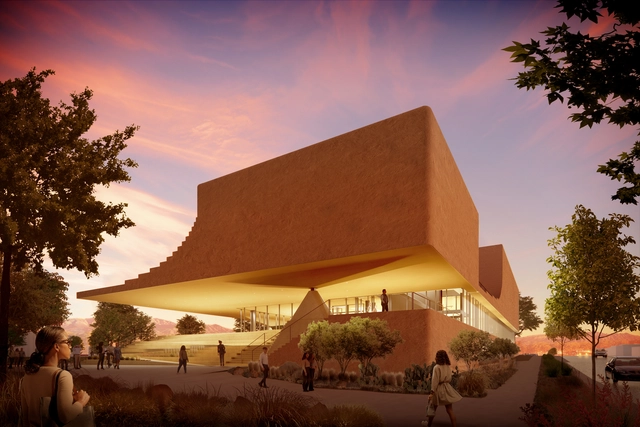
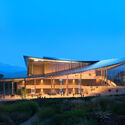
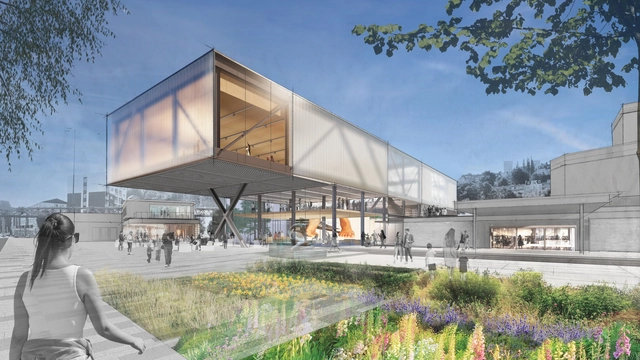
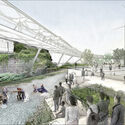
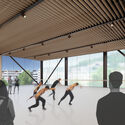
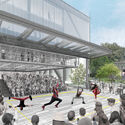
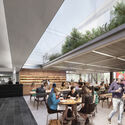
Diller Scofidio + Renfro has just revealed the design for the 60,000-square-foot Center for Collaborative Arts and Technology (CCAT) at the University of New Mexico (UNM). This ground-up facility will serve as a new gateway to the arts at UNM, located along the historic Route 66, where it bridges the campus and the city of Albuquerque. While many interior spaces are designed for performance, film, and technology, the building's prominent location fosters a visual connection between its activities and the surrounding environment.
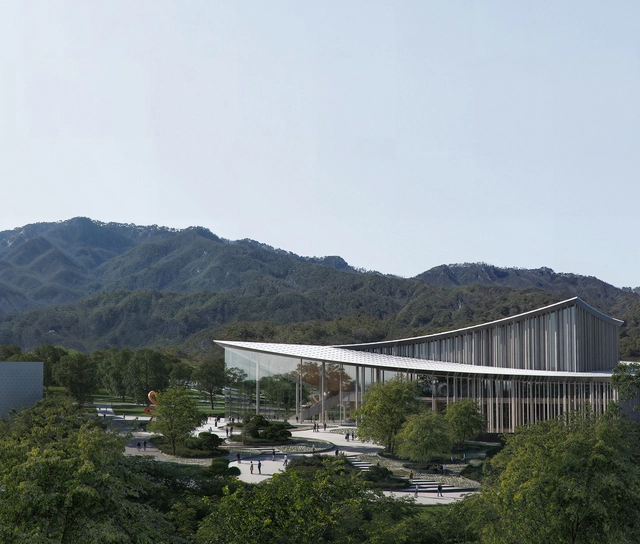
3XN has just won an international competition, which they were invited to participate in, to design the Chungnam Art Center in Chungcheongnam-do, South Korea. Designed in collaboration with SIAPLAN and MDA, the new art center aims to serve as a key destination for creative expression. Drawing inspiration from the dynamic movements of art, the center seeks to create a space where everyone can both experience and participate in the arts.
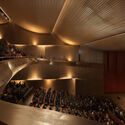
Concert halls, music, and performance venues stand as iconic symbols of cultural vitality within urban landscapes. Through these structures, which often become landmarks of the city, the residents are invited to take part and experience artistic expression, fostering a sense of community and connection. For architects, this program poses the intricate challenge of balancing form and function, creating spaces that enhance the acoustic experience, allow for the flow of audience and performers, and create visual spectacles in their own right.
Featuring both emerging and internationally recognized offices, this week’s curated selection showcases music and performance venues, from mixed arts and cultural centers to opera and ballet halls. Including proposals for international competitions such as David Chipperfield Architects or SHL and PAX architects’ designs for the Polish Royal Opera in Warsaw or Hariri Pontarini Architects’ design for an integrated center for the arts in Canada, the selection explores the program of music venues across scales and programs.
The vomitorium and its purpose is one of historical architecture’s most common misconceptions. It’s said that the vomitorium was a room that neighbored Roman feasts, where guests could socially eject the contents of their stomach before returning to the feast with renewed capacity. Although this theory was not entirely based on fiction – as Romans are known to have indeed taken up habitual regurgitation, possibly as a sign of excess wealth – there’s no reason to believe there was a specific room dedicated to the practice.
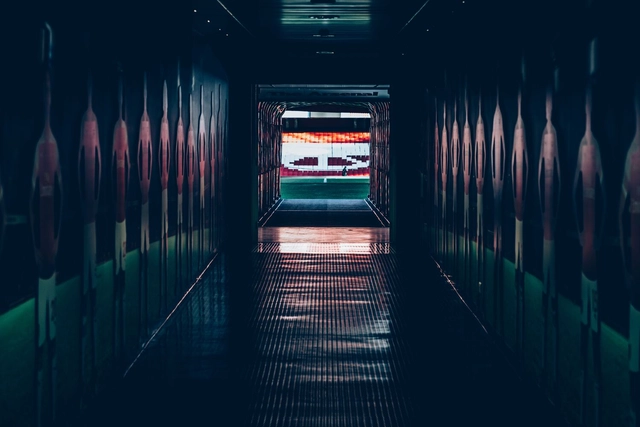
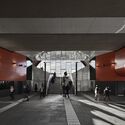
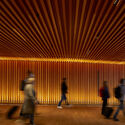
The original usage of the term ‘vomitorium’ – taken from the same Latin root ‘vomere’ – in fact refers to a room that allows a large building to disgorge itself of its contents. A vomitorium, therefore, is nothing more than a corridor. Specifically, a wide, arterial corridor leading to or from a high-capacity public space such as a theatre, arena, or stadium, designed with the intention to get as many people in or out of the venue as quickly as possible. A well-designed vomitorium, for example, is essential for efficient emergency evacuation procedures, but even during day-to-day activity, the ability to move large numbers of people quickly helps with a venue’s turnover and creates a more pleasant crowd experience.
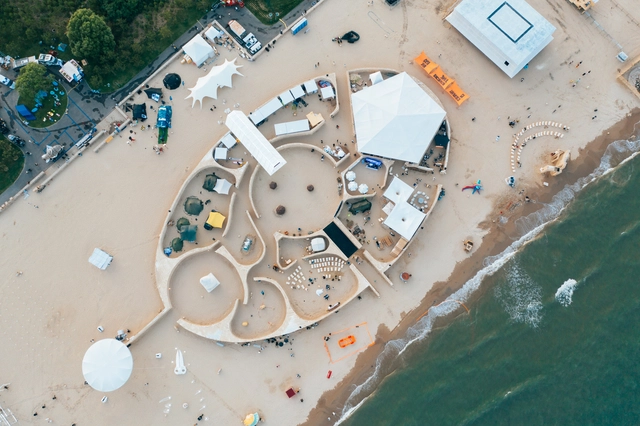
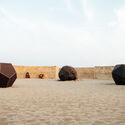
Courtesy of Aranya Theater Festival, MAD Architects Qi Ziying
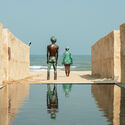
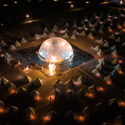
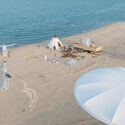
Ma Yansong revealed The City of Time, a performance space and the location of a 300-hour artist residency created for the Aranya Theater Festival in China. Following the metaphor of avian migration, the Migratory Birds 300 is an artist residency program that brings together 300 creators from diverse fields and backgrounds. From June 12 to June 25, Ma Yansong’s architectural intervention will host a wide array of artistic expressions, including shows, installations, sculptures, performance art, paintings, and videos, including 131 group works and 194 individual projects.
Pina Bausch Center in Wuppertal, Germany. Image Courtesy of Diller Scofidio + Renfro
Diller Scofidio + Renfro has won an international competition to design the new Pina Bausch Zentrum in Wuppertal, Germany. Pina Bausch’s legacy as a dancer and choreographer will be celebrated in the design and revitalization of the Tanztheater Wuppertal, as well as in the creation of a new production center. The building will emerge out of the ethos of Pina Bausch, setting an example for a new generation of leadership in the world of choreography.
Apart from the production stage centers, the design includes an archive of Pina Bausch's enormous artistic legacy, comprising a library, study, and research areas, and a public platform to promote community involvement with many creative and academic disciplines. Various contrasting and flexible spaces that encourage and foster conversation across the project's numerous program components are found throughout the proposed design.
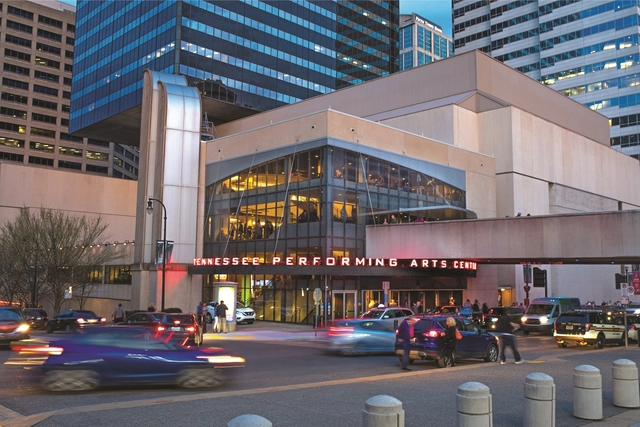
The Tennessee Performing Arts Center (TPAC) has selected an international architecture teamto design its new performance home. Comprising BIG (Bjarke Ingels Group), William Rawn Associates, and Nashville-based EOA Architects, the global architecture team will reimagine the 50-year-old performing arts non-profit on a different site from its original 1974 plot, part of the State-owned James K. Polk Cultural Center.
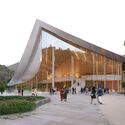
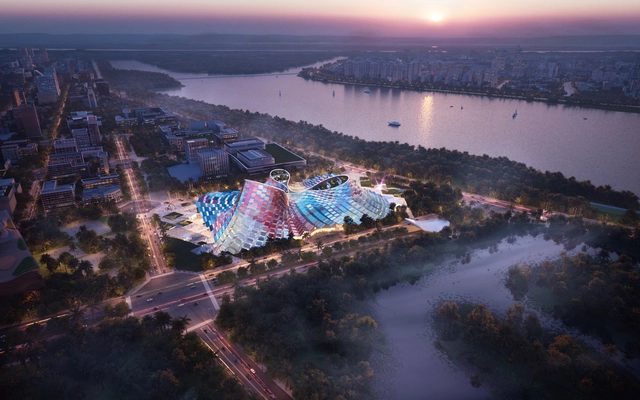
Heatherwick Studio has been selected to design a tropical opera house for the island province of Hainan at the southernmost point of China, the studio's first opera house or music venue project. The design features three performance spaces: an opera house, a concert hall, and a theatre, that come together under a sweeping canopy referencing to the island’s unique geology.
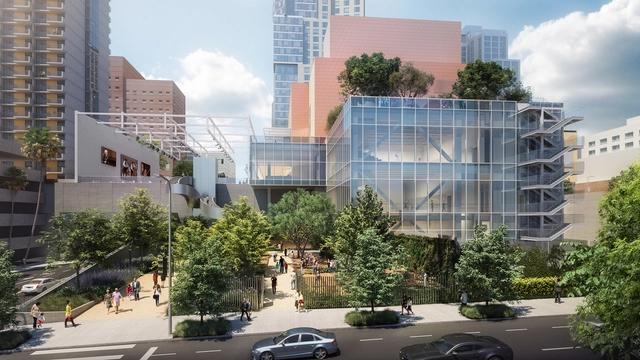
Rendering of the Colburn Center at the Colburn School. View from Hill Street West towards dance school entrance, adjacent park, and stairs leading up to Olive Street and public plaza.. Image Courtesy of Gehry Partners
The Colburn School, Los Angeles' renowned school for music and dance, has unveiled architectural designs by Frank Gehry for the Colburn Center, a 100,000 square-foot campus expansion that aims to inspire and promote the region’s young performing artists and organizations. The center will serve as a cultural and civic hub in the heart of Downtown LA through public programs, as well as performance and educational collaborations with local and touring artists.
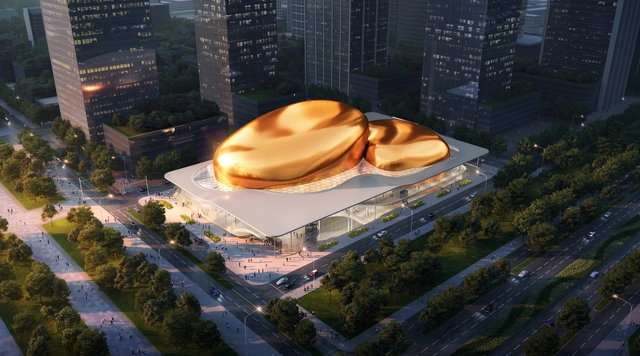
Ennead Architects have been chosen out of a three-part open international competition to design the new International Performance Center in Shenzhen, China. Dubbed 'The People’s Performing Arts Center', the project will be a part of a major cultural development that further marks the city as a metropolitan destination and reinforces the global arts community in the city.
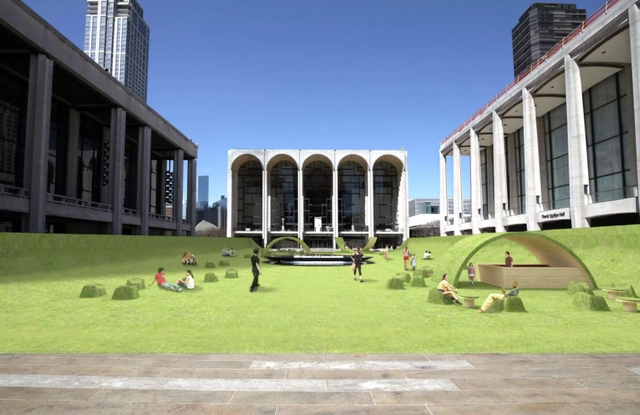
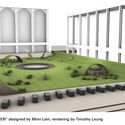
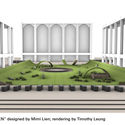
The Green. Image Courtesy of Mimi Lien/Rendering by Timothy Leung
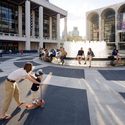
After several event cancellations due to the pandemic, Manhattan’s Lincoln Center for the Performing Arts complex have transformed their outdoor plaza into a green park and outdoor performance venue called The Green. As of May 10, the Restart Stagesinitiative will add fake grass across the 14,000-square-foot (1,300 sqm) Josie Robertson Plaza. The plaza, which was originally designed by Philip Johnson, Wallace K. Harrison, and Max Abramovitz, and renovated by award-winning architecture firm DS+R in 2010, will transform into a public urban space of gathering, leisure, and entertainment.
The ROM Welcome Project aerial render. Image Courtesy of Hariri Pontarini Architects
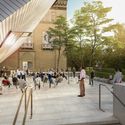
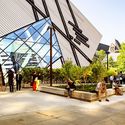
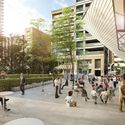
The ROM or The Royal OntarioMuseum, an art, world culture and natural history gallery in Canada, inaugurated its newest additions, the Helga and Mike Schmidt Performance Terrace and the Reed Family Plaza. Designed by Siamak Hariri of Hariri Pontarini Architects (HPA), the latest add-ons create a lively space on the street level.
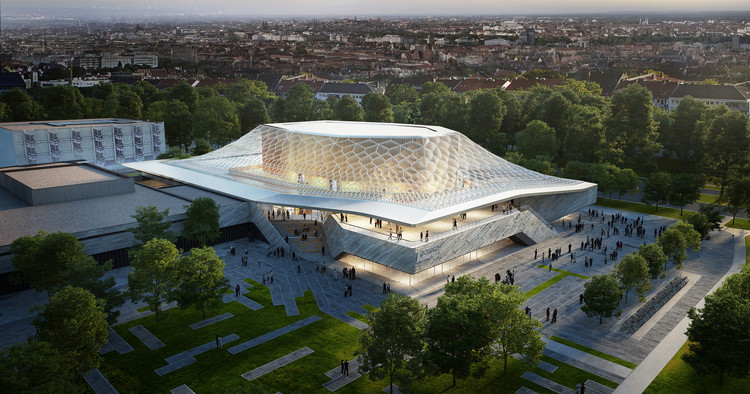
BART//BRATKE & Matthijs la Roi Architects have released images of their proposed new concert hall in Nuremberg, Germany. The “Nuremberg Konzerthaus” seeks to extend the historically rich heritage of the Meistersingerhalle municipal center, contributing a unique musical experience to the cultural city. The proposed concert hall establishes a dialogue with the Meistersingerhalle, connected in a symbolic “band” podium made of natural stone, recalling the rock formations of nearby quarries.