

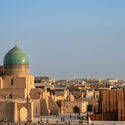
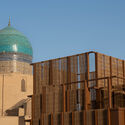
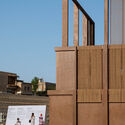
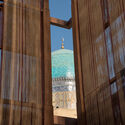
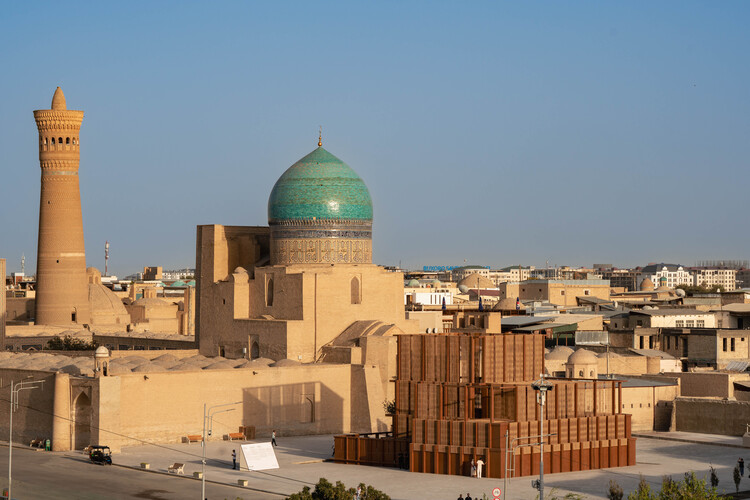
In April 2024, the Diriyah Biennale Foundation announced the AlMusalla Prize, an international architecture competition focused on designing a musalla: a flexible space for prayer and reflection accessible to people of all faiths. The winning project, designed by EAST Architecture Studio in collaboration with artist Rayyane Tabet and engineering firm AKT II, is a modular structure built with materials derived from local date palm waste, including fronds and fibers, and inspired by regional weaving traditions. Installed in the Western Hajj Terminal of King Abdulaziz International Airport in Jeddah, Saudi Arabia, the musalla served for four months during the Islamic Arts Biennale as a space for prayer, welcoming both Muslim and non-Muslim visitors. Conceived to be dismantled and reassembled, the structure was recently relocated to Uzbekistan for the inaugural Bukhara Biennial 2025.
Religious Structure: The Latest Architecture and News
From Saudi Arabia to Uzbekistan: AlMusalla Pavilion Reinstalled for the Inaugural Bukhara Biennial 2025
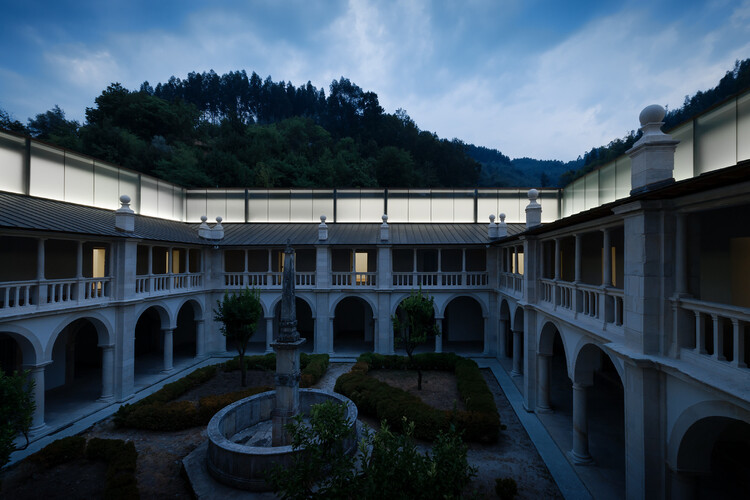
Monasteries in Transformation: 8 Projects that Redefine Architecture and Devotion
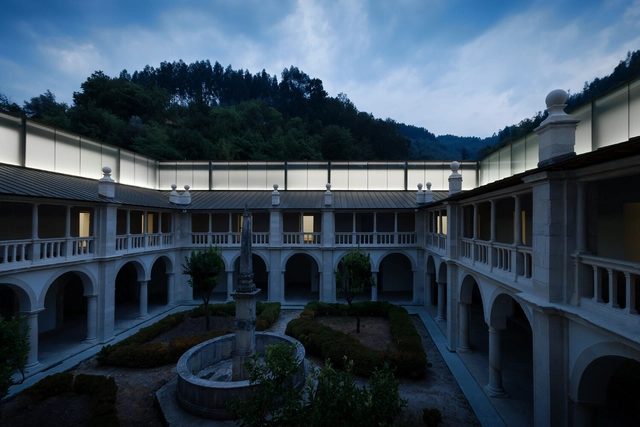
Monasticism emerged from a deep impulse to withdraw—a radical pursuit of spirituality and transcendence. The word itself comes from the Greek μόνος (mónos), meaning “alone,” reflecting the ideal of the holy hermit who retreats from the world to dedicate life entirely to the divine. By the late 3rd century, in Egypt and Palestine, the first Christian monks began to follow this path, creating ways of life that would later give rise to a distinct architecture centered on seclusion.
Centuries later, however, this legacy faces an uncertain fate. With the decline of religious vocations from the 1960s onward, countless convents and monasteries were sold, destroyed, or repurposed as hotels, cultural centers, or residences. Even the few that maintain their original function often lack structural updates to meet contemporary needs. In this context, architecture assumes a crucial role: how can these spaces be renovated and reused without becoming mere sets, stripped of the spirituality and memory that once defined them?


Inside the Construction of Niemeyer’s Cristo Rei Cathedral in Belo Horizonte, Seen Through Paul Clemence’s Lens
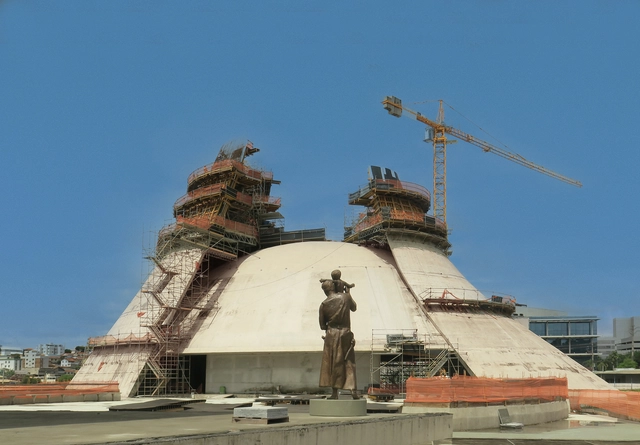
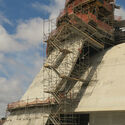
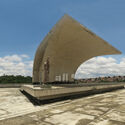
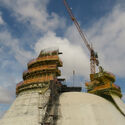
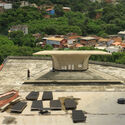
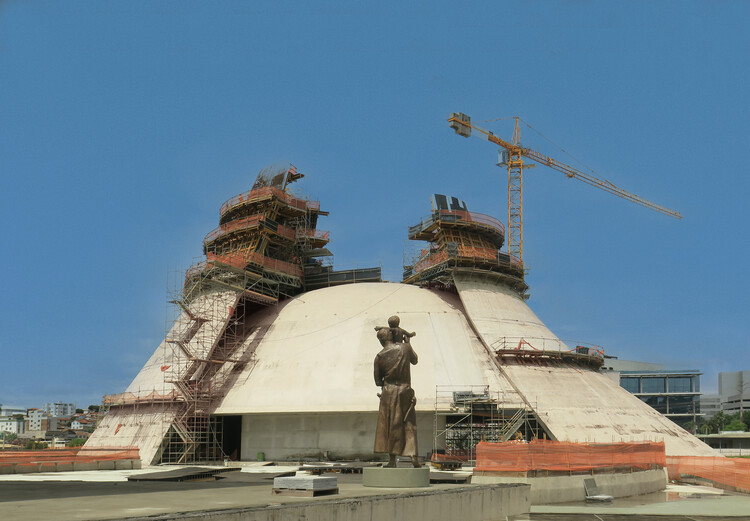
The Cristo Rei Cathedral is Oscar Niemeyer's design for the cathedral of Belo Horizonte, the capital of the state of Minas Gerais in southeastern Brazil. Conceived between 2005 and 2006, it is one of the late architect's final projects in the country. The design features a domed structure approximately 60 meters in diameter, suspended by two towering elements rising 100 meters high. Niemeyer referred to the project as a "square," consisting of a cathedral with a capacity for 3,000 people and an external altar designed to accommodate up to 20,000 worshippers for mass and public events. Construction began in 2013 and is still ongoing. Earlier this year, photographer Paul Clemence visited the site, documenting the building process and capturing the emergence of Niemeyer's signature curves.
Architecture and Spirituality: 12 Churches and Chapels in Latin America
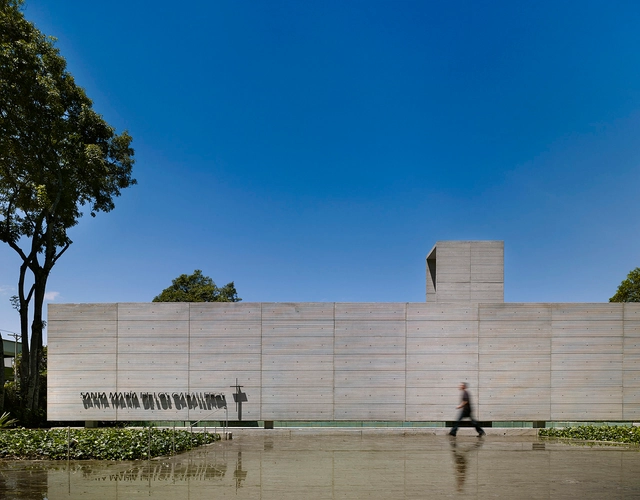
Latin America is home to the largest Catholic population in the world—more than 25% of all Catholics globally live on this continent. Here, faith has shaped not only spiritual life but also cities' cultural, social, and urban fabric. Since the first temples, built during European colonization, the architecture of Catholic churches in the region has undergone profound transformations. The once-imposing features of colonial Baroque and richly ornamented façades have gradually given way to bolder, more contemporary expressions that reflect local realities, a search for identity, and a spirit of architectural experimentation.

Interfaith Spaces: Architectural Responses to Religious Diversity
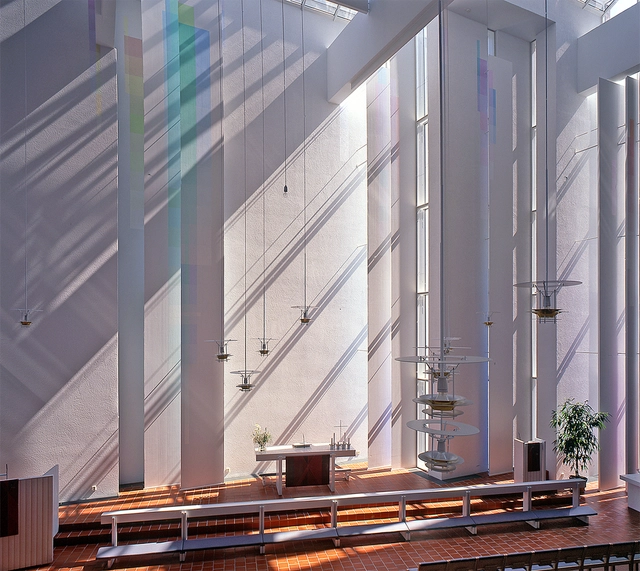
In an increasingly diverse world, the emergence of multi-faith spaces represents a significant shift in architectural design, reflecting the evolving religious landscape of contemporary society. These spaces, which began to be formally established in the 1950s in public buildings like airports and hospitals, serve as microcosms of social transformation and peaceful coexistence. They allow various traditions to harmoniously share environments, embodying principles of inclusivity, flexibility, and adaptability.
As communities grow more multicultural and increasingly diverse, these spaces serve as physical manifestations of religious inclusion, encouraging the acceptance of religious and ethnic minorities within multicultural landscapes. Their proliferation reflects a growing need for inclusive environments that cater to diverse spiritual needs while promoting interfaith understanding. However, designing and implementing these spaces presents complex challenges, often sparking debates about representation, neutrality, and the very nature of sacred space. These discussions underscore the delicate balance architects must strike in creating spaces that are both universally welcoming and spiritually meaningful.

Notre Dame Rebuilt: A Journey of Restoration for France's Iconic Cathedral
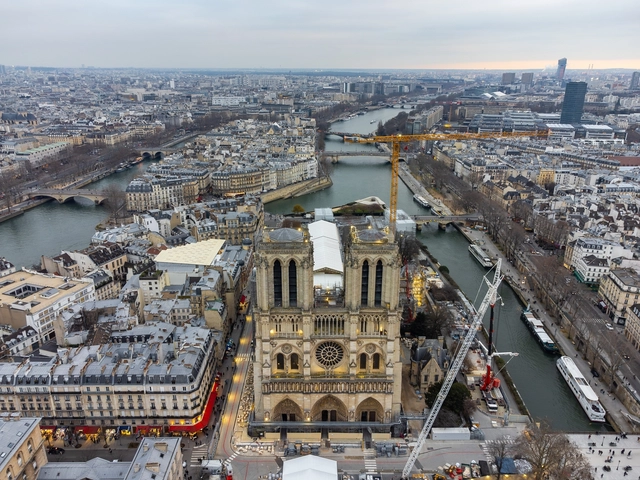
Notre Dame Cathedral reopened on December 7th, 2024, welcoming visitors for the first time since the 2019 fire. The restoration of Notre Dame Cathedral was a massive undertaking, led by chief architect Philippe Villeneuve, assisted by Rémi Fromont and Pascal Prunet. The project involved approximately 2,000 craftspeople, 250 companies, and about $900 million, demonstrating the immense scale and complexity of the work on a tight deadline. Despite the major milestone of opening before the end of the year, the restoration works are not yet complete, as they are scheduled to continue through 2026.


Between the Sacred and the Profane: The Story Behind the Church of the Sacred Heart of Jesus in Lisbon
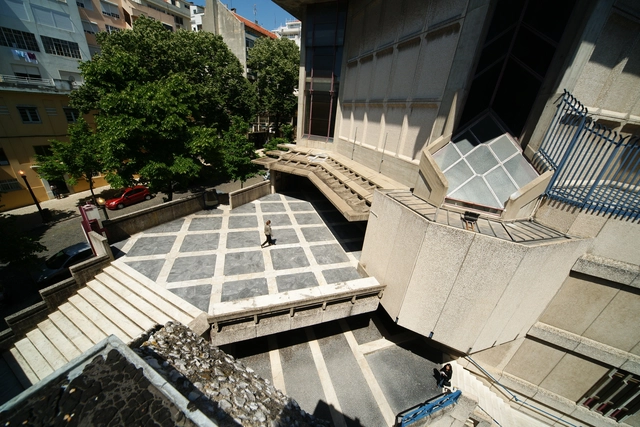
As a landmark of contemporary religious architecture in Portugal, the Church of the Sacred Heart of Jesus stands in contrast to traditional models, representing a work free from historicist stigmas. Resulting from a design competition organized in 1960, the church is notable for its civic dimension, urban role, and its anti-monumental and social significance. Integrated into the regular grid of the Avenidas Novas neighborhood, this example of the Movement for the Renewal of Sacred Art is part of a larger parish complex that often goes unnoticed by passersby. Its external street creates an unexpected public space, inviting people to enter and engage in a courtyard where architecture and the city merge. Finely crafted in terms of spatiality, detail, and light, the church holds many surprises for those who venture inside.

Henning Larsen Designs New Church in Højvangen, Denmark, the First to be Built in Skanderborg Parish in Over 500 years
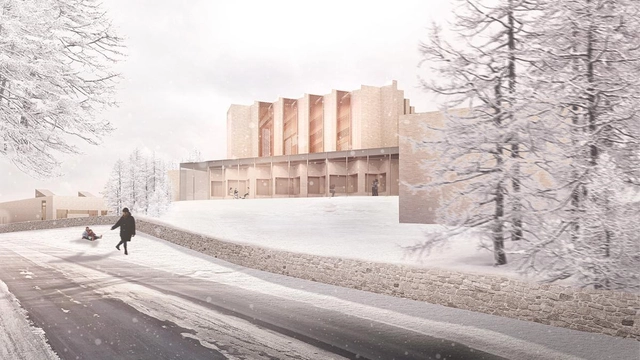
Henning Larsen has won a competition to design Højvangen Church, the first church to be built in Skanderborg Parish in over 500 years. The new intervention, set to be completed and inaugurated by December 2024, will be a new public gathering point in the growing residential area of Højvangen in Skanderborg, Denmark.
Brooks + Scarpa design Interfaith Chapel in Florida

The highly acclaimed Los Angeles-based practice Brooks + Scarpa Architects, along with KZF Design, have released plans for a new Interfaith Chapel at the University of North Florida. Drawing inspiration from a free-flowing wedding gown, its informally shaped footprint - reminiscent of an allegorical figure such as Justice, Faith, Hope, Charity, Prudence and Fortitude - flows upward and culminates at the top with a large skylight whose light is diffused by a wooden lattice spire that is derived from the symbol of infinity.
The symbolic, 7000 square-foot structure will provide students with an intimate, spiritual space that may be used daily while also supporting a variety of diverse religious services, such as student ceremonies, weddings, lectures, meditative practices, musical performances and more.
Learn more about Brooks + Scarpa’s wooden chapel after the break.