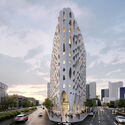
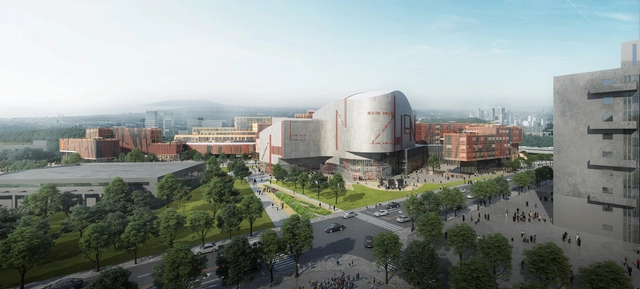
Sun Tower / OPEN Architecture. Image Courtesy of OPEN Architecture
As the year 2023 comes to a close, we review the evolution of the field of architecture, but we also look forward to the most anticipated projects planned to open in 2024. As Paris is preparing to host the 2024 Summer Olympic Games, several projects and infrastructure updates have been planned to support the global event. Another milestone for Paris will be the reopening of the Notre Dame Cathedral, as reconstruction works near completion for the fire-damaged 12th-century monument.
The selection of projects spans various scales and programs, from restoration and expansion works such as OMA's plan for Museo Egizio in Turin, or David CHipperfield's Grand Residential Building in Belgium, to architecture developed with indigenous peoples, such as Snøhetta's Čoarvemátta in Northern Norway, cultural facilities in Asia and Europe and environmentally-conscious buildings such as Studio Gang's Hotel in the United States.
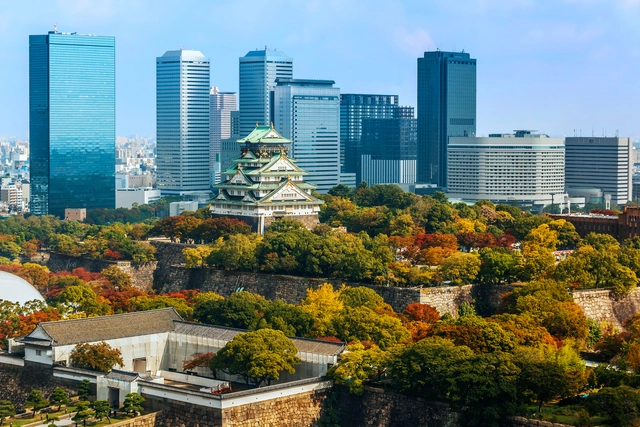
The city of Osaka, Japan, has won the bid to organize the 2025 World Expo, an international event expected to draw in millions of visitors. Set to commence on April 13, 2025, and conclude on October 13, 2025, this marks Japan's second occasion as host, the prior instance being in 1970. Throughout their history, World Expos have been the place where new technologies and products are showcased and popularized, leading to technological advancements and innovative designs. For this event, Osaka has chosen the overarching theme of "Designing Future Society for Our Lives," with three subthemes further developing the concept: Saving Lives, Empowering Lives, and Connecting Lives. Architect Sou Fujimoto was selected as the Expo Site Design Producer, taking on the responsibility of creating the master plan and providing guidance to designers from participating countries.
In 2018, the Bureau International des Expositions (BIE) announced that the Japanese city of Osaka won the bid to host the 2025 World Expo, an event expected to draw millions of visitors. The event will open on April 13, 2025, and close on October 13, 2025. This will be Japan’s second time hosting the event, as another World Expo was held in Osaka in 1970. The official theme for this edition is “Designing Future Society for Our Lives.” Architect Sou Fujimoto has been chosen as the Expo Site Design Producer of the event, becoming responsible for designing the master plan and directing the designers of the participating countries. As of March 24, 2023, 153 countries and regions and 8 international organizations have officially confirmed their participation in Expo 2025 Osaka, Kansai, Japan.
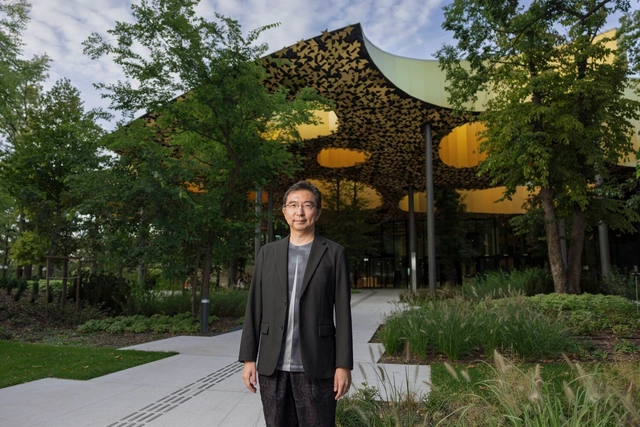
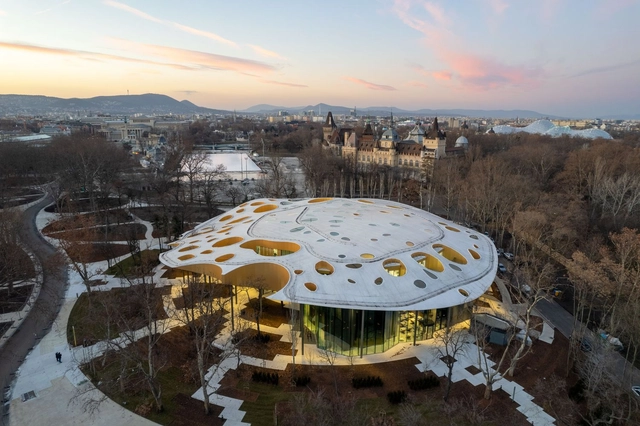
The House of Music Hungary is one of the biggest cultural investments in the European Union. Designed by Sou Fujimoto Architects, it is becoming a hub for city dwellers and worldwide visitors wishing to attend concerts, visit the exhibition or record music in the building's open studios.
ArchDaily editors first got in touch with the Liget Budapest Project in the summer of 2021 and were treated to an impressive site visit at the House of Music Hungary. We were among a few select invitees that caught a glimpse of the finishing phases at one of the city's major projects located in its 200-year-old park. Developers and contractors were racing to catch up on the time they’d missed due to the pandemic – a challenge they certainly fulfilled, with the project completed in less than six years and being opened to the public in December 2021.
Not a Hotel Ishigaki by Sou Fujimoto Architects. Image Courtesy of Sou Fujimoto Architects
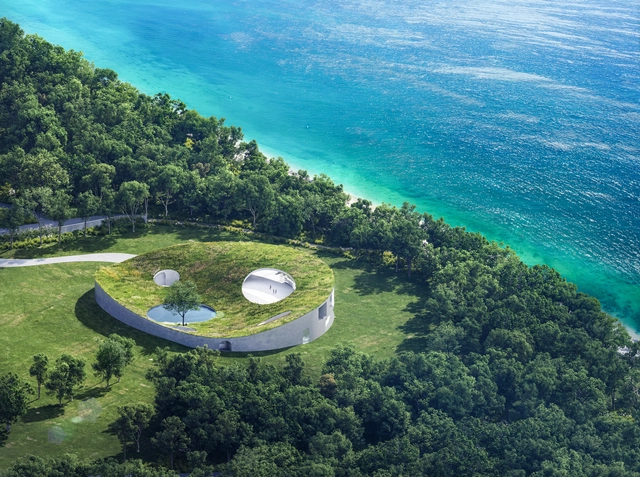
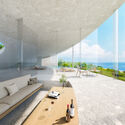
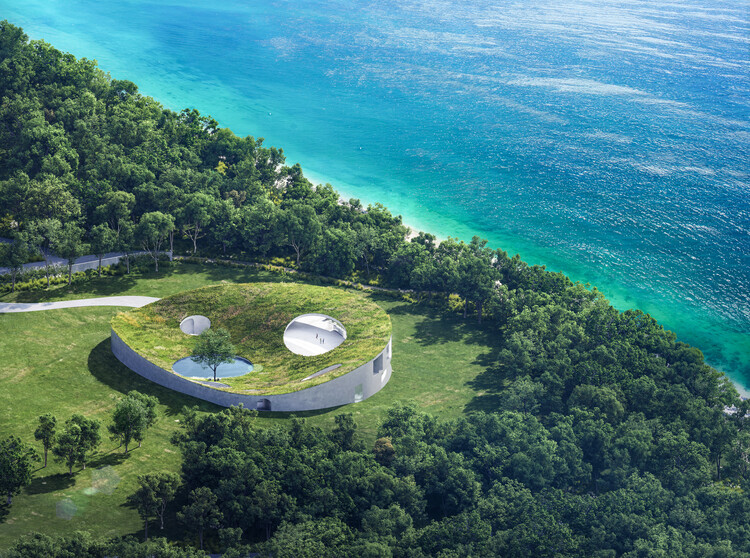
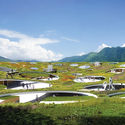
Sou Fujimoto has unveiled a “Not a Hotel Ishigaki”, a new project in the southwest of Ishigaki Island in Okinawa, Japan. The unique tropical resort hotel sits on a circular base open in all directions toward the surrounding natural landscape. The main feature of the building is the undulating roof covered in vegetation. Its shape allows access from the building terraces, creating an inner landscape, complete with meadows, relaxation areas, and a water mirror that reflects the sky and the singular tree in its vicinity.
Sou Fujimoto Architects has unveiled its design for the Hida Furukawa Station Eastern Development, a regional community-based center that aims to enrich the life, leisure, and culture of the residents of Hida City, in Gifu Prefecture. The Center will include a university research base, student accommodation, an all-weather playing field, and commercial facilities, all interconnected to form one harmonious community.
It is nearly impossible nowadays not to present accompanying renders when proposing a new project. No matter the method, software or style that is used, it is a valuable reference that bares more practical weight than one might think. Not only can it be one of the closest possible representations of the architect's vision, if approved, it can also become a promise to clients, investors, and the general public.
When it comes to works from renowned architects, the render becomes a critical reference to the project participants and to the expectant community. A lot of details can be developed and considered when creating the images. In most cases, special attention is brought to the lighting, materials, and context in order to make the most accurate representation possible.
Architecture education is not only about learning how to design and construct buildings but it gives a whole new perspective on our built environment and on how design can contribute to create quality spaces and experiences. Moreover, a big percentage of this design thinking can be used by professional architects as a resource to create other spatial configurations that vary from the traditional building, opening up to a diverse world of possibilities in terms of spatiality and materials.
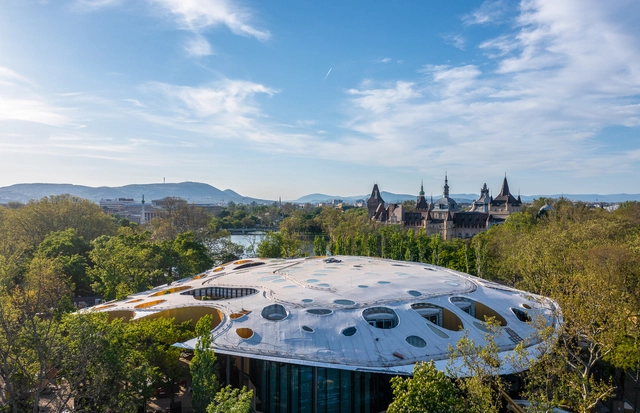
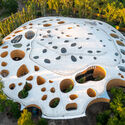
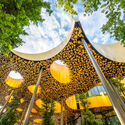
Sou Fujimoto’s House of Hungarian Music, a contemporary cultural landmark dedicated to music in Budapest's City Park has officially opened its doors to the public. Considered as one of the most anticipated buildings of the year, the project is nestled within the park's trees, and is designed as an extension of its natural setting through uninterrupted glass volumes and a perforated roof structure. The museum offers a unique artistic experience combining landscape, architecture, and exhibition design, all dedicated to the creation of music and sound.
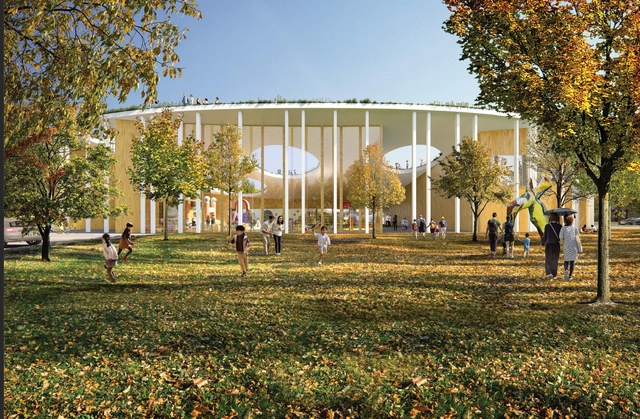
Sou Fujimoto Architects has unveiled its design for the Hida Takayama University, a new academic institute tucked in a small rural area of Japan. The project aims to revitalize the rural areas which are often overlooked, especially by academic institutes, and nurture the sense of community and appreciation of the rich culture provided by nature. The design features an organic-shaped structure inspired the surrounding landscape and a walkable roof. The university is set to open in 2024, and will be followed by 11 other regional learning centers across the country.
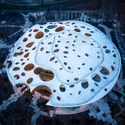
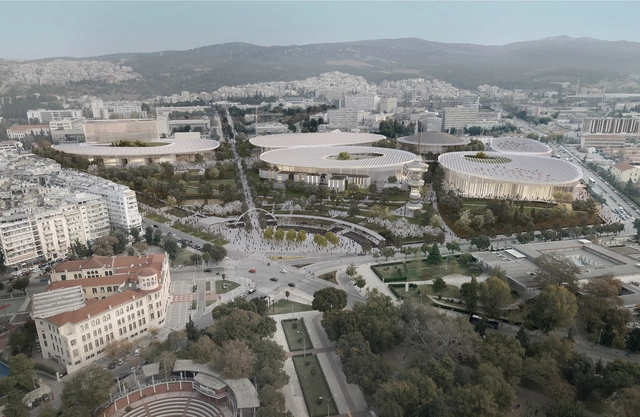
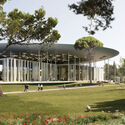
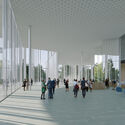
The winning proposal for redesigning Thessaloniki’s ConfEx fairground features a series of pavilions with large overhanging roofs that float within a park, creating the infrastructure for international events while providing locals with a robust public space. Designed by Sauerbruch Hutton, together with Gustafson Porter + Bowman as landscape architects and Elena Stavropoulou, the project builds on the existing network of landmarks creating a new hybrid landscape that caters to the Northern Greek city’s goal of becoming the region’s primary business and tourist attraction.
The House of Hungarian Music is taking shape within Budapest's City Park. With the structure and the design's distinctive roof completed, construction work is underway for the interior of the music hall. Nestled within the park's trees, the project designed by Sou Fujimoto features an extensive, horizontally uninterrupted glass volume topped by a perforated roof which allows natural light to penetrate all levels of the building.
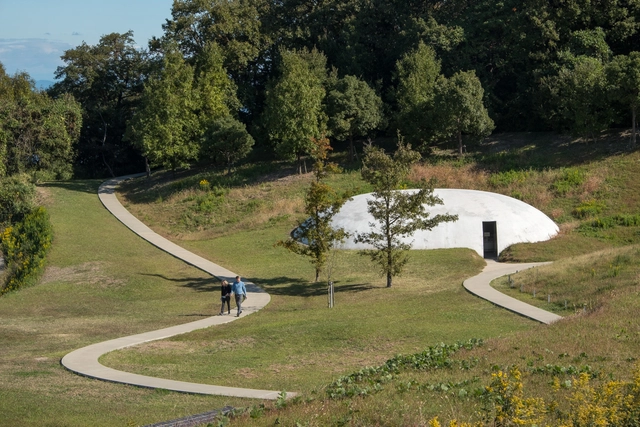
Naoshima, Teshima, and Inujima are the three main islands of an archipelago in Japan's Seto Inland Sea. What sets them apart from the many other Japanese islands is the large number of exceptional architectural works designed by some of the greatest architects and artists in the world. These projects are part of the Benesse Art Site Naoshima, an art complex idealized by billionaire businessman Soichiro Fukutake in the 1980s, composed of eighteen museums, galleries, and open-air installations.
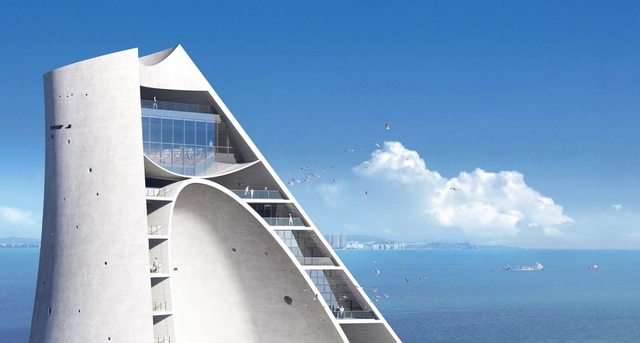
Sou Fujimoto Architects have revealed the winning design of the New City Center Landmark, a monumental floating tower on the bay of the Qianhaiwan district in Shenzhen. The proposed tower is 268m high, and consists of 99 individual tower-like elements connected a strong horizontal plane in the upper part, gradually vanishing as they descend. It is both one tower and a collection of towers all at once, symbolizing the future of societies in an age of diversity.
Courtesy of Sou Fujimoto Architects & Donghua Chen Studio
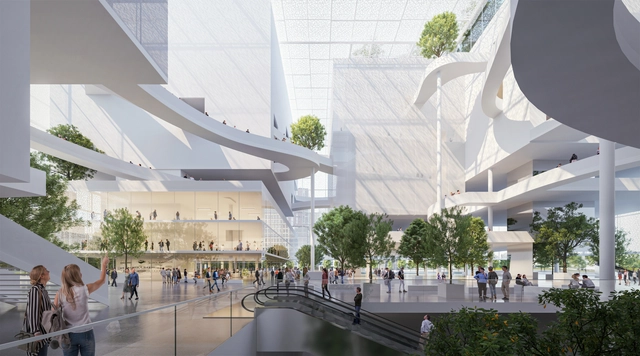
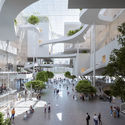
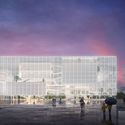
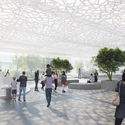
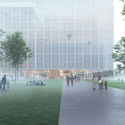
Japanese studio Sou Fujimoto Architects alongside Chinese office Donghua Chen Studio have designed a large scale exhibition complex in the heart of Futian District. The Shenzhen Reform and Opening-up Exhibition Hall adopts the city's characteristics as a contemporary entrepreneurial hub, welcoming innovative international businesses in a garden-inspired structure wrapped with white perforated facades. The design proposal was the winning entry of an international competition in Futian, and will be a part of the Shenzhen Ten Cultural Facilities of New Era promoted by the Municipal Government, once completed.
Miralles Tagliabue EMBT, directed by Benedetta Tagliabue, has won the international competition to design the Shenzhen Conservatory of Music, one of the city's 10 new era cultural buildings. Characterized by the dialogue generated with its surroundings, the complex integrates music and art in nature with a proposal of organic and sustainable architecture.
Sou Fujimoto. Image Courtesy of Sou Fujimoto Architects
After MAD’s Wormhole Library, the city of Haikou revealed a pavilion by Sou Fujimoto Architects. Scheduled for the end of spring, the ribbon-like white pavilion with an accessible roof will be one of the first public waterfront interventions to be completed in the spring of 2021. Shaping the future of Haikou city and Hainan Free Trade Port, the master plan of 16 permanent destinations re-imagines the future of coastal living.
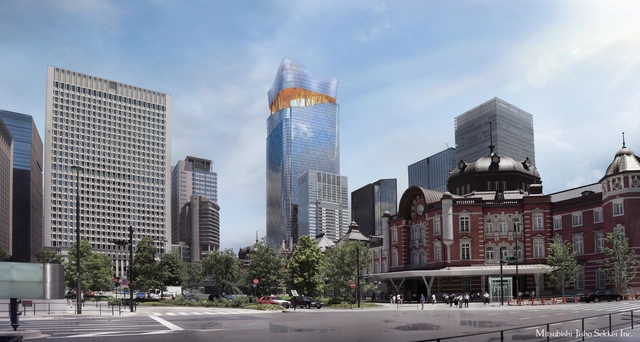
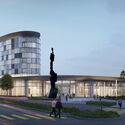
Sou Fujimoto Architects has unveiled its design for the top part of the tallest skyscraper in Japan“Torch Tower” in Tokyo, collaborating mainly with Mitsubishi Jisho Sekkei, Inc. Standing tall at 390m, the highrise building planned to be ready by 2028, takes on a large plaza at around 300m, generating a space for people.




















.jpg?1643020143 "Courtesy of Liget Budapest Project")
.jpg?1643020177 "Courtesy of Liget Budapest Project")

Sou_Fujimoto_Architects_004.jpg?1637138724&format=webp&width=640&height=580)
Sou_Fujimoto_Architects_004.jpg?1637138724 "Courtesy of Sou Fujimoto Architects")
Sou_Fujimoto_Architects_001.jpg?1637138564 "Courtesy of Sou Fujimoto Architects")
Sou_Fujimoto_Architects_003.jpg?1637138684 "Courtesy of Sou Fujimoto Architects")
Sou_Fujimoto_Architects_002.jpg?1637138565 "Courtesy of Sou Fujimoto Architects")
Sou_Fujimoto_Architects_004.jpg?1637138724)





SFA_C02-Sunrise.jpg?1624002065&format=webp&width=640&height=580)
SFA_C10.jpg?1624002191 "Courtesy of Sou Fujimoto Architects")
SFA_C04.jpg?1624002086 "Courtesy of Sou Fujimoto Architects")
SFA_C01-rainday.jpg?1624002018 "Courtesy of Sou Fujimoto Architects")
SFA_C01-Dusk.jpg?1624001996 "Courtesy of Sou Fujimoto Architects")
SFA_C02-Sunrise.jpg?1624002065)



.jpg?1613464686&format=webp&width=640&height=580)
.jpg?1613464615 "Sou Fujimoto. Image Courtesy of Sou Fujimoto Architects")
.jpg?1613464611 "Sou Fujimoto. Image Courtesy of Sou Fujimoto Architects")
.jpg?1613465267 "MAD- Wormhole Library. Image © SAN")
.jpg?1613465249 "MAD- Wormhole Library. Image © SAN")
.jpg?1613464686)